The street address only gets you to the building. To reach the apartment, you may also need the correct name or number on the citofono, the right scala (staircase), piano (floor), and interno (apartment). With Italian doorbells and intercoms, the biggest mistake is assuming the rental name will appear beside a buzzer. It often will not. Save the host’s exact intercom label before arrival, ring that button, wait for the door release, then follow the building details to the apartment.
The five details you want before you arrive
For an apartment stay, a simple street address such as Via Example 24 may not be enough. Ask your host for all of the following:
- Civico: the street number, such as 24.
- Citofono: the surname, number, code, or other label you should ring.
- Scala: the correct staircase or section of the building, if there is more than one.
- Piano: the floor.
- Interno: the apartment or internal unit number, if used.
These are normal pieces of building information rather than necessarily part of the postal street address. Poste Italiane’s address standards, for example, treat details such as scala, piano, and interno as additional building information.
A photo of the entrance and intercom panel is even more useful. At 11:30 p.m., with luggage and a nearly flat phone battery, “ring Bianchi, third button from the top” is considerably better than “you’ll see it.”
What the words on the entrance mean
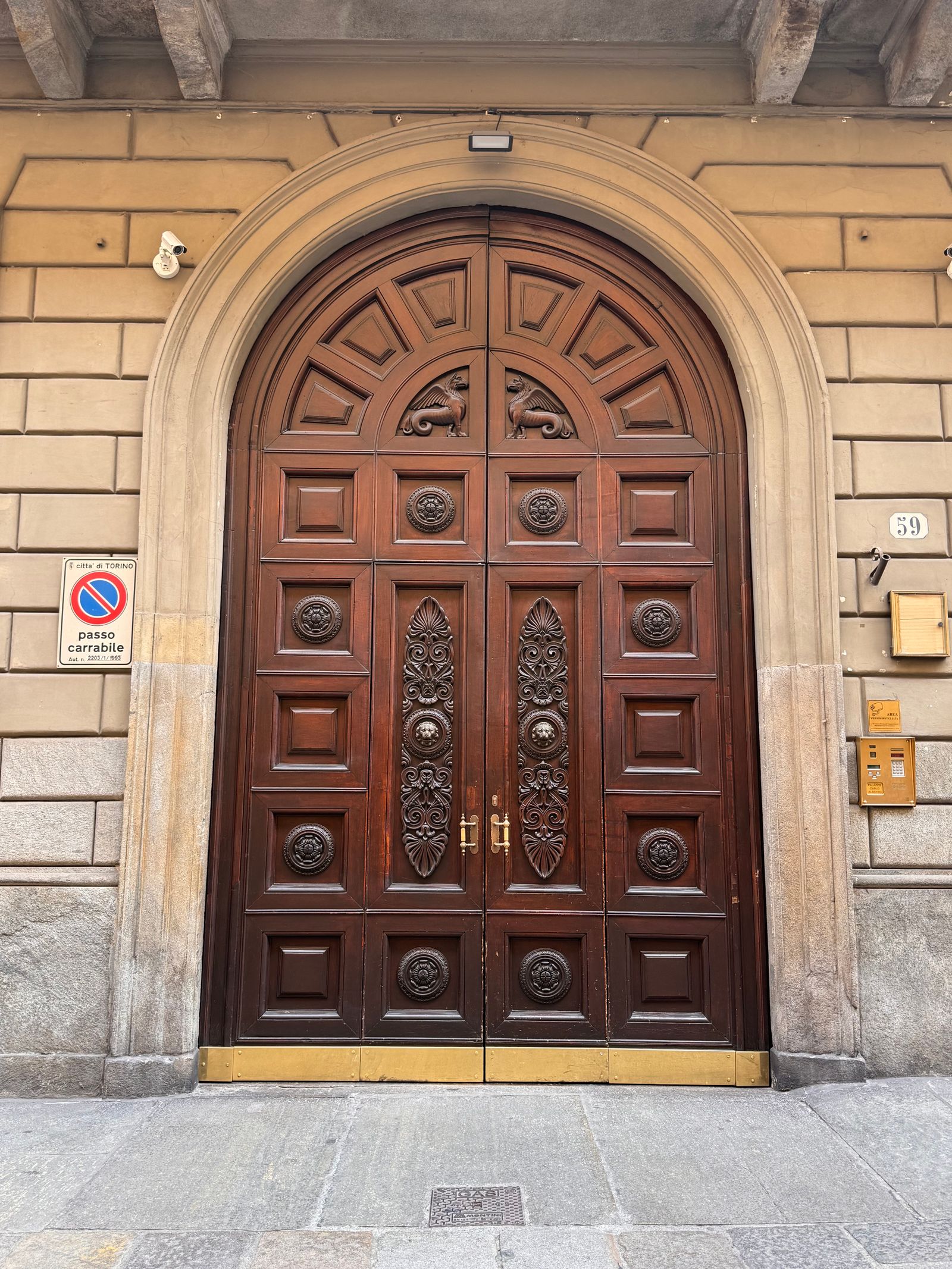
- Citofono: intercom. Usually the panel beside the main building entrance.
- Campanello: doorbell or buzzer.
- Suonare: ring.
- Portone: the main entrance door or gate of the building.
- Apriporta: door-release button or mechanism.
- Scala A, B, C: staircase or building section A, B, C.
- Piano terra: ground floor.
- Primo piano: first floor above ground level.
- Interno 7: apartment or unit 7.
- Portineria: the porter’s or concierge’s desk.
- Ascensore: elevator.
The floor numbering catches North American travelers especially often. Piano terra is street level. Primo piano is normally the next level up. If the instructions say terzo piano, do not count the entrance level as floor one.
How to use a typical Italian intercom
1. Make sure you have the correct street number
Look for the numero civico on the wall, doorway, gate, or plaque. In dense historic streets, two entrances can sit only a few metres apart, so do not start pressing buttons until you have confirmed the building number.
Also check for suffixes such as 24A, 24/B, or a host instruction referring to a side entrance. A map pin can land near the property without identifying the correct doorway.
2. Find the citofono
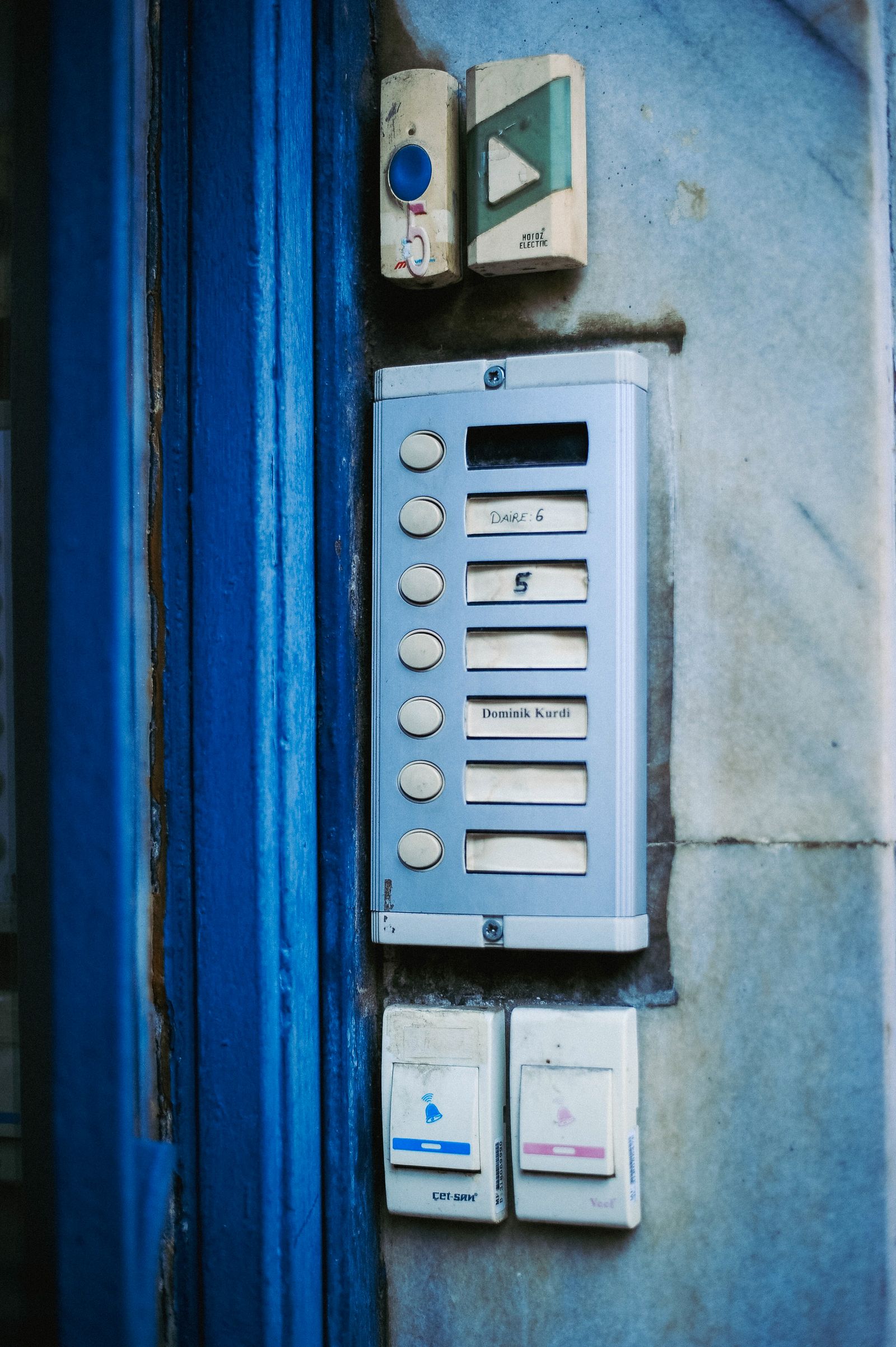
The panel is usually beside the portone. It may be a row of old plastic nameplates, a metal panel containing dozens of buttons, a keypad, or a newer electronic directory.
Do not search only for the commercial name of your accommodation. An apartment advertised as something like “Trevi Terrace Residence” may have no such words outside. The host might instead tell you to ring a surname, an apartment number, or another specific label.
3. Ring exactly what the host told you to ring
Press the relevant button once and give the resident time to answer. On a keypad system, you may have to enter an apartment number and then press a bell symbol.
If someone answers in Italian, you do not need an elaborate speech. Buongiorno, sono [your name], ho una prenotazione means “Hello, I’m [your name], I have a reservation.” If the host is expecting you, your name is usually enough.
4. Listen for the door release
You may hear a buzz, click, or clunk when the lock is released. Open the portone promptly because the release can be brief.
If the door does not move, try both pushing and pulling rather than repeatedly ringing. Heavy older doors sometimes need a firm push while the electric release is active.
5. Do not assume you have reached the apartment yet
Opening the street door may only get you into an entrance hall or courtyard. From there you might still need to:
- cross the courtyard;
- find Scala B;
- open another internal door;
- take an elevator or stairs;
- go to the correct piano;
- find the stated interno;
- use a physical key, keypad, smart lock, or second bell at the apartment door.
This is why “I found number 24” and “I found the apartment” can be two very different achievements.
Why there can be several entrances behind one address
Large Italian residential buildings can contain multiple staircases or separate sections sharing the same street entrance. A courtyard may have Scala A on one side and Scala B around the corner. Larger complexes can contain several palazzine, meaning separate buildings or blocks within the property.
If your instructions specify a staircase, do not simply take the first elevator you see. An elevator in Scala A may have no access to an apartment in Scala C.
The same principle applies to interno. It is not necessarily the number printed on the street-facing intercom. Treat the intercom identifier and the internal apartment number as separate pieces of information unless your host says they are the same.
Old nameplates, missing names, and mystery buzzers
Intercom panels are not always tidy directories. You may encounter handwritten labels, faded surnames, several surnames beside one button, numbers instead of names, or a label that does not resemble anything in your booking confirmation.
The solution is not to guess. Before arrival, ask one precise question: “What exactly is written on the intercom button I should press?”
If the answer is “Rossi,” ring Rossi even though the booking is under another person’s name. If the answer is “interno 12,” use 12. If the host sends a photograph with an arrow pointing to a particular button, save the photograph locally rather than assuming you will have mobile data at the entrance.
Digital intercoms and remote opening links
Some rental apartments use electronic access instead of a traditional resident answering the buzzer. You might receive a web link, app invitation, PIN, virtual key, or instructions combining the physical intercom with remote door opening.
Read the sequence before reaching the building. A system may require you to ring first and then tap an “open building door” control on your phone. Another may use separate controls for the street entrance and apartment.
Take screenshots of instructions that do not contain changing security codes, make sure your phone has enough battery, and confirm whether the link requires mobile data. Do not assume the main entrance code also opens the apartment door.
If you are comparing apartments with hotels and other accommodation types, the practical differences in staffing and self-check-in are covered in our guide to Airbnb, hotels, and agriturismi in Italy.
What to do if nobody answers
Do not work your way down the panel ringing random apartments. First check the obvious failure points:
- Check the civico again. You may be outside the neighboring building.
- Compare the intercom label letter by letter. Similar surnames are common.
- Check your arrival instructions. The host may expect a keypad, remote-opening link, or different entrance.
- Call or message the host. Use the booking platform as well as the emergency contact number if one was provided.
- Send a photo of where you are standing. “I’m outside” is vague. A photograph of the doorway and civic number lets the host immediately spot a wrong entrance.
If you are organizing several apartment stays around the country, save each accommodation’s access details alongside the rest of the route in the Italy on Foot trip planner. Street address, buzzer name, floor, check-in contact, and arrival time are worth keeping together rather than buried in separate message threads.
Late-night arrivals need a better plan
A self-check-in that works at 15:00 may become a serious problem after midnight. A host or property manager may stop answering calls, a portiere may no longer be on duty, or an in-person key handover may operate only during stated hours.
Before a late flight or train arrival, confirm three things: the entry method works at your actual arrival time, you will already have every necessary code or key, and you have a phone number for a person who can solve an access problem.
Do this before boarding your final flight or train, not from the pavement with your suitcase.
Self-check-in arrangements can also be affected by local rules. For example, travelers staying in the city should check the current guidance on Milan rental keyboxes and check-in rather than relying on old instructions mentioning a street-side key safe.
Luggage, strollers, and elevators
Getting through the intercom is only the first part of the arrival. If you have heavy luggage, a stroller, or limited mobility, ask where the elevator starts and where it stops.
“The building has an elevator” does not necessarily mean there is step-free access from the pavement to your apartment. There may be several steps between the street entrance and the lift, or the elevator may stop between floors. Some top-floor apartments require a final flight of stairs.
Ask for the practical version: “Can I get from the street to the apartment without carrying my suitcase up any stairs?”
That question tends to produce a much more useful answer.
Before the host leaves, test how you get back in
One of the easiest mistakes is concentrating on reaching the apartment and forgetting that you will need to repeat part of the process later without the host.
If someone meets you at check-in, identify every key before they leave. One may operate the street portone, another the apartment, and another an internal gate. A small electronic fob may be needed for the main entrance even when the apartment itself uses a conventional key.
Ask how the front door behaves when you leave. Does it lock automatically? Do you need the key to exit? Can you re-enter after midnight? If a building has two consecutive entrance doors, do you need to unlock both?
For more small practical details that tend to matter once you are actually on the ground, the Italy first-timer cheat sheet covers other common arrival and day-to-day surprises.
The arrival message worth saving
Before traveling, you should be able to fill in this sequence without guessing:
Street: Via ______, civico ______
Intercom: ring ______
Main door: opened by ______
Scala: ______
Floor: ______
Interno: ______
Apartment entry: key/code ______
Problem contact: ______
If one of those fields matters for your building and is missing, ask before arrival. A complete set of instructions turns what can look like an intimidating wall of twenty buzzers into a simple sequence: find the right civic number, ring the specified label, enter when the door releases, then follow the staircase, floor, and apartment details to the correct door.