Italy made simple
Walk-first guides, made to be simple when you’re on the ground
hand-picked itineraries
Explore Italy the easy, walkable way
Practical, on-the-ground itineraries built by a tiny, digital-first team spread across Italy. No fluff, just smart routes, timing tips, and what actually works when you’re on foot.
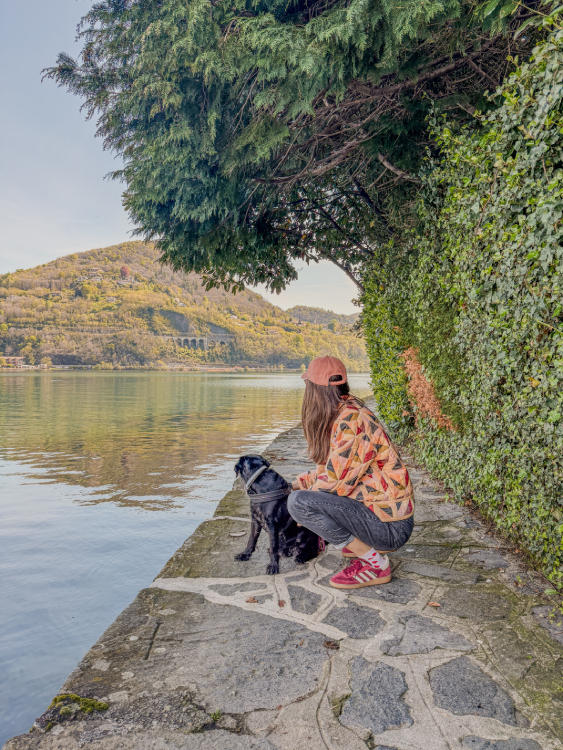
We say “we” on purpose. We’re a digital team living and working across Italy, collaborating remotely while staying rooted on the ground. Our guides are shaped by first-hand experience, a rotating circle of local contributors and friends, and a four-legged scout, Gioia, who reminds us daily that Italy might be the most pet-friendly place on earth.
- Trusted by 70k+ on Instagram
- 10+ years living in Rome
- Mobility-friendly alternates
- Built by locals
About Us
Italy on Foot is led by Maria, who lives in Rome for over 10 years, and shaped by local contributors across the country, so every guide is built from real, on-the-ground experience, not second-hand research.
What we focus on
- Walk-first routes. Clear, simple paths through the must-sees
- Logistics sorted. Tickets, trains, luggage.
- Multi-layer maps. Routes, food, toilets, quiet corners.
- Ready tools. Checklists, tracker, on-trip tips.
- Neighborhood picks. Where to stay by vibe.
Join the walk
70k+ travelers follow our Italy tips
Quick wins, quiet corners, and step-by-step how-tos. New posts weekly.
The first rule of Italian summer is not “see everything.”
It is “find shade before your personality changes.”
I love Italy in summer, but you have to plan like the sun is part of the itinerary. Early mornings are for major sights. Midday is for lunch, churches, museums, naps, or anything with thick walls and air conditioning. Late afternoon is when the city starts being reasonable again.
Do not build a July Rome day like you are immune to heat. You are not. None of us are. 😅
For more personal Italy tips, follow my Substack:
italyonfoot.substack.com
Have you ever had a travel plan completely defeated by the heat?
#italyonfoot #italy #italytrip
How to plan Umbria, Italy without wasting a day
Umbria looks easy on a map. That is exactly how people end up dragging luggage uphill, choosing the wrong base, or trying to reach a countryside winery like it is a train stop. 🚆
Use trains and local transport for towns like Assisi, Spello, Perugia, and Orvieto. But for olive mills, wineries, agriturismi, and countryside villages around Montefalco, Bevagna, and Trevi, plan a car, driver, or organized tour. 🚗
The simple rule: do towns by train, countryside by plan.
#umbria #umbriatravel #visitumbria #italytravel #italytraveltips
Everyone asks for the Italy that feels less crowded, less obvious, and more real. Then they book the same four places.
Le Marche is not a backup plan. It is a proper 5-day Italy road trip with Urbino, the Frasassi Caves, the Riviera del Conero, the Sibillini mountains or Macerata, and Ascoli Piceno.
But you need to plan it correctly. 🚗
This is not the region where you add every hill town, ignore beach access rules, and assume public transport will magically connect everything.
#lemarche #lemarcheitaly #marcheitaly #italyitinerary
The fastest route in Italy is not always the best route.
Sometimes Google Maps sends you through the loudest street, the ugliest traffic, the steepest climb, or the most emotionally unnecessary staircase in the city.
I’ve learned to check the route, then ask: will this actually feel nice to walk?
In Italy, the slower street with shade, cafés, windows, and fewer cars is often the smarter choice. Your feet, mood, and travel partner will thank you.
The best shortcut is the one that does not ruin the afternoon.
For more personal Italy tips, follow my Substack:
italyonfoot.substack.com (link in bio)
Do you follow Google Maps exactly, or do you wander a little?
#italyonfoot #italy #bellaitalia #italygram
Yes, and honestly, Italy is one of the best places to try it. 🇮🇹
Trains make city-hopping simple, cafés are perfect for solo breaks, and walking around alone can feel less lonely than rushing through someone else’s itinerary.
But solo Italy works best when you plan the boring parts first: your arrival, your train tickets, official museum bookings, and where your bag is in crowded places.
#italysolotravel #italytraveltips #solotravelitaly #romeonfoot #italyonfoot
A 4.8 rating in Italy can be useful.
But it does not know whether you are starving, wearing bad shoes, standing uphill, carrying luggage, or about to become a completely different person if you do not eat within 12 minutes.
I use reviews, but I do not worship them. Distance, timing, menu, mood, and location matter too. Sometimes the “perfect” place is not worth a 35-minute detour when there is a perfectly good trattoria nearby.
Travel planning is not only data. It is also human survival. 🍝
For more personal Italy tips, follow my Substack:
italyonfoot.substack.com (link in bio)
Do you trust Google ratings when choosing restaurants in Italy?
#italyonfoot #discoveritaly #italyguide
Rome has plenty of “free” things to do, but not every free stop deserves space in your itinerary.
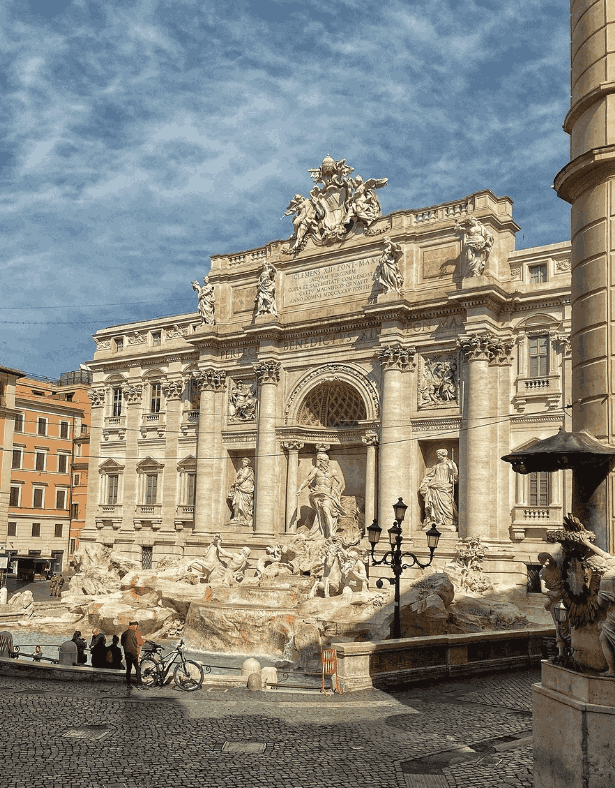
Some famous “free Rome” lists are outdated now. The Pantheon is no longer a simple free-entry stop for most travelers, and Trevi has access rules that can change how you experience it.
So save your energy for the free places that still give you a real Rome payoff:
St. Peter’s Basilica
Caravaggio churches
Appia Antica
Aqueduct Park
San Pietro in Vincoli
Orange Garden
Gianicolo
Ancient Rome from the outside
A few mistakes to avoid:
❌ Calling the Pantheon free without checking current ticket rules
❌ Assuming Trevi is fully free in every access area
❌ Forgetting church hours can change for Mass, holidays, and events
✅ Check before you go
✅ Build your day around free sights that are actually worth the walk
Free Rome done right is not about doing everything. It is about knowing which places still feel unforgettable without another ticket.
#rome #rometravel #romeitaly #visitrome #romeitinerary
Most travelers ask for Italy’s “hidden gems” and then accidentally choose a region that does not fit their trip.
That is how you end up in a beautiful place with no easy train connection, a rental car you did not want, or a beach town that looked simple online but takes half a day to reach.
The smarter question is not: “What is the most underrated region in Italy?”
It is: “Which region matches how I actually travel?”
#italytravel #italytrip #italyitinerary #italytravelguide
A beautiful piazza at noon in July looks romantic in photos and absolutely disrespectful in real life.
This is why summer Italy needs a different rhythm. Do the exposed squares, viewpoints, ruins, and long walks early or later in the day. Save midday for lunch, churches, museums, shaded streets, or doing absolutely nothing without guilt.
Not every hour of the day is good for sightseeing. Some hours are for survival, espresso, and pretending you planned the break all along. 😅
For more personal Italy tips, follow my Substack:
italyonfoot.substack.com (link in bio)
Would you rather visit Italy in summer heat or winter rain?
#summerinitaly #italytravel #italy🇮🇹 #italyonfoot
Make the trip easier
Why it helps
Trip planning gets noisy fast. We focus on the decisions that matter when you’re actually moving through Italy, so you spend less time second‑guessing and more time seeing it.
Italy is more than the big-name cities, from Tuscany’s rolling hills to Venice’s quiet canals and the Amalfi coast, places our team experiences first-hand across the country. Our walk‑first approach bundles nearby sights to avoid backtracking and adds built‑in breaks so your pace feels human.
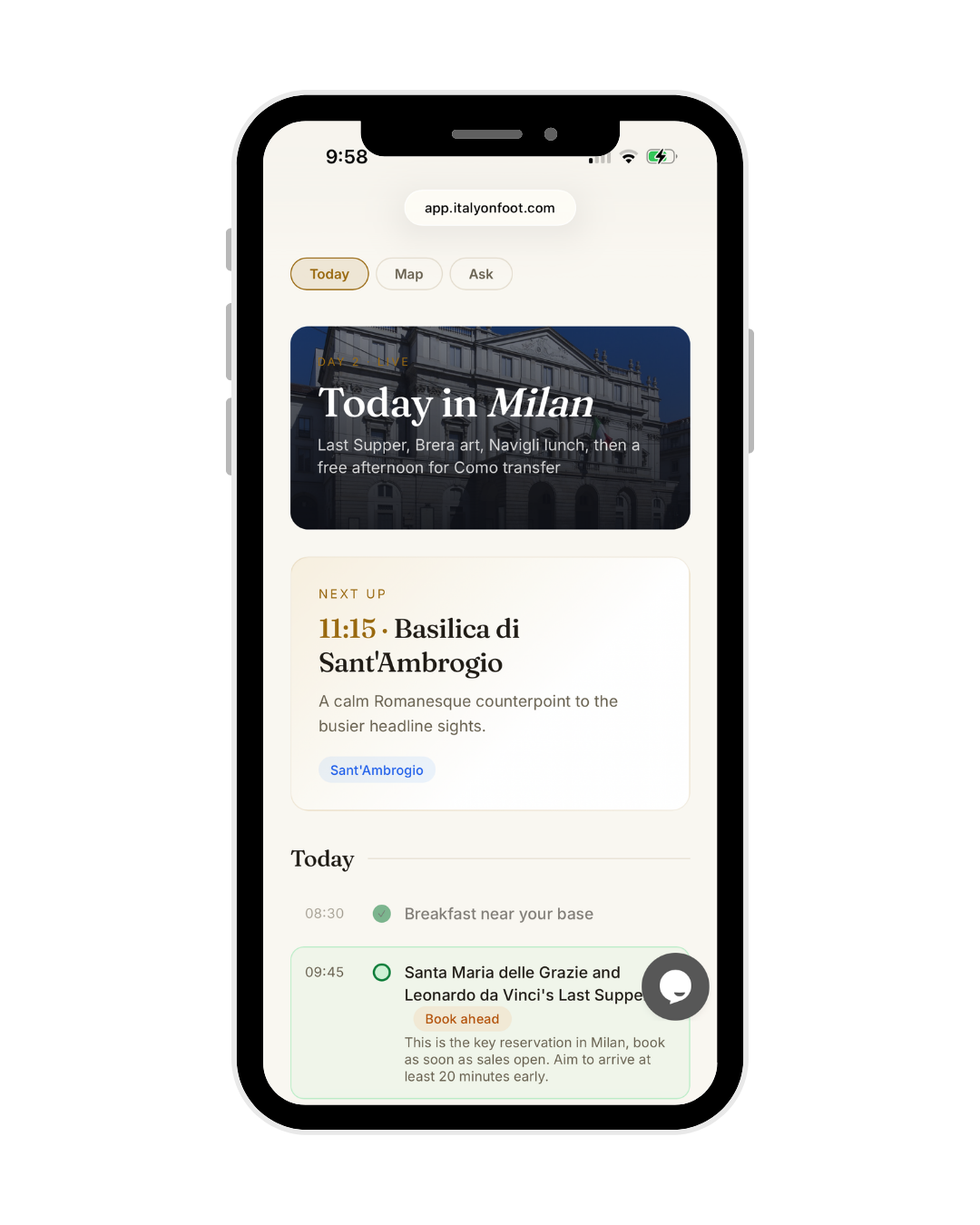
You won’t be juggling a dozen tabs. Each guide gives you one clear route, a pre‑book game plan to dodge “sold out” surprises, and on‑the‑go notes for metro, bus, taxi, and getting back to your hotel. Food and coffee stops sit right on the path, so no doom‑scrolling when you’re hungry.
We also include access notes and dog-friendly tips, based on what actually works in Italian cities and regions today. Gioia keeps us honest about parks, cafés, and transit etiquette, because good trips work for everyone.
We cover: where to stay by neighborhood; how to move around; clear routes; where & how to buy tickets; food & drink along the way; a multi‑layer Google Map you can use on the go.