A restaurant booking in Italy is usually for a specific arrival time, not a loose window. If the confirmation says primo turno or secondo turno, the restaurant is running separate seatings and may need your table back at a fixed time. Arriving late can shorten your meal, and after the restaurant’s stated grace period your table may be released.
For travelers, Italian restaurant reservations become much easier once you treat the booked time as real and read the confirmation for three things: the seating, the late-arrival tolerance, and any no-show or card-guarantee terms. A 15-minute tolerance appears often in booking systems and restaurant policies, but it is not a universal rule for every restaurant in Italy.
What “turno” means on an Italian restaurant booking
Turno means a shift, turn, or seating. In a restaurant reservation system, it usually means the restaurant plans to use the same table for more than one group during lunch or dinner.
- Primo turno: first seating. You arrive earlier and may be required to leave the table by a stated time.
- Secondo turno: second seating. You arrive later and can often keep the table until closing, although the restaurant’s own conditions still apply.
Do not assume that a time range such as 19:15–21:15 means you can arrive at any point during those two hours. It usually means your table is available from 19:15 and must be free by 21:15. Some restaurants instead show several arrival times for the first seating, such as 19:00, 19:15, 19:30, and 19:45, with one common table-release time.
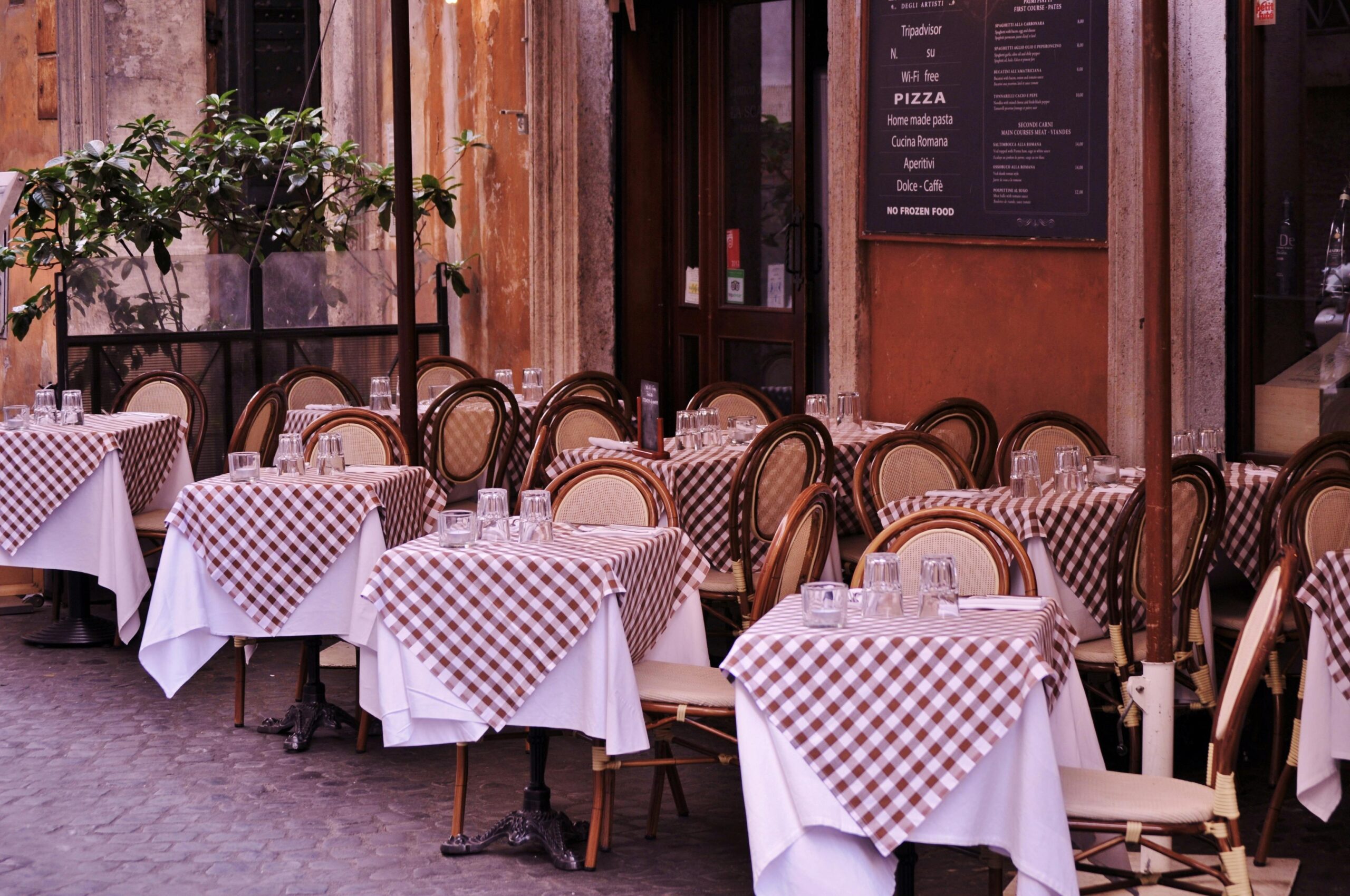
Both systems are used. Some restaurants explicitly state that the first seating must leave before the second begins, while the later seating continues until closing. The details are set by the individual restaurant, so the confirmation matters more than any general dining custom.
How late can you be?
There is no single Italy-wide grace period that guarantees a restaurant will hold your table. What actually happens depends on the restaurant’s booking conditions and, in some cases, the terms of the platform through which you reserved.
Fifteen minutes is a useful warning point because it appears frequently in real booking policies. TheFork’s current terms, for example, say that diners using certain special offers must arrive at the confirmed time and that a restaurant may cancel the offer if the party has not appeared within 15 minutes. Individual restaurants may use the same tolerance, a different one, or no published grace period at all.
A practical traveler rule is:
- A few minutes late: go directly to the restaurant. If you already know you will be delayed, a short call is courteous.
- About 5–15 minutes late: call or message the restaurant as soon as possible and ask them to keep the booking.
- More than 15 minutes late: do not assume the table is still yours. Get explicit confirmation, especially on a busy Friday or Saturday night.
This is a useful rule of thumb, not a legal entitlement. A small restaurant with a waiting list may handle a late booking differently from a large dining room with spare capacity.
Being late does not usually move the end of the first seating
This is the detail that catches visitors most often. If you booked the first seating from 19:30 until 21:30 and arrive at 19:50, the restaurant may still expect the table back at 21:30. Your 20-minute delay does not automatically push the next reservation 20 minutes later.
Some restaurants say this explicitly in their booking conditions. Osteria Trefanti, for example, states that a delay on the first seating does not change the time when the table must be released for the second service. This is why the early seating can be a poor choice if you are coming straight from an airport, a long train journey, a rental-car return, or a museum visit with an uncertain finish time.
Read the confirmation for these Italian words
Reservation emails and booking widgets are often more informative than the restaurant’s main website. Look for these terms before you close the page:
- Prenotazione confermata: reservation confirmed.
- Richiesta di prenotazione: reservation request. This may still need approval.
- Primo turno / secondo turno: first seating / second seating.
- Tolleranza: grace period or tolerance for lateness.
- Ritardo: delay or late arrival.
- Il tavolo verrà liberato: the table will be released.
- La prenotazione verrà annullata: the reservation will be cancelled.
- Carta a garanzia: card used to guarantee the booking.
- Penale: penalty or fee.
- Mancata presentazione / no-show: failure to appear.
- Entro le 21:30: by 21:30.
- Fino a chiusura: until closing.
One especially important distinction is richiesta versus conferma. Filling in a form does not always mean you have a table. Some restaurants manually approve requests and send a second email. Check your inbox and spam folder before assuming the booking is complete.
What to say when you know you will be late
Calling is usually the safest move because the person managing the door can tell you immediately whether the table can still be held. WhatsApp is also common when the restaurant publishes a WhatsApp number, but do not rely on an unanswered message during the dinner rush.
Useful phrases are simple:
- “Buonasera, abbiamo una prenotazione a nome Rossi alle otto. Siamo in ritardo di dieci minuti.” Good evening, we have a reservation under Rossi at eight. We are running ten minutes late.
- “Possiamo mantenere la prenotazione?” Can we keep the reservation?
- “Arriviamo verso le otto e venti.” We will arrive around 8:20.
- “Abbiamo il primo turno. A che ora dobbiamo lasciare il tavolo?” We have the first seating. What time do we need to leave the table?
Give the reservation name, booked time, party size, and realistic arrival time. Saying “five minutes” is not very helpful if you are still three metro stops away.
Choose the first or second seating based on your day
The first seating is useful when you like an earlier dinner, have evening plans afterward, or know you can arrive punctually. It can also be easier with young children who eat early.
The later seating is safer when your evening has uncertainty built into it. Choose it when dinner follows a long-distance train, airport transfer, driving day, sunset tour, performance, or aperitivo that may run long. You may eat later than you are used to, but you remove the pressure of watching the clock while ordering dessert.
For a multi-city trip, leave buffer between transport and a fixed dinner reservation. You can build the rest of your Italy itinerary around realistic transfer times rather than booking a first seating that depends on a train arriving perfectly on schedule.
What if your whole party is not there yet?
Do not assume the restaurant will seat part of the group while everyone else makes their way over. Some places will; others prefer to seat a table only when the party is complete, especially during a tightly timed first seating.
If two people out of six are delayed, tell the host immediately. If the total number of diners has changed, say so before arrival if possible. A table reserved for six is not always physically interchangeable with a table for four, and the restaurant may have arranged the room around the booking list.
Count children accurately when the booking system asks for the total party size. A toddler may not order a full meal, but a high chair or stroller still takes space. If you need a seggiolone (high chair) or space for a passeggino (stroller), add it to the notes rather than hoping the room can absorb it at the door.
A card guarantee is not automatically a charge
Some restaurants ask for card details when you reserve. This may be a carta a garanzia, meaning the card secures the booking and is charged only under the restaurant’s stated cancellation or no-show policy. Other places may take a deposit or prepayment instead.
Read the amount, cancellation deadline, and no-show terms before confirming. If you need to cancel, use the same booking platform or the restaurant’s stated method and keep the cancellation confirmation. Do not simply skip the reservation because your plans changed.
What happens when your table has already been released?
If you arrive and the host says the reservation is gone, arguing about an assumed “15-minute rule” is unlikely to restore a table that has already been given to someone else. Ask what can still work.
- “C’è un tavolo più tardi?” Is there a table later?
- “Possiamo aspettare il secondo turno?” Can we wait for the second seating?
- “C’è posto al banco?” Is there space at the counter?
Sometimes the restaurant can move you to a later slot, seat you at a counter, or call you if a table opens. If not, switch plans quickly rather than losing another half hour. Before choosing the next place, the Italy on Foot guide to spotting Italian restaurant red flags can help you avoid making a rushed choice just because someone is waving a menu at you from the pavement.
Common reservation mistakes that create avoidable trouble
- Treating 20:00 as “around eight.” A booking time is an arrival time, particularly when the restaurant runs two seatings.
- Assuming 15 minutes is guaranteed. It is common, not universal.
- Arriving late to the first seating and expecting extra time. The second group may already have your table booked.
- Mistaking a request for a confirmation. Look for confermata or an explicit confirmation message.
- Ignoring the party size. Tell the restaurant if your group grows or shrinks.
- Missing card-guarantee terms. Check cancellation deadlines before you click confirm.
- Messaging without checking for a reply. If the delay is serious, call.
Once you are seated, the clock is not the only thing to decode
After the reservation problem is solved, dining becomes much simpler if you can read the basic menu structure. The Italy on Foot Italian menu translator explains antipasti, primi, secondi, contorni, price-by-weight wording, and other terms that can change what actually arrives.
At the end of the meal, do not confuse a reservation deposit, coperto, or servizio with a tip. If the bill is the next unfamiliar part of the evening, the Italy on Foot guide to tipping in Italy explains what is optional and what is already part of the charge.
The simplest habit is also the most reliable: arrive at the booked time, warn the restaurant as soon as a delay becomes likely, and treat any stated end time for the first seating as fixed unless the staff tells you otherwise. That turns turno from a confusing booking-screen word into exactly what it is: the restaurant’s timetable for your table.