You normally carry your own suitcase onto the train and store it yourself. There is no airport-style baggage check-in. For luggage on Italian trains, a large checked-size case usually belongs in a floor-level luggage rack near the end of the passenger compartment, in a designated luggage area, or, on some trains, in a vestibule storage space. Smaller cases can use overhead racks or space beneath seats.
The important catch is that storage layouts differ considerably between Frecciarossa, Italo, Intercity, and regional services. Do not assume there will be a huge luggage rack beside your assigned seat.
Where a large suitcase goes on each type of train
Frecciarossa
Frecciarossa trains have several types of storage. Trenitalia lists under-seat space, overhead racks called cappelliere, and internal luggage racks. On Frecciarossa 1000 trains, there are also floor-level racks at the ends of passenger saloons.
A full-size rolling suitcase is usually best in one of those floor racks. The overhead shelf is better for cabin-size cases, backpacks, coats, and lighter bags that you can safely lift above shoulder height.
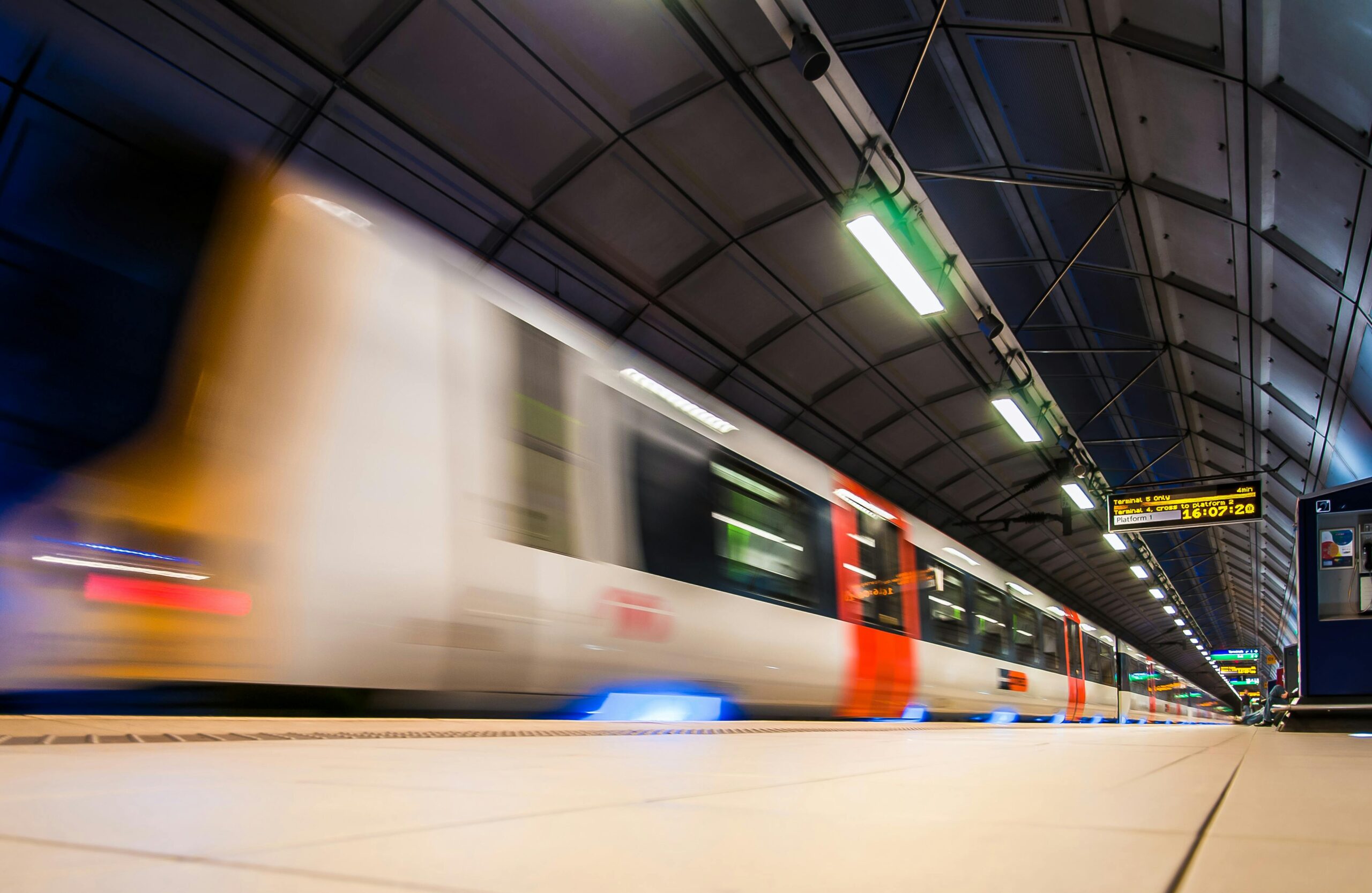
Look for the luggage area as soon as you enter your carrozza, meaning carriage. It may be immediately inside the passenger saloon rather than beside your particular row.
Trenitalia does not impose an airline-style standard suitcase allowance for ordinary baggage. Its current rule is that baggage may be carried free provided it can be placed in the available spaces and does not obstruct passengers, staff, or the carriage. Larger items are allowed where suitable storage is available. You can check the current wording on Trenitalia’s official baggage page.
You may have read that the Frecce now limit passengers to two cases of fixed dimensions. That rule was announced for March 2024, with a limit of 161 cm in total for standard classes, 183 cm for the premium ones and a 50 euro penalty, but Trenitalia suspended it before it took effect after protests from consumer groups, and it has not been applied since. It could return in a revised form, so if your travel is some months away, look at the baggage page again in advance.
Italo
Italo is more specific about both storage and dimensions. Its trains have overhead racks, designated luggage areas at the ends of coaches, and lockers in some equipped carriages. Large cases should go in the designated floor-level racks or appropriate vestibule storage rather than being forced onto an overhead shelf.
There is one rule travelers with very large hard-shell cases should check carefully: in Smart, Italo currently permits baggage up to 75 x 53 x 30 cm. Larger luggage can be accommodated in Prima Business and Club Executive, subject to the available space and the operator’s rules.
Measure an unusually large suitcase before buying a Smart ticket rather than discovering the restriction beside the train. The latest dimensions and permitted items are listed on Italo’s official luggage page.
Intercity
Trenitalia Intercity carriages have dedicated luggage space, including areas suitable for larger cases. These trains can actually be easier with a substantial suitcase than some crowded regional services because the layout is designed for longer journeys.
Still, storage is shared. A rack can fill quickly when a train is busy, particularly during summer weekends and holiday periods. Boarding the correct carriage instead of entering wherever there happens to be an open door makes a noticeable difference.
Regional trains
Regional trains are the least predictable because many generations of rolling stock operate across Italy. Newer Regionale trains have significantly more luggage-rack space than older trains, but the exact layout depends on the train assigned that day.
You may find overhead shelves running above the seats, floor-level racks within the carriage, open multipurpose areas near the doors, or the larger racks distributed through the newer train interiors. On the airport lines, such as the Leonardo Express in Rome and the Malpensa Express in Milan, the trains have extra floor racks because almost everyone is carrying a case.
Do not treat an empty wheelchair, bicycle, or multipurpose area as automatic suitcase storage. Those spaces may be needed by passengers for whom they are specifically provided. If the obvious racks are full, ask the onboard staff where they want a large case placed.
Trenitalia’s regional rules require bags to stay within designated areas without obstructing people, doors, equipment, or railway staff. The operator publishes the current conditions on its regional-train information page.
Check your train tickets and board at the door closest to your seat
The simplest luggage trick happens before you step onto the train.
On Frecciarossa, Italo, and reserved Intercity services, check your ticket for Carrozza, which means carriage, as well as Posto, your seat number. When the train arrives, move along the platform toward that carriage before boarding whenever possible.
Dragging a 23 kg suitcase through four connected carriages is much harder than walking the same distance along a flat platform. Narrow aisles, passengers standing up, automatic internal doors, and other people’s bags make the onboard version considerably less pleasant.
Your useful Italian vocabulary is:
| Italian | Meaning |
|---|---|
| Carrozza | carriage or coach |
| Posto | seat |
| Binario | platform or track number |
| Bagagli | luggage |
| Portabagagli / bagagliera | luggage rack or luggage area |
| Cappelliera | overhead shelf |
| Vestibolo | vestibule, the area around carriage entrances |
| Deposito bagagli | left-luggage office in a station |
If you are still getting comfortable with Italian rail terminology, the Italy by train beginner’s guide covers the wider booking and boarding process.
What to do when the luggage rack is already full
First, do not solve the problem by leaving your suitcase in the aisle or directly beside an exterior door. Bags must not interfere with passengers, staff, emergency routes, or doors.
Instead:
- Check both ends of your passenger compartment for another designated rack.
- Put smaller bags overhead so the scarce floor-level spaces remain available for cases that cannot safely go above the seats.
- If your suitcase fits fully beneath your seat without sticking into the aisle, use that space.
- Ask the personale di bordo or capotreno where to put the case if the proper areas are full.
On a reserved high-speed train, avoid wandering several carriages away and abandoning your suitcase wherever you find a gap. You will have less control over it, and retrieving it when your stop arrives can become awkward if passengers are boarding in the opposite direction.
Do large bags fit in the overhead racks?
Sometimes, but a standard checked-airline suitcase should not be assumed to fit.
Overhead shelves on Italian trains are open racks rather than deep airline bins. Cabin bags, backpacks, soft duffels, and compact cases are much better candidates. A large rigid spinner can be too tall, too wide, or simply too heavy to lift safely.
If you need both hands and a heroic facial expression to raise the suitcase over your head, use the floor-level luggage area instead.
It is also worth packing with the railway part of the trip in mind. A case you can lift onto a train, carry down station stairs, and maneuver across old paving will generally serve you better than the largest case your airline allows. The Italy packing guide goes into that trade-off in more detail.
Keep valuables separate from the big suitcase
Your suitcase may be several rows away or sitting in a rack at the end of the carriage. Keep passports, wallets, medication, phones, cameras, keys, and other hard-to-replace items in a small personal bag that stays with you at your seat.
Trenitalia explicitly states that passengers remain responsible for the custody of their baggage. A visible name tag or contact tag also makes an ordinary suitcase mix-up less likely.
Avoid attaching the suitcase to fixed train equipment with a lock or cable. You need to be able to move it quickly if staff ask you to relocate it or if you reach your stop sooner than expected.
Get ready before your station, not after the train stops
If your large case is in a rack away from your seat, retrieve it shortly before arrival once the train is approaching your destination and it is safe to do so. Do not wait until the doors open to begin searching through a pile of similar black suitcases.
This matters most at intermediate stops, where boarding passengers may immediately occupy the doorway and vestibule. Follow the onboard screens and announcements, then move toward the correct exit with enough time to handle your bag without blocking everyone behind you.
For a trip involving several rail changes, it also helps to organize the rest of your Italy route around realistic transfers rather than treating every connection as if you were carrying nothing.
Strollers and family gear
Trenitalia permits items such as folding strollers and prams without a separate baggage fee when they can be stored appropriately and do not cause an obstruction. Italo also permits strollers when folded and placed in the designated areas.
Fold the stroller before trying to fit it into a busy luggage area whenever practical. Keep the child’s essentials in a smaller bag at the seat so you do not have to repeatedly open the large suitcase during the journey.
If you have a stroller, two large cases, and children to supervise, getting to the platform early enough to locate the correct carriage is more useful than racing for the first open train door.
Very heavy cases change the station experience too
The train itself is only half the problem. Italian stations range from huge hubs with escalators and lifts to smaller stations where reaching another platform may mean an underpass and stairs.
Pack on the assumption that at some point you may have to lift your own suitcase. If you cannot comfortably manage it, consider reducing the load or checking whether a station assistance or luggage service suits your trip before departure.
Trenitalia also lists paid luggage-handling and luggage-shipping services for travelers who would rather not move very heavy bags through major stations. Availability is limited by location, so check the operator’s current services rather than assuming a porter will be waiting on the platform.
Left luggage at stations, and why to book it in advance
If you have hours to fill between checkout and your train, you do not have to drag the case around town. The main stations, including Roma Termini, Milano Centrale, Firenze Santa Maria Novella, Venezia Santa Lucia, Napoli Centrale and Bologna Centrale, have a staffed deposito bagagli, run under the KiPoint name, where a case costs a few euros for the first hours and a little more for each hour after that. Queues at Termini and in Florence can run to half an hour in summer, at drop-off and again at collection, so allow for that before a departure. The alternative is a luggage-storage network such as Radical Storage or Bounce, which uses shops and hotels near the station and is reserved and paid online in advance, with a fixed daily price per item.
Hotels will almost always keep bags for their own guests on the day of arrival and the day of departure, free of charge. A hotel where you are not staying is under no obligation to help, and most will decline for insurance reasons, although some do so through those storage apps. Small stations have no left-luggage service at all, so on a day visit to a hill town from Florence or Milan, leave the big case in the city.
Trains in Italy with a big case: the mistakes to avoid
The common errors are easy to list. Packing the largest suitcase the airline allows, then meeting three flights of steps in an underpass with no lift. Booking a ten-minute connection and discovering that the case, the stairs and the walk along the next platform take longer than that. Buying the cheapest Italo Smart fare for a trunk that exceeds its size limit. Waiting on the wrong part of the platform and boarding four carriages from the reserved seat. Leaving passports in the case at the end of the carriage. Standing the case in front of the doors on a regional service and being asked to move it at every stop. And arriving at the station five minutes before departure in Rome or Milan, where the walk from the entrance to the far platforms alone can take ten. Each of these has the same fix: pack a size you can lift, give yourself time, and read the ticket before the train arrives.
The simplest rule for choosing a suitcase
A carry-on-size case is the easiest option on almost every train. A normal checked-size suitcase is manageable when you can lift and maneuver it yourself and place it in the designated large-bag area. Oversized cases deserve more caution, particularly on Italo Smart because of its stated dimension limit and on crowded regional services where storage can be limited.
Whatever you bring, your bag needs to end up completely out of the aisle, clear of the doors, and in a space intended or accepted for baggage. If you cannot find such a space, ask the train crew rather than improvising one.
Frequently asked questions
Does Trenitalia allow luggage?
Yes, free of charge and without a set number of pieces. The condition is that everything fits in the racks, shelves and spaces provided and does not block aisles or doors. A stricter two-case rule for the Frecce announced in 2024 was suspended and is not applied.
Is there a size limit for carry-on luggage on Italian trains?
Not on Trenitalia. On Italo the Smart class sets a maximum of 75 x 53 x 30 cm per item, and anything that goes on the overhead shelf has to be small and light enough to lift safely. A cabin-size case fits everywhere.
How do I get heavy luggage on and off the train?
You lift it yourself: there are two or three steps at most doors and no porters on the platform. Board at the door nearest your seat, put the case in the floor rack by the entrance, and move it back to the door a few minutes before your stop.
Can I store luggage at the train station?
At the big stations, yes, in the staffed left-luggage office, paid by the hour. Smaller stations have nothing, so use a storage app or leave the case with your hotel.
Will a hotel hold my luggage if I am not staying there?
Usually not. Hotels keep bags for their own guests before check-in and after checkout, but for anyone else it is at their discretion. Use the station deposit or a reserved storage point instead.
What are common tourist mistakes to avoid in Italy with luggage?
Bringing a case too heavy to carry up stairs, planning very short connections, blocking the doors on regional services, and leaving valuables in a case stored out of sight.
How can I travel in Italy by train?
Book high-speed and Intercity tickets online with Trenitalia or Italo for a named train and seat, buy regional tickets on the day, and carry your own bags on board. Our guide to train travel in Italy covers the ticket types and stations step by step.