Florence’s churches do not share one visitor timetable. The main trap is lunchtime: Santa Trinita closes from noon to 16:00, Santo Spirito has a 13:00 to 15:00 break, and San Miniato al Monte also shuts for part of the afternoon, while Santa Croce and San Lorenzo generally stay open continuously during their visitor hours. For Florence church opening hours, put churches with split schedules before lunch or after they reopen, then use the gap for museums, lunch, or a continuously open complex.
Sundays need a separate plan. The cathedral is closed to tourist visits, Santa Maria Novella does not begin sightseeing admission until 13:00, Santa Croce opens at 14:00, and San Miniato al Monte normally opens only in the afternoon. A church being open for Mass does not necessarily mean its sightseeing route is open.
Current visitor hours at the main Florence churches
These are the published 2026 visitor schedules. Liturgies, major feast days, restoration work, and special events can override normal hours, so use the linked official page for a final check close to your visit.
| Church | Usual visitor hours | The planning catch |
|---|---|---|
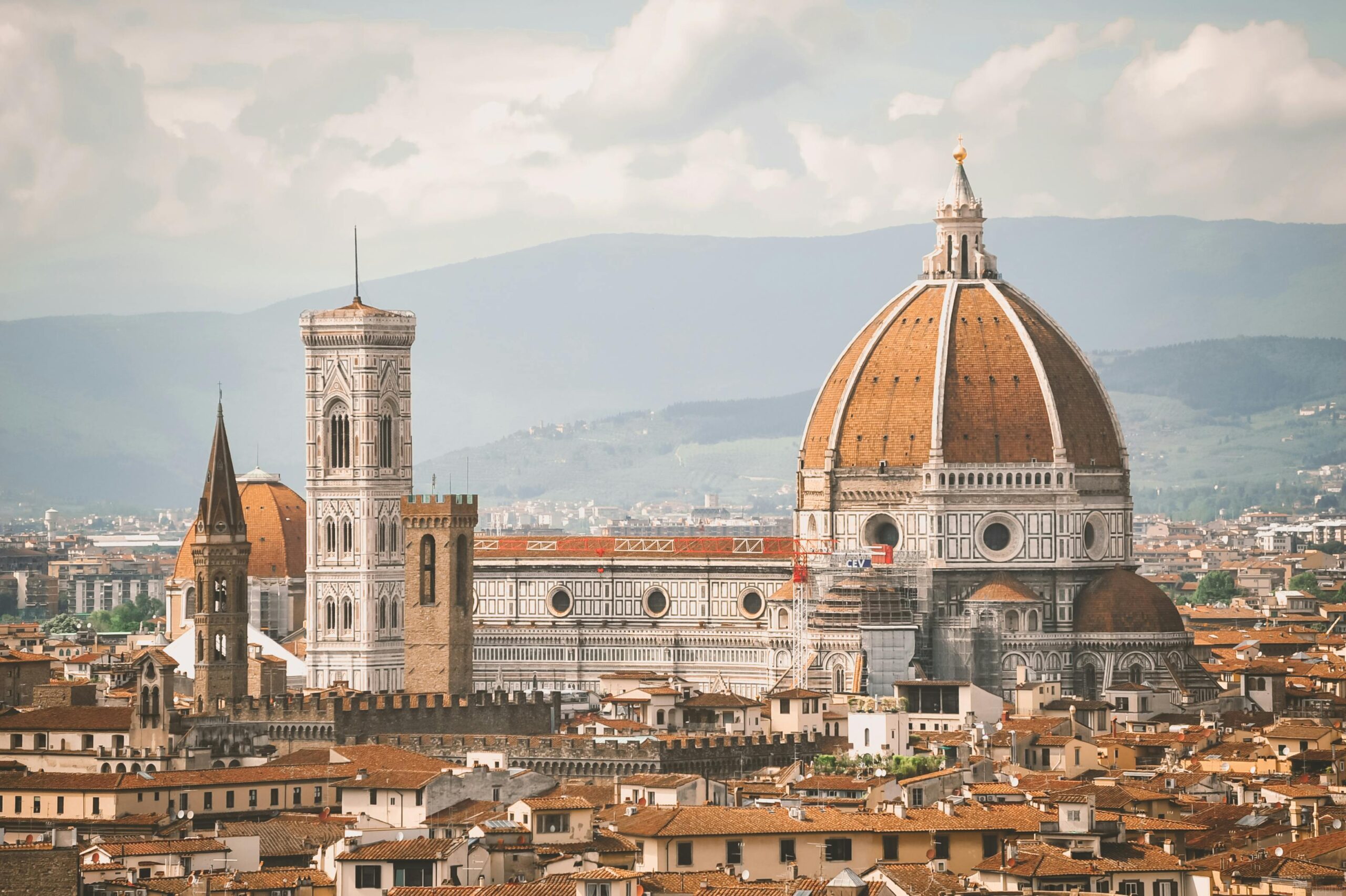
| Cathedral of Santa Maria del Fiore | Monday to Saturday 10:15-15:45. Closed to tourist visits on Sundays and religious holidays. Check the official Duomo timetable. | There is no evening catch-up window. Arriving after 15:45 means coming back another day. |
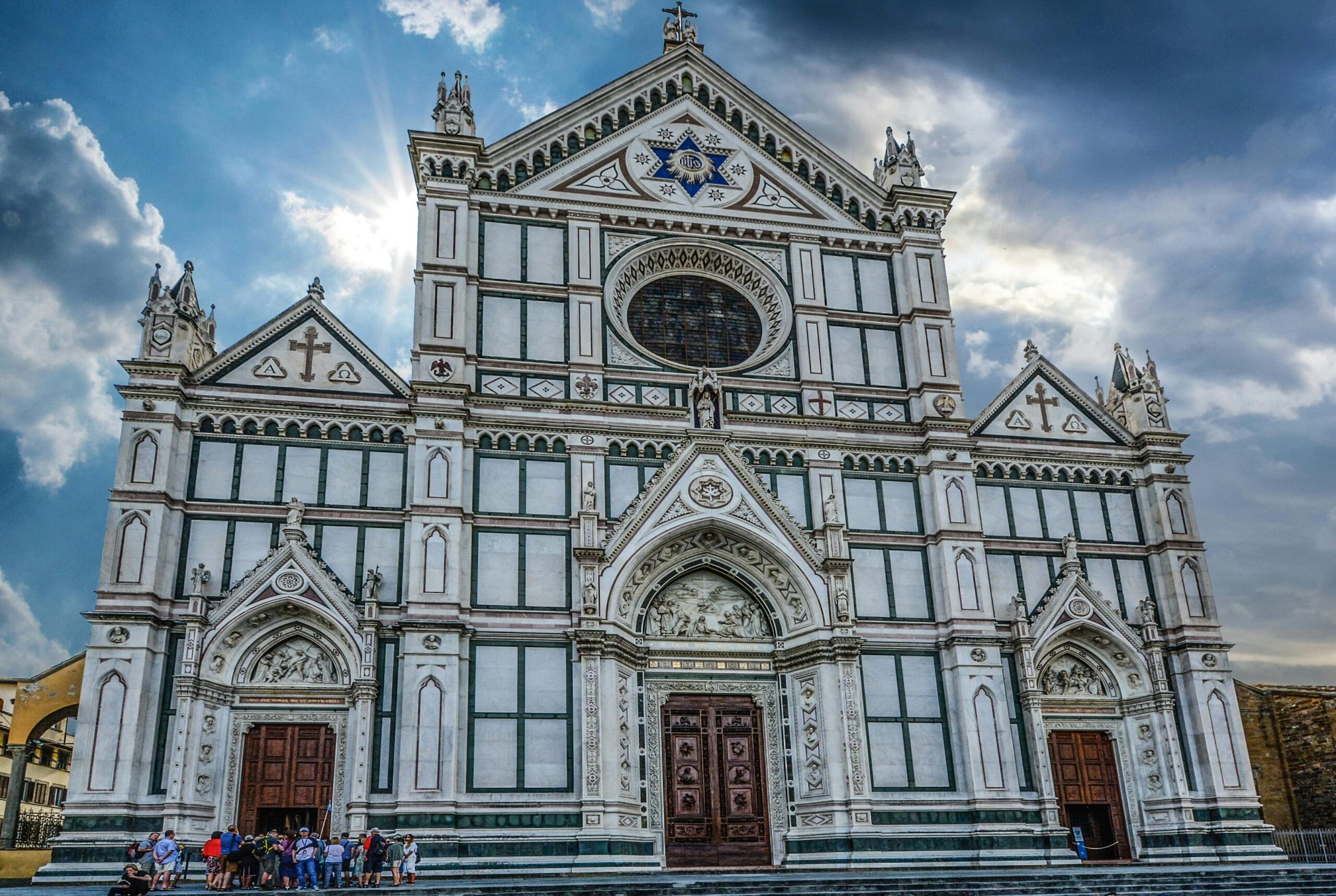
| Santa Croce | Monday to Saturday 9:30-17:30, with last admission at 17:00. Sundays and specified religious holidays 14:00-17:30. See current Santa Croce hours. | No routine lunch closure on weekdays, making this one of the easier major churches to place around midday. |
| Santa Maria Novella | Monday to Thursday 9:00-17:30; Friday and civil holidays 11:00-17:30; Saturday and eves of religious holidays 9:00-17:00; Sunday and religious holidays 13:00-17:00. Last admission is one hour before closing. Check the official visitor timetable. | The Sunday delay and Friday 11:00 opening are easier to miss than a lunch closure. |
| Santo Spirito | Monday to Saturday 10:00-13:00 and 15:00-18:00, closed Wednesday. Sundays and holidays 11:30-13:30 and 15:00-18:00. Check Santo Spirito visitor information. | The two-hour midday break catches anyone crossing into Oltrarno for an early-afternoon church visit. |
| San Lorenzo | Monday to Saturday 10:00-17:30, with last admission at 16:30. Sunday sightseeing is normally closed. Check the Basilica schedule. | The basilica, Medici Chapels, and Laurentian Library are separate visitor sites. Do not transfer one opening schedule to all three. |
| Santa Trinita | Monday to Saturday 8:00-12:00 and 16:00-18:15; Sunday 8:15-10:45 and 16:00-18:15. See the City of Florence listing. | This is the classic Florence lunch-break trap: four hours with the doors closed in the middle of a walking day. |
| San Miniato al Monte | Monday to Saturday 9:30-13:00 and 15:00-18:00; Sunday 15:00-17:30. Check the current city listing. | Do not make the uphill trip immediately after lunch without checking the clock. |
The midday rule that saves most walking plans
Treat noon to 16:00 as a danger zone for active churches rather than assuming Florence works like a museum district. The large ticketed complexes often have continuous daytime admission, while smaller working churches are more likely to close after the morning and reopen later.
A simple decision rule works well:
- Before noon: prioritize churches showing two separate time ranges, such as Santa Trinita.
- Around 13:00-15:00: use a continuously open attraction, have lunch, or visit a museum instead of walking to another church on hope alone.
- After 15:00 or 16:00: the split-schedule churches begin reopening, but check their final closing time before setting off.
This matters especially in Oltrarno. Santo Spirito closes at 13:00 and San Miniato al Monte at 13:00 on Monday through Saturday, then both reopen at 15:00. An attractive-looking sequence on a map can therefore produce two locked doors in succession.
The Duomo is not one opening time or one entrance
The cathedral nave, Brunelleschi’s Dome, Giotto’s Bell Tower, the Baptistery, Santa Reparata, and the Opera del Duomo Museum all operate differently. Do not read the hours for one and assume they cover the rest of Piazza del Duomo.
For the free cathedral nave, ordinary tourist admission is Monday through Saturday from 10:15 to 15:45. Visitors without a monument ticket normally use the entrance on the cathedral façade. Pass holders entering through Santa Reparata use the Porta del Campanile on the south side. The Dome has another entrance, the Porta della Mandorla on the north side, and requires a timed booking.
This is why standing in the longest line you see in Piazza del Duomo is not a reliable strategy. First identify what you are actually visiting. Our Florence Duomo monuments guide explains how the different pieces of the complex fit together.
Santa Croce: go to Largo Bargellini, not automatically to the façade
The visitor entrance and ticket office for the monumental complex are on the north side of the basilica in Largo Bargellini. This is an important little piece of wayfinding because the grand façade faces Piazza Santa Croce and naturally attracts first-time visitors toward the wrong door.
Worship access is handled differently. Santa Croce directs people attending the 18:00 Mass through the side entrance in Largo Bargellini, while the Sunday and holiday 11:00 Mass uses a door on the façade. Entry for prayer and worship is free, but that does not turn a worship entrance into free access to the full museum route.
Sunday mornings are for worship, not a normal church crawl
Sunday is when weekday-based itineraries fail fastest. Several major churches deliberately hold back tourist admission while services take place.
- The Florence cathedral is closed to ordinary tourist visits on Sundays and religious holidays.
- Santa Maria Novella’s sightseeing complex opens at 13:00 on Sundays and religious holidays.
- Santa Croce normally begins tourist admission at 14:00 on Sundays.
- San Lorenzo is normally closed to sightseeing on Sunday.
- San Miniato al Monte normally opens to visitors at 15:00 on Sunday.
If you enter a church to attend Mass or pray, treat it as exactly that. Do not use a service as a workaround for sightseeing restrictions, wander into closed chapels, or start photographing the interior during the liturgy.
Know the Italian words on the door
A handwritten notice can be more useful than an old opening-hours page. These are the terms worth recognizing:
- Orario di apertura: opening hours.
- Chiuso: closed.
- Riapertura or riapre alle: reopening or “reopens at”.
- Ultimo ingresso: last admission. This can be well before the building closes.
- Feriali: weekdays or non-holiday days in this context.
- Festivi: Sundays and/or holidays, depending on the schedule.
- Prefestivi: the day before a religious holiday, often Saturday-like hours.
- Solo per il culto or solo per la preghiera: open only for worship or prayer.
- Celebrazione in corso: a religious service is in progress.
Pay particular attention to ultimo ingresso. Reaching a church at 17:10 because Google says it closes at 17:30 can still leave you outside if its final admission was 17:00.
Luggage can create a second timing problem
If your church day is also an arrival or departure day, do not assume every church will admit you with a suitcase or large backpack.
For paid Duomo monuments, medium and large suitcases, backpacks, and bags must be left at the official luggage storage at Piazza del Duomo 38/R before entry. The storage service is included with monument passes. Allow for that extra stop before a timed Dome, Bell Tower, or Santa Reparata entry rather than arriving at the monument door with your bag at the booked time.
Santa Croce has a left-luggage facility in Largo Bargellini before the basilica entrance, which is useful if you are visiting near hotel checkout time.
For smaller churches, facilities are much less predictable. With a rolling suitcase, the safer choice is to leave luggage at your accommodation or a proper storage facility instead of building a day around the hope that a sacristan will make an exception.
Dress rules still apply when admission is free
Free entry does not mean casual beachwear is acceptable. The Duomo explicitly requires clothing appropriate to a place of worship and refuses entry with bare shoulders or inadequately covered legs. Santa Croce also asks visitors to dress respectfully and provides coverings at its ticket office when necessary.
Rules and enforcement differ from church to church, so there is no useful citywide formula involving an exact number of centimetres of exposed knee. A light shirt, scarf, or other easy cover-up is much more practical than arguing about what another church allowed earlier in the day.
What to do when the church is locked
A closed door at 13:20 does not automatically mean the information you found was wrong. First look for a posted timetable near the entrance. If it shows two time ranges, you have found the midday break. If it says chiuso mercoledì, chiuso domenica, or similar, waiting for an afternoon reopening will not help.
If the church should be open according to the ordinary schedule, check for a notice mentioning a celebrazione, funzione religiosa, funeral, wedding, restoration, or apertura straordinaria. Active churches can temporarily interrupt sightseeing even on an otherwise normal day.
When the reopening is only an hour or two away, change the order of the day rather than waiting on the steps. Florence’s center is compact enough that lunch, a museum, a market, or another indoor sight can usually fill the gap. For a sense of realistic distances between the main districts, see our guide to walking around Florence.
Build the schedule around hard openings, not geography
The tempting way to plan Florence is to draw a neat line between nearby sights. Churches punish that approach because a site five minutes away geographically may be three hours away in practical terms.
Start with the non-negotiable times: museum reservations, Dome slots, Sunday restrictions, weekly closure days, and churches with a long midday break. Then fit the continuously open places into the remaining spaces. If you are coordinating several timed attractions, you can use the Italy on Foot trip planner to organize the day around those hard windows rather than simply following the nearest pin on the map.
Finally, recheck the most important church on the official site the evening before or morning of your visit, especially around Easter, Christmas, the Assumption on 15 August, local feast days, or major liturgical events. In Florence, a ten-second timetable check can save a forty-minute detour followed by a very beautiful, very firmly locked door.