Do not choose an Italian rubbish bin by color alone. Check the words or symbols printed on it, then follow the waste operator’s instructions for the exact municipality, and sometimes the exact street address. Italy has a standardized color scheme, but older containers are still in use and local systems can combine materials differently.
For travelers, garbage sorting in Italy is easiest when you identify three things as soon as you arrive: where the property’s bins are, what each local waste category contains, and whether rubbish can be deposited at any time or only put outside on scheduled collection days.
The bin colors you are most likely to see
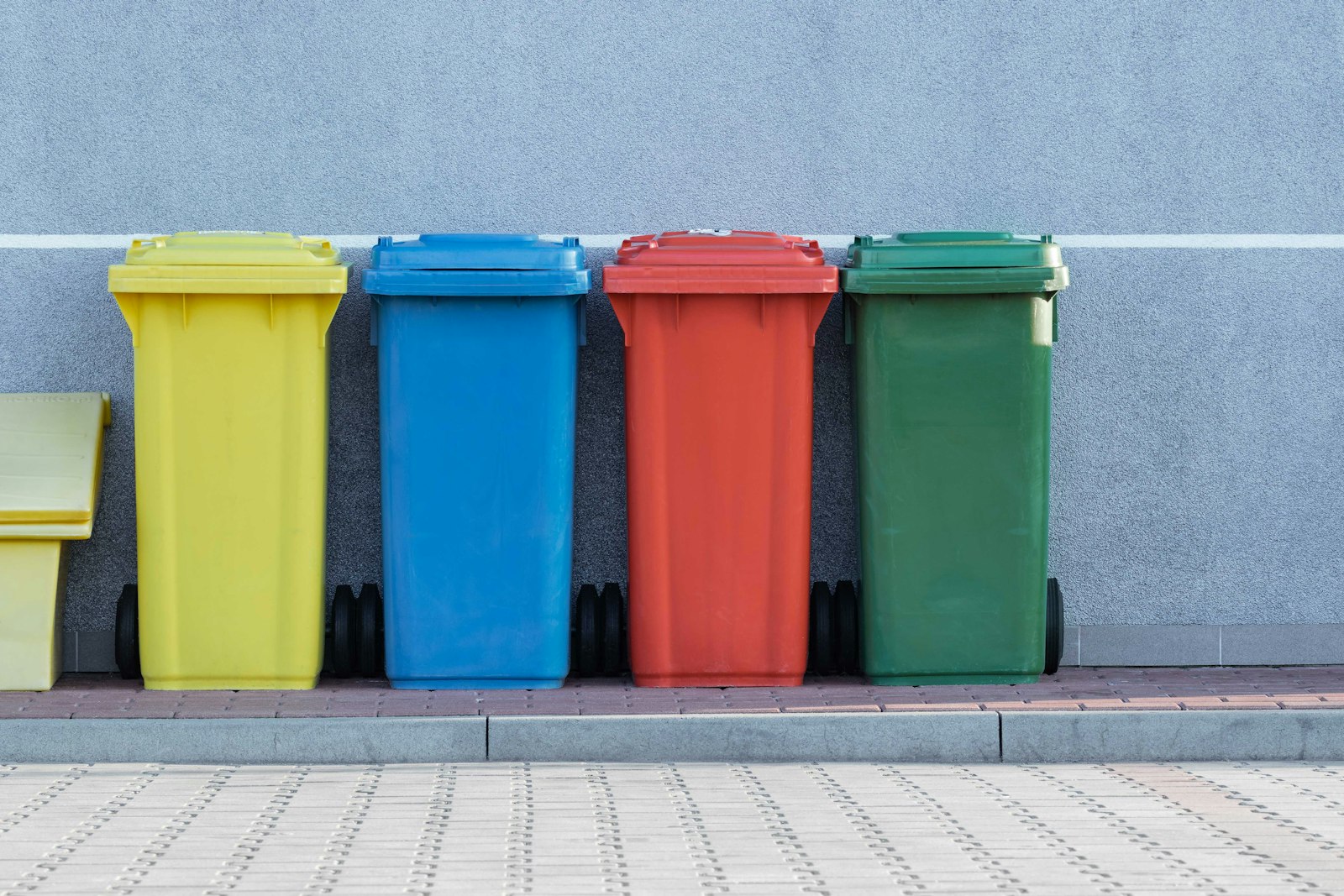
The UNI 11686 color system increasingly used by Italian waste operators assigns the following colors:
- Blue, blu: paper and cardboard, carta e cartone.
- Yellow, giallo: plastic, often collected together with metal packaging.
- Green, verde: glass, vetro.
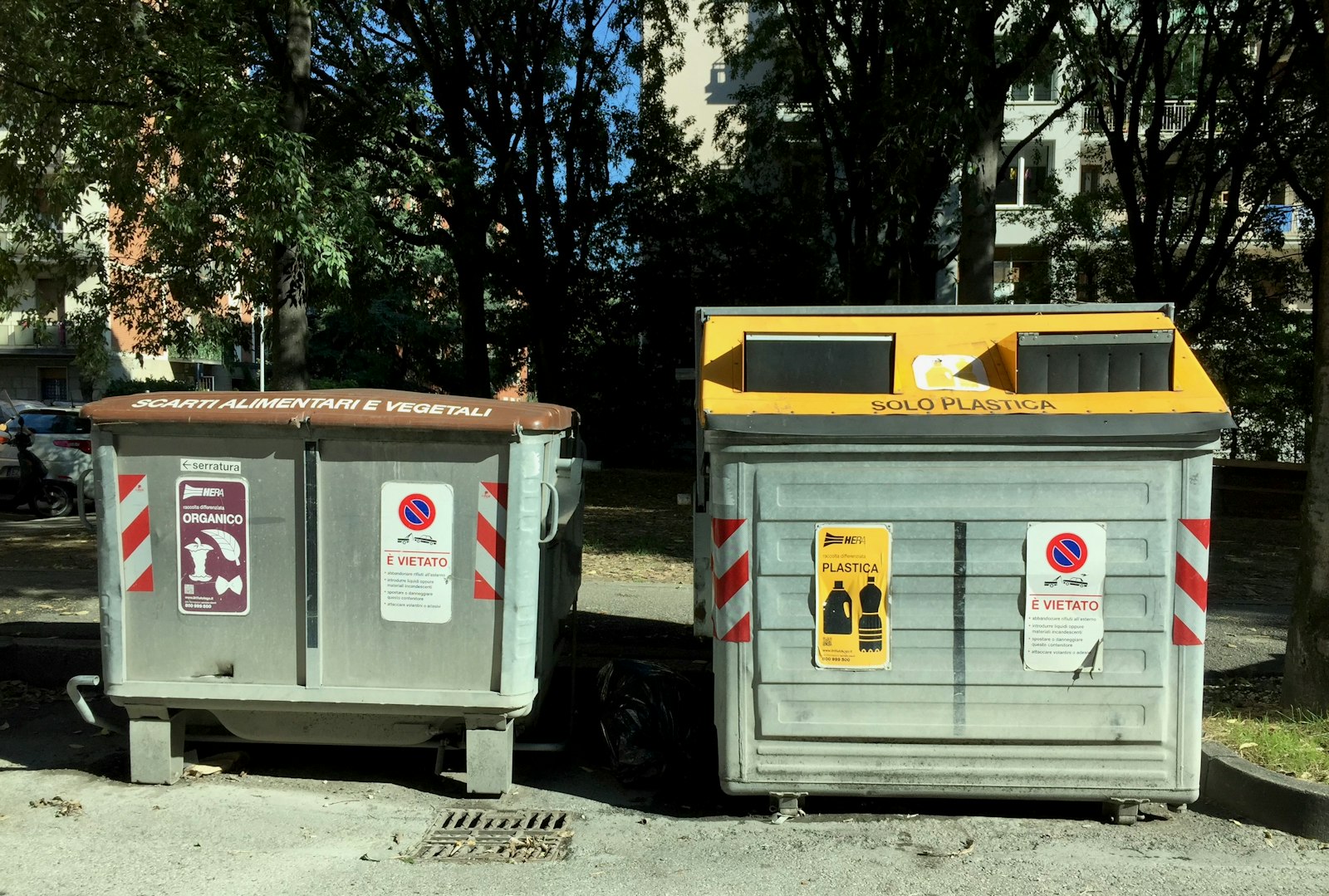
- Brown, marrone: food and organic waste, organico or umido.
- Gray, grigio: non-recyclable residual waste, usually called indifferenziato, rifiuto residuo, or secco residuo.
- Turquoise or light blue: metals when they are collected separately.
That is a useful starting point, not permission to ignore the label. Municipalities often collect several materials together. You might see plastica e metallo, meaning plastic and metal, or abbreviations such as VPL for vetro, plastica e lattine, meaning glass, plastic and cans.
There are also legacy containers. Milan illustrates the problem neatly: AMSA says its newer paper containers use blue lids, replacing the older white identification for paper. A traveler can therefore encounter equipment that does not look quite like the latest color chart.
The printed waste category beats the color. If a blue lid says CARTA, it is for paper. If an older local container uses another color but says PLASTICA, follow the word.
Italian waste words worth recognizing
Most labels are easy once you know the small vocabulary used by municipalities and apartment buildings:
- Raccolta differenziata: separate recycling collection.
- Carta e cartone: paper and cardboard.
- Plastica: plastic.
- Metalli: metals.
- Lattine: cans.
- Vetro: glass.
- Organico / umido: food and compostable organic waste.
- Indifferenziato: unsorted non-recyclable waste.
- Rifiuto residuo / secco residuo: residual non-recyclable waste.
- Imballaggi: packaging.
- Cassonetto: large bin or dumpster.
- Bidone: bin.
- Campana: large bell-shaped street container, commonly used for glass.
- Porta a porta: door-to-door collection.
- Esposizione: putting bags or bins out for collection.
- Ritiro: collection or pickup.
- Calendario / ecocalendario: collection calendar.
- Ecocentro / centro di raccolta: municipal recycling or waste collection center.
How to sort the everyday rubbish from a holiday apartment
Paper and cardboard
Newspapers, ordinary paper, clean cardboard boxes and most paper packaging normally go with carta e cartone. Flatten boxes rather than filling the bin with one enormous shoebox.
Receipts, baking paper and heavily contaminated paper can be treated differently from ordinary paper. Pizza boxes are a common source of confusion: remove leftover food and check the local operator’s rule for greasy or badly soiled sections rather than assuming the entire box belongs in paper.
Plastic and metal packaging
Many cities collect plastic packaging and metal together. Bottles, food tubs, cans, aluminium trays and similar packaging may therefore share a container marked plastica e metallo.
Do not assume that every object made from plastic belongs there. Toys, toothbrushes, razors and other durable plastic objects are frequently excluded from packaging collection. Waste operators commonly provide a searchable Dove lo butto?, literally “Where do I throw it?”, for uncertain objects.
Glass
Vetro generally means glass bottles and jars, not everything made of glass. Drinking glasses, mirrors, ceramics, Pyrex-type cookware and light bulbs usually belong elsewhere.
Some towns collect glass alone. Others combine it with cans or other packaging. A green street campana marked VETRO is a strong clue that bottles and jars go there without a rubbish bag.
Food waste
The brown organico or umido container is normally for food scraps such as fruit peel, coffee grounds and leftovers. Bag requirements matter. Waste operators may require certified compostable bags, so do not assume an ordinary plastic bag or something merely advertised as “biodegradable” is acceptable.
Rome, for example, currently specifies compostable bags for its brown organic containers. The city’s current categories and colors can be checked on the official AMA collection page.
Residual rubbish
Indifferenziato, rifiuto residuo and secco residuo all point toward the non-recyclable fraction. It is not a catch-all for anything you cannot immediately identify. If an object could be hazardous, electronic, bulky or recyclable through a dedicated system, check before putting it here.
Packaging labels help, but the local rule still wins
Italian consumer packaging now commonly carries environmental disposal information. Look for phrases such as Raccolta carta, Raccolta plastica or material codes including PAP, PET and ALU.
These labels are especially useful when a package is made from several pieces. A cardboard sleeve and plastic tray may need to be separated before disposal.
CONAI, Italy’s packaging consortium, specifically warns that collection methods can vary between municipalities. Its environmental-labeling explanation is useful for decoding packaging, but once you know the material, follow the rules of the town where you are actually staying.
Your apartment may not use public street bins at all
Before walking outside with four bags in your hands, check the building.
An apartment may have communal condominium bins in a courtyard, basement, garage or bin room. Another property may use individual containers that are kept inside until collection day. Some municipalities have locked street containers opened with a card, electronic key or other access device.
Ask the host or property manager:
- Where are the building’s rubbish bins?
- Which categories do I need to separate?
- Do I put rubbish directly into communal bins or leave containers outside on collection day?
- Is a key or card required to open anything?
- What should I do with rubbish if I check out before the next collection?
That last question matters during a short stay. A Friday departure does not automatically give you permission to leave a Monday collection bag beside the front door.
How to read an Italian collection calendar
With raccolta porta a porta, each waste category is collected according to a schedule. The calendar might look something like:
- LUN: organico
- MAR: carta
- MER: organico + residuo
- GIO: plastica/metalli
The important part is not just the weekday. Look for the orario di esposizione, the period during which the bin or bag may be put outside.
This varies substantially. One municipality may require containers outside the evening before collection. Another may specify a narrow morning window. In parts of Milan, for example, AMSA instructs residents to expose waste between 7:00 and 8:00 on the collection morning. That is a Milan rule for the specified service area, not a rule to copy elsewhere in Italy.
Do not rely on a generic Google result for “Rome recycling days” or “Tuscany rubbish collection.” Calendars can depend on municipality, neighborhood, street and even civic number. Some operators also divide a street into different service sections.
If you are moving through several rental apartments, save each host’s rubbish instructions alongside check-in details and departure times when you organize the rest of your Italy trip. It prevents the particularly unglamorous final-night hunt for a municipal waste calendar.
What happens on Sundays and public holidays
Never assume that a Monday-to-Saturday schedule operates unchanged on an Italian public holiday. Depending on the operator, a collection can be cancelled, moved or replaced by a special holiday timetable.
Look on the current ecocalendario for notes such as festivi esclusi, meaning holidays excluded, or an alternative collection date. If the apartment has a printed calendar pinned near the bins, check its year before trusting it.
Venice historic center works differently
Venice is a good example of why nationwide assumptions fail. In the historic center, Giudecca, Murano and Burano, Veritas operates a collection system adapted to streets without ordinary garbage trucks.
Under the current Veritas instructions for Venice, residents can take the day’s waste to designated collection points between 6:30 and 8:00, or wait from 8:00 for the waste collector to ring the building bell. Paper and cardboard are collected on Monday, Wednesday and Friday, while glass, plastic and cans are collected on Tuesday, Thursday and Saturday. Residual rubbish is collected Monday through Saturday. Weekday public holidays are excluded.
If you are staying in a Venice apartment, use the host’s directions rather than wandering through a campo looking for the sort of roadside dumpsters you saw in another Italian city.
What to do if you miss the collection
If the collection truck has already passed, do not leave your bag beside a closed bin, doorway or random street container for several days.
- Bring the bag or household bin back inside if possible.
- Check the next date on the current local calendar.
- Ask the host whether the building has another permitted disposal point.
- If something appears wrong with the service, use the waste operator’s website or app rather than improvising.
If you are checking out before the next collection, message the host. Short-term rentals routinely have to deal with this situation, and the property may have a bin room or cleaning procedure that guests cannot see.
Do not leave special waste beside ordinary bins
Batteries, electronics, cooking oil, medicines, paint, large appliances and bulky items can have dedicated collection systems. Terms you may see include pile esauste for used batteries, RAEE for electrical and electronic waste, and ingombranti for bulky waste.
For an unusual item, search the local operator’s Dove lo butto? service. Municipal recycling centers and specialist collection points may have access rules, opening hours or residency requirements, so a tourist should not simply carry an unwanted appliance to the nearest ecocentro and assume it will be accepted.
A quick setup that prevents most mistakes
When you enter an Italian apartment, find the household bins before you start generating rubbish. Photograph any sorting notice if it is hidden in a utility cupboard, and check whether there is a collection calendar beside it.
Then match words before colors: carta, vetro, organico, plastica/metalli and residuo. If the property uses door-to-door collection, note both the day and the permitted exposure time. If anything conflicts with a color chart you remember from another city, follow the local label and the current municipal operator instructions.