Use the Pitti Palace side if you are coming from Ponte Vecchio or visiting the palace first, Annalena for a straightforward garden-only arrival from Oltrarno, Porta Romana if you are approaching from the south, and Forte di Belvedere if you are already on the upper hillside. Official Uffizi guidance allows both entry and possible exit at all four points. The important part is choosing an exit that leaves you near your next stop, because a standard ticket permits only one admission.
Choosing between the Boboli Gardens entrances is therefore less about finding a single “main gate” and more about planning your route through the grounds. The garden stretches uphill and southward behind Palazzo Pitti, so walking out of the wrong gate can leave you much farther from Ponte Vecchio, Santo Spirito, or your bus than expected.
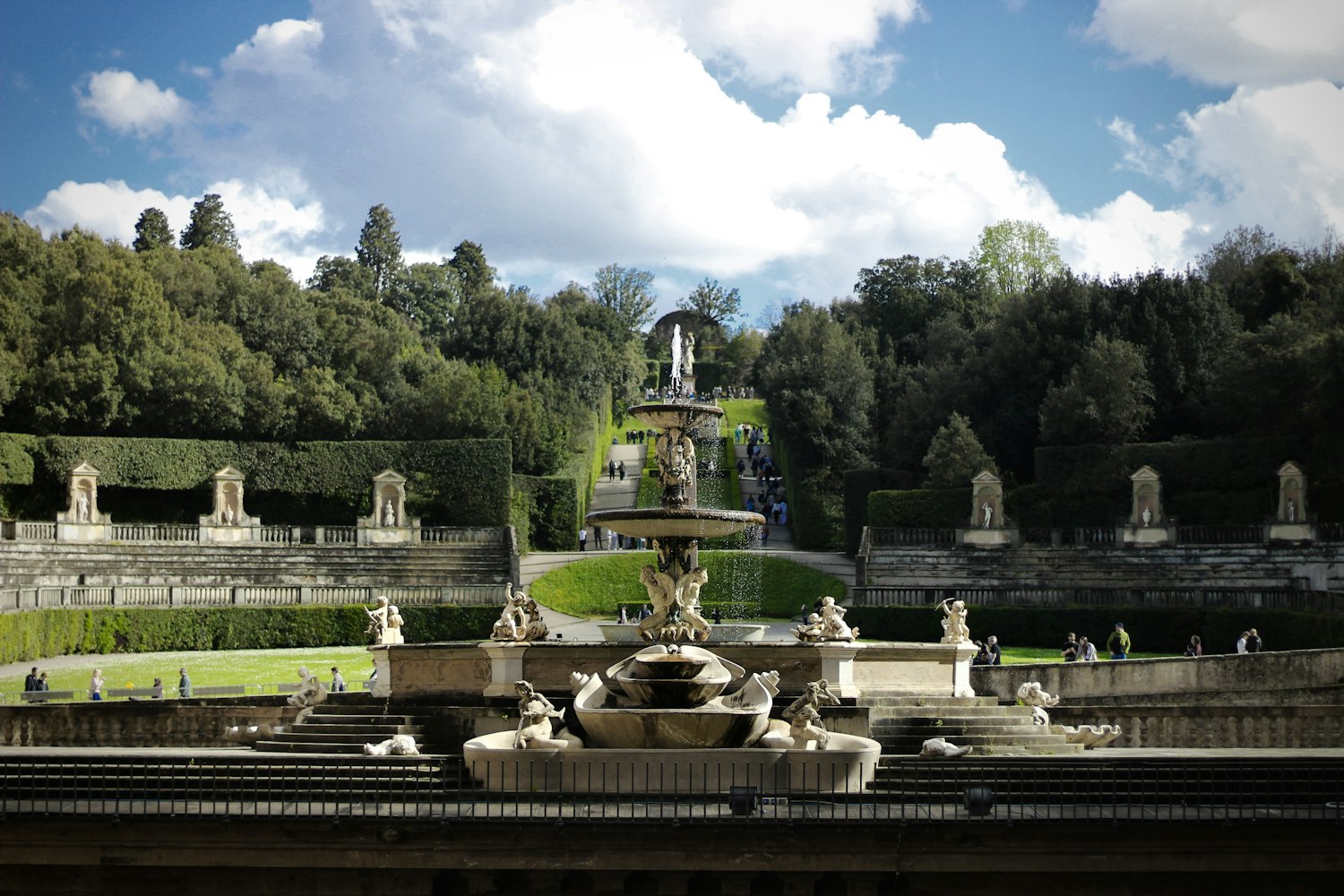
The four gates at a glance
- Palazzo Pitti / Piazza Pitti: best for Ponte Vecchio, central Florence, and anyone combining the palace with the gardens.
- Annalena, Via Romana: convenient for a garden-only visit and the western side of Oltrarno.
- Porta Romana, Piazzale di Porta Romana: best from the south and one of the two entrances specifically identified by the Uffizi for accessible access.
- Forte di Belvedere, Via del Forte di San Giorgio: useful when approaching from the upper Costa San Giorgio side or continuing toward hillside sights.
The official Boboli Gardens page lists all four access points and states that exiting through them is also possible. Temporary restoration work, staffing, or severe weather can alter normal circulation, so check the gate situation when you enter if your route depends on a particular exit.
Palazzo Pitti: best from Ponte Vecchio and for a palace-and-garden visit
Piazza Pitti is the natural arrival point for most visitors walking from Florence’s historic center. Cross Ponte Vecchio, continue along Via de’ Guicciardini, and the enormous rusticated façade of Palazzo Pitti fills the square ahead.
There is an important 2026 change here. Since 1 July 2026, ordinary visitors entering the Palazzo Pitti museums use the doorway on the right-hand side of the façade, near the ticket office. The central doorway now serves as the palace exit. The Uffizi announced the change as part of a new visitor-flow system.
The Boboli information still lists access from the Pitti Palace side, so do not automatically join whichever queue you see at the central portal. If you are visiting the palace first, use the new right-side palace entrance, complete security, and then follow the garden signs from the Ammannati Courtyard. If you have only a garden ticket, follow the Boboli signs and staff instructions in Piazza Pitti rather than assuming that the palace museum queue is yours. The official Pitti entrance announcement explains the new doorway arrangement.
What happens inside the Pitti courtyard
From the Ammannati Courtyard, the gardens rise behind the palace toward the Amphitheatre. For visitors with mobility limitations, the Uffizi identifies an alternative route on the left side of the courtyard, before the bookshop. A vaulted passage leads to an uphill earth-and-gravel route toward the Amphitheatre.
The free cloakroom listed for Boboli is also in the Ammannati Courtyard, on the right. That makes the Pitti side the sensible choice if you are carrying a bag that may need to be deposited. Do not assume that every outlying garden gate offers equivalent luggage storage.
Annalena entrance on Via Romana: the simplest alternative to Pitti
The Annalena gate, also referred to as the Palazzina di Annalena entrance, is on Via Romana, the street running south from the Pitti area toward Porta Romana.
This is a useful choice when you want to see the gardens without dealing with the Palazzo Pitti visitor flow. It has its own Boboli ticketing point, so you can arrive directly rather than entering through the palace complex. There are also toilets at the Annalena entrance.
Choose Annalena when:
- you are staying in Santo Spirito or western Oltrarno;
- you want a garden-only visit;
- the Pitti entrance area looks confusing or crowded;
- you want to finish back on Via Romana rather than Piazza Pitti.
It is also a useful recovery option if you reach Piazza Pitti and discover that you have joined the wrong palace queue. Instead of spending time sorting out the doorway, walk south along Via Romana and enter at Annalena.
Porta Romana: best from the southern side of Florence
The Porta Romana entrance is at Piazzale di Porta Romana, beside the historic city gate at the southern end of the Oltrarno district. It puts you into the lower, southern section of the grounds, around the Prato delle Colonne and Isolotto side of the garden.
This gate makes particular sense if you arrive by taxi, bus, or on foot from accommodation south of the center. It can also be a smart exit if you are heading onward rather than returning immediately to Ponte Vecchio.
Remember the geography, though. Entering here means that much of the major garden route is ahead of you and generally uphill toward the palace. Conversely, walking from Pitti through the gardens and leaving at Porta Romana creates a pleasant one-way route but deposits you well south of Florence’s historic center.
Porta Romana and reduced mobility
The Uffizi specifically identifies Piazza Pitti and Porta Romana as the two accessible garden entrances. That does not mean the garden itself is flat. Paths are predominantly earth and gravel, with frequent slopes, climbs, and descents. An accompanying person is recommended for visitors who may need assistance.
For wheelchairs or a stroller, choosing the correct gate solves only part of the problem. Boboli is a historic hillside garden rather than a level urban park, so allow extra time and ask staff which routes are currently usable before committing to a steep section.
Forte di Belvedere: useful if you are already on the hill
The Forte di Belvedere gate is on Via del Forte di San Giorgio, on the elevated eastern side of Boboli. Inside the grounds it connects toward the Kaffeehaus area.
This is rarely the most convenient gate if you are standing near Ponte Vecchio at street level because reaching it from below involves climbing into the hills. It becomes much more useful if you are already around Forte di Belvedere, Costa San Giorgio, or the upper Oltrarno streets.
It can also make sense as an exit if you intend to continue toward the upper entrance of the Bardini Gardens. Our Bardini Gardens guide explains its separate entrances and visiting arrangements.
The Uffizi currently lists the access ramp between the Forte Belvedere entrance and Kaffeehaus as available, but Forte Belvedere is not one of the two gates specifically identified as accessible entrances for Boboli. Do not choose it solely as a way to avoid climbing inside the garden without considering the steep streets outside.
Which exit should you use?

You do not normally need to leave through the same gate you entered. This makes a one-way walk through Boboli practical, but it also makes it easy to end up on the wrong side of the neighborhood.
- Going back to Ponte Vecchio or central Florence: aim for the Pitti Palace side. Annalena is also reasonably convenient, but slightly farther south.
- Going to Santo Spirito or Via Romana: Annalena or Pitti usually makes the most sense.
- Going south toward Porta Romana: leave through Porta Romana instead of climbing back toward Pitti.
- Going toward Forte di Belvedere, Costa San Giorgio, or the upper Bardini area: consider the Forte di Belvedere gate.
If Boboli is part of a longer Florence day, decide the exit before you begin wandering. You can also organize the rest of your trip around the gate that puts you closest to your next sight rather than automatically walking back to the palace.
Do not exit just to buy food or meet someone
The Uffizi’s general visitor rules state that a ticket allows one admission and cannot be reused. In practical terms, treat leaving the garden as final. Do not walk through an exit expecting to have lunch, collect something from a hotel, or meet a friend outside and then scan the same ticket again.
Keep the ticket with you until the visit is finished because museum staff may ask to see it while you are still inside.
Buying tickets at the different gates
If you have not bought a ticket in advance, the Uffizi lists physical Boboli ticket offices at Annalena, Porta Romana, and Forte di Belvedere. On the Pitti side, the palace ticket office is in Piazza Pitti, toward the right-hand side of the façade.
Advance tickets are available through the official Uffizi ticketing system. The standard Boboli ticket is a single-entry ticket, while combined products cover additional museums or gardens under their own conditions. Check the official ticket-purchase information before your visit if you are relying on a reduction, free admission category, group arrangement, or combined ticket.
What changes near closing time
The gardens open at 8:15, with seasonal closing times. Last admission is always one hour before the scheduled closing time. They are normally closed on the first and last Monday of each month and on 25 December.
Do not plan a last-minute cross-garden dash to a particular secondary gate. When you arrive late in the day, ask staff which exits will remain available and choose a route with enough time to reach one comfortably. The grounds are large, uneven, and much slower to cross than their position behind Palazzo Pitti suggests.
Weather matters too. The Uffizi warns that dangerous weather can cause temporary closures or changes to opening hours. Strong wind is particularly relevant in a garden full of mature trees. Current restoration work can also close individual paths even when the garden itself remains open.
Common gate mistakes
- Joining the old Pitti entrance line: palace visitor entry moved to the right-hand façade doorway in July 2026. The central doorway is now used for palace exits.
- Assuming Pitti is the only entrance: Annalena, Porta Romana, and Forte di Belvedere are official Boboli gates and have their own ticketing facilities.
- Exiting at Porta Romana without checking your map: it is convenient for southern Florence but not for someone whose next reservation is beside the Duomo.
- Choosing Forte di Belvedere to avoid hills: the garden gate is high, but reaching the surrounding streets from central Florence involves its own climb.
- Leaving temporarily: a normal admission cannot be reused after you exit.
- Bringing unnecessary luggage: the official Boboli cloakroom is at the Pitti Palace courtyard, while the garden itself has gravel, dirt, steps, and slopes that make wheeled luggage a poor companion.
A simple decision rule
For a first visit from central Florence, use Pitti, especially if Palazzo Pitti is part of the same day. For a garden-only visit from Oltrarno, Annalena is often the least complicated alternative. Use Porta Romana when arriving from or continuing south, and reserve Forte di Belvedere for itineraries already taking you onto the upper hillside.
Before walking away from your chosen exit, check that you really want to finish there. Once the ticket has taken you through Boboli and back onto the streets of Florence, the garden portion of that visit is over.