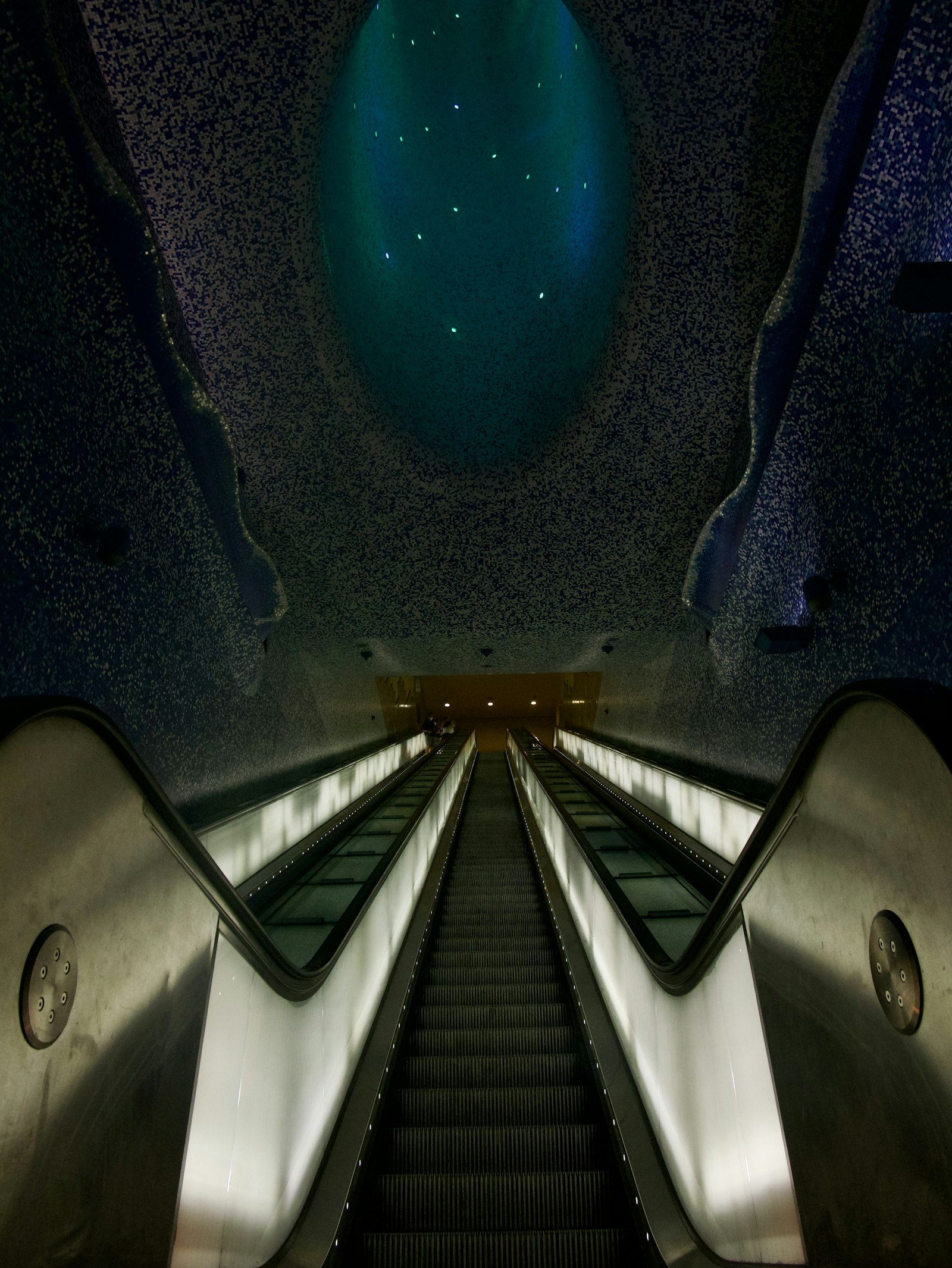
The escalator you want is the one for Via Diaz / Largo Enrico Berlinguer, not the long Montecalvario passage. It rises to the pedestrianized space immediately beside Via Toledo, at the junction with Via Armando Diaz. The two exits actually labeled Via Toledo use fixed stairs, one oriented toward Piazza Carità and the other toward Piazza del Plebiscito. For travelers comparing Toledo metro station exits, the Via Diaz escalator is usually the simplest street-level choice with luggage or tired legs.
The short answer: follow Via Diaz for the escalator
Toledo is a deep Line 1 station, so you will ride several escalators before you are anywhere near street level. Those long internal escalators are part of the normal route between the platforms and the upper concourse. They do not, by themselves, tell you which street you are about to reach.
Near the top, make the important choice. Follow signs for Uscita and then Via Diaz, Largo Enrico Berlinguer, scale mobili or ascensore. The final upward escalator comes out on the pedestrianized Largo Berlinguer/Via Diaz space, immediately next to Via Toledo. The official Toledo station project page shows how the main shaft and the separate Montecalvario pedestrian link fit together.
This distinction is what catches people out: the exit with the escalator is commonly described as the Via Diaz exit, even though it puts you essentially at Via Toledo.
What each Toledo exit is best for
Via Diaz / Largo Enrico Berlinguer: easiest for the escalator and lift
Choose this exit if your priority is avoiding the final fixed staircase. It is also a good default when your hotel is on Via Toledo but you have not worked out whether you need the northbound or southbound stair exit. Once outside, Via Toledo is right beside you.
If your destination is north toward Piazza Carità, turn along Via Toledo in that direction. If you are heading south toward Galleria Umberto I, Teatro di San Carlo or Piazza del Plebiscito, turn the opposite way.
Via Toledo stairs: fastest when you already know your direction
The Via Toledo access is split into two fixed stairways. One is oriented toward Piazza Carità, the other toward Piazza del Plebiscito. These are useful when you are traveling light and already know which way you need to walk after surfacing.
- Piazza Carità side: better for the northern stretch of Via Toledo and for continuing toward the Dante side of the center.
- Piazza del Plebiscito side: better for Galleria Umberto I, the San Carlo area, Piazza Trieste e Trento and Piazza del Plebiscito.
Do not overthink the choice if you pick the wrong fixed staircase. Both leave you in the same central stretch of Via Toledo, so correcting the mistake above ground is much easier than going back through the gates.
Montecalvario: for the Quartieri Spagnoli, not for Via Toledo itself
The Montecalvario exit is the one to choose for the interior of the Quartieri Spagnoli. It is reached through a separate pedestrian gallery of roughly 170 metres, with moving walkways and escalators along the route. ANM’s official Metro Art page for Toledo describes this second exit and the artworks along the connecting passage.
That passage is useful if your destination is around Piazza Montecalvario, Teatro Nuovo or the uphill streets of the Spanish Quarter. It is unnecessary if you simply want Via Toledo, Galleria Umberto I or Piazza del Plebiscito. Following it by mistake adds an underground detour and brings you out on the other side of the neighborhood grid.
Step by step from the platform to Via Toledo
- Leave the train and follow Uscita. Do not worry about choosing a street exit immediately.
- Ride the main internal escalators upward. Toledo’s blue mosaic spaces and the large light shaft make the ascent feel long because the station is unusually deep.
- At the upper distribution level, ignore Montecalvario if Via Toledo is your goal.
- Look for Via Diaz / Largo Berlinguer. Choose the upward escalator marked scale mobili, or the lift marked ascensore if that is more practical.
- At street level, orient yourself on Via Toledo. Piazza Carità is one direction; Galleria Umberto I and Piazza del Plebiscito are the other.
The useful rule is simple: make your street-exit decision near the top, not when you first see an escalator deep inside the station.
With luggage, a stroller or reduced mobility
The Via Diaz side is the practical choice because the street-level access includes both an upward escalator and a lift. ANM describes Line 1 stations as accessible, but lifts and escalators can be temporarily unavailable. If step-free access is essential, check ANM’s current service information before traveling and ask station staff which lift route is operating before committing to a staircase.
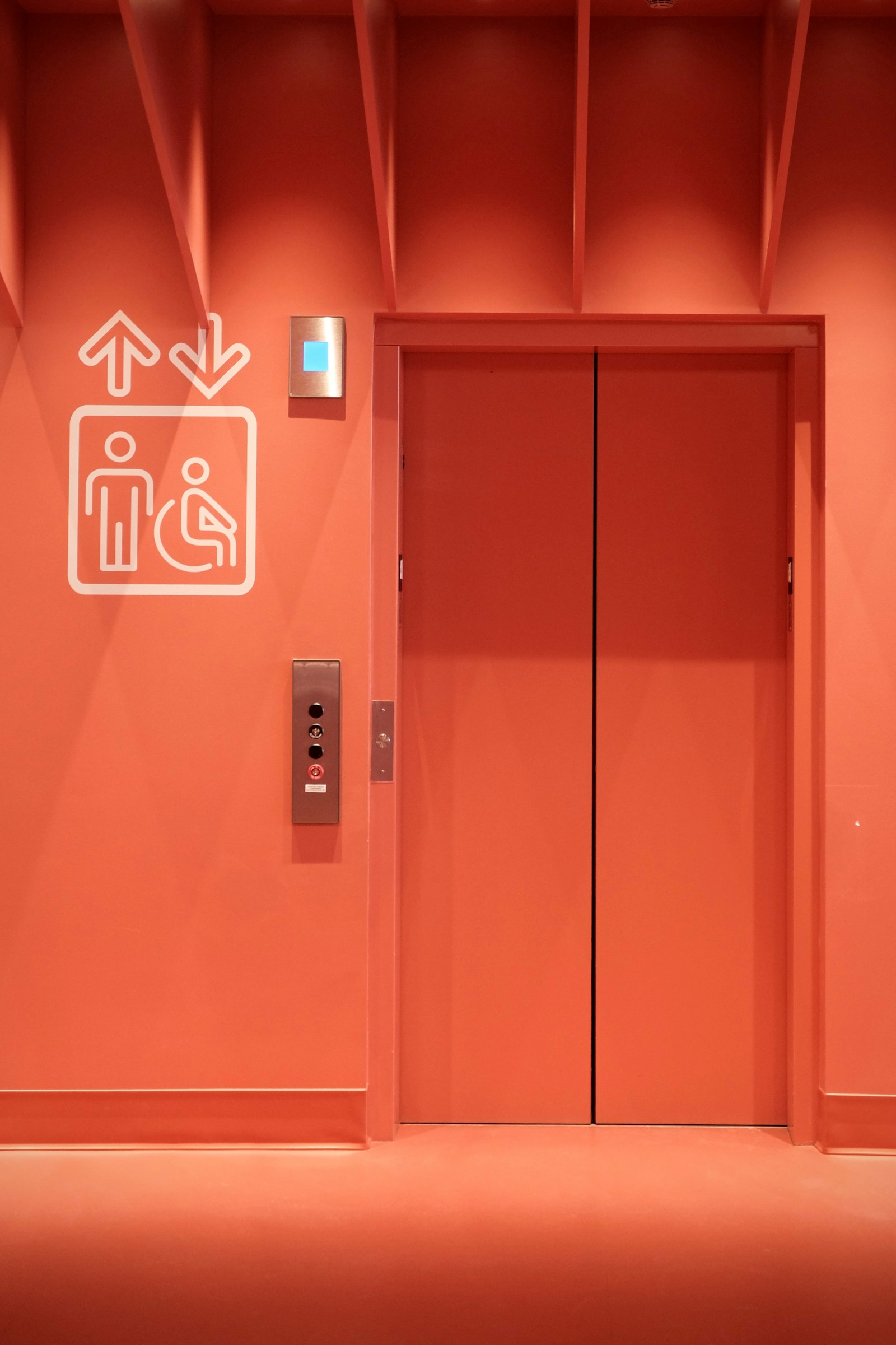
For a stroller, use the lift rather than trying to balance it on an escalator. With a wheeled suitcase, the Via Diaz route usually saves the awkward final carry up the fixed Via Toledo stairs. Keep in mind that you still need to follow the internal circulation through a very deep station, so allow a little more time than you would at a shallow metro stop.
Which exit should you choose for common destinations?
- Hotel directly on Via Toledo: use Via Diaz if you have luggage, then turn north or south outside according to the hotel address.
- Piazza Carità or the upper/northern part of Via Toledo: use the Piazza Carità-oriented fixed stairs if traveling light, or Via Diaz and turn north.
- Galleria Umberto I, Teatro di San Carlo or Piazza del Plebiscito: use the Piazza del Plebiscito-oriented stairs, or Via Diaz and turn south.
- Quartieri Spagnoli interior: use Montecalvario if that exit is open and your destination is genuinely west of Via Toledo.
- Meeting a taxi or driver: do not say only “Toledo station.” Give the driver Largo Enrico Berlinguer / Via Diaz or your exact street-side meeting point.
If Naples is one stop in a longer trip, it helps to save tiny arrival notes like “Toledo: Via Diaz escalator” while you build your Italy itinerary. That is more useful on arrival than trying to reconstruct the station layout while carrying bags.
The signs worth recognizing before you reach the top
- Uscita: exit.
- Via Toledo: the two fixed-stair exits onto the main shopping street.
- Via Diaz: the street-level route with the upward escalator and lift beside Via Toledo.
- Largo Enrico Berlinguer: the pedestrianized space at the Via Diaz side of the station.
- Montecalvario: the separate passage toward the Quartieri Spagnoli.
- Scale mobili: escalators.
- Ascensore: lift or elevator.
- Scale: stairs.
- Tapis roulant: moving walkway.
The same naming logic appears throughout Italy: the word Uscita matters less than the street or square written after it. For larger rail hubs, the same method is explained in our guide to choosing the right Italian station exit.
If you take the wrong exit
If you accidentally follow Montecalvario, do not automatically head back underground. Once outside, use your map to walk back toward Via Toledo unless mobility or luggage makes that impractical. If you emerge from the wrong Via Toledo staircase, simply turn around on the street.
Secondary exits can also be affected by special operating plans, holiday arrangements or temporary closures. If the Montecalvario passage is signed closed, use the Via Diaz or Via Toledo side and continue above ground. Station barriers and staff instructions take priority over an old screenshot or a route saved earlier in the day.
If the escalator is unavailable and you need a step-free route, ask staff before taking the fixed stairs: “Per Via Toledo, dov’è l’ascensore?” means “For Via Toledo, where is the lift?” If you only need to confirm the correct way out, “Per Via Toledo, uscita Via Diaz?” gets straight to the point.