A sit-down Neapolitan pizza is normally an individual meal, not a large pie ordered for the table. It will often arrive whole rather than sliced, and using a knife and fork is completely normal. Sharing is possible, but one pizza per person is the usual rhythm. For takeaway, ask for da asporto; for something made specifically to eat in the street, look for pizza a portafoglio.
The useful thing to know when ordering pizza in Naples is that there is much less ceremony than visitors sometimes expect. Nobody is grading your knife technique. The main differences are practical: the pizza is soft in the middle, intended to be eaten soon after leaving the oven, and usually sized for one diner.
How big is one Neapolitan pizza?
A classic round pizza in Naples is generally a single-person portion. Do not read the diameter the way you would a delivery menu offering small, medium, and large pizzas for several people.
For the formally defined Vera Pizza Napoletana, the Associazione Verace Pizza Napoletana specifies dough balls of 200 to 280 grams producing pizzas roughly 22 to 35 centimetres across, with 35 centimetres as the maximum diameter under its standard. That is a certification standard, not a rule controlling every pizza baked in Naples.
You will also encounter styles described as a ruota di carro, literally “cartwheel.” These are especially broad and thin, sometimes reaching or overhanging the edge of the plate. Their impressive width does not automatically turn them into a sharing pizza because the centre is still very thin.
If you have a small appetite, do not assume a full-sized pizza will be enormous just because it fills the plate. A Neapolitan pizza has a thin centre and a light, inflated cornicione, the raised rim around the edge.
Do you normally order one pizza per person?
Yes. At a traditional sit-down pizzeria, the simplest order is one pizza for each person, perhaps preceded by shared fried snacks. A Margherita, Marinara, Diavola or similar pizza functions as an individual main course.
There is no Naples-wide rule forbidding two people from sharing one. House policies vary, however, and very busy pizzerias may expect each seated customer to order something substantial. If two people genuinely want only one pizza, ask before settling into the meal rather than assuming:
Possiamo dividere una pizza in due?
Can we share one pizza between two?
A more natural option for two hungry diners who want to taste different pizzas is to order one each and swap portions. Shared starters such as crocchè, frittatine di pasta and other fritti are also completely normal.
Why does the pizza arrive uncut?
Do not be surprised if a round pizza lands on the table as one intact disc with a knife and fork beside it. Pre-cutting it into six or eight identical wedges is not a necessary part of sit-down service in Naples.
The soft centre is the reason the knife is useful. Tomato, cheese and oil can make the middle too flexible to pick up neatly as a large wedge. Cut from the centre toward the crust, making pieces as large or small as you want.
If you specifically need the pizza cut, perhaps for a child or because cutting is difficult, simply ask:
Me la può tagliare, per favore?
Could you cut it for me, please?
That is a request, not an etiquette violation. Just do not be surprised if the default is an unsliced pizza.
Knife and fork or hands?
Both are fine. The easiest method for a particularly soft pizza is to start with knife and fork. Once you reach a firmer section near the crust, you can pick it up if you prefer.
You can also cut a wedge, fold it slightly along its length and eat it by hand. What matters is keeping the soft toppings on the pizza rather than trying to imitate a rigid New York-style slice.
If the centre is extremely soft, that is not automatically evidence that it is undercooked. Traditional Neapolitan pizza is deliberately tender and flexible rather than crisp from edge to edge.
What if you want to share several different pizzas?
Order them together and divide them yourselves at the table. You do not normally need to ask the kitchen to turn two pizzas into a formal tasting platter.
Half-and-half pizza is less safe to assume. A kitchen may agree to put one topping on each half, while another pizzeria may prefer to serve every pizza exactly as listed. Ask before ordering:
Si può fare metà Margherita e metà Marinara?
Can you make it half Margherita and half Marinara?
If the answer is no, it is usually just the restaurant’s way of working, not resistance to tourists. Order two pizzas and exchange pieces instead.
Takeaway: ask for “da asporto”
The standard expression for takeaway is da asporto. At a counter you can say:
Una Margherita da asporto, per favore.
One Margherita to take away, please.
Da portare via also makes sense, and English “takeaway” will be understood in many central locations. Da asporto is the phrase most useful to recognize on menus, signs and ordering apps.
A normal round pizza ordered this way will generally go into a flat pizza box. Eat it reasonably soon. The thin centre continues absorbing moisture while it sits, so a pizza that was beautifully soft at the oven can become considerably less charming after a long walk back to the hotel.
If pizza is one stop during a larger sightseeing day, you can organize the rest of your Naples route so lunch fits the area you are already exploring rather than carrying a cooling box across the city.
Pizza a portafoglio is a different takeaway experience
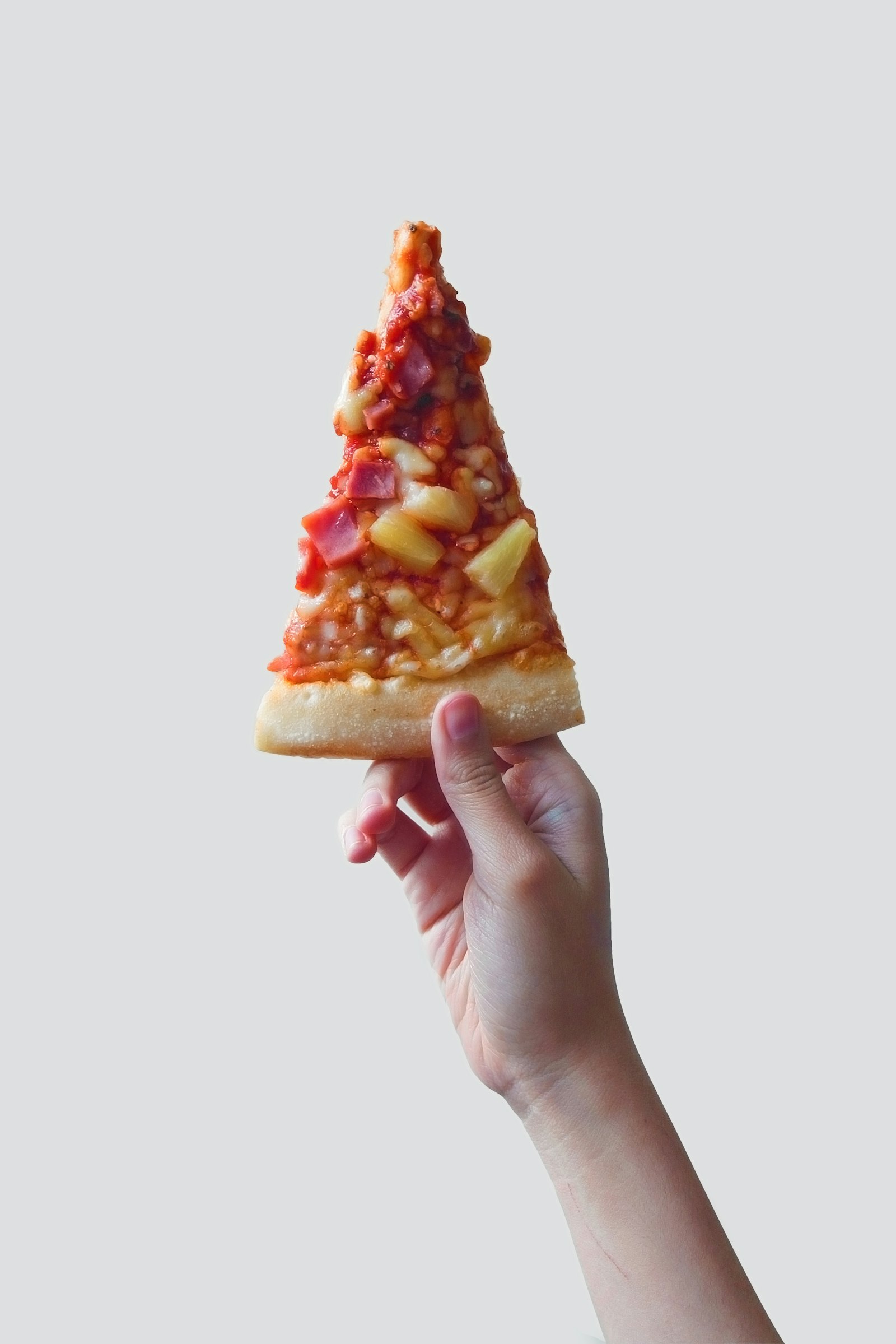
If you want pizza specifically designed for eating while walking, ask for pizza a portafoglio, “wallet pizza.” This street-food version is smaller and folded over on itself so it can be held in paper and eaten without a plate. Italy’s official tourism portal also describes pizza a portafoglio as a classic Neapolitan takeaway food.
Do not confuse it with “one slice.” Naples does not depend on the same by-the-slice system found in some other pizza cultures. A wallet pizza is a small whole pizza made to be folded.
It can be extremely hot inside. Open the paper gradually, keep the bottom supported, and take the first bite carefully. Tomato and melted cheese escaping onto your shirt is traditional only in the sense that it happens to everyone who gets impatient.
Can you take leftover pizza away?
Yes. If you have eaten half and want the remainder boxed, asking is perfectly reasonable:
Me la può mettere da asporto?
Could you pack it to take away?
You do not need to force yourself through the final quarter simply to avoid offending the pizzaiolo. The practical drawback is quality, not etiquette. Neapolitan pizza is at its best shortly after it comes from the oven.
Ordering for children and small appetites
Some pizzerias offer a pizza baby or smaller pizza for children, but it is not universal. Look for baby, piccola or a children’s section on the menu, then ask if necessary:
Avete una pizza più piccola per bambini?
Do you have a smaller pizza for children?
If there is no small version, sharing with a child is an ordinary practical solution. You can also ask the kitchen to leave off an ingredient with senza: senza basilico, senza formaggio, and so on.
Useful menu words before you order
- Margherita: tomato, mozzarella or fiordilatte, basil and oil.
- Marinara: traditionally tomato, garlic, oregano and oil. Despite the name, it does not mean a seafood pizza.
- Fiordilatte: cow’s-milk mozzarella commonly used on pizza.
- Mozzarella di bufala: buffalo-milk mozzarella, often offered as a different pizza or an upgrade.
- Provola: a cheese frequently used in Neapolitan combinations, sometimes smoked.
- Friarielli: the bitter green vegetable commonly paired with sausage.
- Cornicione: the raised outer rim.
- Ripieno: a filled or folded pizza preparation.
- Fritta: fried rather than oven-baked.
- Asporto: takeaway.
For a wider explanation of restaurant vocabulary, the Italian menu translator covers the words that commonly change what actually arrives at the table.
Customising a pizza without turning the order into a negotiation
Simple changes are easy to ask for. Use senza for “without” and con aggiunta di for an added ingredient.
Una Margherita senza basilico.
A Margherita without basil.
Posso aggiungere le acciughe?
Can I add anchovies?
The pizzeria may charge for additions. More elaborate substitutions are less predictable, particularly at places with a very short traditional menu. If you want a substantially different set of toppings, choosing the closest pizza already listed is usually simpler than rebuilding one ingredient by ingredient.
Small mistakes that cause unnecessary confusion
- Expecting one giant pizza for the table: assume a round pizza is an individual order unless the menu says otherwise.
- Waiting for it to arrive pre-sliced: an intact pizza with knife and fork is normal.
- Thinking cutlery looks touristy: it is a sensible way to handle a soft centre.
- Ordering “pepperoni” and expecting spicy salami: in Italian, peperoni means peppers. Look for diavola, salame piccante or the menu’s actual spicy-salami description.
- Assuming Marinara contains seafood: the classic version does not.
- Assuming wallet pizza means a slice: it is normally a small whole pizza folded for street eating.
- Carrying takeaway for an hour: the pizza may survive, but its texture will not thank you.
If the wrong pizza arrives
Say something as soon as you notice, before cutting into it unnecessarily. A simple Scusi, avevo ordinato la Margherita, “Excuse me, I ordered the Margherita,” is enough. If the problem involves an ingredient you cannot eat rather than a matter of preference, make that clear rather than trying to remove the topping yourself.
If your only surprise is that the pizza is unsliced, very soft in the middle or wider than its plate, however, nothing has gone wrong. Pick up the knife, cut the first piece, and deal with the rest at your own pace.