Ferries and hydrofoils arrive at Favignana’s main harbor at Molo San Leonardo, right beside the town rather than at a remote terminal. Bike-rental shops are clustered around the port, the island-bus terminus is on nearby Lungomare Duilio, and private luggage storage is available close to the waterfront. The practical rule for a smooth Favignana ferry arrival is simple: deal with your suitcase first, then choose a bike or bus. Trying to pedal away with a full-size roller bag is the one option that makes an easy arrival unnecessarily awkward.
What happens when you step off the ferry
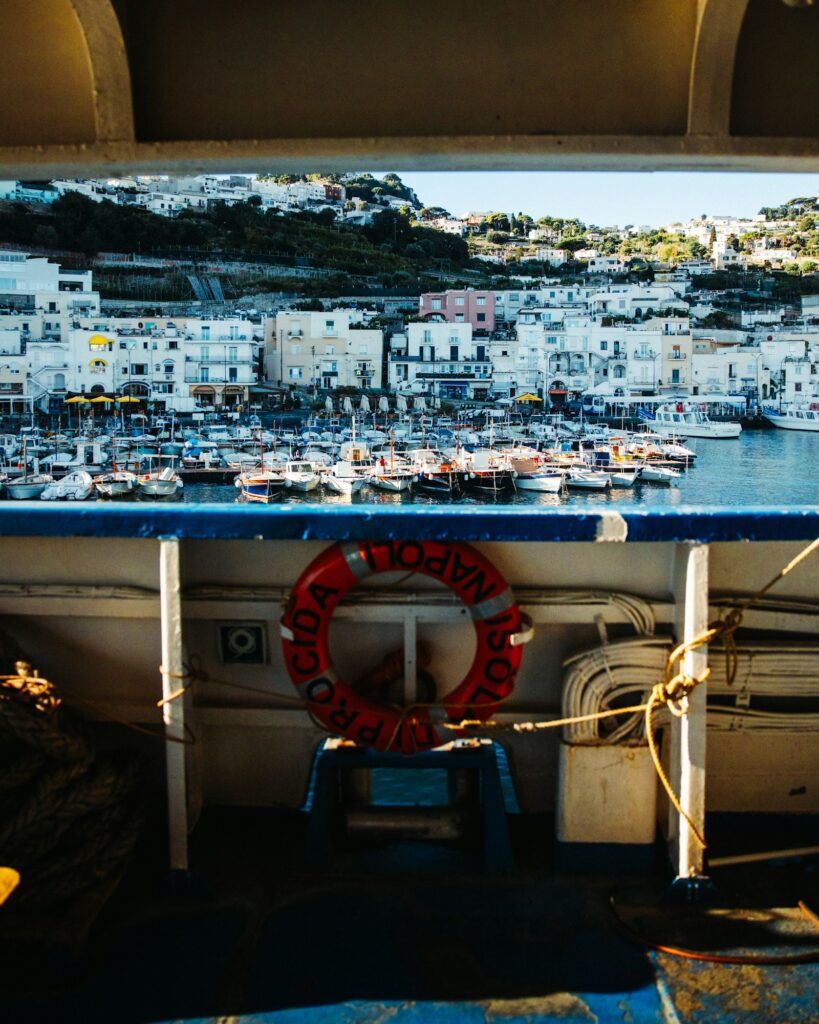
Favignana does not have a large passenger terminal with a long exit route. You disembark onto the harbor at Molo San Leonardo and are immediately in the useful part of town. The center lies just inland, while Via Molo San Leonardo and Lungomare Duilio run around the waterfront. Caronte & Tourist/Siremar lists Molo San Leonardo as the Favignana port.
Do not wait for an airport-style transfer bus. Once you are off the vessel, you can walk to the center, rent a bicycle, reach the local bus terminus, or meet an accommodation transfer within the port area. If your hotel or apartment is outside town, ask it before arrival where its driver meets passengers. Trasferimento dal porto means transfer from the port.
If Favignana is a day trip, take a photo or screenshot of your return booking before you leave the harbor. Return sailings may use a different berthing position within the port, so come back to the waterfront and follow your operator’s departure information rather than assuming you must stand exactly where you arrived.
Choose your first move before you leave the harbor
- Staying in town with a small bag: walk to your accommodation first. The center is close enough that renting a bike before check-in often creates more work than it saves.
- Staying outside town: use an accommodation transfer or taxi for the luggage, then collect a bike once the bags are gone.
- Day-tripping with only a backpack: renting at the port is the simplest start.
- Day-tripping with a suitcase: use a private deposito bagagli before heading to the beaches.
- Travelling with reduced mobility, a stroller, or several bags: the bus or a pre-arranged transfer is usually easier than a bicycle on the first leg.
Renting a bike at Favignana port
Several rental businesses operate on or immediately beside Via Molo San Leonardo, so there is no need to carry luggage across the island just to find a bicycle. Standard city bikes are usually enough for the flatter eastern side of Favignana. An e-bike becomes more useful for longer loops, hot afternoons, strong wind, or a route toward the western side of the island.
Before leaving the shop, check the brakes, gears, tire pressure and lock. On an e-bike, check the battery level and ask how much range the rental expects from that specific bike. Also confirm the return time. A “daily” rental may mean return by the shop’s closing time, not 24 hours after collection.
Useful rental vocabulary includes bici or bicicletta for bicycle, bici elettrica for e-bike, lucchetto for lock, cestino for basket, seggiolino per bambini for child seat, and assistenza for breakdown assistance. Some port rentals advertise child seats and roadside help, but availability is limited enough that families should reserve those extras rather than assuming they will be waiting on arrival.
A front basket is fine for a beach bag. It is not a sensible place for a cabin suitcase. A heavy case changes the steering, can interfere with the front wheel, and becomes a nuisance on rough limestone or gravel access roads. Ask the rental company whether it offers consegna bagagli, luggage delivery, or leave the case at your accommodation or a storage service first.
If the bike develops a problem
Stop and call the rental company rather than continuing on a flat tire or damaged wheel. Keep the shop’s phone number in your phone and photograph the rental receipt or contract. This matters most at Cala Rossa, Punta Sottile and other points away from town, where walking a disabled bike back to the harbor can turn into a long, hot detour.
Where to leave luggage
Do not treat the ferry port itself as a staffed left-luggage terminal. Storage around the harbor is provided by private businesses, and hours can change with the season. Look for deposito bagagli or ask your accommodation to hold bags before check-in and after check-out. A current private option near the port, Favignana Bedda’s luggage service, publishes its own daily opening hours and rate, so check the page for your date instead of relying on an old screenshot.
For an overnight stay, the best order is usually accommodation first, beach second. Many hotels and apartments can hold luggage even when the room is not ready, and some properties arrange port transfers. Ask “Potete tenere i bagagli prima del check-in?” if you want them to hold the bags before check-in.
For a day trip, note the storage closing time before you leave the harbor and build a buffer before your ferry. A late beach return is much easier to fix than a suitcase locked behind a closed shop door.
Finding the island buses
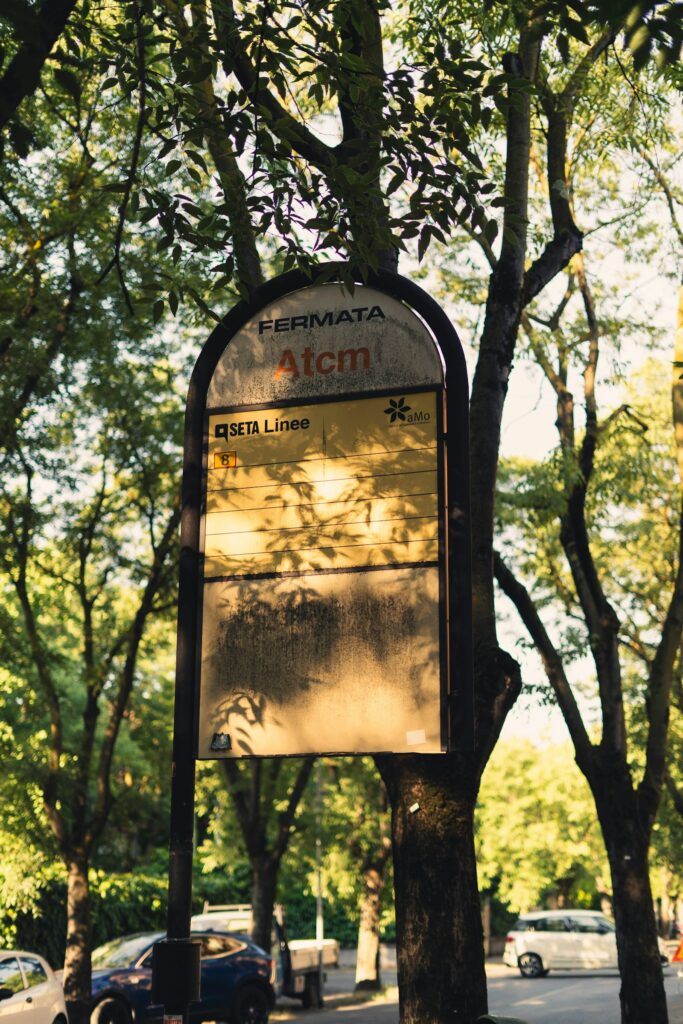
Favignana’s local bus network uses Lungomare Duilio as its central terminus, or capolinea. From Molo San Leonardo, stay on the harbor side and follow the waterfront toward Lungomare Duilio. The distance is short, but the distinction matters: the bus does not collect arriving ferry passengers from the gangway.
The Comune di Favignana describes three local routes from Lungomare Duilio:
- Line 1: the eastern and southeastern side, including Lido Burrone, Grotta Perciata, Punta Fanfalo and the junction for Cala Azzurra.
- Line 2: the western side, including Punta Longa, the junction for Cala Rotonda and Punta Sottile.
- Line 3: the northeastern side, including Scalo Cavallo and the junction for Cala Rossa, then returning through the Lido Burrone side.
Two abbreviations are easy to misread. “Bv.” means bivio, a junction, and “Sv.” means svincolo, also a turnoff or junction. A timetable entry such as Bv. Cala Rossa does not mean the bus drives down to the water. You still have a walk from the road junction to the cove. The same principle applies to the Cala Azzurra turnoff.
Bus fares and schedules change by season
Tarantola & Cuffaro currently operates the local service. Its published summer 2026 notices listed €3 for a single ride and €9 for a day ticket, but those are 2026 figures, not confirmed 2027 fares. The operator had not published a 2027 timetable by September 2026. Check the operator’s Favignana timetable notices for your travel month, because frequencies change between early summer, July and August, September, and the quieter part of the year. Sunday and holiday service can also differ, particularly outside peak summer, so use the timetable for your actual date.
Do not build a tight ferry connection around a bus departure. The operator states that buses run to fixed schedules and drivers cannot wait for late passengers. This is especially important after a delayed hydrofoil or on a return from the western side of the island. If missing the last practical bus would make you miss a ferry, leave one service earlier or use a taxi.
Luggage, strollers and accessibility on the bus
Tarantola & Cuffaro’s published general service charter allows one small hand bag free within stated size and weight limits, with separate conditions for a larger bag. The island service uses compact vehicles, so a full-size suitcase is still better stored or transferred than carried around the beach network. The same operator charter says strollers must be folded before boarding.
The Comune says Favignana’s electric buses are equipped for passengers with disabilities. That helps with the vehicle itself, but beach access is a separate question. Stops such as the Cala Rossa junction lead to outdoor paths and uneven ground, so an accessible bus ride does not make every final approach step-free.
Bike or bus for the main beach areas?
Cala Rossa
A bike gives the most flexibility because the bus serves the bivio, not the cove itself. Use Line 3 if you prefer not to cycle, then expect to walk the final approach. For anyone carrying beach gear, choose what you can comfortably carry back uphill and over uneven ground.
Lido Burrone
This is one of the easiest places to reach either way. Lines 1 and 3 both pass the Lido Burrone area on their loops, while a bicycle gives you freedom to combine the beach with nearby stops. For families or travelers avoiding midday cycling, the bus is a strong option.
Cala Azzurra
Line 1 serves the Cala Azzurra turnoff. A bike is more convenient if you want to move on to another beach rather than timing your day around the next bus. Remember that svincolo on the timetable means the road junction, not a door-to-sand drop-off.
Cala Rotonda and Punta Sottile
Line 2 covers the western side. This is the route where an e-bike can earn its keep if you want to make a longer cycling loop, particularly in heat or headwind. The bus is better when the destination itself matters more than stopping spontaneously along the way.
If you are combining Favignana with Trapani, Levanzo or Marettimo, use the Italy on Foot trip planner to keep ferry legs and island days in one itinerary rather than treating each connection as a separate puzzle.
Late arrivals, early departures and missed connections
A late ferry arrival can remove options quickly. Bike shops may be closing, the useful bus departures may have finished, and accommodation receptions outside town may not be staffed indefinitely. If your sailing is due in late in the day, arrange your hotel transfer before leaving Trapani and save the property’s phone number offline.
For an early departure, return a rental bike the evening before unless the company has explicitly agreed to an early-morning return method. Do not assume there will be staff at a closed rental shop just because ferries are running.
If the ferry is delayed and you miss the bus you intended to take, the recovery order is straightforward: contact your accommodation first if you are staying overnight, ask about a transfer, then use a taxi if needed. For a day trip, keep the first part of the day near town until you know which transport option is actually available.
The easiest first-hour plan
- Disembark at Molo San Leonardo and move away from the boarding area before stopping to organize bags.
- Check your return ferry time and operator while you still have the harbor in front of you.
- Take luggage to your accommodation, a transfer driver, or a private deposito bagagli.
- If renting a bike, inspect it, save the rental contact number, and confirm the return deadline.
- If taking the bus, walk to the Lungomare Duilio capolinea and match the line number to your destination, not just the beach name.
- For Cala Rossa or Cala Azzurra, remember that the bus stop is at a junction and allow time for the final walk.
One final trap is bringing a car because the conventional ferry can carry vehicles. Favignana applies seasonal restrictions to non-resident motor vehicles, with the rules issued for each tourist season. The Sicilian Region published a specific 2026 Favignana vehicle-restriction decree; the 2027 rules were not yet published as of September 2026. Check the current year’s decree before paying to take a rental car across. For most foot passengers, luggage transfer plus a bike or the island bus is the simpler combination.