The railway station at Trieste Airport is directly connected to the passenger terminal, so you do not need an airport shuttle to reach the tracks. The Trieste Airport train station is about an eight-minute walk from the terminal along a covered pedestrian connection. From there, direct trains run toward Trieste Centrale, Udine and Venice, with typical journey times of roughly 30 minutes to Trieste, 32 minutes to Udine and around 1 hour 35 minutes to Venice.
The detail that catches people out is the station name. Search for Trieste Airport when buying the ticket. Do not accidentally choose Trieste Centrale, and do not substitute Ronchi dei Legionari Nord just because the airport itself is physically near Ronchi dei Legionari.
Where the railway station is
The station is not underneath the terminal. After leaving Arrivals, follow signs for Treni, Train or Stazione ferroviaria toward the airport’s intermodal hub. A covered elevated pedestrian connection leads from the terminal area toward the bus station, parking areas and railway platforms.
Trieste Airport currently describes the terminal-to-rail connection as an eight-minute covered walk. This matters if you are judging a tight connection after landing. A train leaving eight minutes after you collect your suitcase is not realistically eight minutes away: you still need to leave Arrivals, follow the walkway, check the departure board and reach the correct platform.
The station itself has only two passenger tracks, which makes it much less intimidating than a major Italian station. Do not memorize a platform number from an old timetable, though. Look for Partenze on the departure screens and Binario for the platform. RFI advises passengers to rely on the station’s live visual and audio information because operational assignments can change.
Which train do you need?
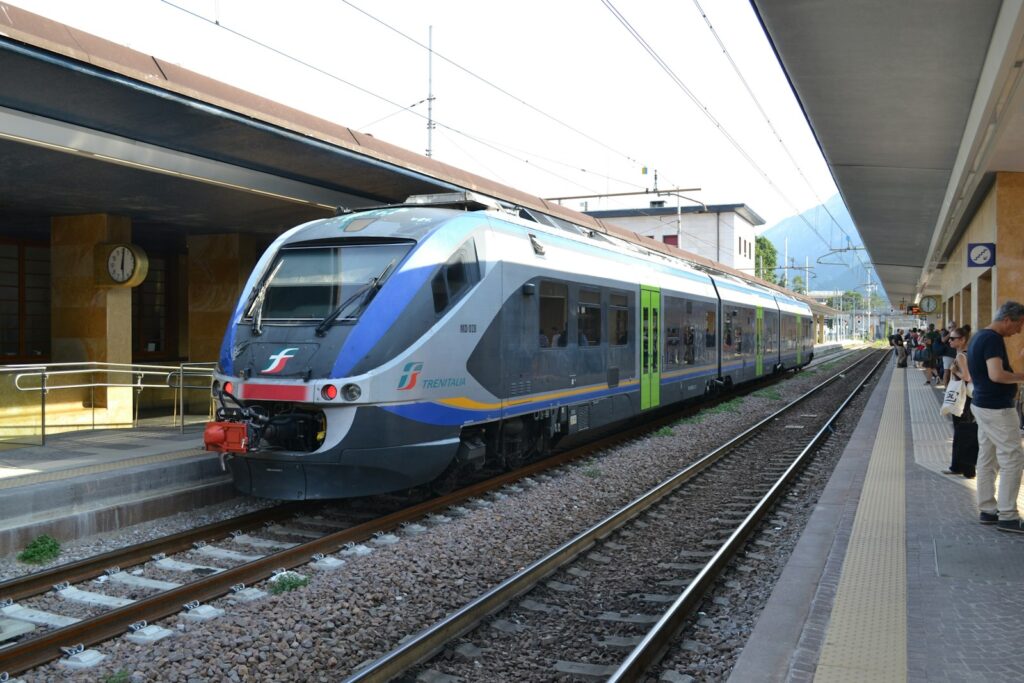
For Trieste: search for Trieste Centrale
For the city centre, your destination is Trieste Centrale. Direct trains from the airport commonly take about 30 minutes, although the exact journey varies by service.
You do not necessarily need the train’s final destination to say Trieste when checking every railway journey in Italy, but at this airport many eastbound services do terminate at Trieste Centrale. Confirm that Trieste C.le appears in the stop list before boarding rather than relying only on the train number.
Once you arrive at Centrale you are on the northern edge of central Trieste, close enough to continue on foot or by local bus depending on your hotel.
For Udine: use the direct regional service when available
Udine is also directly connected to the airport. The airport currently gives a typical rail journey of about 32 minutes. Trains heading that way use the line through Cervignano, and some services may continue beyond Udine toward other destinations.
That means the departure board does not always have to display UDINE as the final destination for the train to be useful to you. Check the intermediate stops in the Trenitalia app or on the station display. If Udine appears in the stop list, the train works for your journey.
This is especially useful when several departures appear close together. Match the train number and stops to your ticket instead of simply following other passengers carrying airport luggage.
For Venice: decide between Mestre and Santa Lucia first
This is the route where choosing the correct destination matters most. Venezia Mestre is on the mainland. Venezia S. Lucia is the railway terminus inside historic Venice, directly beside the Grand Canal.
If your hotel is in San Marco, Cannaregio, Dorsoduro, Castello, San Polo or Santa Croce, Venezia Santa Lucia is normally the station you want. If you are staying in Mestre or Marghera, choose Mestre. See the Italy on Foot explanation of Venezia Mestre versus Venezia Santa Lucia if your accommodation simply says “Venice” and you are not sure which station belongs on the ticket.
Direct regional trains can continue from the airport through Mestre to Santa Lucia, but not every service does. Some trains terminate at Mestre. Before boarding, look at the complete destination and stop list. If your ticket says Venezia S. Lucia but the service ends at Mestre, you will need another train for the short final rail section across the lagoon.
For a multi-city trip involving the airport, Udine, Trieste and Venice, it helps to build your Italy itinerary around the exact station names rather than recording only the cities. “Venice” is not specific enough when one train stops on the mainland and another continues into the historic centre.
Regional train or Frecciarossa?
The airport rail stop is served primarily by regional services, with selected long-distance and high-speed trains also stopping there. For most passengers arriving by air and travelling to Trieste, Udine or Venice, a regional train is often the simplest choice.
Regional tickets are particularly useful when your flight arrival time is uncertain. Trenitalia currently allows a Digital Regional Ticket’s departure time to be changed until the scheduled departure of the selected train, subject to the applicable ticket conditions. That gives you more flexibility if baggage reclaim takes 25 minutes instead of ten.
A Frecciarossa or other reserved long-distance train works differently. Your ticket is tied to the train and fare conditions you purchased. A missed reserved service does not automatically mean you can board whichever regional or high-speed train appears next. Check the ticket conditions before switching services.
Buying and validating the ticket
For the simplest airport arrival, buy through the official Trenitalia website or app once you know which departure you can realistically make. Enter Trieste Airport as the origin and your actual destination station, such as Trieste Centrale, Udine, Venezia Mestre or Venezia S. Lucia.
Trenitalia’s current rules make an important distinction between digital and paper regional tickets:
- Digital Regional Ticket: it is automatically activated at the scheduled departure time of the train you selected. You no longer perform a separate check-in.
- Single paper regional ticket: it must be validated in a station validation machine before boarding.
- Frecciarossa, Intercity and other reserved tickets: follow the conditions printed for that specific ticket. Do not apply regional-ticket rules to them.
You can verify the current rules on Trenitalia’s regional travel information page.
If your plane is late and you hold a digital regional ticket, deal with the ticket before its scheduled departure if possible. Do not wait until you are standing on the platform after the booked train has already left to investigate your options.
What the station signs mean
A few Italian words cover most of what you need at this small station:
- Partenze: departures
- Arrivi: arrivals
- Binario: platform or track
- Ritardo: delay
- Cancellato or Soppresso: cancelled
- Fermate: stops
- Uscita: exit
- Autostazione: bus and coach station
The train’s final destination is not always your destination. For example, a train suitable for Venice Mestre may continue toward another major city, while a train suitable for Udine may continue north. Match your train number and check that your station appears under Fermate.
Luggage, strollers and reduced mobility
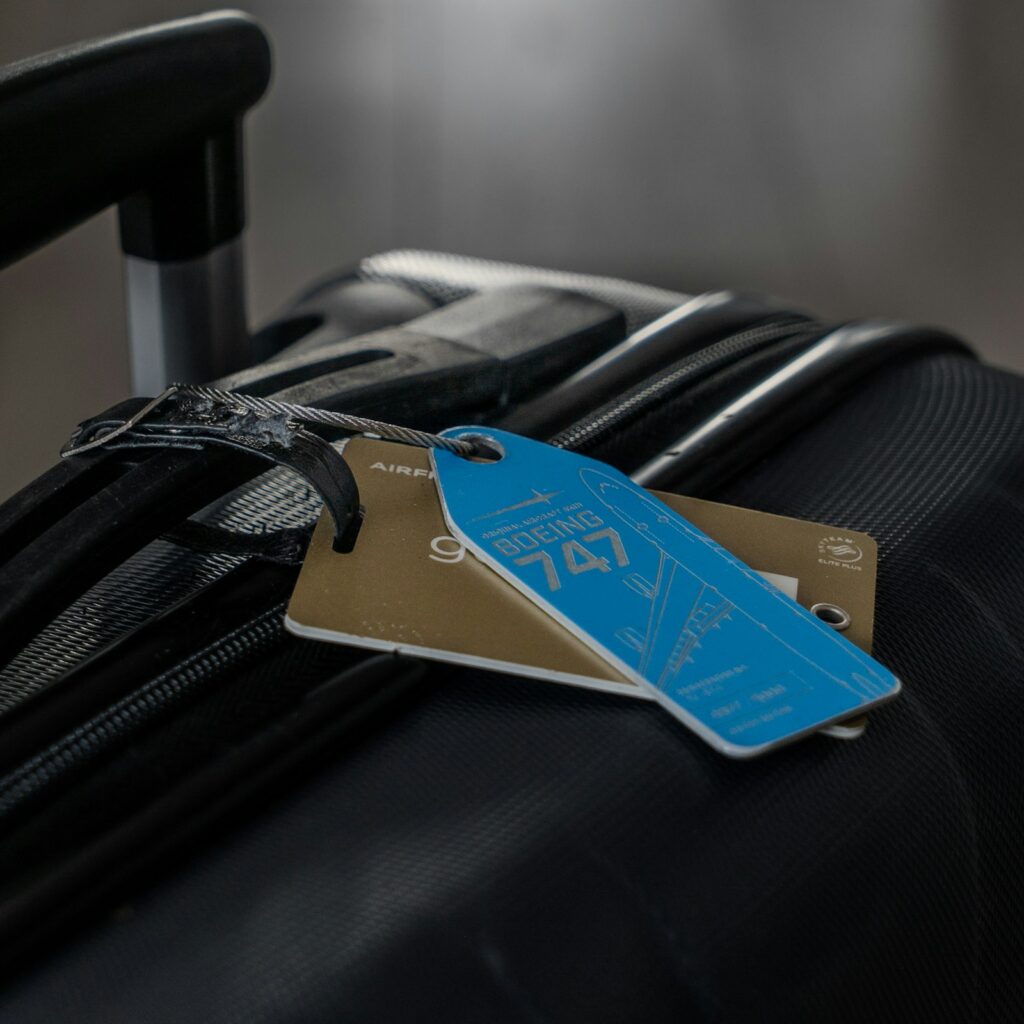
The covered connection between the airport and railway makes this one of Italy’s more manageable airport-to-train transfers with suitcases. You still need to allow time for the walk, the platform access and boarding, particularly if you have several large bags or are moving with young children.
There is no airport-style baggage check for the train. You take your luggage aboard and remain responsible for it. Avoid arranging a connection so tight that you need to run along the pedestrian link with a suitcase just to reach the train doors.
For reduced mobility, RFI’s station information currently lists lifts providing access to both passenger tracks and assistance for travelers with disabilities or reduced mobility. RFI also warns that temporary lift outages can affect step-free access, so check the station status before travel if a working lift is essential.
Airport passenger assistance also has a calling point at the railway station. If you require assistance across the air-to-rail transfer rather than only inside the aircraft terminal, arrange the appropriate services in advance instead of assuming the airline’s assistance automatically continues onto the train.
How much time should you allow after your flight?
Do not build the connection around the scheduled landing time. Build it around the moment you are likely to be landside with your luggage.
With hand luggage and a domestic or Schengen arrival, you may reach the station fairly quickly. Checked luggage, passport control, a remote aircraft stand or a delayed arrival can add substantial uncertainty. The airport-to-platform walk then comes on top.
If the train you are considering is the last useful service of the night, give yourself considerably more margin than you would for an ordinary daytime departure. A missed train at 14:00 is usually an inconvenience. Missing the final useful departure changes the whole transfer.
For more general advice on calculating that margin, Italy on Foot’s guide to a late flight arrival in Italy explains why the relevant time is when you reach the public side of the airport, not when the aircraft touches the runway.
If you land late and the useful train has gone
First, check the actual timetable for your date rather than assuming service has finished because one train was missed. Evening departures do exist, but the final useful train depends on your destination and the operating day.
If rail no longer works, the airport’s adjacent bus station gives you another possibility. TPL FVG operates regional airport connections, and its travel planner lets you search by date and time using TRIESTE AIRPORT as the origin. Current published airport bus timetables include services valid from September 2026 into June 2027, but later summer 2027 schedules should be checked once they are released.
Do not assume the bus always runs later than your train. Check the exact date, especially on Sundays and public holidays, because road-service schedules can differ from weekday patterns.
A taxi is another fallback, but there is a useful late-night catch: Trieste Airport’s official taxi information currently lists taxis outside Arrivals from 08:00 to 24:00. If your flight lands after midnight and public transport no longer works, do not count on simply walking outside and finding a taxi rank operating all night. Arrange an NCC chauffeur service or another confirmed transfer beforehand.
What to do when trains are cancelled or replaced by buses
Engineering work and disruption can produce cancellations, altered stops or rail-replacement buses. This matters at an airport because a journey that normally begins on a railway platform may suddenly begin at the adjacent bus station.
If your train shows Cancellato or Soppresso, read the service notice before leaving the station. Look for wording such as bus sostitutivo or servizio sostitutivo, meaning replacement bus service. The airport bus terminal is part of the same intermodal complex, but the exact bay used can vary with the disruption.
Do not follow an old online post telling you to wait at a particular bus bay. Replacement-bus positions are operational information. Use the notice for your train, the electronic information at the airport or instructions from railway staff.
The three mistakes most likely to cause trouble
- Booking Ronchi dei Legionari instead of the airport station. Enter Trieste Airport as your railway origin.
- Booking “Venice” without checking which station. Historic Venice normally means Venezia S. Lucia; Mestre is the mainland.
- Treating the landing time as the train connection time. Add baggage reclaim, border formalities and the covered walk from the terminal before deciding which departure is realistic.
If a connection goes wrong, stay focused on the destination rather than the train you originally planned to catch. Check the next regional departure, then the adjacent TPL FVG bus station, and only then move to a taxi or pre-booked transfer. At this airport the rail and bus facilities are deliberately grouped together, so a missed train does not necessarily mean returning to the terminal and starting the journey from scratch.