For most families with school-age children, a private Vatican Museums tour lasting two to three hours is a reasonable choice. It gives a guide enough time to explain selected highlights, keep children involved and reach the Sistine Chapel without spending an entire day inside museums. Younger children may need a shorter visit, while teenagers interested in art and history can often manage a longer itinerary.
A private Vatican tour with kids is most useful when the guide adapts the explanations, walking pace and stops to your children’s ages. Before booking, confirm the actual route, whether admission tickets are included, how breaks are handled and whether St. Peter’s Basilica is part of the experience. These details make a substantial difference to how the day works.
What does a private Vatican family tour include?
Most private family tours concentrate on the Vatican Museums and Sistine Chapel. The guide meets your family near the museum entrance, helps with the admission process and leads you through a selection of galleries before reaching the chapel.
A typical route may include ancient sculptures, the Gallery of Tapestries, the Gallery of Maps and some of the Renaissance rooms. Longer tours may add the Raphael Rooms or other collections, depending on the available route and the family’s interests.
St. Peter’s Basilica is a separate visitor site with different entrances and security arrangements. Some private tours include it, but many finish at the Sistine Chapel or the Vatican Museums exit.
Private usually means the guide works exclusively with your family. It does not mean that the galleries, chapel or security areas are reserved for you. Other visitors will be present, and the guide must follow the Vatican Museums’ access rules.
Ask for an itinerary showing the areas you will actually enter. A description promising the Vatican’s major highlights does not tell you whether the tour includes three galleries, the full museum route, the Basilica or the dome.
How long should a Vatican tour with children last?
The right length depends on the youngest child’s attention span, how much walking everyone can manage and whether you want to visit the Basilica afterward. Tour duration should include the time needed to move through the building, rather than counting only the guide’s explanations.
90 minutes to two hours: a focused family visit
A shorter guided visit is most suitable for younger children or families who want to see a limited number of museum highlights.
The guide can concentrate on a few memorable stories, introduce important artworks and help children understand what they are about to see in the Sistine Chapel.
However, the museum complex is large, and the chapel sits toward the end of the main visitor route. A 90-minute tour may be difficult to deliver comfortably when it includes entry procedures, several galleries and the Sistine Chapel.
If you are considering a very short tour, ask how the operator reaches the chapel within the advertised time and which galleries will be skipped. Also confirm whether the duration begins at the meeting point or after admission.
For a family with a four-year-old, a shorter visit that excludes some collections may work better than attempting to cover every major room.
Two and a half to three hours: a useful balance for school-age children
Many private family tours are advertised at approximately two and a half hours. This allows more time for the main museum highlights, explanations adapted for children and the Sistine Chapel.
For children aged around six to twelve, this is often a manageable format, provided the guide knows how to maintain attention without delivering long lectures in every room.
A three-hour session can also allow a restroom break or a brief pause in one of the museum’s designated resting areas.
Ask whether the guide can change the route if the children become tired. The flexibility to spend less time in one gallery can be more valuable than having another famous artwork added to the itinerary.
Three and a half to four hours: for older children and teenagers
A longer session may suit teenagers, children who already enjoy museums or families who want more detailed explanations of Renaissance art and Vatican history.
Some four-hour experiences combine the Vatican Museums and Sistine Chapel with St. Peter’s Basilica. Others spend the full duration inside the museum complex.
These are substantially different itineraries. If the Basilica is included, establish how the group travels between the two sites and whether additional security waiting is accounted for.
For many families, four hours of continuous sightseeing inside crowded buildings is demanding. If you want to include both the Museums and Basilica, a lunch break between separate visits may be more comfortable.
Choosing a tour by your children’s ages
Tour descriptions often use terms such as child-friendly or family-friendly, but the experiences offered can differ considerably. A guide accustomed to teaching twelve-year-olds may use activities that are too complicated for a preschooler.
Babies and toddlers under 4
At this age, the practical considerations are feeding, naps, stroller access and how long the child can remain comfortable in a busy indoor environment.
A private guide may help the adults see selected artworks while accommodating the child’s needs, but there is little reason to expect a toddler to follow an extended art-history lesson.
Consider keeping the visit short and avoiding an ambitious combined Museums and Basilica itinerary. Ask whether you can use a stroller and whether the proposed route includes lifts.
For a child who normally naps in a stroller, the time of day and amount of crowding may matter more than the precise choice of galleries.
Children aged 4 to 6
Children in this age group can enjoy stories about animals, ancient statues, unusual objects and Michelangelo’s paintings. They may struggle when an explanation becomes too abstract or continues for several minutes without interaction.
Look for a guide who uses visual prompts, simple questions and opportunities to find details in the artworks.
Ask whether the activities are suitable for a child who cannot yet read independently. Some scavenger hunts and printed worksheets are designed for older children.
A visit of around two hours may be appropriate, although you should discuss the route carefully because the Sistine Chapel cannot simply be moved to the beginning of the standard museum experience.
Children aged 7 to 10
This is a useful age for an interactive museum tour. Children can follow stories, compare artworks and understand basic ideas about ancient Rome, mythology, the Renaissance and the popes.
A guide might ask them to find particular animals in a sculpture, identify places on the Gallery of Maps or compare the stories shown in different paintings.
Two and a half hours is a reasonable starting point for this age group. If the children have previously enjoyed guided museum visits, a three-hour tour may work well.
Children aged 11 to 13
Older children may enjoy more involved explanations, particularly when the guide connects the artworks to subjects they already know.
Ancient mythology, Renaissance rivalries, Michelangelo’s techniques and the history of papal elections can provide useful starting points.
Ask whether the guide adjusts the material for preteens rather than relying entirely on activities aimed at much younger children.
Teenagers
Teenagers can often join a standard private Vatican tour, provided the guide presents the material at an appropriate level.
A teenager studying history, art or religion may appreciate detailed explanations of the Raphael Rooms and Sistine Chapel. Others may prefer a shorter visit focused on the most recognizable highlights.
Ask about the guide’s experience working with teenagers and whether they can include subjects connected to your child’s interests.
What makes a good Vatican guide for children?
A knowledgeable art historian is not automatically an effective children’s guide. The person leading the tour needs to explain complicated subjects clearly, adjust their pace and recognize when children need a change of activity.
When comparing guides, look for specific experience working with families rather than descriptions that simply say children are welcome.
Useful qualities include:
- Experience with similar ages: The guide regularly works with children in your family’s age range.
- Clear English: Explanations are easy for the children to understand, including those who are not native English speakers.
- Interactive teaching: The guide uses questions, short stories and observation games.
- Flexible pacing: The itinerary can be adjusted when someone needs a break.
- Knowledge of the building: The guide understands the gallery layout, lifts, restrooms and visitor restrictions.
- Realistic expectations: The guide can explain what the family will have time to see without promising access that is not permitted.
Ask for examples of activities used with children of similar ages. A specific answer about storytelling, picture-based challenges or age-appropriate explanations is more informative than a promise that the tour will be fun.
Does the guide need special authorization?
Guided activities inside the Vatican Museums are subject to Vatican rules, including accreditation arrangements for guides.
The Museums’ official radio-headset service, for example, is reserved for guides accredited to the Vatican Museums for the current year.
Before booking an independent guide, ask whether they are professionally qualified and properly accredited or authorized to conduct guided visits in the Vatican Museums.
You can also ask whether the guide named in the booking will personally lead the tour. Some companies work with several guides and assign the individual according to availability.
If a particular guide’s teaching style is important to you, confirm their name in writing or ask what happens if a replacement is required.
Which Vatican Museum highlights work well for children?
The Vatican Museums contain far more material than a family can reasonably explore during one visit. Selecting a few engaging areas is usually more useful than attempting to see every important collection.
Ancient sculptures and mythology
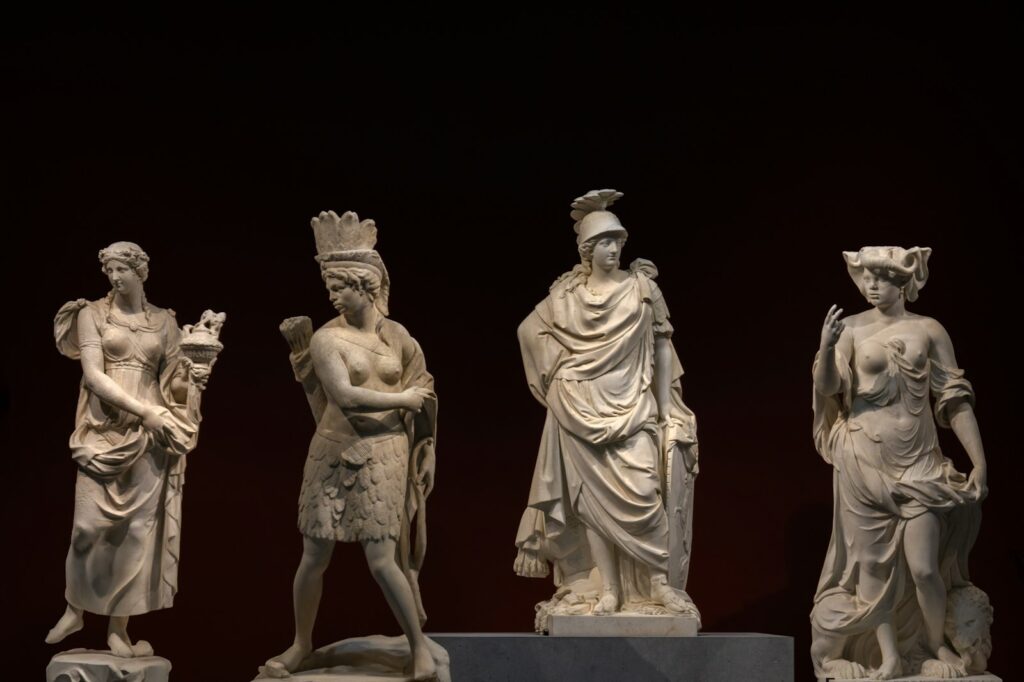
Greek and Roman sculptures provide opportunities to discuss myths, gods, heroes and the differences between ancient and modern life.
Children may enjoy identifying animals, expressions and objects carried by the figures. A guide can introduce the historical context without expecting younger visitors to remember every artist or date.
Gallery of Maps
The Galleria delle Carte Geografiche contains large painted maps showing regions of Italy. It can be especially interesting for children who recognize places they have visited or plan to visit during the trip.
A guide might ask children to find Rome, Sicily or another destination on the maps and explain how people understood geography centuries ago.
The gallery’s length and decorative ceiling also make it visually striking, although it can become crowded.
Gallery of Tapestries
The Galleria degli Arazzi displays large woven scenes that can be approached as visual stories.
Children can look for characters, animals, clothing and unusual details while learning how tapestries were made.
A short explanation of one or two works may hold attention better than an extended discussion of every tapestry.
Raphael Rooms
The Stanze di Raffaello contain major Renaissance frescoes, including Raphael’s School of Athens.
Older children and teenagers may enjoy learning about the people represented in the paintings and how artists created such large compositions.
For younger children, a guide can focus on a few identifiable figures or details rather than the entire philosophical and historical context.
Ask whether the Raphael Rooms are included in your tour. Their inclusion should not be assumed from a general description of Vatican highlights.
Sistine Chapel
The Sistine Chapel is the central reason many families visit the Vatican Museums. Michelangelo’s ceiling and the Last Judgment provide plenty to discuss, but the explanation needs to happen before entering the chapel.
The Vatican Museums require silence inside. Photography and filming are prohibited, and guides must provide their art-historical explanations beforehand.
This is especially important with children. Ask the guide to explain what they should look for before you enter, perhaps using printed images or the educational screens available along the museum route.
Once inside, children can look at the ceiling and identify scenes they have already discussed without expecting the guide to continue speaking.
What happens if a child talks or becomes upset in the Sistine Chapel?
Children are welcome, but the Sistine Chapel has stricter behavior rules than the ordinary museum galleries.
Visitors are expected to remain quiet, and staff monitor the space. Photography, filming and mobile-phone use are prohibited.
Explain these rules before approaching the chapel. For younger children, a simple instruction about using a quiet voice and looking for a particular painting may be easier to follow than a detailed discussion of the site’s religious importance.
If a baby begins crying or a child becomes distressed, follow the attendants’ directions and move toward an appropriate exit if necessary.
Ask your guide what the procedure would be if someone in the family needs to leave early. Re-entering the chapel or reversing through the museum route may not be straightforward.
Can you bring a stroller into the Vatican Museums?
Yes. The Vatican Museums officially welcome families with strollers and provide lifts that help visitors move between different areas of the complex.
However, accessibility routes do not always follow the same sequence as the standard visitor itinerary. Staff may direct families with strollers toward a lift or alternative passage.
If a stroller is essential, tell the guide before booking. Ask whether the proposed itinerary can be completed with it and whether any galleries will need to be omitted.
The Museums also provide baby-changing facilities, a nursing room and designated relaxation areas. Their official visitor guidance explains these arrangements.
A compact stroller may be easier to maneuver through crowded spaces than a large travel system. If you are visiting with a baby, a suitable carrier may also be useful, provided you are comfortable using it for the required duration.
St. Peter’s Basilica has different stroller rules
Do not assume that the stroller arrangements in the Vatican Museums also apply to St. Peter’s Basilica.
The Basilica’s current visitor guidance states that strollers are not permitted inside and must be left in the designated storage area beneath the portico.
If you have a sleeping toddler or a child who cannot walk comfortably, this may affect whether you include the Basilica on the same tour.
Ask the guide how much walking and standing the Basilica portion involves and whether you can use an appropriate baby carrier.
For families with infants, it may be more comfortable to visit the Museums and Basilica on separate occasions rather than combining them into one long session.
What if your child has reduced mobility or additional needs?
Private tours can allow more flexibility, but the Vatican’s physical layout and visitor rules still apply.
If a child uses a wheelchair, has difficulty with stairs or cannot stand for long periods, ask the guide for an accessible itinerary before paying.
The Museums provide lifts and services for visitors with disabilities. Their admission rules also grant free entry to visitors with a certified disability of at least 67%, with free entry extended to a companion when the visitor is not self-sufficient, subject to the required documentation.
These admissions are arranged through the Museums’ designated desks rather than ordinary online free-ticket booking. Check the official ticket and eligibility information before purchasing a private tour, and ask how the operator handles the relevant admission entitlement.
For children with sensory sensitivities, crowds, echoing galleries, audio headsets and the requirement to remain quiet in the Sistine Chapel may be significant considerations.
Explain the child’s needs to the guide and ask which adjustments are genuinely possible. A private guide can adapt commentary and pacing, but cannot reserve quiet galleries or guarantee an uncrowded Sistine Chapel.
Restrooms, snacks and breaks during the tour
The Vatican Museums have restrooms, refreshment areas and spaces where families can sit. Food and drinks must not be consumed inside exhibition galleries.
For younger children, ask the guide to plan a restroom stop before the final part of the itinerary leading toward the Sistine Chapel.
Some museum routes are controlled, and returning to a previous restroom or café may be difficult once you have continued through the galleries.
Bring a small bag with water, tissues and essential items for the children. Snacks should be eaten only in permitted areas.
If your child has a medical condition requiring regular food, drinks or medication, discuss the arrangements with the museum and tour provider in advance.
The museum complex has refreshment facilities, but a short private tour may not include a meal break. Ask whether the tour can pause at an appropriate café or whether eating beforehand would be more practical.
Vatican Museums and St. Peter’s Basilica have separate entrances
This is one of the most important booking details for families who are unfamiliar with the Vatican.
The Vatican Museums entrance is on Viale Vaticano, along the Vatican walls. St. Peter’s Basilica is approached from St. Peter’s Square, on the other side of the complex.
If you tell a taxi driver simply “Vaticano,” you may be dropped near St. Peter’s Square when your guide is waiting at the Museums entrance.
Ask for the precise meeting point, including the street address and a recognizable landmark. Our guide to the Vatican Museums entrance and taxi drop-off explains where to go.
Some tour companies meet families outside a nearby café or another designated location before walking to the entrance together.
Check whether the guide meets you before security or inside the museum complex. These arrangements are different, especially when you are managing children, tickets and bags.
Does a private tour include skip-the-line tickets?
Some private tours include timed Vatican Museums admission, while others charge separately for tickets.
Do not assume that private guiding automatically includes priority entry. Ask the provider which tickets are included and whether your family will use a reserved entry time.
The Vatican Museums’ official online ticket portal is tickets.museivaticani.va. The Museums warn visitors that other websites with similar names are not official ticket sellers.
Pre-booked tickets can avoid the ordinary ticket-purchase queue, but visitors must still follow security procedures and museum admission controls.
The guide cannot guarantee that there will be no waiting, particularly at busy times.
How much are Vatican Museums tickets for children?
Under the Vatican Museums’ currently published admission prices, children under seven enter free. Children aged seven to eighteen qualify for reduced admission.
The published standard prices are:
- Adults: €20 for ordinary admission, or €25 with the official online reservation fee.
- Children aged 7 to 18: €10 for reduced admission, or €15 with the official online reservation fee.
- Children under 7: Free museum admission.
These are museum admission charges, not prices for a private guided experience. The guide’s fee is separate unless the tour package explicitly includes both services.
A private tour company may charge for a child’s participation even when the child qualifies for free museum entry. Ask how the total is calculated.
Make sure every child is included in the booking details and that the operator explains how any free or reduced admission is arranged.
The Museums also publish a family tariff for certain visits to the Papal Palace and Secret Garden at Castel Gandolfo. That arrangement should not be confused with the ordinary Vatican Museums admission prices in Rome.
How much does a private Vatican family tour cost?
Private guided tours can cost substantially more than ordinary museum admission because you are paying for a dedicated guide and, depending on the booking, advance planning and ticket arrangements.
As one published 2026 example, Joy of Rome lists a starting price of €390 for a private family-oriented visit lasting approximately two and a half hours for two adults, with museum admission tickets charged separately. Other services use different group prices, per-person rates and inclusions.
This is an individual provider’s advertised starting price, not a standard Vatican tour tariff. The final cost depends on your date, group size and booking conditions.
When comparing quotations, establish whether the price covers:
- The private guide for the entire agreed duration.
- Vatican Museums admission for every family member.
- Any timed-entry reservation charges.
- Audio headsets, where used.
- Child-oriented activities and materials.
- St. Peter’s Basilica guiding, if included.
- Additional administrative or booking fees.
- Applicable taxes.
For a family of four, request the full total for two adults and two children of the specified ages. This is more useful than comparing prices advertised “from” a particular amount.
Does a private guide have to use headsets?
The Vatican Museums use radio-headset systems for guided groups, and their published rules require the internal rental of headset equipment for guided groups of eleven or more participants.
For smaller private groups, the equipment arrangement depends on the guide and the visit.
If headsets are provided, ask whether they are suitable for your children’s ages. Some younger children may find adult-sized earpieces uncomfortable or difficult to keep in place.
Also confirm whether headsets cost extra and whether the guide has a suitable alternative when a child cannot use one.
The Sistine Chapel remains a silent space regardless of headset use. The guide should explain the frescoes before entering, as commentary is not permitted inside.
Can the tour continue directly into St. Peter’s Basilica?
There is a controlled passage associated with the Sistine Chapel that some authorized guided groups may be able to use to reach the Basilica area. Access depends on the applicable rules and whether the passage is operating.
Do not assume that every private guide can use it. A tour company may advertise direct Basilica access, but the route should be confirmed for your specific booking.
If the passage is unavailable, you may need to leave the Vatican Museums through the regular exit and walk around the Vatican walls to St. Peter’s Square.
That outside route is approximately one kilometre and usually takes around 15 minutes before any Basilica security waiting. With children or a stroller, allow more time.
Our guide to walking from the Vatican Museums to St. Peter’s Basilica explains the route.
There is another complication: if you leave a bag at the Vatican Museums cloakroom, you need to collect it before departing the museum complex. A route that finishes inside the Basilica may prevent you from returning directly to the museum cloakroom.
Ask the operator where the tour ends and how any checked belongings will be retrieved.
Should you include St. Peter’s Basilica in a family tour?
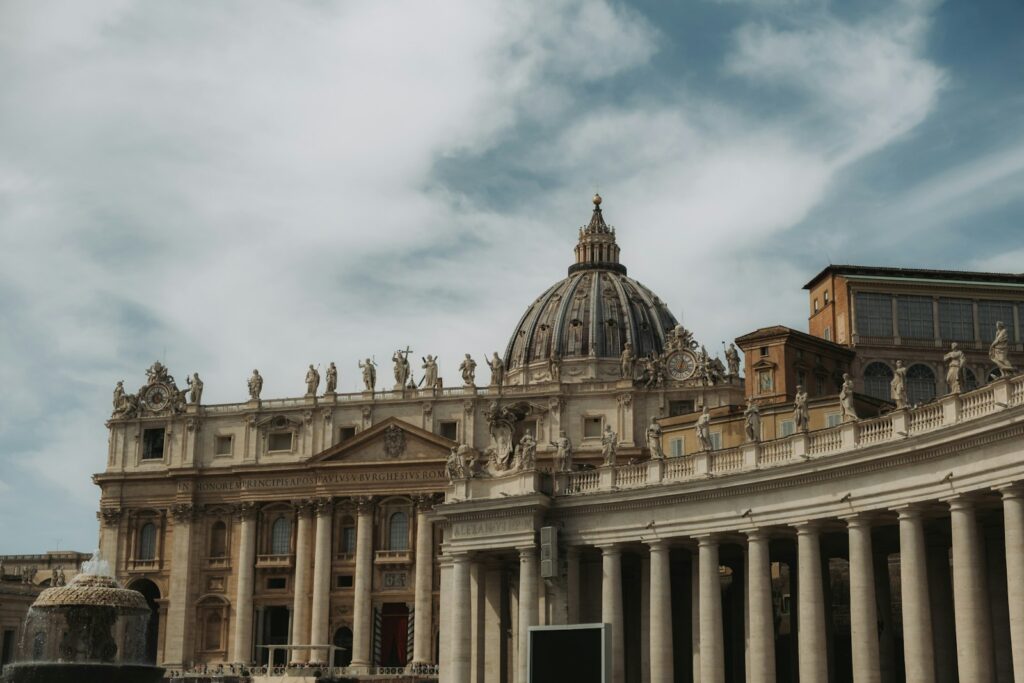
St. Peter’s Basilica is free to enter for an ordinary visit, although security screening is compulsory. Guided visits, reserved services and the dome have separate arrangements and possible charges.
Inside the Basilica, children can see Michelangelo’s Pietà, Bernini’s Baldachin and the enormous scale of the church itself.
However, visiting after several hours in the Museums can be tiring, particularly for children who have already spent much of the morning standing and walking.
If the Basilica is a major priority, consider two possibilities:
- Arrange a longer private itinerary that explicitly includes both sites, with sufficient time allowed for access and security.
- Visit the Vatican Museums with a guide, then return to St. Peter’s Basilica separately at a more comfortable time.
The Basilica is also an active place of worship. Religious ceremonies and special events can affect tourist access and guiding arrangements.
If you are organizing several Rome sightseeing days, the Italy on Foot trip planner can help you keep the Vatican Museums booking, Basilica visit, meals and transport in a realistic schedule. Avoid placing another demanding attraction immediately after a long museum session.
What about climbing St. Peter’s Dome with children?
The dome, or cupola, requires separate planning and should not be assumed to be included in a family Vatican tour.
There are stairs even when using the lift. The Basilica’s official visitor information states that the lift reaches the terrace level, after which visitors must climb another 320 steps to reach the upper viewing area.
The climb includes narrow passages and can be uncomfortable for anyone with vertigo, claustrophobia, respiratory difficulties or reduced mobility.
The official dome experience is recommended from age six, and minors must be accompanied by an adult.
For young children, consider whether the climb is appropriate after a museum visit. If the family is tired, postponing the dome or leaving it out entirely may be sensible.
The official St. Peter’s Dome information explains the stairs, lift limitations and visiting requirements.
What should children wear to visit the Vatican?
Dress requirements apply to the Vatican Museums, Sistine Chapel and St. Peter’s Basilica. Shoulders and knees must be covered, and sleeveless tops, very short shorts and miniskirts are not permitted.
Children should wear comfortable shoes suitable for several hours of walking on hard floors and outdoor pavements.
In summer, lightweight clothing that meets the dress requirements is preferable to heavy layers. Some museum spaces have limited air-conditioning because of the historic buildings and conservation requirements.
Do not rely on the guide being able to negotiate an exception to the dress code. Visitors who arrive in unsuitable clothing can be refused admission.
Should you book a morning or afternoon tour?
Morning tours are often practical for children who are more alert earlier in the day. They also leave time for lunch and a slower afternoon after the visit.
However, mornings can be busy at the Vatican Museums. Booking an early time does not guarantee empty galleries or an uncrowded Sistine Chapel.
Afternoon tours may suit families who prefer a relaxed start, particularly when children are older and comfortable spending several hours indoors.
The Vatican Museums currently publish regular opening hours from Monday to Saturday, 8 a.m. to 8 p.m., with final entry at 6 p.m. They are generally closed on Sundays except the last Sunday of the month, when free admission operates on reduced hours if the date is not excluded by the official calendar.
Free-entry Sundays may attract substantial visitor interest, so they are not necessarily the easiest option for a family seeking a controlled pace.
Check the official opening and closure calendar for your date, including any religious holidays or extraordinary restrictions.
What should you bring for a Vatican family tour?
Keep belongings manageable. The Vatican Museums operate security screening, and large bags or unsuitable backpacks may need to be deposited at the cloakroom.
For most families, a compact bag containing essential items is more practical than bringing everything needed for an entire sightseeing day.
Consider carrying:
- Booking confirmation and admission tickets.
- Identification or documentation required for any reduced admission.
- A small water bottle.
- Essential baby supplies, if applicable.
- Medication required during the visit.
- Tissues and basic hygiene items.
- A light extra layer suitable for the weather.
- A compact stroller or baby carrier if needed.
Food and drink cannot be consumed in the exhibition halls. Larger luggage should generally be left at your accommodation rather than taken to the Vatican.
There is no general visitor Wi-Fi coverage inside the Vatican Museums, according to the museum’s published guidance. Save your tickets, meeting instructions and guide’s contact number so they remain accessible offline.
What if your child becomes tired halfway through?
One of the practical advantages of a private tour is being able to discuss adjustments directly with the guide.
However, the route through the Museums includes controlled visitor flows, and the guide cannot always take a shortcut or reverse direction whenever someone needs a break.
Before booking, ask what would happen if the youngest child needed to stop after the first hour. Could the group pause at an approved resting area? Could some galleries be omitted? Would it be possible to finish early without creating difficulties for the rest of the family?
If your family includes children of very different ages, discuss how to balance their interests. A guide may be able to alternate simpler activities with more detailed explanations for older siblings.
If the child becomes unwell, tell the guide and follow museum staff directions. Do not continue toward the Sistine Chapel solely because it is listed as the final stop.
Is a private tour better than visiting independently?
A private guide can be useful for families who want explanations tailored to children, assistance with the museum layout and someone to manage the pace.
It is less necessary when your children are comfortable exploring museums independently and you are happy to choose a small number of highlights yourselves.
The Vatican Museums offer a dedicated family audioguide with an illustrated map, riddles and a treasure-hunt approach to the collections.
This can be a useful alternative for families who want child-oriented explanations without paying for a private guide.
You can also make an independent visit shorter by deciding in advance which galleries matter most. The official museum map helps with planning, although the available visitor routes still need to be followed.
For children who are very young, easily overstimulated or uninterested in museums, it may be better to postpone an extensive Vatican visit until they are older. Spending money on a private guide does not guarantee that a toddler will enjoy several hours inside a crowded museum.
How far ahead should you book?
Private guides and timed admission tickets are separate availability considerations. A guide may be available for your preferred day even when the required museum entry time is not.
For school holidays and other busy travel periods, begin enquiries several weeks ahead when possible, especially if you want a particular guide or a specific morning time.
Before paying a non-refundable guide deposit, confirm how admission tickets will be secured.
Some operators purchase the tickets as part of the package. Others expect you to book official entry yourself and provide the ticket details.
Make sure the dates, entry times and number of participants match the guiding reservation.
Do not buy museum tickets independently before checking whether the guide needs a particular entry time or booking category.
Cancellation policies and changes of plans
Private tour cancellation terms vary by provider. Some allow changes until a specified deadline, while others require a non-refundable deposit or impose stricter conditions once museum tickets have been purchased.
The Vatican Museums state that admission tickets cannot be refunded. A guide’s willingness to reschedule does not automatically mean the original admission tickets can be changed.
Before booking, ask what happens if:
- Your child becomes ill before the tour.
- Your family arrives late at the meeting point.
- Your flight or train is delayed.
- The assigned guide becomes unavailable.
- The Museums close an important section unexpectedly.
- The Sistine Chapel or Basilica is unavailable because of a religious event.
- You decide to shorten the visit after it begins.
Ask whether a replacement guide can be assigned and whether you can review their experience with children before accepting the change.
Keep the booking confirmation and all agreed conditions accessible on your phone.
Questions to ask before booking a private Vatican family tour
Send the provider your children’s ages, preferred date, number of participants and any mobility or special requirements. Then confirm the practical details before paying.
- Will the tour be exclusively for our family?
- Who will be our guide, and what experience do they have with children of these ages?
- Is the guide properly accredited or authorized to lead visits inside the Vatican Museums?
- Does the guide use stories, questions, games or other age-appropriate activities?
- How long is the tour, including walking and time spent inside the Sistine Chapel?
- Which galleries are included, and can the route be shortened if needed?
- Are the Raphael Rooms included?
- Does the tour include St. Peter’s Basilica, or only the Vatican Museums and Sistine Chapel?
- If the Basilica is included, how will we get there, and what happens if the internal passage is unavailable?
- Are all adult and child admission tickets included in the quoted price?
- How is free admission for children under seven handled?
- Are audio headsets provided, and are they suitable for young children?
- Can we bring a stroller throughout the proposed museum route?
- Can the guide help us locate restrooms and appropriate break areas?
- Where exactly will we meet, and where will the tour finish?
- Are security waiting times included in the advertised duration?
- What is the total price, including tickets, reservations, guiding and any additional fees?
- What are the cancellation and rescheduling conditions?
- What happens if our child becomes tired or unwell during the visit?
For most families with children aged six to twelve, a private two-and-a-half-hour Vatican Museums and Sistine Chapel tour is a sensible starting point. Choose a guide who can demonstrate real experience with children of similar ages, and confirm the route and tickets before paying. If you also want to see St. Peter’s Basilica, treat that as an additional activity with its own walking, access and timing requirements. The most useful tour is one your children can comfortably complete while still having enough attention and energy to appreciate the places they came to see.