Buy your ticket before joining the bus queue whenever you can. ATC has ticket offices at Marina Grande, the Capri town terminal, Marina Piccola and Anacapri, with additional authorized sellers and app sales. As of September 2026, a standard ATC single ride is €2.50, while an onboard purchase costs €3.00. Since 15 June 2026, onboard payment is cashless. Capri bus tickets are therefore easiest to sort out before you reach the door, especially when a tiny bus is filling and fifty people behind you have the same idea.
Where to buy a bus ticket on Capri
For most visitors, the simplest option is an ATC biglietteria, meaning ticket office. ATC’s April 2026 sales notice lists ticket offices at the four main terminals: Marina Grande, Capri, Marina Piccola and Anacapri. There are also authorized retailers around the island, plus online sales through ATC GO and MyCicero. You can check the operator’s current list of sales points before relying on a particular newsstand or shop.
At Marina Grande, do not confuse the bus ticket counter with the ferry ticket offices simply because both are in the port area. Follow signs for Autobus or ask for the biglietteria autobus. The transport ticket offices and funicular entrance are just behind the main waterfront area, a short walk from the ferry arrivals. Buy first, then locate the queue for your actual destination.
The Capri town terminal is at Piazza Martiri d’Ungheria, on Via Roma and only a short walk from the Piazzetta. Anacapri’s main terminal is Piazza della Pace, sometimes referred to locally as Piazza Cimitero. Marina Piccola has its own terminal and ATC ticket office as well.
You can even buy before reaching the island
ATC’s 2026 list includes authorized sellers at Molo Beverello in Naples. That can be useful if you are taking a ferry from Beverello and would rather arrive on Capri already holding your first bus ticket. Sales arrangements can change, so look at the operator’s current list rather than assuming any port newsstand sells the right ticket.
What the bus costs in 2026
The current 2026 island timetable lists an ordinary ATC single at €2.50 and an onboard purchase at €3.00. The higher prices took effect in July 2026. You may still find older webpages showing €2.40 or €2.90, including material that has not caught up with the July increase, so use the fare displayed at the ticket office and on the current route timetable rather than an old screenshot.
If you expect to make several ATC journeys in one day, ask for the biglietto giornaliero, or day ticket. The important catch is that it is an ATC product, not a magic island-wide transport pass. The funicular and Staiano buses are separate operations, so count your likely ATC rides before deciding that a day ticket is automatically the better buy.
Cash works on land, not on the bus
Since 15 June 2026, ATC no longer accepts cash for tickets purchased aboard its buses. Onboard payment is electronic using a credit or debit card, contactless phone or smartwatch, ATC GO or MyCicero. Cash is still accepted through the normal land-based sales network. ATC explains the change in its cashless onboard payment notice.
If several people are traveling together with only one bank card, buying the required number of tickets at a ticket office is the safer option. Current local instructions for Tap&Go treat each passenger separately, so a family should not reach the front of a crowded queue assuming one quick card tap will automatically cover everyone.
How boarding the small buses actually works
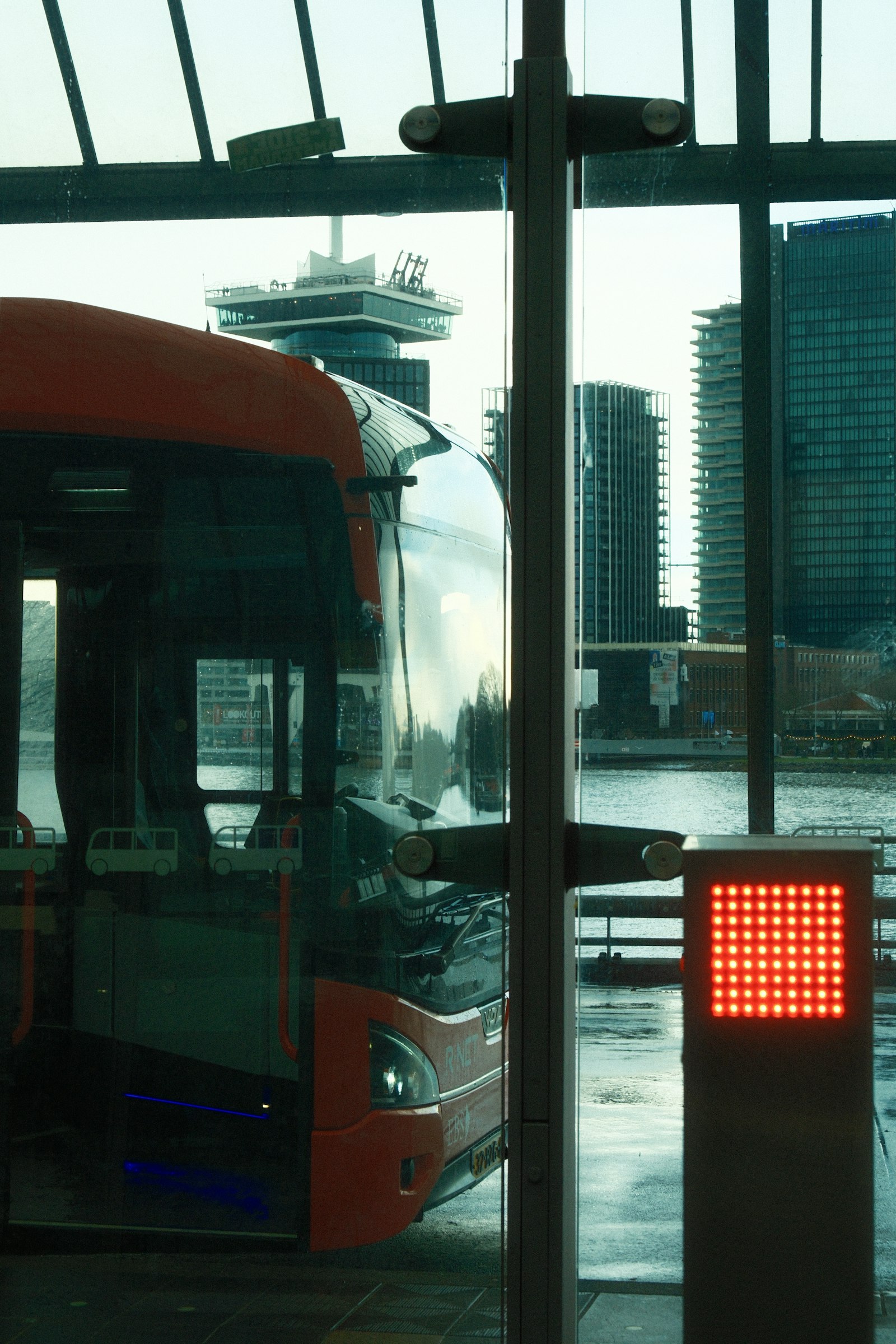
Capri’s public buses are minibuses because full-size urban buses would have a miserable time on the island’s narrow roads. There are only around ten seats on many vehicles, although additional passengers can stand up to the vehicle’s permitted capacity. That small size explains a lot of what visitors experience at the stops: a queue that looks modest can still require more than one departure.
- Check the destination before joining a line. Look at the bus display or terminal sign for names such as Anacapri, Marina Grande or Marina Piccola. Do not assume everyone standing beside the terminal is waiting for the same route.
- Stay in the correct queue. At busy terminals, staff may direct passengers into separate boarding lines. Being physically close to the bus door does not put you ahead of people already queued for that departure.
- Have payment or your ticket ready. The aim of the cashless system is to avoid holding the vehicle while passengers search for change.
- Board only through the indicated entrance. ATC requires passengers to use the prescribed doors and not block entrances or exits.
- Validate or activate your fare. If you are paying contactless, tap and wait for confirmation. If you bought through ATC GO, activate or validate the ticket as required by the app. Pre-purchased tickets should be validated according to the onboard equipment and retained for inspection.
- Move inside once aboard. Standing passengers are normal. Hold the rails because Capri’s roads include bends and abrupt gradients, and keep bags away from the doorway.
Once the vehicle reaches its legally permitted passenger capacity, ATC does not allow more people aboard. The remaining queue waits for the next bus. This is also why a bus can drive past an intermediate stop in summer: there may simply be no legal room left inside.
Intermediate stops work differently from terminals
Almost all ATC stops away from the main terminals are request stops. If you are waiting beside a roadside fermata, make your intention obvious with a hand signal as the bus approaches. Standing silently several metres from the pole can result in watching your bus continue down the road.
To get off, press the stop-request button early enough for the driver to stop safely. If you cannot find the button, a brief verbal request to the driver is permitted. ATC specifically warns that passengers who signal too late may have to continue to the next stop.
- Fermata: bus stop
- Capolinea: end of the line or terminal
- Biglietteria: ticket office
- Convalida / convalidare: validation / to validate
- Fermata prenotata: stop requested
The three terminals visitors most often confuse

Marina Grande
This is the ferry port and the most hectic boarding point for day-trippers. Buses leave for Capri and Anacapri, while the funicular provides the main direct connection to Capri town. If your destination is the Piazzetta, the funicular is usually the more straightforward choice. If you are going directly to Anacapri, look specifically for the Anacapri bus queue instead of following the larger crowd toward the funicular.
Capri town
The ATC terminal is at Piazza Martiri d’Ungheria on Via Roma, not in the middle of Piazza Umberto I itself. From the Piazzetta, walk out along Via Roma toward the bus station signs. This is the place to queue for Anacapri, Marina Piccola and other ATC connections.
Anacapri
The main interchange is Piazza della Pace. This matters because buses arriving from Capri also serve Piazza Vittoria, near the Monte Solaro chairlift. Drivers may call out “Anacapri” there, but travelers continuing toward the Blue Grotto or Punta Carena should normally remain aboard until Piazza della Pace, where the onward bus connections are organized.
For more detail on the cave itself, including the separate boat and entrance arrangements, see the Italy on Foot guide to the Blue Grotto on Capri.
ATC, Staiano and the funicular do not use one universal ticket
One of the easiest mistakes on Capri is assuming that a bus ticket is simply a “Capri transport ticket.” The island has separate operators. ATC runs the main bus network between Capri, Anacapri, Marina Grande and Marina Piccola. Staiano operates other services, including important Anacapri connections, while SIPPIC operates the funicular.
A ticket or day pass issued by one company should not be assumed valid on another. This matters most when you travel from Capri to Anacapri and then change for the Grotta Azzurra or Punta Carena lighthouse. Check the operator shown on the timetable or vehicle before presenting your previous ticket.
If you are fitting Capri into several southern Italy stops, it helps to build the rest of your Italy itinerary around the actual ferry and island connections rather than treating the whole day as one continuous transport system.
Luggage changes the boarding calculation
ATC’s published travel conditions allow one small hand bag free when it is no larger than 25 × 30 × 50 cm. A bag beyond the free allowance requires the appropriate additional single-ride ticket. Luggage cannot occupy a passenger seat or obstruct the aisle, doors or other passengers.
This rule matters more on Capri than it would on a normal city bus. There is no generous coach-style luggage hold underneath these vehicles. A rolling suitcase that feels perfectly ordinary on a train can become a large object in a packed minibus. If you are changing hotels with several suitcases, a taxi or porter service can be substantially less awkward than trying to squeeze everything through two busy bus terminals.
Children, strollers and reduced mobility
Children up to one metre in height travel free on ATC. A child’s stroller or pushchair may also be carried free, but it must be folded; ATC does not allow an open stroller aboard for safety reasons. The wheels should also be reasonably clean before it is brought inside.
Wheelchairs are permitted, but not every ordinary bus can handle every mobility requirement. ATC publishes a dedicated accessible public-transport service with space for two wheelchairs and accompanying passengers, and asks users to reserve it in advance on 800 991 404. Anyone who needs step-free boarding should check the operator’s accessibility notice rather than simply waiting for the next minibus.
What to do when the queue is longer than expected
Do not calculate your wait by looking at the number of people and imagining a normal 50-seat city bus. Capri’s minibuses absorb queues in small batches. During busy summer periods they can also reach capacity before they get to intermediate stops.
If you are in Anacapri and need to return toward Capri, starting from the Piazza della Pace terminal usually gives you a better chance of boarding than waiting farther along the route at Piazza Vittoria. If you have a fixed ferry departure, that difference can matter. The broader problem of Capri’s midday transport bottlenecks is also covered in Italy on Foot’s practical look at visiting Capri in 2026.
If the queue at Marina Grande for Capri town is severe, compare it with the funicular line before committing. Conversely, do not abandon a direct Anacapri queue merely because you see people moving quickly toward the funicular. Going up to Capri first and then taking another bus means another fare, another boarding point and another potential queue.
If you arrive late or the ticket office is closed
A closed ticket office no longer means you need exact coins. You can board an ATC bus and pay electronically with an accepted bank card or contactless device, or use ATC GO/MyCicero. What you cannot do after the June 2026 change is hand the driver cash for a ticket.
Schedules on Capri change with the season and can include services timed around ferry arrivals, so check the current timetable on the day rather than relying on a photograph saved months earlier. Sunday and holiday frequencies may also differ from the pattern you saw on a weekday.
For a return ferry, build in enough margin for one bus to fill before you board. If missing the sailing would cause a serious problem, a taxi is the sensible recovery plan once that margin disappears. On Capri, the timetable tells you when the bus is supposed to leave; the queue decides whether you leave with it.