The route is simple: leave the platform, follow the pedestrian tunnel into Manarola, then turn left toward the sea and continue downhill along Via Renato Birolli to the small harbour. The Manarola station to the harbour walk is short, but suitcases make it less effortless than the map suggests because the railway station is not step-free and the village route includes slopes, uneven paving and some avoidable stairs.
For a 2027 trip, the most useful thing to know is that the harbour is downhill from the village end of the station tunnel. If you emerge from the tunnel and start climbing toward the church of San Lorenzo, you are going the wrong way for the waterfront.
The route from the train platform to the water
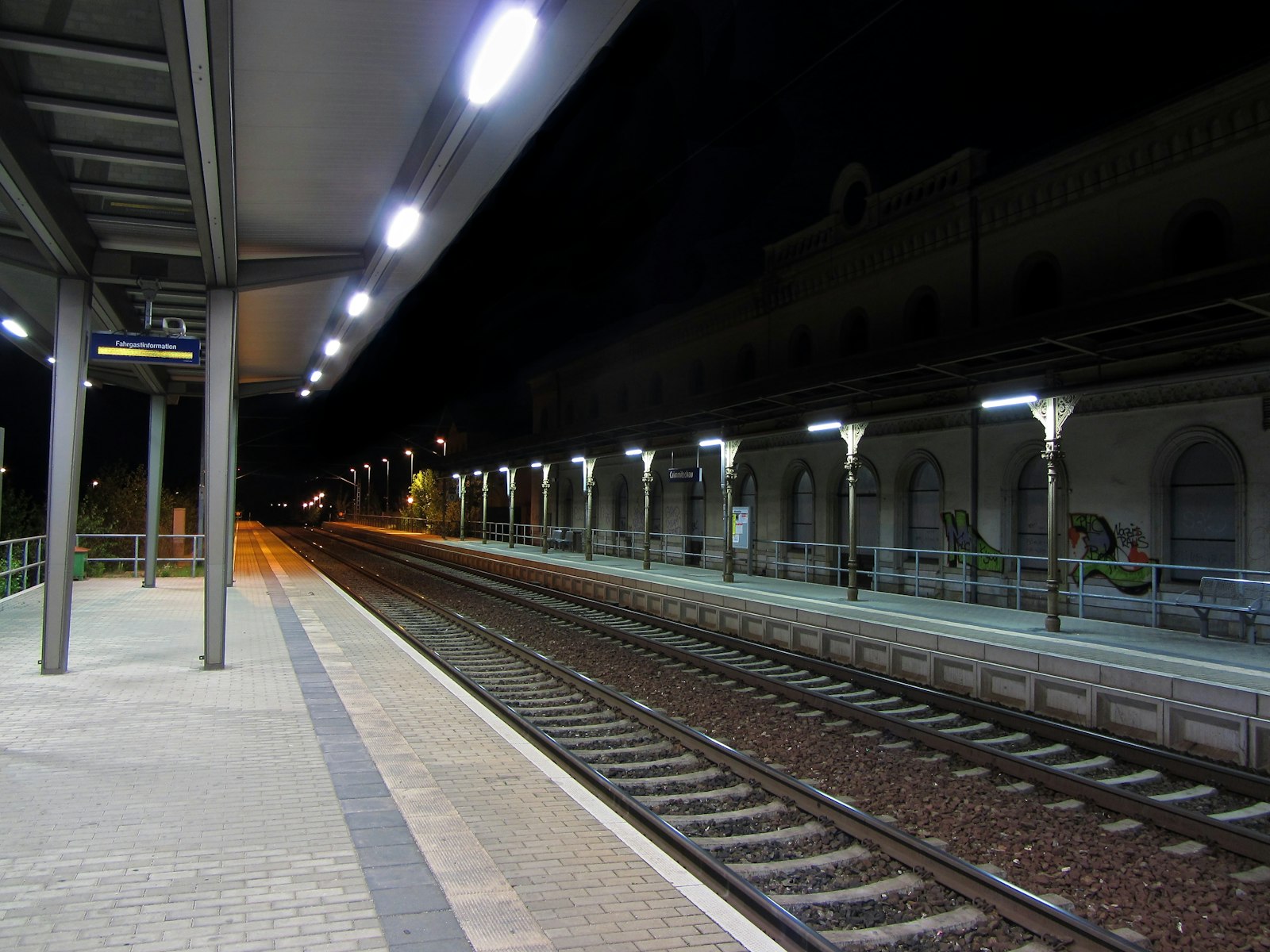
- Get off at Manarola and follow the station exit. The railway sits on the seaward side of the rock rather than in the village itself. Depending on the platform you arrive on, stairs may be part of the exit route.
- Enter the pedestrian tunnel leading into the village. This is the obvious connection between the station and central Manarola. Do not confuse it with paths leading along the cliffs.
- At the village end of the tunnel, go left toward the sea. The National Park’s own walking directions use the same instruction: through the tunnel, then left toward the waterfront.
- Continue toward Piazza Dario Capellini and Via Renato Birolli. This is the lower part of Manarola rather than the uphill route toward San Lorenzo.
- Follow Via Renato Birolli downhill. You will begin seeing the fishing boats stored beside the street, a useful confirmation that you are heading toward the marina.
- Keep going until the street reaches the rocky inlet. This is the marina, porticciolo or scalo you may see referred to on signs and maps.
Without heavy bags, the whole transfer takes only a few minutes. With a large roller case, children or summer crowds, budgeting about 10 to 15 minutes is more sensible than relying on the shortest walking estimate shown by a map app.
The difficult part is the station, not the tunnel
Do not assume that such a small station will have an easy lift between tracks. Rete Ferroviaria Italiana’s Manarola station information currently lists no barrier-free route by ramp or lift to the passenger platforms, and Manarola is not listed as providing the standard assistance service for passengers with reduced mobility.
That matters considerably more with luggage than the distance to the harbour. A full-size suitcase that rolls perfectly well through the pedestrian tunnel may still have to be carried on station stairs first.
For travel in 2027, check the RFI page again shortly before departure if avoiding steps is essential. Accessibility work can change station layouts, and it would be a mistake to assume today’s arrangement will remain permanent.
How to avoid unnecessary stairs around Piazza Capellini
Piazza Dario Capellini sits slightly above part of the route between the station tunnel and lower Via Renato Birolli. Travelers following the crowd can find themselves carrying cases up steps onto the square and then back down again.
With a roller bag, watch for the sloping street-level route around the raised piazza rather than automatically taking the steps over it. Manarola’s lanes are also used to move the village’s small boats, so the smoother route is particularly useful when you have wheels.
If crowding makes the layout difficult to read, the simple rule is to keep heading downhill and toward the sea. Do not climb merely because most people in front of you are climbing. They may be heading to the square, restaurants or viewpoints rather than the marina.
Via Renato Birolli is downhill, but that does not make luggage effortless
Once you are properly on Via Renato Birolli, route-finding becomes easy. The lane runs toward the water and is one of the main pedestrian arteries of lower Manarola.
The nuisance is the surface. Small wheels can catch on uneven paving, and summer foot traffic can leave little room to pull a suitcase beside you. A backpack or compact two-wheel case is easier here than a very wide four-wheel spinner.
Keep your luggage close to you rather than letting it roll freely downhill. Boats may be stored beside the lane, delivery activity still takes place in the village, and there can be far more pedestrian traffic than the width of the street suggests.
If you will be making several rail transfers before reaching Cinque Terre, the separate guide to changing trains in Italy with luggage explains why platform stairs are often more important than the scheduled connection time.
Check where your accommodation actually is before going downhill
The harbour route is correct if you are sightseeing at the water, staying near lower Via Renato Birolli or catching a boat. It is not automatically the right route for every Manarola hotel or apartment.
Many rooms are above the station tunnel rather than below it. If the address mentions Via Antonio Discovolo, Piazza Papa Innocenzo IV, San Lorenzo, Via Rollandi or another upper-village location, check the property directions before dragging your suitcase all the way to the marina.
A useful decision rule is:
- Address near Via Renato Birolli or the marina: turn left after the tunnel and descend.
- Address near San Lorenzo or the upper village: you will normally need the uphill direction instead.
- Address on a staircase or tiny side lane: ask the accommodation for the easiest luggage approach, not simply the shortest walking route.
Manarola is compact enough that a wrong turn does not put you kilometres away, but walking downhill with 20 kilograms of luggage only to discover that your room is above the church is a particularly efficient way to make the village feel much larger.
Wheelchairs, reduced mobility and strollers
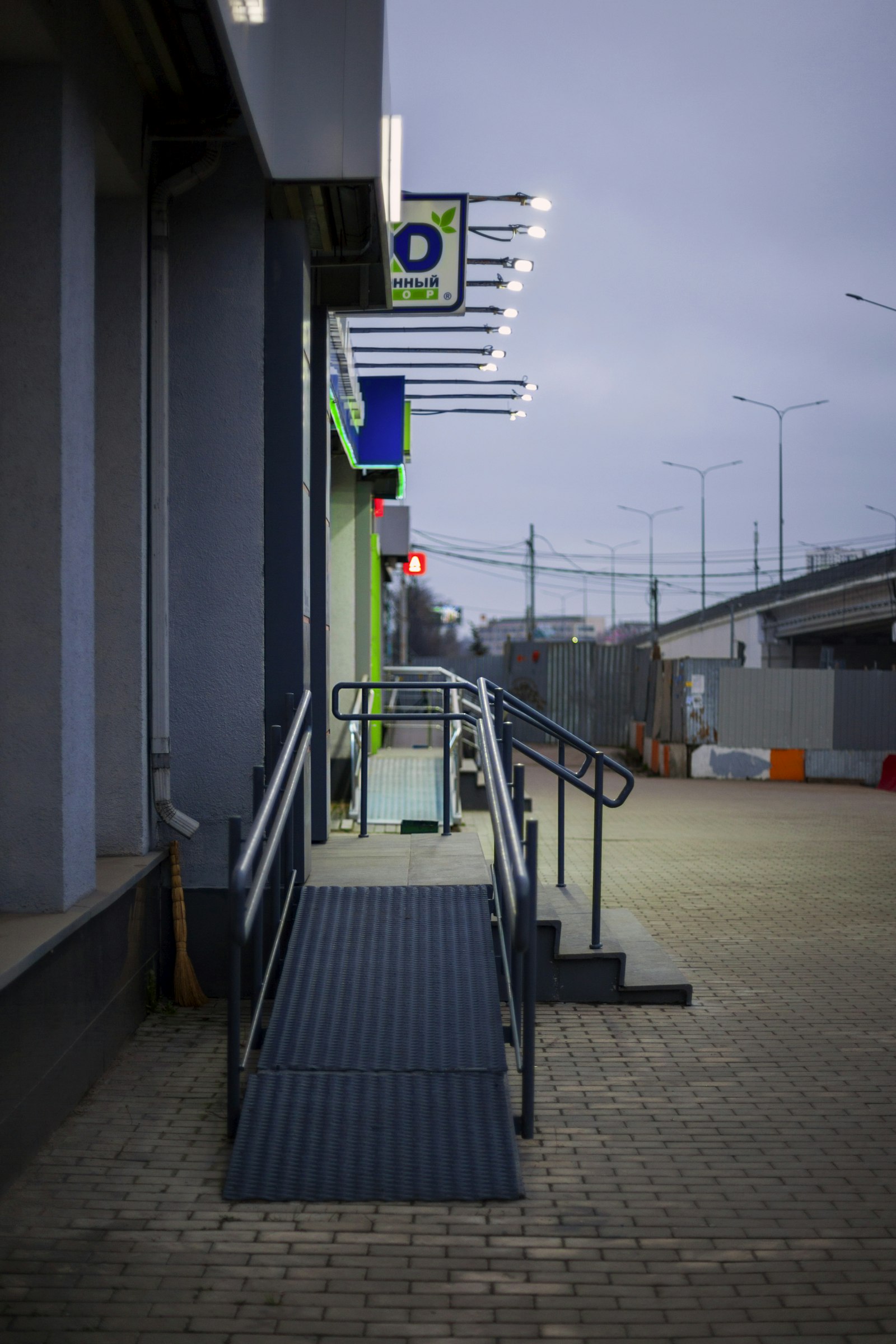
The pedestrian tunnel itself is not the main accessibility problem. The railway station is. Current RFI information says there is no barrier-free route to the platforms, so travelers who cannot use stairs should not treat Manarola as a reliably step-free rail arrival.
A stroller is more manageable if it folds and can be carried for the station sections. A heavy non-folding stroller is considerably more awkward.
The waterfront should not be confused with a level marina promenade either. Manarola’s actual boat landing is steep. The Cinque Terre ferry operator describes the Manarola landing as having architectural barriers and a strongly sloping frontal approach. Anyone relying on a wheelchair or who has significant walking limitations should check the operator’s current boarding arrangements directly before planning a boat connection.
If you are walking down to catch a ferry
Reaching the water is not quite the same thing as being ready to board. Continue to the operating boat landing and look for signs such as imbarco or battelli, meaning boarding or boats.
Ferry service in Cinque Terre is seasonal and weather-dependent. Manarola was a scheduled stop during the 2026 operating season, but 2027 departure dates and times should be checked once the operator publishes that year’s timetable. Rough seas can also prevent boats from using individual village landings even while trains continue running normally.
Do not plan a train-to-ferry connection with only the bare walking time between them. Add time for the station stairs, the tunnel, crowds on Via Birolli and finding the correct boarding point.
If Manarola is one stop in a longer trip, you can organize the rest of your Italy route before deciding which villages make sense with your arrival times and luggage.
What to do if you take the wrong turn after the tunnel
The easiest mistake is turning uphill instead of toward the harbour. If the street begins climbing noticeably and you find yourself heading toward the church of San Lorenzo, stop and reverse direction. You do not need another tunnel or a bus to reach the waterfront.
Return toward the tunnel area and follow the downhill branch toward Via Renato Birolli. Boats stored along the street are the clearest visual confirmation that you have reached the correct lower-village route.
Another common mistake is following signs for a hiking trail because it appears to run along the coast. Trail conditions in Cinque Terre change after landslides, maintenance and bad weather. The ordinary route from the station into Manarola requires no hiking trail at all.
Late arrivals and quieter evening trains
The physical route does not become complicated after dark, but services around it do. The National Park information point, shops and ferry facilities should not be assumed to remain open simply because trains are still running.
For an evening arrival, save your accommodation address and check-in instructions before leaving La Spezia or Levanto. Mobile reception can be less convenient inside tunnels, and “meet us near the station” is much easier to interpret when you already know which side of the pedestrian tunnel your host means.
If you arrive after ferry operations have finished, the harbour remains part of the village waterfront, but it is not a substitute transport hub. Your practical onward option will usually be the train rather than waiting beside the water for another boat.
The three mistakes that make this short transfer harder
- Assuming Manarola station has lifts. Current official accessibility information says otherwise.
- Taking every staircase you see. Around Piazza Capellini, look for the smoother sloping route if you have luggage.
- Going to the harbour before checking your hotel address. Many rooms are uphill, and descending first can create a completely unnecessary climb back through the village.
For the simplest arrival, pack so that you can lift your own bag on station stairs, follow the pedestrian tunnel into Manarola, choose the left-hand downhill direction at the village end, stay on the smoother route around the raised piazza where possible, and continue along Via Renato Birolli until the lane reaches the sea.