A surprise proposal in Florence needs three things arranged before the day: an exact location, a photographer who knows when the proposal will happen, and a simple way to coordinate without alerting your partner. Many photographers offer 30-minute to two-hour sessions that cover the proposal itself and, if requested, portraits afterward. The most important booking questions concern where the photographer will stand, how you will recognize the correct spot, what happens if you arrive late, and how the plan changes if it rains.
Hiring a proposal photographer Florence visitors can coordinate with discreetly is especially useful when you are unfamiliar with the city. Popular viewpoints can be crowded, historic gardens have opening hours, and some museums restrict professional photography. A successful arrangement depends on practical preparation, particularly when the moment needs to remain a surprise.
How Does Surprise Proposal Photography Work?
Most surprise photography sessions begin well before the photographer takes the first picture. You discuss the intended location, preferred time, and how the photographer can recognize you without approaching or revealing the arrangement.
The photographer may suggest a particular position, explain which direction you should face, and agree on a signal indicating that you are about to propose.
A typical arrangement follows this sequence:
- Initial planning: You tell the photographer your proposed date, preferred location, and whether your partner knows about the photography.
- Location coordination: The photographer identifies the exact place where you should stop and where they can photograph you without standing directly in front of your partner.
- Discreet arrival: The photographer reaches the location before you and takes up an agreed position.
- The proposal: You arrive together, stop at the planned location, and propose while the photographer captures the moment.
- Introductions: After the proposal, the photographer approaches when appropriate and explains the arrangement.
- Optional portraits: You can continue with a short engagement photography session around Florence.
Some photographers work openly as tourists or street photographers until the proposal begins. Others remain at a distance using a longer lens.
The right approach depends on the setting. A photographer standing with a large camera on Ponte Vecchio may attract little attention, while someone waiting alone in a quiet garden can be more noticeable.
Ask how the photographer intends to remain discreet and what they will do if your partner notices them.
Choosing the Right Proposal Location in Florence
The most recognizable location is not necessarily the easiest place for a surprise proposal. You need sufficient space to stop, a clear view for the camera, and a route that feels natural to your partner.
Florence offers panoramic terraces, gardens, riverside viewpoints, and historic squares. Each comes with different crowd levels, lighting conditions, and practical restrictions.
Piazzale Michelangelo: panoramic views of Florence
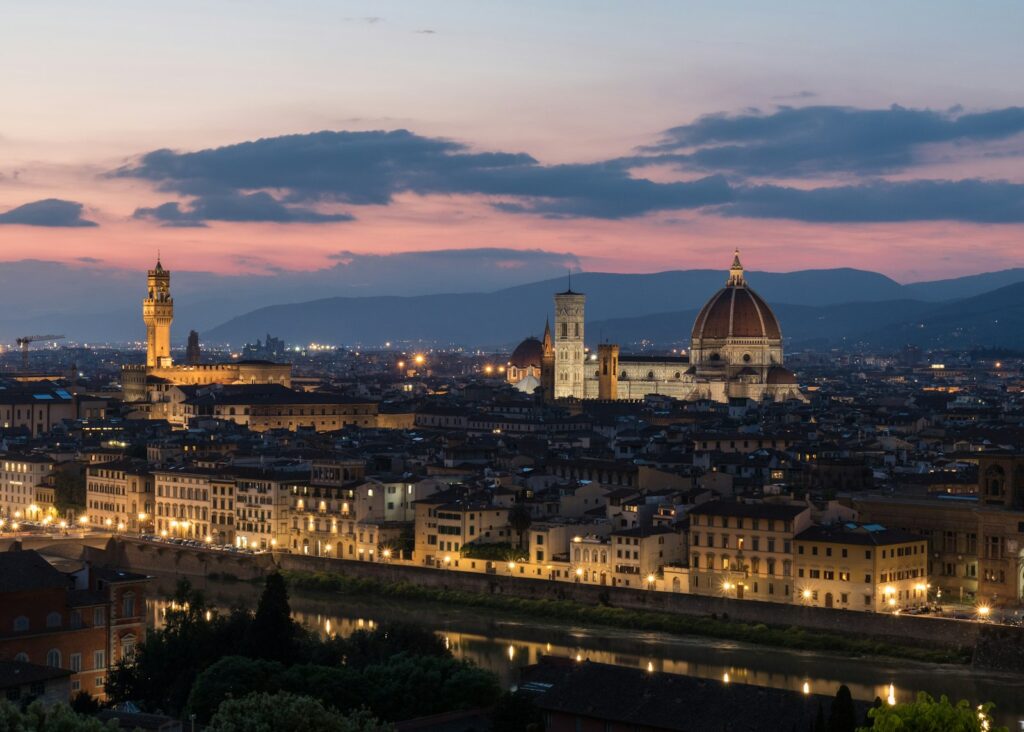
Piazzale Michelangelo offers a wide view over the historic center, including the Duomo, Palazzo Vecchio, the Arno, and Ponte Vecchio. It is one of the city’s most recognizable locations for outdoor photography.
The terrace is particularly popular around sunset, when visitors gather to watch the changing light over Florence.
That popularity presents a problem for proposals. You cannot reserve a section of the public viewing area simply by hiring a photographer, and other visitors may walk between you and the camera.
An early-morning session can provide a less crowded environment, although it does not guarantee privacy.
Before booking, ask the photographer to identify the precise section of the terrace where the proposal should happen. “Meet at Piazzale Michelangelo” is too vague for a carefully coordinated surprise.
Also consider how you will get there. The viewpoint is uphill from the historic center, and walking from the Arno involves a substantial climb. A taxi may be preferable if you want to arrive comfortably dressed.
The official Florence tourism website provides information about the viewpoint and its surroundings.
San Miniato al Monte: views above Piazzale Michelangelo
The area outside the Basilica of San Miniato al Monte offers another elevated view over Florence. It is farther uphill than Piazzale Michelangelo and has a different atmosphere, with the Romanesque church providing an additional architectural backdrop.
This location may suit couples who prefer a more contemplative setting and do not want to propose in the middle of a large panoramic terrace.
However, the basilica is an active place of worship. Religious services, visitor access, and other activities must be respected.
For a professional proposal session, discuss using the outdoor viewpoint rather than assuming photography inside the church is allowed. Any planned photography within religious premises should be cleared with the relevant management.
The stairs, slopes, and uneven surfaces also deserve attention, particularly if one of you has reduced mobility.
Giardino delle Rose: a garden overlooking the city
The Rose Garden, or Giardino delle Rose, sits below Piazzale Michelangelo. It combines greenery, sculptures, and views across Florence.
It can offer a more intimate setting than the main panoramic terrace, although it remains a public garden and other visitors may be present.
Its opening hours are seasonal. The published 2026 schedule lists 9:00 a.m. openings, with closing times ranging from 5:00 p.m. in winter to 8:00 p.m. in summer.
For a proposal in 2027, check the updated schedule on the official Rose Garden information page. Do not assume you can arrange a sunset proposal inside the garden when the seasonal closing time falls earlier.
The paths also have changes in level, and accessibility is partial. Ask your photographer to assess the exact meeting position rather than describing the entire garden as suitable for every visitor.
Ponte Vecchio and the Arno: recognizable Florence scenery
Ponte Vecchio is an appealing backdrop, but proposing directly on the bridge can be difficult because of pedestrian movement and limited space.
The bridge is often busy during the day and around popular evening photography periods. People may stop unexpectedly, cross directly in front of the camera, or gather around the central viewing areas.
A practical alternative is to propose at a nearby riverside location where Ponte Vecchio appears behind you.
Areas around Ponte Santa Trinita and sections of the lungarni, the streets along the Arno, offer different views of the bridge and historic riverfront.
For photographs that include Ponte Vecchio clearly, the exact side of the river and the direction of the light matter. Ask the photographer to show examples taken at the approximate time you are considering.
See the Italy on Foot guide to Ponte Vecchio and the surrounding area for more information about the bridge and visiting conditions.
Duomo and Piazza della Signoria: historic city-center proposals
The cathedral area and Piazza della Signoria offer immediately recognizable Florentine architecture without requiring a trip uphill.
These locations can work well early in the morning, when pedestrian traffic may be lighter than during the main sightseeing hours.
The main complication is the number of people crossing the squares. A photographer may be able to find an angle that excludes much of the crowd, but cannot guarantee an empty background.
For a cathedral backdrop, consider whether you want the entire dome visible or would prefer a closer composition featuring marble details and the surrounding streets.
A smaller side street or a quieter part of the square may be easier for a discreet proposal than standing directly in front of the cathedral entrance.
Giardino Bardini: gardens and city views
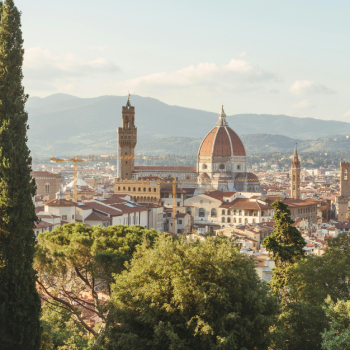
Giardino Bardini has formal terraces, garden paths, and elevated views over Florence. Its wisteria pergola is especially associated with spring, although flowering dates depend on seasonal conditions.
The garden is a ticketed attraction with set opening hours. Its paths include slopes, gravel, and changes in elevation, so accessibility is limited in some areas.
More importantly, admission to a garden does not automatically authorize a professional photo session or a staged proposal setup.
Contact the garden’s management before arranging a paid photography session, particularly if it involves professional equipment, decorations, or special arrangements.
The official Bardini Garden visitor information provides current access details and contact information.
A Warning About Proposals in the Uffizi and Boboli Gardens
Visitors sometimes assume that a photographer can discreetly capture a proposal inside a famous museum simply by buying an ordinary entrance ticket.
The Uffizi Galleries have specific rules addressing marriage proposals in their museum spaces. Personal proposals are welcomed when they do not disturb other visitors, but the published rules explicitly exclude the presence of professional photographers or people using professional photographic or video equipment for such proposals.
Those rules apply across the Uffizi museum system, which includes Palazzo Pitti and Boboli Gardens.
Read the official Uffizi notice about marriage proposals before making plans.
If you want professional photographs inside a museum or heritage site, contact its management about the applicable permissions and whether your proposed activity can be authorized. Do not assume that a photographer can bypass restrictions by posing as an ordinary visitor.
For a simpler arrangement, consider proposing in an appropriate outdoor public location and taking portraits afterward where photography is permitted.
Sunrise, Sunset or Daytime: What Time Should You Choose?
The time of day affects both the photographs and how easily the surprise can be coordinated.
Sunrise and early morning
Early morning can be particularly useful around the Duomo, Ponte Vecchio, and the main viewpoints because pedestrian traffic is often lighter.
It also provides softer light when the weather is clear. However, the direction of the sunlight varies according to the season and the location, so not every viewpoint receives the same lighting conditions.
Another consideration is how naturally you can persuade your partner to leave the accommodation early.
If you normally prefer slow mornings, an unexplained departure before breakfast could raise questions. A planned walk, sightseeing appointment, or breakfast reservation may provide a believable reason to be outside early.
Late afternoon and sunset
The hour before sunset often provides warm light, particularly on clear days. Photographers sometimes call this period the golden hour.
It can work well for riverside views and elevated locations, but popular sunset spots in Florence attract large numbers of visitors.
Sunset times also vary substantially throughout the year. A proposed time that works in June may fall after dark in December.
Ask the photographer to recommend an exact arrival time for your specific date. The proposal itself may need to happen before the most attractive portrait light disappears.
Midday and evening
Midday sunlight can create strong shadows, especially in open squares during summer. Experienced photographers can work with those conditions, although choosing a position with softer or more even lighting can help.
After sunset, Florence’s illuminated streets and monuments can provide interesting portraits. However, low-light photography may require different camera settings and positioning.
If you want the photographer to remain completely discreet, ask whether additional lighting would be necessary after dark. Flash or portable lights could reveal the photographer before the proposal begins.
How to Coordinate the Proposal Without Revealing the Surprise
The most reliable plans use an agreed location and simple instructions rather than complicated signals or a minute-by-minute performance.
Before the day, ask the photographer to send a map pin and a reference photograph showing exactly where you should stand.
A good coordination plan should establish:
- Your arrival route: Which street, staircase, or entrance you will use.
- The proposal position: A specific spot that can be identified without searching around.
- Your orientation: Which direction you and your partner should face.
- The photographer’s position: Where the camera will be located and how the photographer will recognize you.
- The signal: A simple action or agreed sequence that tells the photographer the proposal is about to happen.
- The backup plan: What to do if the spot is occupied or you cannot find it.
It can help to send the photographer a recent photograph of both of you, along with a description of what you expect to wear.
However, the photographer should not rely exclusively on clothing identification because outfits can change with the weather.
Keep the signal simple
A useful signal might be stopping beside a particular landmark and taking your partner’s hand. Another arrangement might involve asking your partner to look at the view before turning toward them.
The photographer should know approximately when the proposal will happen, but the moment itself should remain natural.
Avoid elaborate sequences involving several phone messages, coded phrases, or multiple changes of position. These increase the chances of confusion.
Make sure the photographer is ready first
One common mistake is arriving exactly at the agreed time and immediately proposing.
The photographer may still be adjusting their position or dealing with people standing in the intended background.
Agree on a method for confirming readiness before you begin. This could be a discreet message received before you approach the final location or another arrangement discussed in advance.
Do not rely on your partner being distracted while you send several messages at the last moment.
Decide when the photographer will approach
Some couples prefer the photographer to remain at a distance for a few minutes after the question. Others are happy for the photographer to approach shortly afterward.
Agree on a sensible default while allowing the couple to have a private moment.
Once your partner understands the situation, check that they are comfortable continuing with photographs. A surprise proposal should not create an obligation to participate in a public portrait session.
How Long Should You Hire the Photographer?
Proposal photography packages in Florence currently include short 30-minute sessions, one-hour appointments, and longer sessions of approximately two hours.
Each format provides a different amount of flexibility.
30 minutes: the proposal and a few immediate photographs
A short appointment can work if you already know the exact location and do not need photographs in several neighborhoods.
The photographer generally concentrates on the proposal, reactions, and a small number of portraits afterward.
This arrangement leaves little time for late arrivals, walking between locations, or unexpected changes.
Ask whether the photographer’s waiting time before you arrive is included in the session duration.
One hour: proposal and engagement portraits
For many couples, one hour provides enough time to capture the proposal and continue with a relaxed portrait session nearby.
For example, a proposal along the Arno might be followed by photographs at a nearby bridge and surrounding streets.
The route should remain geographically compact so that most of the session is spent taking photographs rather than walking.
Two hours: additional locations and more flexibility
A longer session allows time to explore several backgrounds, change position as light conditions develop, or take portraits at a more relaxed pace.
However, two hours does not automatically mean you can visit several distant parts of Florence.
Travel time is often included in the purchased photography duration. Ask how many locations can realistically fit into the route and whether transportation is needed.
For a simple surprise proposal with one main location and some portraits, a one-hour session is often sufficient. A longer booking makes more sense when the photography itself is an important part of your plans for the day.
What Is Usually Included in the Price?
Proposal photography rates in Florence vary according to the photographer’s experience, session duration, planning assistance, image quantity, and delivery arrangements.
Current published packages range from relatively short sessions priced in the low hundreds of euros to more extensive one- or two-hour services costing several hundred euros or more.
Some offerings include only a few edited images, while others promise dozens. Private location arrangements, flowers, video coverage, and additional planning services may be charged separately.
Before comparing prices, ask for the complete package details:
- The exact duration of photography coverage.
- Whether preparation and proposal coordination are included.
- The number of edited photographs delivered.
- Whether high-resolution downloads are included.
- Whether unedited files are provided or remain with the photographer.
- The expected delivery deadline.
- Any additional charge for travel outside central Florence.
- Whether short videos or a second photographer cost extra.
- The price of expedited delivery, additional edits, or extra images.
- The deposit, payment schedule, and cancellation conditions.
A photographer offering 15 edited photographs is providing a different product from one delivering 50 or 100 images, even if the session duration is similar.
Also check whether the delivered pictures are individually retouched or mainly corrected for exposure, color, and cropping.
What Should a Proposal Photographer’s Portfolio Show?
Beautiful engagement portraits do not necessarily demonstrate that a photographer can capture a surprise proposal discreetly.
Ask to see examples of actual proposals rather than only carefully posed couple photographs.
Look for sequences that include the approach, the question, the reaction, and the moments immediately afterward.
Pay attention to whether both people’s expressions are visible. A photograph from directly behind one partner may include the setting but miss an important reaction.
Also consider how the photographer handles backgrounds containing other visitors. Completely empty scenes may reflect early shooting times, careful framing, or editing, and should not be treated as a guarantee that the same location will be empty on your date.
Useful questions include whether the photographer has worked at your chosen location before and what they usually do when another person blocks the planned camera angle.
Do You Need Permission for Professional Photography in Florence?
Permission depends on the location, equipment, and nature of the photographic activity.
A discreet session involving one photographer using a handheld camera on an ordinary public street is different from a production involving tripods, lighting, decorations, several crew members, or temporary occupation of public space.
Florence has official procedures for professional photographic and video activities involving public land. The city distinguishes between certain small-scale activities requiring a communication procedure and larger operations requiring a public-space concession.
The rules and application process are described on the Municipality of Florence photography and filming information page.
Do not assume every casual handheld portrait requires a full production permit. Equally, do not assume a professional photographer can install a large setup anywhere in the historic center.
The photographer or organizer should establish which requirements apply to the planned activity.
Private terraces, hotels, and restaurants
A hotel rooftop or private terrace can provide more privacy, but access usually depends on the property owner or manager.
Reserving a table does not necessarily reserve the surrounding terrace for exclusive use or authorize a professional photography team.
Before paying for a private location, obtain confirmation of the permitted photography arrangements, available time, guest numbers, weather contingency, and any additional fees.
If the proposal includes flowers, candles, signage, or musicians, ask whether these elements are permitted and who is responsible for setting them up and removing them.
Drone photography
Drone photography requires separate consideration. Italy regulates drone operations, and restrictions can be particularly relevant around airports, historic centers, and crowded areas.
The official D-Flight maps provide information about airspace restrictions.
A normal proposal photography booking should never be assumed to include drone footage. If it is advertised, ask the operator to explain the applicable authorizations and how the planned flight complies with the rules.
Weather Planning: What Happens if It Rains?
Florence weather can change, particularly during spring and autumn. Even in summer, thunderstorms can affect an outdoor appointment.
Light rain may still allow photography, depending on the equipment, visibility, and participants’ comfort. Heavy rain or dangerous weather may make a viewpoint or garden unsuitable.
The location itself matters. Open panoramic terraces offer little protection, and garden paths can become slippery.
Before booking, settle three separate issues:
- Location backup: Is there a nearby sheltered place where a proposal can happen without requiring a long transfer?
- Timing flexibility: Can the session start earlier or later if rain is expected?
- Contract terms: What happens if the weather makes the planned session impossible?
Covered public areas may be useful, but their access and photography rules still apply. A sheltered location should be checked in advance rather than selected at the last minute without considering permissions.
Some photographers allow weather-related rescheduling when they have availability. Others offer only a limited change of time or apply the normal cancellation terms.
Do not assume that rain automatically entitles you to a refund.
Travel, Pickup and Arriving at the Location
Many proposal photography sessions begin at a prearranged location rather than with hotel pickup.
The photographer may already be waiting near the proposal spot, meaning you are responsible for getting there on time.
This is normally straightforward around the historic center, where much of Florence is accessible on foot. Elevated viewpoints require additional planning.
If you are using a taxi to reach Piazzale Michelangelo or San Miniato al Monte, allow for traffic and the possibility that the vehicle cannot stop at your ideal position.
Florence also has a restricted traffic zone, or Zona a Traffico Limitato (ZTL), which affects vehicle access in parts of the historic center. Private drivers and transfer services need to arrange compliant pickup and drop-off locations.
If you intend to arrive from the airport, railway station, or a countryside hotel on the same day, allow a generous margin. A delayed train or road journey can disrupt a precisely timed surprise.
For additional planning around Florence’s main railway station, see the Italy on Foot Florence visitor tips, including the city’s main sightseeing areas and practical considerations.
Accessibility and Choosing a Comfortable Location
A proposal location should suit the people involved, including their walking ability and comfort with stairs, slopes, or uneven ground.
Florence’s central squares are generally easier to reach than some hillside viewpoints and historic gardens. However, crowds and paving conditions can still create difficulties.
Ask the photographer about the exact route from the nearest practical drop-off point to the proposed position.
For someone using a wheelchair or mobility aid, check whether the intended location has step-free access and whether the photographer can work from a position that does not require climbing stairs.
Some gardens have gravel paths, slopes, and restricted sections that make certain photographic viewpoints inaccessible.
A photographer familiar with the area should be able to explain these limitations clearly and suggest an alternative location when necessary.
How Far Ahead Should You Arrange the Photography?
The appropriate booking lead time depends on the date, preferred photographer, and complexity of the proposal.
A short session at an accessible public location may be relatively simple to arrange. A private terrace, decorated setting, or proposal involving several vendors requires more coordination.
For a specific weekend, holiday period, or sunset appointment, making arrangements well ahead of the travel date gives you more choices.
Do not automatically assume that the busiest tourism periods are the only difficult dates. Local events, religious holidays, and restrictions at particular attractions can also affect the planned location.
For 2027 proposals, check the photographer’s actual availability and any relevant site opening schedules. The published 2026 hours of a garden or monument should not be presented as confirmed for a future year.
It is useful to have the proposal appointment settled before organizing other timed activities for the same day. You can use the Italy on Foot trip planner to arrange the rest of your Florence itinerary around the session and avoid conflicts with museum reservations or transport departures.
How to Keep the Booking and Messages Secret
Communication deserves some preparation if the proposal is intended to remain a surprise.
Ask the photographer to contact you through a method your partner is unlikely to see. Confirm whether messages, calendar invitations, or payment notifications could reveal the booking.
Some booking services send automatic reminders containing words such as “proposal” or “engagement photography.” These may appear on a shared device or lock screen.
You may wish to use a private email address for the correspondence and avoid adding an obviously named event to a shared calendar.
For the day itself, keep the photographer’s telephone number and meeting instructions accessible without needing to search through a long conversation.
Also check that your phone has an active mobile connection in Italy. Depending on your provider, roaming access may require activation or carry additional charges.
What If Your Partner Notices the Photographer?
A photographer working discreetly in a public place may still be noticed. Some people are naturally observant and will pay attention to cameras or someone standing nearby.
Agree on a simple backup if that happens.
For example, you might continue walking and return to the intended viewpoint a few minutes later. The photographer may also be able to adjust position without interrupting the moment.
A different option is to acknowledge the photographer and continue openly with a couple’s portrait session, if that suits you both.
The purpose of discreet coordination is to allow the proposal to unfold comfortably. It does not require maintaining an elaborate deception once the arrangement becomes obvious.
What If You Are Late or the Exact Spot Is Occupied?
Late arrivals are a particular concern with short photography sessions.
If you are running behind schedule, contact the photographer as early as possible. Do not wait until the original meeting time has passed.
Ask whether the session begins at the booked time or when photography actually starts. Some packages count waiting time within the scheduled appointment.
At busy locations, the designated position may also be occupied by other visitors.
The photographer should have an alternative point close enough to preserve the general setting without requiring a complicated change of plan.
For example, another section of a panoramic terrace may provide a similar city view, while a different riverside position may still include Ponte Vecchio in the background.
A good backup should be recognizable and easy to reach. A vague instruction to “find somewhere quiet” is unlikely to help during a time-sensitive surprise.
What to Ask About Editing and Photo Delivery
After the proposal, the photography itself may be finished, but the service is not complete until the images have been delivered.
Photographers commonly provide edited digital photographs through an online gallery or downloadable collection.
Delivery deadlines vary. Some providers advertise a few days, while others specify approximately one or two weeks. Faster delivery may be offered for an additional fee.
Ask whether the package includes:
- A guaranteed minimum number of finished photographs.
- High-resolution files suitable for printing.
- Smaller files suitable for sharing digitally.
- Basic color correction and exposure adjustments.
- Any detailed retouching.
- A private gallery and its expiration date.
- The ability to order prints or albums.
- A defined deadline for receiving the images.
If you hope to announce the engagement with professional photographs immediately, discuss the delivery deadline before booking.
Also ask about image privacy. Some photographers request permission to display proposal photographs in their portfolios or on social media. If you want the moment kept private, confirm that the images will not be published without your agreement.
Do You Need a Proposal Planner as Well?
A photographer and a proposal planner provide different services, although some businesses offer both.
A photographer may help select the location, suggest the timing, coordinate the surprise, and capture the event.
A planner may organize additional elements such as venue reservations, flower arrangements, musicians, private dining, transportation, and multiple suppliers.
For a simple outdoor proposal, a photographer familiar with Florence may provide all the coordination you need.
A separate planner becomes more useful when the proposal involves a private venue, elaborate setup, several vendors, or an itinerary requiring significant coordination.
Before hiring additional services, ask exactly what the photographer includes. Some provide substantial planning support, while others limit their role to the photographic session and essential positioning instructions.
How to Compare Two Photography Quotes
Rather than comparing only the total price, evaluate what each photographer is responsible for delivering.
Consider a short package with minimal planning assistance and a limited number of edited images. It may suit someone who has already chosen the exact location and needs only discreet coverage of the question.
A more expensive package may include location advice, a detailed coordination call, more flexible timing, a longer portrait session, and a substantially larger edited gallery.
The second package is useful only when those additional elements matter to your plans.
Ask both photographers the same questions about duration, included images, weather arrangements, late arrivals, and delivery time. This makes the differences easier to evaluate.
Be cautious about descriptions promising complete privacy at a public viewpoint, guaranteed empty backgrounds, or unrestricted access to private or ticketed locations. Such claims require clear evidence or an authorized private arrangement.
A Message You Can Send Before Booking
A detailed initial enquiry helps a photographer understand the practical requirements without a long exchange of follow-up messages.
“I am planning a surprise marriage proposal in Florence for two people on [date]. I am considering [location] around [time], but I would appreciate advice about lighting and crowds. My partner must not know that a photographer will be present. Could you confirm your availability, how you coordinate the exact proposal spot and signal, and what happens if we are delayed or the weather changes? Please also tell me how much coverage is included, how many edited photographs we receive, your delivery time, and the total price including any deposit or additional fees.”
If you have mobility requirements, a proposed private location, or a tight schedule afterward, include those details in the first message.
Common Proposal Photography Mistakes
- Choosing only by the scenery: A beautiful viewpoint may be difficult to photograph discreetly when it is crowded.
- Not agreeing on the exact position: A large square or garden can have several possible meeting points.
- Arriving exactly at the proposal time: The photographer needs to be positioned and ready before the question.
- Ignoring the direction of the light: The same landmark can look quite different at different times of day.
- Assuming a ticket permits professional photography: Museums, gardens, and private properties may have additional restrictions.
- Making the plan too complicated: Multiple signals, messages, and location changes increase the chance of confusion.
- Forgetting the walking route: Hilltop viewpoints may require more effort than expected.
- Overlooking the delivery terms: Session length alone tells you little about how many finished images you receive.
- Leaving no weather alternative: A fully exposed viewpoint may become unsuitable during a storm.
What If You Decide Against Hiring a Photographer?
You do not need professional photography to propose in Florence.
For some couples, having the moment entirely to themselves matters more than obtaining professional images. You can choose a meaningful location, propose privately, and take photographs together afterward.
Another option is to arrange an ordinary couple’s photography session after the proposal, with both people aware of the appointment. This removes the challenge of coordinating a hidden photographer and may offer more freedom to choose the time and locations together.
If you do hire someone, make sure your partner would be comfortable having such a personal moment photographed. You can arrange the surprise while still respecting their preferences about public attention, continued portraits, and sharing images afterward.
The Details to Settle Before the Day
Once you have selected a photographer, keep the final plan short enough to follow without repeatedly checking your phone.
You should know the exact proposal spot, your approach route, the photographer’s position, the readiness signal, and what to do if the first location is unavailable.
Save the photographer’s contact details and the map pin offline. If you are using a ticketed venue, confirm access and photography permission separately. If the proposal is outdoors, agree on a nearby backup and the deadline for making any weather-related decision.
Finally, allow time after the proposal without an immediate restaurant reservation, train departure, or other obligation. The photography can follow naturally if your partner is happy to continue, and a little flexibility will be more useful than trying to manage every minute of the occasion.