A hotel listing that says “elevator” does not necessarily mean you can roll a suitcase from the sidewalk straight to your room. In older Italian buildings, the lift may begin above a short staircase, stop between floors, have a cabin barely large enough for one guest and a bag, or serve only part of the property. Italian hotel elevators are usually perfectly usable once you know what to expect, but travelers with heavy luggage, strollers, wheelchairs, or limited mobility should check the exact route before booking.
Why Hotel Lifts in Italy Can Be So Small
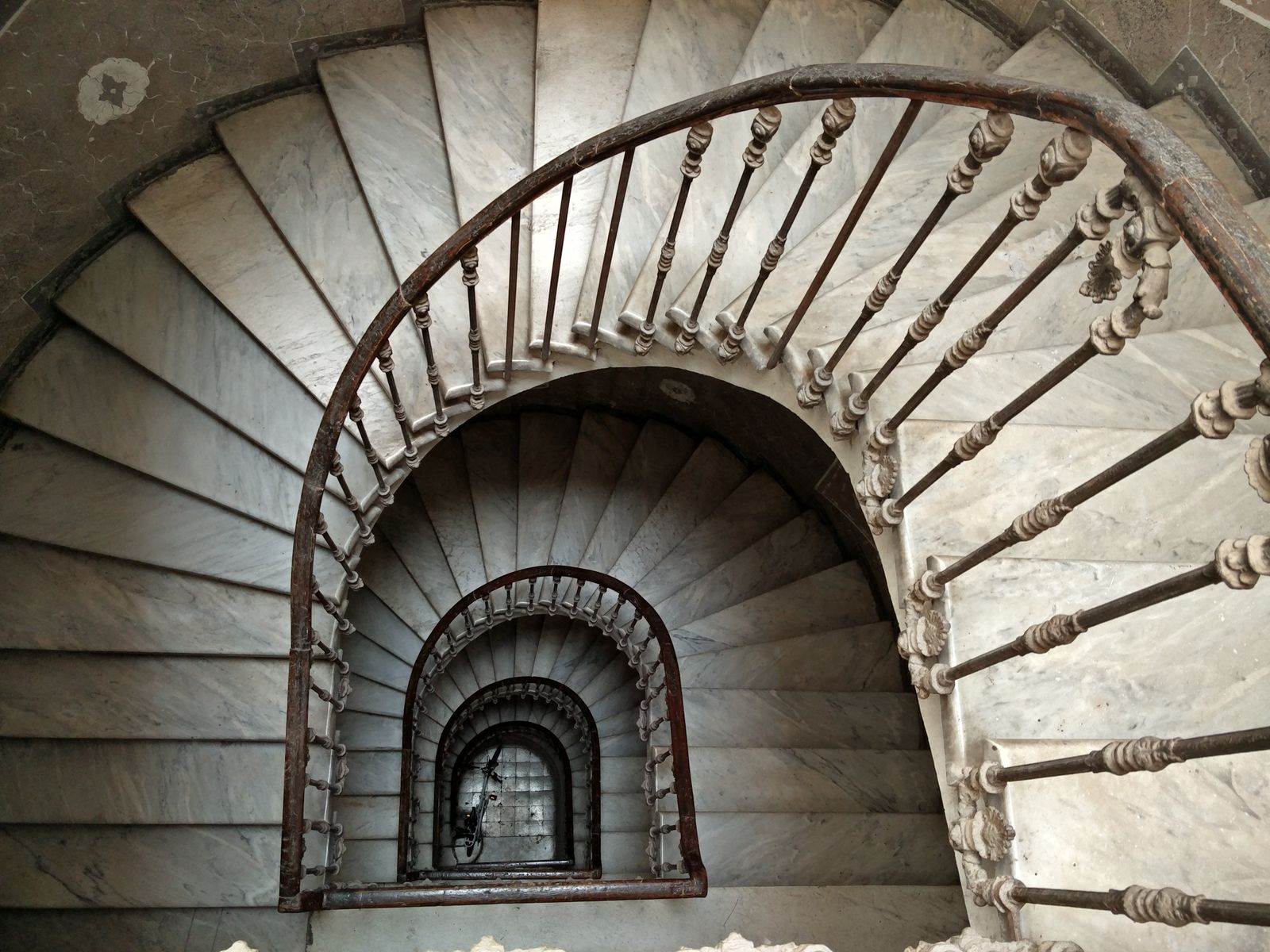
Many hotels in historic centers occupy buildings that were standing long before elevators became normal. Instead of designing the building around a lift shaft, later owners sometimes had to fit one into whatever space was available: a narrow stairwell, an internal courtyard, or a small shaft beside the stairs.
The result can look surprisingly compact. A lift advertised for several people may feel crowded with two adults and two suitcases. In especially tight installations, the practical arrangement is one person plus luggage while everyone else uses the stairs.
This is particularly common in converted palazzi, small family-run hotels, guesthouses, and properties occupying only one or two floors of a larger residential building. A modern chain hotel built more recently is much more likely to have the large automatic elevators familiar from North America or northern Europe.
“There Is an Elevator” Does Not Always Mean Step-Free
This is the most important distinction to understand before booking.
A property can truthfully advertise a lift even though you still encounter stairs somewhere between the street and your room. Common arrangements include:
- a few entrance steps before reaching the elevator;
- a lobby on the raised ground floor, reached by stairs from street level;
- a lift installed inside a stairwell that stops on intermediate landings;
- rooms located several steps above or below the elevator landing;
- a hotel occupying an upper floor of a residential building where the lift does not serve the entrance level;
- a separate breakfast room, terrace, or annex accessible only by stairs.
If stairs are a serious problem, do not rely only on the elevator icon on a booking platform. Ask whether there is step-free access from the sidewalk all the way to the room.
Italian accessibility requirements include technical standards for lifts and the removal of architectural barriers, including provisions in Ministerial Decree 236/1989. For a traveler, though, the useful question is not simply whether a building has a lift. It is whether the particular route you need is actually usable without steps or tight passages.
Why the Elevator May Stop Between Floors
One of the stranger arrangements for first-time visitors is an elevator door opening onto a stair landing instead of directly onto a hotel floor.
Imagine a traditional staircase with two flights between each main floor. When a lift was added later in the central stairwell, its doors may have been easiest to install at the intermediate landings. You step out of the elevator, then walk half a flight up or down to reach your corridor.
A booking description might still say the property has a lift, because it does. It simply does not provide completely step-free access.
If reception tells you the elevator stops at the mezzanino, ammezzato, or an intermediate pianerottolo, expect some stairs.
Italian Floor Numbers Can Add to the Confusion
Italian floor numbering generally treats the street-level floor separately from the first floor above it. You may see:
- PT or T: piano terra, ground floor;
- 0: ground floor on some elevator panels;
- R: rialzato, raised ground floor;
- M: mezzanino, mezzanine;
- 1: primo piano, usually the first floor above ground level;
- 2: secondo piano;
- -1 or S1: basement or first underground level.
A room described as being on the primo piano is therefore normally one level above street level, not the ground floor.
Do not worry if the elevator buttons seem to skip numbers or include letters. In a converted building, the hotel may occupy only selected levels and other floors may contain apartments or offices.
How Old-Style Elevator Doors Work
Some older lifts have a manual outer door rather than the automatic sliding doors found in modern hotels. You may need to pull the landing door open yourself, enter the cabin, and close it completely before the elevator moves.
Other installations have two barriers: an outer hinged door and an inner sliding, folding, or gated door. If either is not properly closed, pressing your floor button may appear to do nothing.
If the elevator refuses to move, first check that:
- the landing door is fully shut;
- the internal door or gate has closed;
- you have pressed the floor button firmly;
- the hotel does not require a room key or key card to activate guest floors.
Do not force doors or try to manipulate the mechanism. If it still does not work, call reception.
What to Do With Large Suitcases
The capacity plate inside the cabin is the limit to respect, not a challenge to see how many people and bags can be squeezed inside.
If the lift is tiny, the easiest system is usually to split up. One traveler takes one or two suitcases in the elevator while the other walks upstairs. Couples with several bags may need two trips.
Keep wheels and loose straps clear of the doorway. Put the bag fully inside rather than trying to hold it halfway through an automatic door while rearranging other luggage.
This is one reason packing light pays off disproportionately in Italy. A suitcase that feels effortless across an airport terminal feels very different when you suddenly face six stone steps, a narrow doorway, and a one-person lift. Our practical Italy packing guide explains why being able to lift your own bag matters on trains, stairs, bridges, and in older accommodation.
What to Ask Before Booking
If mobility or luggage makes elevator access important, send the property a specific question rather than asking simply, “Do you have an elevator?”
A useful message is:
Is there step-free access from the street entrance to the elevator and from the elevator to my room? Are there any stairs at all along that route?
For a wheelchair, mobility scooter, or large stroller, also ask for the clear door width and cabin dimensions. “Accessible” can describe several different features, and knowing the actual measurements is far more useful than relying on a generic accessibility symbol.
Other worthwhile questions include:
- Does the elevator reach every guest floor?
- Are there steps before the elevator?
- Are there steps between the elevator and the room?
- Does the lift operate 24 hours a day?
- Will a wheelchair or unfolded stroller fit?
- Can hotel staff help with luggage if the lift is too small?
If choosing between accommodation types, the differences between a purpose-built hotel, converted guesthouse, apartment, and agriturismo can be substantial. The Italy on Foot comparison of hotels, apartments, and agriturismi is useful when vertical access is part of the decision.
Useful Italian Words Around the Elevator
You usually will not need much Italian, but a few terms make signs and conversations much easier to understand.
- ascensore: elevator or lift;
- scale: stairs;
- piano: floor or storey;
- piano terra: ground floor;
- primo piano: first floor above ground;
- mezzanino / ammezzato: mezzanine or intermediate level;
- pianerottolo: stair landing;
- fuori servizio: out of service;
- guasto: broken or malfunctioning;
- portata massima: maximum load;
- non usare l’ascensore in caso d’incendio: do not use the elevator in case of fire.
If you need to ask at reception, these phrases cover most situations:
- L’ascensore arriva al mio piano? Does the elevator reach my floor?
- Ci sono scale tra l’ascensore e la camera? Are there stairs between the elevator and the room?
- Ci sono gradini all’ingresso? Are there steps at the entrance?
- L’ascensore è fuori servizio? Is the elevator out of service?
- Potete aiutarmi con i bagagli? Can you help me with my luggage?
Strollers, Wheelchairs and Limited Mobility
For a stroller, a very small elevator may mean folding it before entering. If you are traveling alone with a young child, ask about this before arrival rather than discovering it while holding a sleeping toddler, a stroller, and two bags in the lobby.
Wheelchair users and travelers who cannot manage stairs should be more exacting. Confirm the entire path:
- sidewalk to entrance;
- entrance to reception;
- reception to elevator;
- elevator cabin and door clearance;
- elevator landing to room;
- room entrance and bathroom.
A single step in any one of those places can change whether the accommodation works for you. Requesting photographs of the entrance, elevator doorway, and landing is entirely reasonable when accessibility is essential.
It is also worth checking the route as part of the wider trip rather than treating the room in isolation. You can use the Italy on Foot trip planner to organize accommodation alongside stations, transfers, and the places you need to reach, which helps avoid choosing a technically accessible room at the end of an awkward arrival route.
What Happens If the Lift Breaks
Elevators occasionally go out of service anywhere, and a failure matters more when your room is several floors up.
If you can use stairs but cannot carry your suitcase, ask reception to arrange luggage assistance. At a staffed hotel this is usually the first and simplest solution. If an employee carries heavy bags several flights for you, a small tip is a reasonable thank-you rather than an obligation. The Italian tipping guide covers hotel porters and other service situations.
If you genuinely cannot use the stairs, tell the hotel immediately. Do not accept “the technician is coming” as a complete answer if it leaves you unable to enter or leave your room. Ask what alternative accessible room or practical arrangement the property can provide.
For a problem discovered at check-in, photograph the access issue and keep your booking description and messages with the hotel. Those details are useful if the property you received differs materially from what was promised.
Late Arrivals Can Make Elevator Problems Harder
A lift inside a residential building may be shared with private apartments, and the hotel itself may occupy only an upper floor. That is not normally a problem once you have checked in, but arriving late makes good instructions more important.
Make sure you know:
- which street door is the hotel entrance;
- which intercom button to press;
- which floor contains reception;
- whether the lift requires a key after certain hours;
- what number to call if the elevator or entrance will not open.
Save those instructions before your flight or train arrives. Standing in a shared entrance hall at midnight is not the ideal moment to discover that “Hotel Aurora, 4th floor” also requires a particular intercom button and an elevator key waiting in a lockbox upstairs.
Do Not Use the Lift During a Fire
If there is smoke, a fire alarm, or an evacuation, follow the hotel’s emergency instructions and use the designated escape route rather than an ordinary passenger elevator. Italian fire-safety rules specifically prohibit normal lift use during a fire except for equipment designed and operated for that purpose. Hotels should provide evacuation information showing exits and stairs.
Look for the sign Non usare l’ascensore in caso d’incendio. The rule is covered in guidance and regulations published by Italy’s Vigili del Fuoco, the national fire and rescue service.
The Best Booking Test Is Simple
If you are able to climb a few steps and carry your own bag, a small or oddly positioned lift is usually just a minor Italian-building quirk. You may ride three floors, climb six steps, and reach your room without giving it another thought.
If stairs are difficult or impossible, treat “elevator available” as the beginning of the conversation, not the answer. Ask whether the route from the street to your room is completely step-free, confirm the lift dimensions if necessary, and ask about any intermediate landings. Those three checks prevent most unpleasant surprises before you ever reach the hotel door.