If a station lift is broken, do not assume the stairs beside it are your only way to the platform. At many Italian railway stations there may be another lift, a ramp, a different underpass or an accessible route from another part of the station. If none exists, contact station staff or RFI’s Sala Blu before committing yourself to a platform you cannot safely reach or leave.
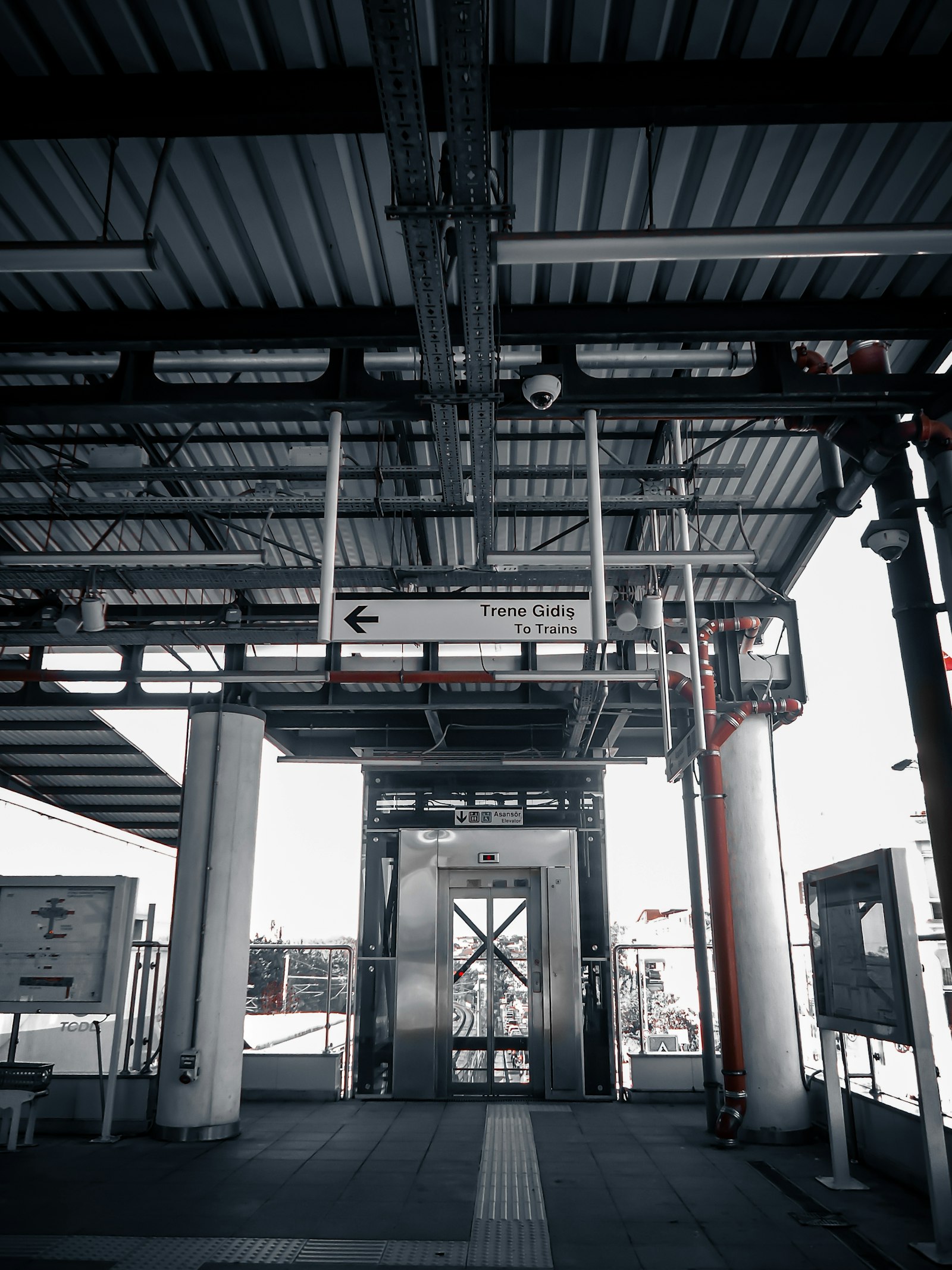
An Italian station lift out of service can turn an ordinary platform change into a serious problem for a wheelchair user, someone who cannot manage stairs, or a traveler using a walking aid. The useful question is not simply, “Where is another elevator?” Ask for the percorso senza barriere, the barrier-free route to the exact platform you need.
First, check what the sign actually says
The lift nearest the main entrance may not be the only accessible route. Before changing plans, look for signs or ask staff using the platform number shown on the departure board.
- Ascensore: lift or elevator.
- Fuori servizio: out of service.
- Guasto: faulty or broken.
- Binario: platform or track number.
- Accesso ai binari: access to the platforms.
- Sottopassaggio: pedestrian underpass.
- Rampa: ramp.
- Percorso senza barriere: barrier-free or step-free route.
- Uscita: exit.
A useful question at an information desk is: “C’è un percorso senza barriere per il binario 6?” That means, “Is there a step-free route to platform 6?” If the obvious lift has failed, add: “L’ascensore è fuori servizio.”
How to find the backup route
Start by confirming your actual departure platform. There is little point crossing the station to an alternative lift if a platform change is about to send you back again.
- Stay on the accessible side of the station for the moment. Do not descend into an underpass or enter a platform area unless you know you can continue without stairs.
- Check for another signed accessible route. Large stations may have more than one underpass, concourse or bank of lifts. A second route can be considerably farther from the shortest walking route.
- Ask specifically about your platform. Another elevator existing somewhere in the building does not mean it serves every track.
- Check the station’s current accessibility information. RFI publishes accessibility details for individual stations and information about lift and ramp availability.
- If no independent route exists, involve staff. A station assistance team may be able to arrange a workable route or advise on a different travel solution.
For stations managed by Rete Ferroviaria Italiana, start with RFI’s Infoaccessibilità service. Individual station pages show which platforms normally have level, ramp or lift access. RFI also maintains a lift and ramp status page for accessibility changes, particularly longer-lasting outages.
Those pages describe the normal infrastructure, not a guarantee that every lift will be working when you arrive. RFI itself warns that temporary failures can change a station’s actual accessibility.
Do not treat an escalator as the accessible replacement
An escalator may solve the problem for someone carrying an ordinary suitcase, but it is not a substitute for step-free access for a wheelchair user or anyone who cannot safely stand on it.
Do not try to carry an occupied wheelchair up stairs or an escalator, and do not accept an improvised lift from strangers. If the normal accessible route has disappeared, the correct next move is assistance or rerouting, not turning a staircase into a lifting exercise.
If you already booked Sala Blu assistance
Tell Sala Blu about the failed lift rather than attempting to redesign the transfer yourself. RFI’s station assistance service includes meeting passengers, accompanying them through the station, helping with boarding and alighting when required, and accompanying arriving passengers toward the exit or a connecting train.
The booking also gives staff your train and station details, which matters when a broken piece of infrastructure changes the planned route.
RFI currently operates its Sala Blu contact service every day, including public holidays, from 06:45 to 21:30. The official numbers are 800 90 60 60 from an Italian landline and +39 02 32 32 32 from mobile phones and from abroad. Current booking methods and notice requirements are listed on RFI’s Sala Blu assistance page.
Notice periods depend on the station and time. At RFI-designated “Fast” stations, telephone or in-person assistance for services between 07:45 and 22:30 can normally be requested up to one hour before departure or arrival. Standard stations generally require at least 12 hours’ notice, as do overnight services at Fast stations. A sudden lift failure can obviously occur after those deadlines, so contact staff immediately, but do not assume an unbooked assistance service can always be organized at the last minute.
A broken lift during a train connection is more serious
A ten-minute connection that looks comfortable on a timetable may become impossible if the accessible route requires a long diversion through the station.
RFI currently plans 30 minutes for assisted train-to-train interchanges. If you have booked assistance, do not abandon the agreed meeting arrangement because you see a quicker-looking staircase. Staff may be using a completely different route to reach your next platform.
If the connection is already tight when you discover the fault:
- show staff the train number and departure time, not simply the destination;
- ask if another barrier-free route reaches the departure platform;
- tell Sala Blu immediately if you have an assistance booking;
- if the connection is no longer physically possible, speak to the railway operator about the next suitable service rather than buying a replacement ticket blindly.
For the broader differences between regional, Intercity and high-speed services, see our practical guide to train travel in Italy.
If you are still on the train approaching the affected station
This is the moment to act, not after everyone else has stepped onto the platform.
If you know that the lift serving your arrival platform is unavailable and the lack of it may leave you stranded, tell the conductor or train manager as early as possible. Explain that you need a percorso senza barriere to leave the station. If you have booked assistance, also contact Sala Blu or use the contact option associated with your booking.
Do not automatically get off and hope there is another exit at the far end of the platform. Some platforms are linked to street level only through stairs plus a single lift. Ask staff what arrangement applies before deciding whether to alight or whether another solution is required.
Wheelchairs, walking aids, strollers and heavy luggage are different cases
Wheelchairs and serious mobility limitations
A failed elevator can make a normally accessible platform temporarily inaccessible. Use the formal assistance channels rather than attempting stairs. RFI’s service covers wheelchair users, people with walking difficulties, older travelers, pregnant travelers and several other categories of passengers with reduced mobility.
Walking sticks, crutches and temporary injuries
You do not need to be a permanent wheelchair user for stairs to be unsafe. RFI explicitly includes people with temporary limb problems or difficulty walking within its reduced-mobility assistance categories.
Strollers
A stroller alone does not make every railway assistance service applicable. If you can safely fold and carry it, stairs may be an option, but do not feel pressured to do so while carrying a child, bags and a folded buggy at the same time. Ask staff whether another lift or ramp exists first.
Heavy suitcases
A suitcase being inconvenient to carry upstairs is not the same as requiring reduced-mobility assistance, and Italian stations should not be assumed to have porters waiting beside every broken elevator. If you are receiving RFI mobility assistance, however, the published service can include transport of one item of hand luggage on request.
Late arrivals and small unstaffed stations
A lift failure becomes harder to solve at 11 p.m. than at a major station in the afternoon. If step-free access is essential, check the station before taking the last practical train of the day rather than discovering the problem after arrival.
RFI states that station lifts normally operate in accordance with the first and last trains serving the station, but a mechanical failure obviously overrides the normal schedule. At small stations there may also be no staffed information desk to ask.
In that situation, use the station operator’s published accessibility contact rather than relying on café, security or cleaning staff to know the alternative route. For RFI stations within the assistance network, Sala Blu is the relevant service. Railways and metro stations managed by other infrastructure operators can have different assistance systems, so do not assume the RFI lift-status page covers every station in Italy.
Allow extra time for routes that leave and re-enter the station
Some step-free alternatives are geometrically awkward. The stairs may cross the tracks in 90 seconds while the accessible route uses a lift at the far end of the concourse, a second corridor and another lift back to platform level.
In some station layouts, staff may direct passengers through another entrance or external approach rather than through the route used by most travelers. Follow the official route rather than assuming a shortcut through a service gate is permitted.
This is also why walking-time estimates on a map are poor predictors of an accessible connection. When arranging several rail journeys, hotels and transfers, it helps to plan the rest of your Italy route with realistic buffers between the parts that cannot easily be moved.
What to do if there really is no step-free path
If staff confirm that the required platform cannot currently be reached without stairs, stop searching for a secret elevator. The problem has changed from wayfinding to rerouting.
Ask these questions in order:
- “C’è un altro percorso senza barriere?” Is there another barrier-free route?
- “Questo binario è accessibile con assistenza?” Is this platform accessible with assistance?
- “Da quale stazione posso partire senza scale?” From which station can I depart without stairs?
- “Qual è la soluzione per il mio treno?” What is the solution for my train?
Do not independently take a taxi to another railway station until you know which station and which train staff expect you to use. High-speed tickets can be train-specific, and changing the departure station or service can affect ticket validity.
If the failure causes a missed train
Document the problem before leaving the station if you can do so without delaying assistance. Keep the ticket, train number, assistance booking reference and any message showing the lift outage. A photo of an official fuori servizio notice or a screenshot of the published accessibility status can also make it easier to explain what happened later.
Then speak to the company that operated your train about the ticket and onward journey. RFI manages the infrastructure and station assistance at its stations, while Trenitalia, Italo or another railway company manages the transport contract. The station operator and train operator therefore have different responsibilities.
RFI also publishes a specific compensation provision for eligible passengers with disabilities or reduced mobility using public-service rail transport when an elevator has been unavailable for more than 24 hours and RFI fails to meet the repair time it communicated. That is a specific compensation mechanism, not an automatic payment every time a lift briefly stops working.
The safest decision rule
If another signed ramp or lift clearly reaches your platform, use it and allow extra time. If the alternative route is unclear, ask for the percorso senza barriere. If staff confirm that no step-free route currently exists, involve Sala Blu or the relevant station and train operator before boarding, changing platforms or leaving the train.
The expensive mistake is usually not the broken elevator itself. It is continuing through the station until the only route left in front of you is a staircase.