The usual routine is simple: take a queue number if the counter uses one, wait until your number appears or is called, name or point to the food, give the quantity you want, specify how it should be sliced, and let the staff weigh and package it. You normally take the labeled packet away and pay later at the main checkout. For ordering at an Italian deli counter, the most useful word to learn is etto: one etto is 100 grams.
First, check whether you need a number
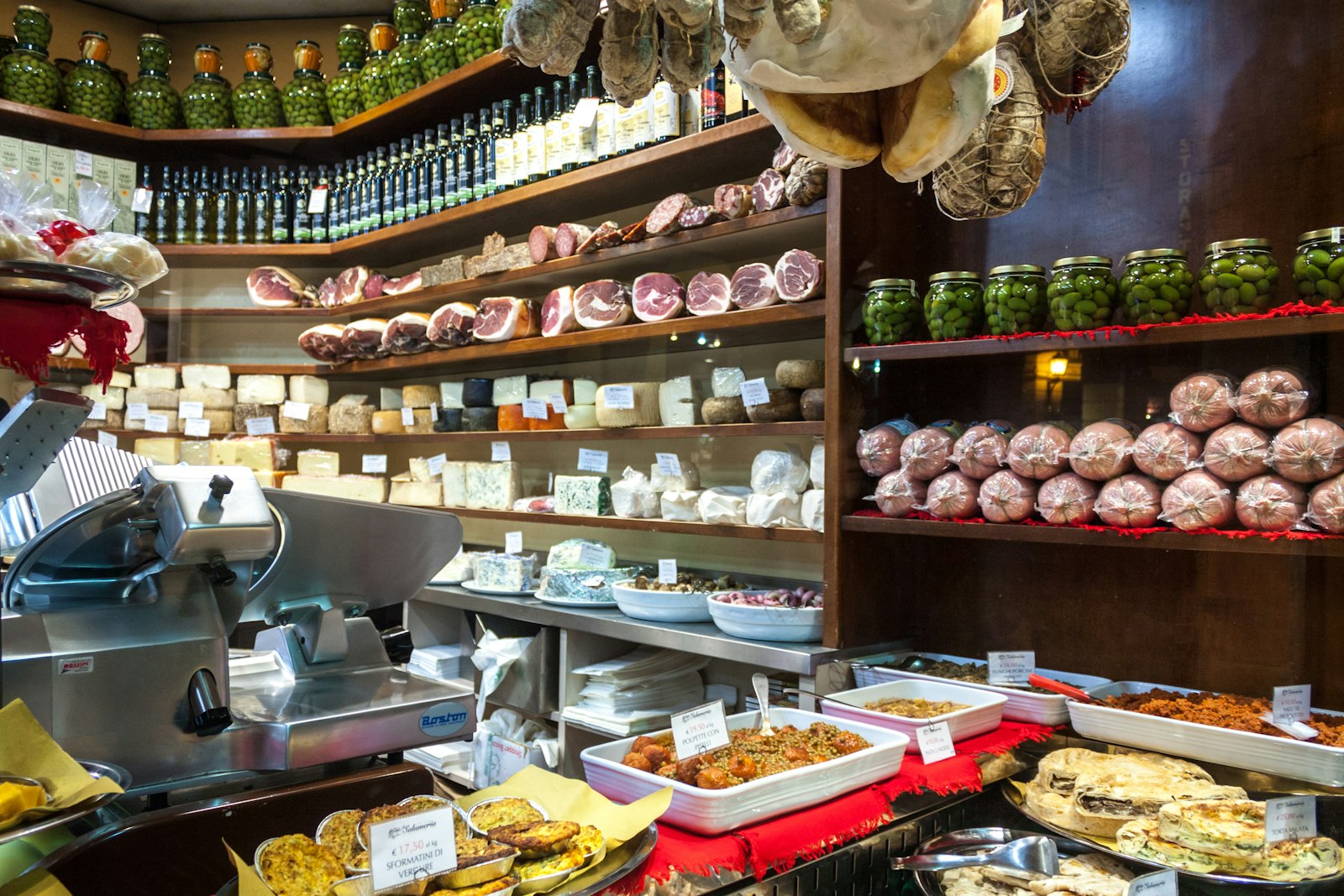
Do not assume the people standing near the glass display form a normal line. Supermarket deli counters, market halls, and busy specialty shops often use numbered tickets.
Look near the counter, a pillar, or the end of the refrigerated case for a small dispenser. You may see signs such as prendi il numero or ritira il numero. Electronic systems may have buttons for individual departments.
- Salumi: cured and cooked meats.
- Formaggi: cheeses.
- Gastronomia: prepared foods such as roast vegetables, lasagne, salads, meatballs, and other ready-made dishes.
- Pane / panetteria: bread or bakery counter.
- Macelleria: butcher counter.
- Pescheria: fish counter.
One ticket may cover salumi, cheese, and prepared foods, while another supermarket may give each section its own queue. Watch the electronic display rather than assuming the next number belongs to your counter.
If there is no ticket machine and the queue seems completely unstructured, ask “Chi è l’ultimo?”, meaning “Who is last?” The person who answers is the customer you should follow.
The easiest way to order by weight
Italian deli quantities are commonly expressed in etti, particularly when buying sliced meat or modest amounts of cheese. An etto is a hectogram, or 100 grams.
- 50 g: mezzo etto
- 100 g: un etto
- 150 g: un etto e mezzo
- 200 g: due etti
- 250 g: due etti e mezzo
- 300 g: tre etti
You can also use grams directly. “Centocinquanta grammi di prosciutto crudo, per favore” is perfectly understandable.
Do not expect the final weight to be mathematically exact. The server may aim for 200 grams and finish at 208 or 215 because one more slice changes the total. They will often look at the scale and ask “Va bene così?”, meaning “Is that okay?”
If you really do not want more than a particular amount, say “Non più di due etti, per favore”, meaning “No more than 200 grams, please.” Otherwise, circa due etti means approximately 200 grams and allows some flexibility.
How to order salumi
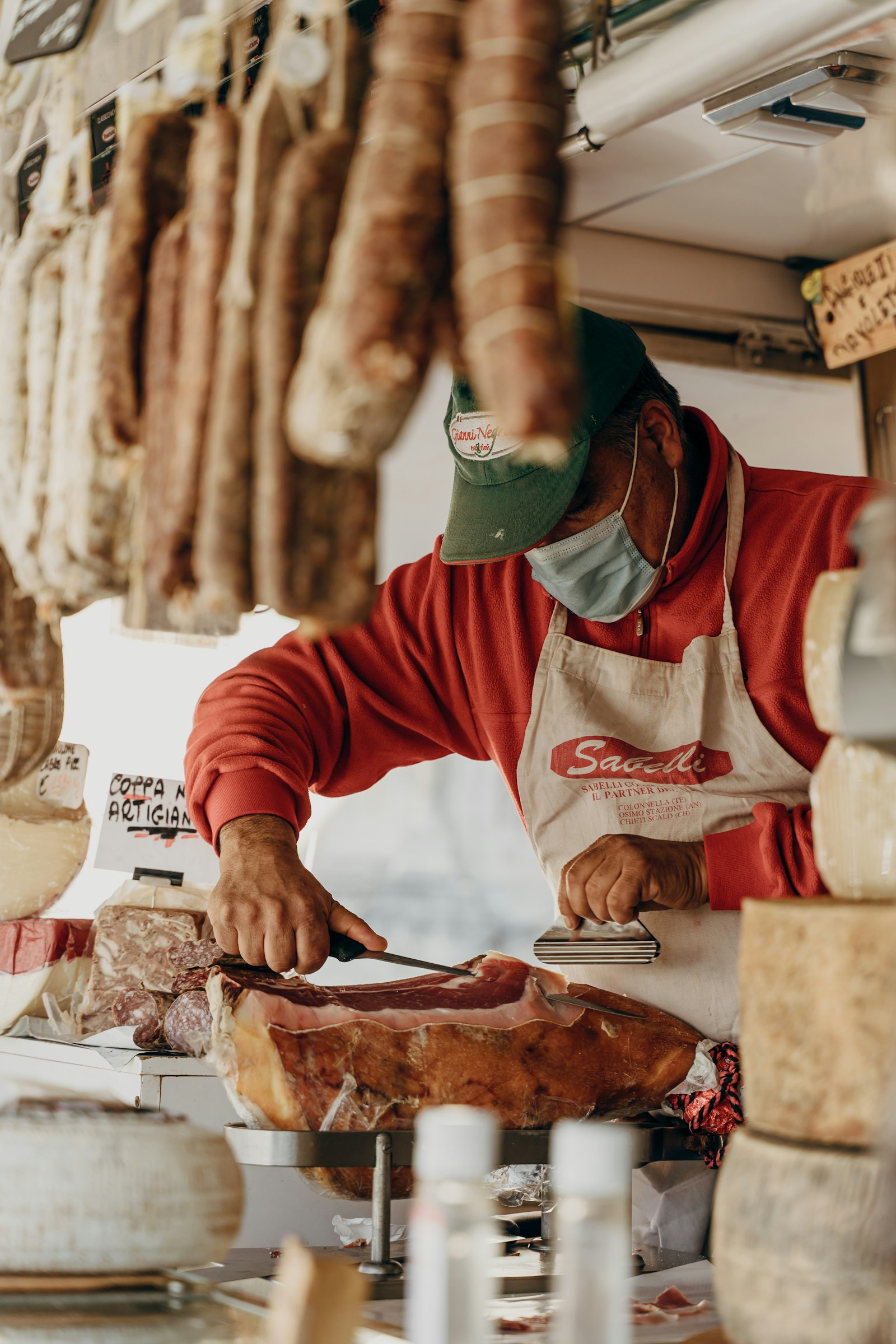
Salumi covers far more than salami. A counter may have prosciutto crudo, prosciutto cotto, mortadella, bresaola, speck, pancetta, coppa, different regional salami, and other cured or cooked meats.
A straightforward order sounds like:
“Due etti di prosciutto crudo, per favore.”
Two hundred grams of prosciutto crudo, please.
After you choose the product, the server may ask how you want it sliced. Useful words are:
- sottile: thin
- molto sottile: very thin
- un po’ più spesso: a little thicker
- a fette: in slices
If normal deli-counter slicing is fine, you do not need to give elaborate instructions. For many products, simply stating the meat and quantity is enough.
If several similar products are displayed, pointing is completely acceptable. “Vorrei questo, due etti” means “I’d like this, 200 grams.” Point at the label rather than vaguely toward a row of six nearly identical hams.
How to order cheese
Cheese is often easier to order in grams because you may want a wedge rather than thin slices.
Useful requests include:
- “Un pezzo da circa 200 grammi.” A piece of about 200 grams.
- “Me ne dà circa tre etti?” Could you give me about 300 grams?
- “A fette, per favore.” In slices, please.
- “Un pezzo da grattugiare.” A piece for grating.
The employee will normally cut a piece from the wheel or block, place it on the scale, and show or tell you the resulting weight. If the first cut is larger than you wanted, saying “Un po’ meno, per favore” is enough.
If you are choosing between cheeses rather than ordering a known product, “Quale è più stagionato?” asks which is more aged, while “Quale è più delicato?” asks for the milder option.
How prices at the counter work
The large number on a deli label is usually not the price of the piece in front of you. Food sold loose is commonly displayed with a unit price, often per kilogram. Italian consumer price-display rules provide for unit pricing of products sold loose, although the exact unit shown can depend on the product and customary way it is sold.
If prosciutto is marked €29.90/kg, 100 grams costs about €2.99 and 200 grams about €5.98. That quick mental conversion prevents the unpleasant discovery that the beautiful €48/kg cheese you casually requested “a large piece” of was not €4.80.
Look for al kg, €/kg, or another unit beside the price before ordering.
Prepared food at the gastronomia counter
A banco gastronomia may sell food that is ready to eat or needs reheating: lasagne, baked pasta, roast meat, vegetables, seafood salads, croquettes, polpette, olives, and regional dishes.
Some items are sold by weight. Others may be priced per piece or portion, so there is less value in memorizing one universal rule.
If you do not know how much to request, the most useful phrase is:
“Una porzione per due persone, per favore.”
A portion for two people, please.
You can also ask “Si mangia freddo?” for “Is it eaten cold?” or “Va scaldato?” for “Does it need to be heated?” This is particularly useful when buying dinner for an apartment with questionable kitchen equipment.
If food shopping is only one stop between trains, sightseeing, and accommodation check-in, you can plan your Italy route so the grocery stop lands somewhere sensible rather than five minutes after the counter has closed.
What happens after the food is weighed
In a supermarket, the employee normally wraps the food or seals it in a tray, prints a barcode label showing the product and weight, and hands it to you. Put it in your basket or trolley and pay for it with everything else at the main cassa.
Do not stand at the deli counter holding out a credit card unless there is clearly a register there.
In a small salumeria, alimentari, cheese shop, or market stall, the arrangement can be different. You might order everything first and then pay at a separate cash desk, or the same person may operate the register. Follow the packet, receipt slip, or staff instructions rather than assuming the supermarket routine applies everywhere.
What to say when you want several things
You do not need to place a new order from scratch each time. After the first item is packaged, the server may ask “Altro?”, meaning “Anything else?”
Answer “Sì, anche…” and give your next item. When you are finished, say:
“Basta così, grazie.”
That’s all, thank you.
That phrase is particularly useful because basta can also mean “enough.” If the slicer is running and you already have the quantity you wanted, “Basta così” tells the employee to stop there.
If your Italian disappears at exactly the wrong moment
You can complete a deli order with surprisingly little vocabulary. Wait for your number, point at the product, say “questo”, give a number of grams, and finish with “per favore.”
For example:
“Questo, centocinquanta grammi, per favore.”
If you indicated the wrong product, say “Scusi, intendevo questo”, meaning “Sorry, I meant this one.” Correct the mistake before the food has all been sliced and wrapped if possible.
If you did not hear the employee call your number, show your ticket and ask “È già passato questo numero?”, meaning “Has this number already passed?” The employee may serve you next or tell you to take another ticket. Do not simply move in front of whoever is currently being served.
Allergies and shared slicers
If an allergy is involved, do not rely only on the product name or appearance. Ask the employee about ingredients and make the allergy explicit. Prepared dishes, cooked meats, flavored cheeses, sauces, and stuffed products can contain ingredients that are not obvious from looking through the glass.
Also consider the equipment. The same slicer, knife, board, or serving utensil may be used for more than one product. If cross-contact matters, explain that before the employee starts slicing rather than after the packet has been made.
Buying food for a picnic or onward journey
For a same-day train picnic, sliced meats and cheeses can be divided into separate packets if you ask. A specialty shop may also offer vacuum packing. The phrase is “Me lo può mettere sottovuoto?”, meaning “Can you vacuum-pack it for me?”
Vacuum packing does not automatically make a refrigerated product safe to carry indefinitely without refrigeration, so ask how it should be stored. It also does not override customs restrictions if you later take meat or dairy products into another country.
If the counter is inside a supermarket and you are also buying fruit or vegetables, remember that the produce section may have a completely different weighing system. The Italy on Foot guide to Italian supermarket produce explains when you need to weigh and label those items yourself.
The five things to remember at the counter
- Look for a numbered-ticket machine before joining what appears to be a queue.
- Choose the product and check whether the displayed price is per kilogram or another unit.
- Order by etti or grams: one etto equals 100 grams.
- Say how you want it sliced, then confirm the final weight when the employee asks “Va bene così?”
- Take the wrapped, labeled food with you and pay at the cassa unless the shop clearly handles payment at the counter.