The easiest setup is a hooded rain jacket, grippy walking shoes, and a compact umbrella that you use only when conditions are calm enough to manage it with your bag. The real problem with rain in Italy with luggage is not getting slightly wet. It is trying to control an umbrella, phone, ticket, and rolling suitcase at the same time on slick stone, station stairs, bridges, or uneven pavement.
Prioritize keeping your hands free and your feet stable. Protect electronics and documents inside the luggage, accept that the outside of your suitcase may get wet, and save the umbrella for slower walks rather than complicated transfers.
The simplest rain setup for a travel day
For a day when you are changing hotels or taking a train, use three layers of protection rather than trying to waterproof everything you own.
- On you: a lightweight hooded rain jacket.
- On your feet: broken-in shoes with decent wet-surface grip.
- Inside your luggage: important items protected in waterproof or zip-top bags.
- Optional: a compact umbrella that fits inside your personal item when you need both hands.
The jacket matters more than the umbrella on transfer days. A hood lets you pull a suitcase, check directions, carry it up stairs, scan a ticket, or board a bus without constantly opening and closing something above your head.
An umbrella becomes useful once you have dropped the luggage at your accommodation and are simply walking around town.
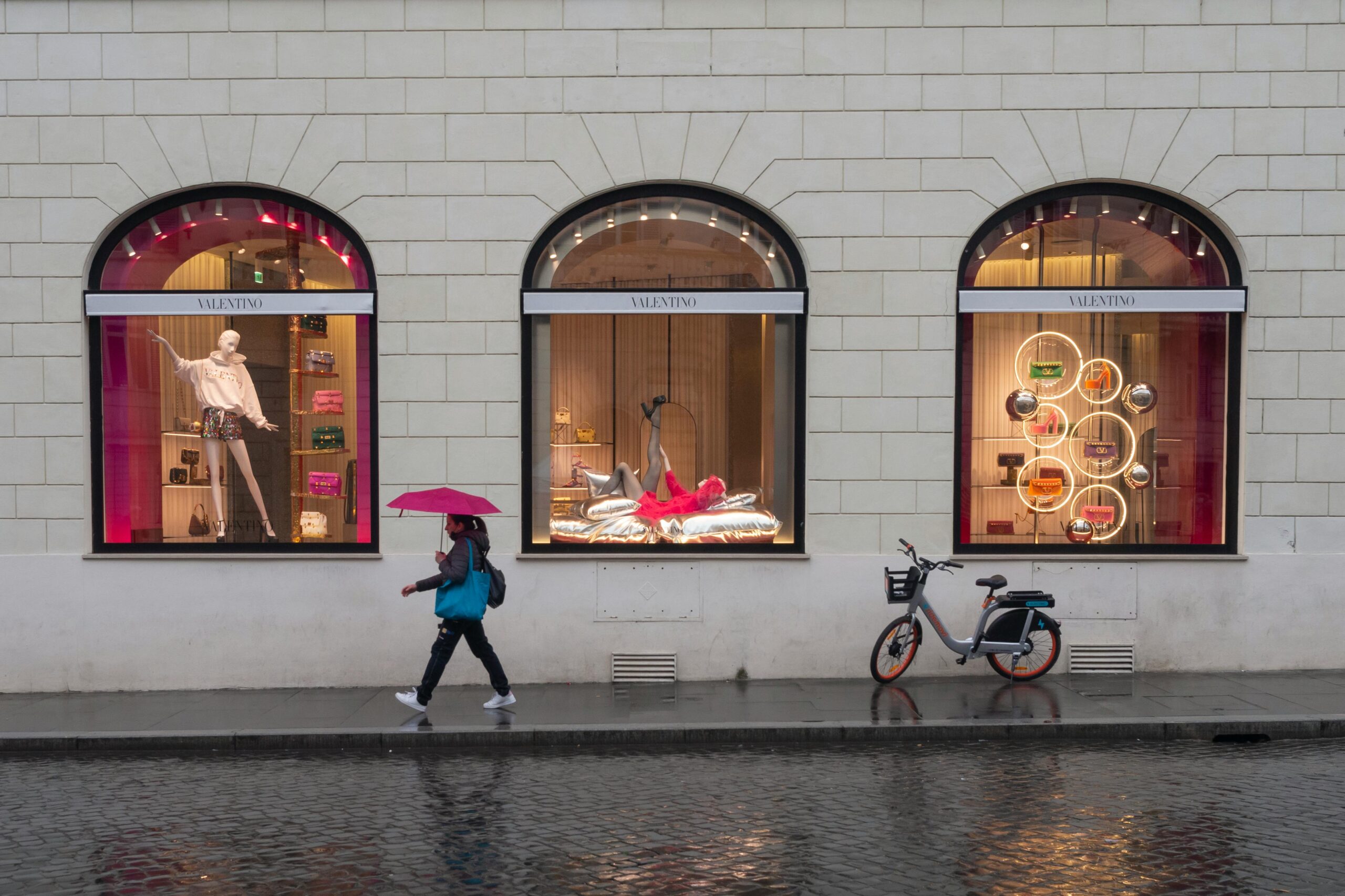
Umbrella or rain jacket: choose according to what you are doing
Use the jacket when you are moving luggage
A jacket is usually the better choice between a hotel and station, around bus stops, on ferry connections, and anywhere stairs are involved. Keep the hood up and both hands available.
This is particularly useful when you reach a station and suddenly need to find binario for your platform, take a sottopassaggio under the tracks, or use an ascensore lift. Trying to fold a wet umbrella while simultaneously moving a suitcase through a train door is an unnecessary complication.
Use the umbrella for ordinary sightseeing
A compact umbrella is useful during steady rain when you are walking slowly without a large bag. It also prevents your jacket from becoming completely saturated during a long outdoor day.
But do not build your entire rain strategy around it. Narrow pavements, crowded streets, strong wind, stairs and historic lanes can make umbrellas awkward surprisingly quickly.
If the weather turns windy, close it. A wet hood is preferable to fighting an inside-out umbrella while your suitcase starts rolling toward the kerb.
Your shoes matter more than either one
Wet Italian streets can turn a perfectly comfortable shoe into the wrong shoe. Smooth stone, polished paving, marble steps and worn cobbles become noticeably less forgiving after rain.
Look at the sole rather than the marketing label. You want visible tread and enough rubber underfoot to provide traction. A shoe does not have to resemble a hiking boot, but thin, nearly smooth fashion soles are a poor choice for a rainy walking trip.
Water resistance is useful, although grip comes first. A slightly damp sock is inconvenient. Slipping while carrying luggage is a much bigger problem.
Avoid testing brand-new waterproof shoes on the trip itself. Stiff new footwear plus a long station walk is an excellent recipe for blisters. The better choice is a pair you already know you can walk in for several hours.
For broader packing decisions, the Italy packing list covers the other small items that become useful during train and city travel.
Protect what is inside the suitcase, not just the suitcase
Most travelers worry about keeping the exterior of their luggage dry. The more important goal is keeping passports, electronics, medicine and tomorrow’s clothes dry.
Suitcases that appear weather-resistant are not necessarily waterproof. Zippers, seams and fabric panels can eventually let moisture through, particularly if a bag sits outside in heavy rain.
Use a simple internal system:
- Keep your passport and travel documents in a waterproof pouch inside your personal bag.
- Put chargers, adapters and loose electronics in a separate zip pouch.
- Use packing cubes or lightweight plastic bags for clothes if significant rain is forecast on transfer day.
- Carry one empty bag for wet socks, a soaked umbrella or damp clothing.
A fitted suitcase rain cover can help if you use a soft-sided case or expect a substantial outdoor walk. For a short walk from station to taxi rank, however, it can create more fuss than benefit. Protecting the contents is usually enough.
Rolling a suitcase on wet streets
Rain makes the weakest parts of a luggage route more obvious. Cobblestones become slippery, shallow depressions fill with water, kerbs become harder to see and suitcase wheels collect grit.
Slow down rather than trying to maintain normal walking speed. Keep the case close to your body instead of extending your arm far behind you. This gives you more control when a wheel catches between stones.
Be particularly careful around:
- painted road markings, which can be slick when wet;
- metal drain covers and utility covers;
- tram tracks;
- smooth stone steps;
- station entrances where wet floors meet polished indoor surfaces;
- large puddles that may hide broken pavement or deep kerbs.
If the route includes stairs, stop and close your umbrella before lifting the suitcase. Trying to carry luggage one-handed while holding an open umbrella is rarely worth it.
What to do when you reach an Italian train station soaked
Do not stand immediately inside the entrance reorganizing your belongings. Station doorways become crowded during bad weather because everyone else is doing exactly the same thing.
Move away from the entrance first, then deal with the umbrella, jacket and phone.
Useful signs include:
- Binari: platforms.
- Partenze: departures.
- Uscita: exit.
- Sottopassaggio: pedestrian underpass beneath the tracks.
- Ascensore: lift or elevator.
- Scale: stairs.
- Taxi: taxi rank or taxi direction.
- Deposito bagagli: luggage storage, where available.
Keep your train ticket accessible before entering the station rather than buried under waterproof layers. If it is on your phone, make sure you can reach the phone without opening the main suitcase.
A small cloth or handkerchief is surprisingly useful here. Dry your hands and phone screen before trying to unlock the device or enlarge a QR code.
The last 500 metres to the hotel can be the hardest part
A station-to-hotel route that looks trivial on a map may feel very different under heavy rain. Historic centres can include uneven streets, pedestrian areas, stairs and routes where a taxi cannot stop directly outside the accommodation.
Check the final approach before leaving the station. Do not simply follow the walking route because it says nine minutes instead of twelve.
Look for hills, bridges and pedestrian-only sections. If you know where your hotel sits within the wider route, you can also organize the rest of your Italy route around realistic station transfers rather than treating every arrival as a simple point-to-point walk.
If the rain has become intense, taking a taxi for a short transfer can be sensible even when you originally planned to walk. Follow signs for the official Taxi rank rather than accepting an unsolicited ride from someone approaching travelers inside or outside the station.
Venice needs a slightly different strategy
Venice exposes every weakness in wet-weather luggage planning because wheels, bridges and stairs repeatedly meet each other.
An umbrella is particularly inconvenient while carrying a suitcase over a bridge. Put it away before the steps, use the handrail when possible, and concentrate on the luggage.
A hooded jacket earns its suitcase space here. So does packing lightly enough that you can physically lift your own bag.
Do not assume a water bus eliminates all walking. Your accommodation may still be several lanes and bridges away from the nearest vaporetto stop. Check that final section before arriving, particularly if heavy rain is forecast.
Backpack travelers have a different rain problem
A backpack leaves both hands free, which is excellent for stairs and umbrellas, but the pack itself receives much more direct rain.
If you travel with a backpack, use either its fitted rain cover or a waterproof liner inside it. The liner is particularly valuable because external covers can shift in wind or leave straps exposed.
Keep documents and electronics separately protected even when the pack has a cover. Think of the cover as the first barrier, not the only barrier.
A small crossbody or zipped personal bag under your jacket can work well for your phone, wallet and travel documents, provided it does not interfere with the backpack straps.
What to do with wet gear after reaching the hotel
Do not leave soaked shoes, jacket and umbrella bundled together overnight.
Open the umbrella somewhere appropriate to dry if your accommodation allows it, or leave it partially open over a shower or tiled area rather than dripping onto wood or carpet.
Remove shoe insoles if they are wet and loosen the laces. Stuffing shoes loosely with absorbent paper can help draw moisture from the inside. Replace the paper if it becomes saturated.
Avoid placing wet shoes directly against a powerful heater or radiator. Concentrated heat can damage adhesives and deform some materials.
If the suitcase exterior is wet, empty anything vulnerable near damp seams and leave the case open to air before repacking.
When ordinary rain becomes a transport problem
There is an important difference between a rainy sightseeing day and severe weather.
For normal showers, the main decisions are clothing and route choice. During major thunderstorms or flooding risk, the question becomes whether you should make the journey at all. Check Italy’s official Civil Protection weather-alert information when serious weather is expected, as well as updates from the train, ferry or local transport operator you are using.
Do not assume that because your train still appears in a journey planner every local connection will operate normally. Heavy weather can affect roads, underpasses, ferries and the final section between a station and accommodation.
If you get caught without rain gear
A forgotten umbrella is not an emergency. In most Italian cities you can buy a basic umbrella quickly from convenience shops, supermarkets and other general retailers. During sudden rain you may also see temporary street sellers, although availability and quality are unpredictable.
If your shoes become soaked, buying dry socks can improve the day more than almost any other emergency purchase. Change them as soon as you can rather than spending hours walking in wet socks.
If both you and your luggage are already drenched, abandon the idea of saving the walk. Get under proper cover, reorganize your bags, check the route again and use public transport or an official taxi if that removes a difficult outdoor section.
The packing rule that works best
Do not pack for rain by adding bulky waterproof equipment. Pack so that bad weather does not take away your ability to move.
A lightweight hooded shell, compact umbrella, proven walking shoes with grip, waterproof protection for documents and electronics, and one spare bag for wet gear cover most city trips. Most importantly, keep the suitcase light enough that you can lift it yourself when the dry escalator you were hoping for turns out to be a wet flight of stairs.