Dreaming of Italy for your very first adventure? You are in for one of the world’s great travel experiences. Italy overflows with historic treasures, sunny coastlines, vibrant life, and delicious food. This travel guide makes everything easy for first-time visitors, covering entry requirements, arrival options, vital customs, smart money tips, transportation, common mistakes, and unforgettable regions, both famous and lesser known. You will learn not only how to see the famous sights but also how to truly experience the rhythms and warmth of Italian life.
Traveling to Italy for the first time raises the same handful of questions for almost everyone: where to fly into, when to go, how much it costs, how to get between cities, and what the unwritten rules are at the table and on the train. Everything below is checked for 2026 and written from years of walking these cities, so you can plan your first trip with confidence.
- Entry requirements for Italy in 2026
- Which city to land in
- When to go
- How much a trip to Italy costs
- Italian culture and customs
- Essential tips before you go
- Eating, drinking and your bill
- Getting around
- Safety, health and connectivity
- Common tourist mistakes
- What I wish I knew
- Two week itinerary
- Less-crowded alternatives
- FAQs
- Packing list
Travel to Italy Requirements in 2026: Passports, EES and ETIAS
Italy is part of the Schengen Area, so the rules are the same as for the rest of the zone. Citizens of the United States, Canada, the United Kingdom, Australia, and most other visa-exempt countries can enter for up to 90 days within any 180-day period without a visa. Your passport should be valid for at least three months beyond the day you plan to leave the Schengen Area and issued within the last ten years; in practice, aim for six months of validity to avoid any airline check-in trouble.
Two systems changed border crossings recently. The Entry/Exit System (EES) has been fully operational at all external Schengen borders since 10 April 2026. On your first entry, a border officer or a self-service kiosk records your passport details, fingerprints, and a facial image instead of stamping your passport, and later entries and exits are matched against that record. Allow extra time at passport control on arrival, especially at Fiumicino and Malpensa in summer. The official EU Entry/Exit System page explains the process. The second system, ETIAS, is an online travel authorization (a €20 fee, valid for three years) that visa-exempt travelers will need before boarding. As of September 2026 it is still not in operation and the EU has not confirmed a start date, so check the official ETIAS site a few weeks before your flight rather than relying on older blog posts; there is no need to pay any third-party site for it.
Beyond that, there are no vaccination requirements, and EU and UK residents should bring their EHIC or GHIC card for state healthcare. If you rent a car, an International Driving Permit alongside your national license is required for non-EU license holders. Finally, every accommodation in Italy registers guests with the police, which is why hotels and apartments ask for your passport at check-in.
Planning the Start of Your Journey: Which Italian City to Land In?
Choosing the Best Airport for Your Adventure
Your gateway into Italy shapes your whole vacation. Picking the right city to land in saves time and money, and helps you see more without stress. Rome’s Fiumicino Airport (FCO) is Italy’s busiest, connecting travelers from all corners of the globe. With frequent direct flights, FCO is ideal for exploring Rome and central or southern regions. Milan Malpensa (MXP) is the top airport for northern Italy, including the famous lakes and the fashion capital of Milan. Venice, Pisa, and Naples airports are smaller but can be smart picks if your trip targets their regions.
Arriving at FCO, you will be amazed how simple it is to reach the city highlights. The non-stop Leonardo Express connects FCO to Roma Termini in about 32 minutes, costs €14, and departs every 15 minutes, with no pre-booking required: buy at the airport or from Trenitalia. If you are based in Trastevere or near Tiburtina, take the FL1 regional line, which serves those neighborhoods directly. Prefer a taxi? Keep it official: licensed white taxis with the Comune di Roma label charge a fixed €55 for rides between FCO and anywhere inside the Aurelian Walls, the historic center, as published by Aeroporti di Roma. That fare includes luggage and is valid in both directions.
Landing in the north? At Malpensa, efficient rail, bus, and shuttle options whisk you to Milan’s center or even Lake Como in under an hour; our note on the Malpensa terminals explains which terminal you will use. Venice’s Marco Polo Airport is minutes from the historic canals by Alilaguna water bus or road shuttle, and the second station question, Mestre and Santa Lucia, is worth reading before you book. Pisa and Naples airports are small but plug travelers straight into Tuscany or Campania with rail and buses. Always compare airline prices across Milan (MXP and BGY), Venice (VCE and TSF), Pisa, and Naples, as deals on low-cost carriers like Ryanair or easyJet rotate often.
Arranging a smooth airport arrival comes down to three habits. At the big airports, buy express rail tickets in advance or on arrival for the shortest wait. In Rome, licensed taxis charge set rates to central areas, so never use the touts who approach you in the arrivals hall. In Venice, the terminals connect via the Alilaguna boat or the bus to Piazzale Roma, and the People Mover links Piazzale Roma to the Tronchetto car park; no car is needed. If your Italian wish-list includes must-see icons from several regions, consider combining airports, for example arrival in Rome and departure from Venice, Florence, or Milan.
Budget-Friendly Airports and Travel Strategies
Italy’s main airports are modern, friendly, and well-connected, but price-sensitive travelers look out for the airports used by European discount airlines. Milan Bergamo (BGY) and Venice Treviso (TSF) routinely offer the lowest fares from cities across Europe, thanks to Ryanair and other budget carriers. These airports sit just outside their main cities, but shuttle buses are frequent, inexpensive, and easy to use even after a long flight. Grabbing these arrivals is a way to free up more of your budget for food, tours, and experiences.
If Pisa (PSA) fits your plans, it puts the Leaning Tower, Tuscan hill towns, and vineyards right within reach. Naples Airport (NAP) is the perfect jump-off for Sorrento, the Amalfi Coast, Pompeii, Capri, and all of southern Italy’s warmest regions. Wherever you choose, smaller airports are often less crowded, and you may breeze out in minutes; just watch seasonal variations, since some routes only run part of the year.
Getting to your hotel is never difficult. Dedicated airport shuttles, rail links, and city buses connect you from even remote-feeling airports right into the center of town. If you fly into a smaller airport, enjoy the countryside views, because the ride is part of your introduction to Italy’s gentle hills, stone villages, and working farmland. Booking your first and last hotel night near a main station makes luggage and transfers especially easy, whether you land late or depart early. Being open to different airports means greater flexibility to build your ideal trip, from the Alps to Sicily, without blowing your whole budget on plane tickets.
Best Time to Visit Italy
Timing matters, because weather, festivals, and crowds all shape your experience. Spring (April and May) brings lush parks and countryside, wildflowers everywhere, and mild temperatures that are ideal for walking, though Easter week and the 25 April and 1 May holidays fill the big cities. Autumn (late September and October) means golden hills, harvest festivals, grape and olive oil tastings, and cities that are lively yet more relaxed once the heat has eased. Both shoulder seasons are the sweet spot for a first visit.
Peak summer (July and August) can be very hot, especially in central and southern regions, with regular days above 35°C inland; plan early outings, a siesta, and late dinners. In mid-August, around Ferragosto on 15 August, some family-run places close for the holidays, but beach towns come alive. Winter (November to March) is the quiet, cheap season: shorter museum hours and some closed coastal hotels, but the big three and Naples are pleasant, the Christmas markets and Carnival in Venice are memorable, and the Dolomites turn into a ski destination.
One seasonal detail for Venice: the city has trialed a day visitor access fee (€5 to €10) on selected peak dates between April and July. The 2026 trial ended on 27 July and the Comune has not yet decided whether it returns in 2027, so check the official access fee site if you plan a spring day there. Overnight guests were exempt and received a code from their hotel.
How Much Does a Trip to Italy Cost?
Italy can be done on almost any budget, and the biggest variables are the season, how central you sleep, and how often you eat at a table rather than at the counter. As a rough 2026 guide per person per day, excluding international flights: a careful budget traveler in hostels or simple guesthouses, eating pizza al taglio and cooking sometimes, spends about €70 to €100; a mid-range couple in three-star hotels or good apartments, with one sit-down meal a day and a few paid museums, spends €150 to €250 each; and a comfortable four-star trip with guided tours, taxis, and wine at every dinner runs €300 to €500 and up. Rome, Florence, Venice, and the Amalfi Coast sit at the top of each range, while Puglia, Sicily, Le Marche, and Abruzzo sit at the bottom, and a longer stay in one place always costs less per day than a trip that moves every two nights.
Is $10,000 enough for a couple’s two week vacation?
Yes, comfortably. At current exchange rates $10,000 is roughly €9,000. Take out $2,000 to $2,800 for two return flights from the US, and you still have about €6,500 for 14 nights, or €460 per day for two people. That covers good three-star or apartment accommodation (€130 to €200 a night), high-speed rail between three or four stops (€120 to €200 per person for the whole route if booked early), museum tickets, one restaurant meal a day plus casual lunches, gelato, coffee, and a couple of splurges such as a guided Vatican tour or a cooking class. A solo traveler with $10,000 can go four-star nearly everywhere.
Is $1,000 enough for a week?
Only if flights are already paid for and you travel like a backpacker. $1,000 is about €900, or €128 a day for seven days. That works in shoulder or low season with a hostel dorm or a simple room outside the historic center (€35 to €60 a night), regional trains instead of high-speed ones, two or three paid attractions for the week, and most meals from bakeries, markets, and pizzerias with a sit-down dinner every second night. In July or August in the capital, on the lagoon, or on the Amalfi Coast it is very tight, because a plain double room alone can pass €150. Choose one region, sleep in the same place for several nights, and a budget trip is doable.
Understanding Italian Culture: A Primer for Visitors
Food, Conversation, and Local Customs
Italy’s culture is a lively mosaic of regional traditions, legendary food, and centuries-old art. Make every meal an adventure, because each region delivers its own signature dishes: Tuscany’s ribollita, Sicily’s arancini, Naples’ unbeatable pizza, Bologna’s tagliatelle al ragù, and Venice’s cicchetti. Seek out the trattoria or osteria filled with locals, and do not miss the weekly food markets for farm-fresh cheeses, produce, and meats. Meal times are later and more fixed than you may be used to on a trip, so read our note on lunch time in Italy before you turn up hungry at 4 pm.
A few words of Italian (even simple greetings like ciao, buongiorno, and grazie) will make you friends everywhere. Italians appreciate effort, and a smile with slow English is always welcome. Socializing is central to daily life, so enjoy a morning espresso al banco (standing at the bar costs less than sitting at a table), a lazy afternoon gelato, and the nightly passeggiata, the early evening stroll through the town squares to see and be seen.
Art and history are never far away. Even the smallest town can stun you with Renaissance statues, Roman aqueducts, or Baroque town halls. The larger centers overflow with world-famous museums: Florence’s Uffizi for Botticelli, Rome’s Vatican Museums for Michelangelo’s Sistine Chapel, the basilicas and bridges of the lagoon everywhere you look. At every turn, take your time, because Italians value slow pleasures, conversation, and the rhythm of local life as much as sightseeing.
Beyond the cities, savor country lanes, sleepy villages, and the freedom of exploring on foot or by gentle bike. Castles, vineyards, olive groves, and ancient stone farmhouses dot every landscape. You will quickly find that sometimes an unplanned detour or a shared meal with locals becomes the best memory of all. Two small courtesies go a long way: greet the shopkeeper when you walk in, and say goodbye when you leave; and in churches, keep shoulders and knees covered and voices low, since most are still active places of worship.
Things to Know Before You Go: Essential Italian Travel Tips
Planning Ahead and Being Flexible
To have the smoothest, happiest trip, start planning early. Book tickets to the major sites, especially the Colosseum (official Colosseum booking), the Vatican Museums (official booking portal), the Uffizi (Uffizi official tickets), and Florence’s Accademia (official Accademia tickets), weeks or even months ahead if possible, and only from official sites. Colosseum slots in particular sell out 30 days ahead in high season; our Colosseum planning guide explains the release times. The first Sunday of each month brings free entry to many state museums, but expect crowds. Make reservations for dinner too at any restaurant you have read about, since the good ones fill up by 20:00.
Rail is the easiest way between cities: fast, comfortable, and scenic. Regional paper tickets must be validated at the platform machines before boarding, while high-speed Frecciarossa and Italo tickets are digital and need no stamping. Download schedules or use the operators’ apps with offline mode in case of spotty Wi-Fi, and learn what binario means so platform boards make sense. Save time in the big centers using Tap&Go on Rome’s buses and metro and contactless entry on Milan’s metro. In smaller towns, shops may close from about 13:00 to 16:00; plan shopping or breaks accordingly.
Choosing Where to Sleep
When booking accommodation, Italy offers everything: chic hotels, family-run B&Bs, countryside agriturismi, and city apartments. Sleeping in the historic center puts all the sights outside your door but can cost more; just beyond it you will find budget options and authentic neighborhoods. Always review guest ratings and photos before booking, check whether there is an elevator (many historic buildings have four flights of stairs and none), and read the cancellation terms. A tourist tax of roughly €2 to €10 per person per night, depending on the city and hotel category, is normal and is usually collected at check-in in cash or by card; the capital and the lagoon sit at the top of that range.
A few more essentials. Bring basic Italian, because a little goes a long way. Dress neatly and modestly, especially for churches. Only use official white taxis in town (fixed rates from FCO), and download offline maps and transit apps for independence and backup. Watch for ZTL signs when driving, since restricted central zones are camera-enforced and hefty fines arrive by mail months later. Keep some cash for small purchases, but know that cards and contactless payment are widely accepted, and by law shops must accept cards. Travel insurance and, for EU and UK residents, the EHIC or GHIC health card are must-haves. Packing light is essential, because many towns have cobbles, stairs, and tight elevators.
Eating, Drinking, and Understanding Your Bill
Restaurant Fees and Dining Essentials
Italian menus sometimes list a coperto (cover charge) and/or a servizio (service) fee. The coperto is common except in Lazio, including Rome, where it is banned, though you may still see a bread or table fee if it is noted on the menu. Servizio is more typical in touristy spots or on bills for large groups. By law, prices, including all fees, must be displayed. It is normal for a sit-down table al tavolo to be pricier than a quick bite al banco at the counter.
Tips are not obligatory, and Italians usually round up or leave a couple of euros for good service rather than a percentage. If someone goes out of their way or you love your experience, a few euros are always appreciated. If you are unsure about a daily special without a price on the menu, or about fish priced by weight (per etto, 100 grams), always ask, because price transparency is required and asking is the norm. Tap water is rarely served in restaurants; you will be offered bottled still or sparkling water. A typical dinner follows antipasto, primo (pasta or risotto), secondo (meat or fish) with a contorno (side), then dolce and coffee, but nobody expects you to order every course.
Sample bill breakdown at a typical restaurant:
| Item | Expected Charge |
|---|---|
| Coperto (if outside Rome and Lazio) | €1 to €3 per person |
| First course (pasta, risotto) | €9 to €16 |
| Main course (meat or fish) | €14 to €25 |
| Side dish (contorno) | €4 to €8 |
| Water | €2 to €4 per bottle |
| House wine (glass or half liter) | €4 to €10 |
| Espresso at the table | €1.50 to €3 |
| Service (if present) | 10 to 15%, mostly in tourist zones or for large groups |
The Best Way to Get Around Italy: Train, Car, and City Buses
The Basics of Italian Rail Travel
Italy’s trains are legendary for a reason: they are fast, cover nearly all regions, and show you scenery you would never get from the highway. High-speed Frecciarossa and Italo services and the Intercity are great for the big jumps between cities, such as Rome to Florence in 1 hour 30 minutes or Milan to Venice in about 2 hours 15 minutes. Regional lines connect everywhere else, even tiny villages. Reserve high-speed tickets online on the official Trenitalia or Italo websites, where advance fares can be a third of the walk-up price, and you are set: just board and show your digital code. For cheap regional routes, if you get a paper ticket at a machine or counter, do not forget to validate it at the little box on the platform before boarding. Our complete guide to rail travel in Italy covers classes, seat reservations, strikes, and luggage.
Each city’s public transit system is user-friendly. Rome’s Tap&Go and Milan’s contactless system mean your bank card works like a metro ticket, with fare caps if you ride a lot. Elsewhere, buy bus tickets at a tabaccheria or newsstand before boarding and validate them on the bus. Download the official transit apps or Google or Apple Maps and load your routes for the day in case of spotty internet. For islands and the coast, ferries fill the gaps: hydrofoils link Naples, Sorrento, Capri, and the Amalfi towns from spring to autumn, and we have an honest look at whether Capri is worth it.
If you plan to drive, carefully check where your hotel is located, because city centers are almost always protected by ZTL (limited-traffic) zones. You need your hotel to register your plate or you will face automated fines of around €100 per entry. Outside these zones, renting a car gives you freedom in the countryside, the lakes, and the hill towns. Choose the smallest car you can live with, expect motorway tolls (Milan to Rome is about €45), and remember that fuel is sold by the liter at close to €1.80. Domestic flights only make sense for Sicily and Sardinia.
Safety, Health, and Connectivity in Italy
Essential Health and Travel Items
Italy is one of Europe’s safest countries for travelers, but simple smarts help. Carry your passport or a copy at all times, since the law requires ID and museums increasingly ask for it with named tickets. Be aware of pickpockets at busy stations, on crowded buses such as Rome’s 64 line, and at the popular sights; keep valuables zipped and never lose sight of bags at a café table. Use ATMs inside or attached to banks rather than standalone street machines, and always decline the machine’s offer to convert to your home currency, because your own bank’s rate is better. Have your medical insurance documentation (and the EHIC or GHIC for EU and UK travelers for state hospital care). Drinking water from Italian taps and public fountains is safe, so refill your bottle and cut down on plastic. Plan breaks and carry sunscreen and a hat in summer, because the Italian sun is strong and shade is treasured.
For a phone, EU roaming rules do not apply to US or UK plans in the same way, so check your carrier or buy an eSIM before departure; Italian prepaid SIMs from TIM, Vodafone, WindTre, and Iliad cost €10 to €20 for generous data and are sold in phone shops with your passport. Italy uses 230 volts and Type C, F, and L sockets, so read which adapter you need for Italy. Pharmacies (farmacia, green cross sign) handle minor ailments and can recommend a doctor; the emergency number for everything is 112. If you lose a passport, your consulate in the capital, Milan, Florence, or Naples issues emergency documents within a day or two.

Common Tourist Mistakes to Avoid When Visiting Italy
The first and most expensive mistake is trying to see too much. Rome, Florence, Venice, the Amalfi Coast, and Cinque Terre in eight days means four hotel changes and most of the trip spent on trains and in stations; three bases in ten days is the sweet spot for a first time trip to Italy. The second is booking the famous sights late: the Colosseum, the Vatican, the Uffizi, the Accademia (for David), and the Last Supper in Milan sell out weeks ahead, and the only tickets left on the day are from resellers at three times the price.
Money mistakes are next. Eating on the main square in front of a monument almost guarantees frozen pasta and a servizio charge, while the trattoria two streets back serves the same dish for half the price. Ordering a cappuccino after a meal marks you as a tourist but harms nobody; paying €12 for a coffee at a table on Piazza San Marco is a different matter, so check the price list first. Taking an unlicensed taxi from the airport, accepting a bracelet or a rose from a stranger, and signing a petition in a crowded square all end with you paying for something you did not want.
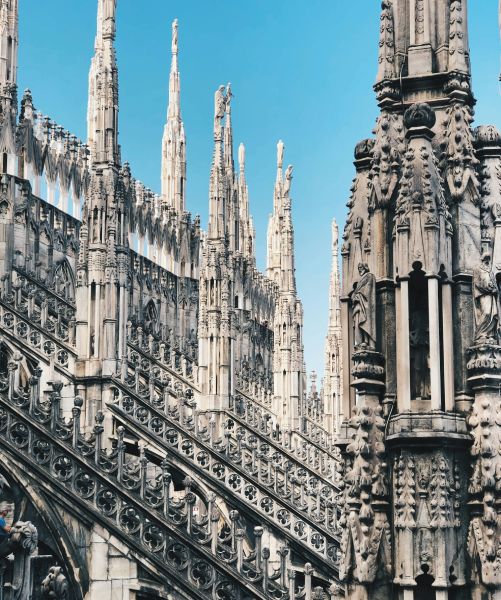
Transport slips are easy to avoid once you know them. Do not board a regional service with an unvalidated paper ticket, do not drive into a ZTL because the sat-nav told you to, and do not assume the last train back from a day out runs late. In Venice, get off at Santa Lucia rather than Mestre. Dress codes in churches are enforced at St. Peter’s, the Duomo in Milan, and St. Mark’s, so carry a light scarf. Finally, do not skip travel insurance for the trip to save €60; a twisted ankle on the Cinque Terre trails or a cancelled flight costs far more.
What I Wish I Knew Before Going to Italy
That the country runs on a schedule that is not yours. Lunch is 13:00 to 14:30 and dinner rarely starts before 19:30, museums often close on Monday, many shops shut on Sunday and for a long break in the afternoon, and August belongs to Italians on holiday. Plan around it rather than against it and the days flow. That the best meals of the trip cost €25 and were in places with paper tablecloths, a handwritten menu, and no English. That the free water fountains (nasoni in Rome) mean you never need to buy a bottle.
That trains between cities are so cheap and easy that a car is only worth it for Tuscany, Puglia, Sicily, and the lakes, and even then only for the countryside days. That contactless cards now work almost everywhere, including on the metro in the capital, but that a €20 note in your pocket still saves the day at a village market or a mountain rifugio. That the Italian you learn on the plane, even ten words, changes how people treat you, and that the passeggiata at 18:30 in a small town will tell you more about the country than any museum. And that every region is a different country: plan to come back, because nobody sees Italy in one trip.
Sample Itinerary: The Perfect Two Weeks in Rome, Florence and Venice
Trying to fit it all in? Here is a sample two-week plan for first-timers, blending the iconic cities and one off-the-beaten-path region for a true mix of Italian wonders. Days 1 to 4 belong to Rome: ancient history, the Vatican, the Trastevere neighborhood, and a day trip to Tivoli or Ostia Antica (our Rome in three days itinerary maps the first three days on foot). Days 5 to 7 go to Florence and Tuscany: art, Brunelleschi’s dome, a wine tour, or exploring San Gimignano, the Val d’Orcia, or Siena. Days 8 to 10 are for Venice: the Grand Canal, St. Mark’s, the islands of Murano and Burano, and an uncrowded day at the Lido beach or Chioggia. Days 11 to 14 add Lake Orta or Lake Iseo for northern routes, or Le Marche or Abruzzo for central and southern ones: gentle villages, lakes, hikes, and wine.
Travel between the three cities by high-speed rail: Rome to Florence takes about 1 hour 30 minutes and Florence to Venice about 2 hours. If you have less time, split your days among the big three; with more, consider Naples and the Amalfi Coast, Sicily, Puglia, or the Dolomites. If you are flying from the USA, arriving in Rome and leaving from Venice or Milan saves a day of backtracking on your trip. You can build and adjust your own Italy itinerary with the Italy on Foot trip planner, which handles the rail times and walking distances for you.
Less-Crowded Alternatives: Discover Hidden Sides of Italy
Do not limit your dreams to only the most famous cities and coastlines. Italy is full of quieter places where local life shines. Instead of Lake Como, try Lake Orta, a romantic, uncrowded medieval gem, or Lake Iseo, scenic and tranquil, with great walking and boat rides. Crowds in Cinque Terre? Head to Levanto or Bonassola just north, or Palmaria Island and Tellaro to the south, for similar views at a laid-back pace. Swap the busy Florentine hills for the Val d’Orcia villages of Pienza and Bagno Vignoni, the stone towns of Le Marche, or the mountain valleys of Abruzzo for jaw-dropping scenery with room to breathe. In southern Italy, choose the Salento Peninsula for wild beaches and Baroque towns, or the hill villages of Molise for quiet and slow food. Each lesser-known stop means lower prices, more locals, and surprises around every corner. Day trips from the big three work the same way: Orvieto from Rome, Lucca from Florence, and Padua or Verona from Venice each take under an hour by rail.
FAQs: Answers to Common First-Timer Questions
Is getting around Italy easy?
Yes. High-speed and regional rail lines are easy to use and reach nearly all destinations. Buses and local transit fill in the gaps; even remote villages usually have a bus, at least on weekdays. The large cities have clear metro or tram networks, and the historic centers are best explored on foot.
What is the food like, and can I eat on a budget?
Absolutely. Avoid tourist traps by eating where locals go: pizza by the slice, pasta at a trattoria, sandwiches at bakeries, and market stalls. Aperitivo hour in the early evening offers cheap snacks or buffet-style bites along with your first drink, and a full lunch menu (menù fisso) often costs €12 to €18.
Are cards or euros better for money?
Cards and contactless payment are the norm for most shops, hotels, and restaurants, and shops are legally required to accept them. Always carry a bit of cash for markets, rural stops, or emergencies. Using ATMs at banks and paying in euros rather than your home currency gets you the best rates.
How can I avoid mistakes with transport tickets?
Validate every regional paper ticket at the platform machine before boarding. High-speed, online, and electronic tickets do not require validation, so just board and show them on your phone. On buses, validate in the machine on board.
Do I need insurance or health cards?
Always bring travel insurance. EU residents should bring their EHIC and UK residents their GHIC card, which covers urgent state hospital care. Everyone else relies on insurance, because a hospital visit is billed.
How many days are enough for a first time in Italy?
Ten days to two weeks lets you see the three great art cities properly with one countryside or coastal break. With a week, choose two cities. With three weeks, add Naples and the Amalfi Coast or the north and the lakes.
Pack Smart: What to Bring for Your Italian Adventure
Recommended Packing List
- Adapter: Type L for Italy, plus C and F for the rest of continental Europe
- Comfortable shoes: cobblestones and stairs are everywhere
- Refillable water bottle: Italian tap water and fountains are safe and free
- Layered clothing: light items plus a sweater or rain jacket for cooler evenings
- Sunscreen and hat: for exposed squares and the coast
- Light scarf or cover-up: for church dress codes
- Maps and guidebooks: offline or physical backup for rural zones
- Travel insurance and medical documentation
- Power bank: for navigating, translating, and all those photos
- A small day bag that zips: against pickpockets on busy buses
With friendly planning, an open mind, and an appetite for adventure, your first Italian journey will exceed every expectation. Blend iconic sights with untouristed corners, trust the pace of Italian life, and never underestimate the joy of a shared meal, a wandering stroll, or a simple “ciao.” Your most lasting memories will come from those moments between the big museums and famous ruins, when you allow yourself to get a little lost, find a tiny bakery, listen to church bells, or simply gaze at the sunset in a medieval piazza. Buon viaggio!