If you are wondering which side will the Italian train doors open, listen for the onboard announcement just before your stop. The useful words are lato destro for the right side and lato sinistro for the left. Right and left are normally understood from the train’s direction of travel, not from the way your seat happens to face. Do not rely on the platform used at the previous station because the exit side can change from stop to stop.
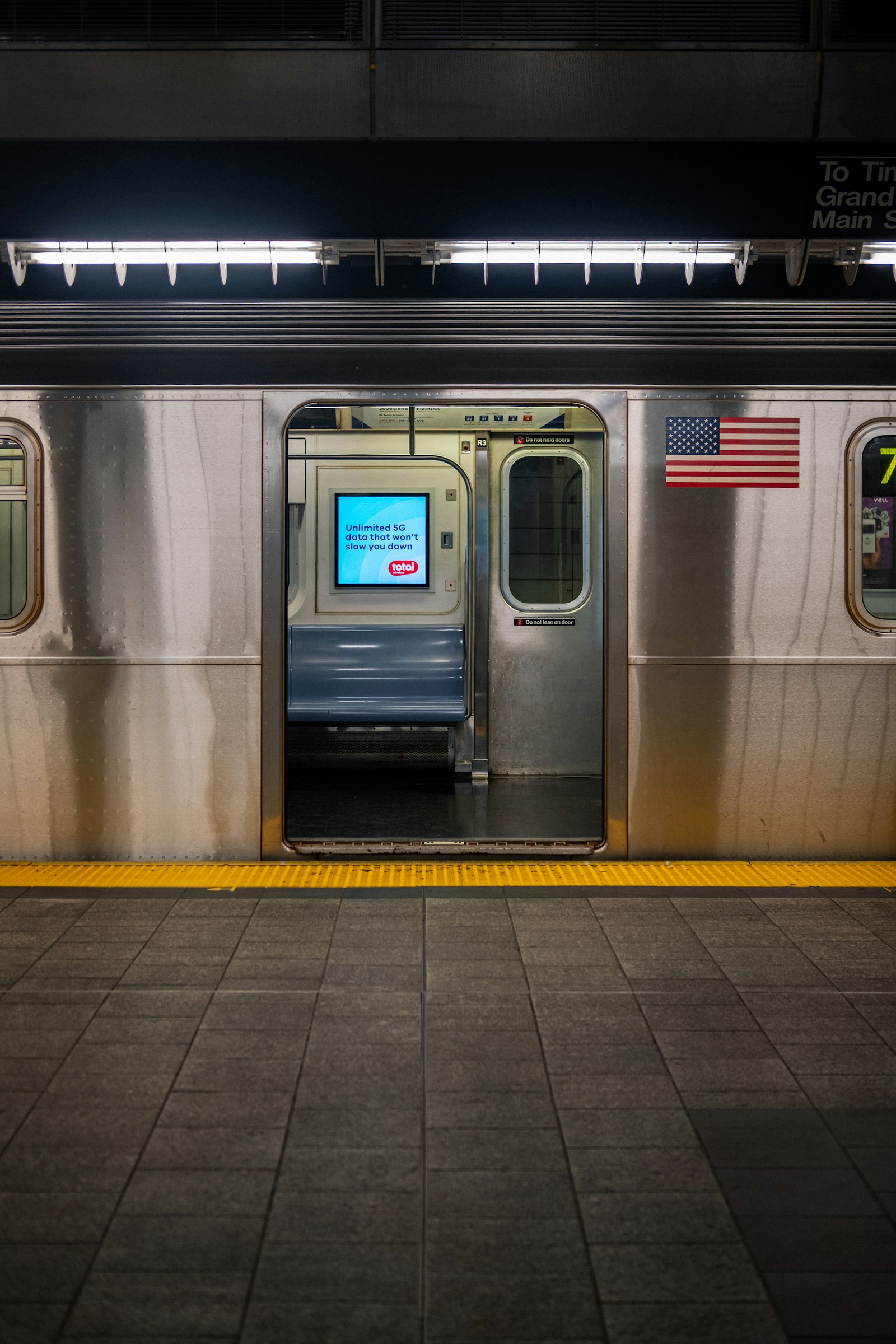
You may hear the side announced clearly, see it on an onboard display, or receive no side information at all. Regional trains, high-speed trains and local rail systems do not all use identical passenger-information systems, so the safest habit is to know the Italian phrases and then confirm that there is actually a platform outside the door.
The Italian words that tell you which side to use
The exact sentence varies by train and operator, but these are the phrases worth recognizing:
- Uscita lato destro: exit on the right.
- Uscita lato sinistro: exit on the left.
- Apertura porte lato destro: doors opening on the right.
- Apertura porte lato sinistro: doors opening on the left.
- Le porte si apriranno sul lato destro: the doors will open on the right.
- Le porte si apriranno sul lato sinistro: the doors will open on the left.
- Rispetto al senso di marcia: relative to the direction of travel.
The last phrase removes the main source of confusion. Senso di marcia means the direction in which the train is currently moving.
Right and left are based on the train’s direction of travel
Imagine that you are standing inside the train looking forward, in the same direction the train is moving. Your right-hand side is lato destro; your left-hand side is lato sinistro.
Your seat orientation does not matter. If you are sitting backward, facing the rear of the train, the announcement may feel reversed. Turn the direction around mentally before moving toward a door.
An easy trick is to look out of a window while the train is still moving. Decide which end of the carriage is leading. Face that way for a moment, then identify right and left.
If the train reverses direction during the journey, start again. A door that was on the right relative to the previous direction is now on the left relative to the new direction. Do not memorize “my suitcase is beside the right-hand doors” and assume those doors will remain the correct exit for the rest of the trip.
Do not assume Italian trains always open on the same side
Italy’s railway layout does not give travelers a reliable shortcut for predicting the platform side. A station can have side platforms, island platforms, terminal tracks or several possible tracks for the same service. Operational changes can also put a train on a different track.
That means rules such as “Italian trains normally run on the left, so the platform must be on the right” are not useful for getting off. Even where a line normally uses a particular running arrangement, individual station layouts can put the passenger platform on either side.
Use the announcement for that stop, then confirm visually as the train enters the station.
Station announcements and onboard announcements are different
A loudspeaker announcement heard from the station platform usually concentrates on the train itself: its destination, train number, binario and any delay or platform alteration. You may hear something such as:
Il treno è in arrivo al binario cinque.
That means the train is arriving at track/platform 5. It does not mean the doors will open on the right or left.
The side-of-train information is more likely to be heard inside the train as you approach your stop. On some services it may also appear on an interior passenger-information screen. Local metro and suburban systems can announce the exit side particularly consistently, while some mainline trains simply announce the next station without mentioning it.
Useful railway words to listen for
- Destra: right.
- Sinistra: left.
- Lato: side.
- Uscita: exit.
- Apertura porte: door opening.
- Porte: doors.
- Prossima fermata: next stop.
- Binario: track/platform number.
- Marciapiede: railway platform.
- Senso di marcia: direction of travel.
If you catch only three words from a fast announcement, make them lato, destro and sinistro.
How to prepare before your station with luggage
Do not wait until the doors have already opened before retrieving a suitcase from the other end of the carriage. A better sequence is:
- Check that the next station really is yours.
- Listen for destra or sinistra.
- Collect your coat, backpack and smaller belongings.
- Retrieve large luggage while the train is still approaching the station, provided it is safe to do so.
- Move toward the vestibule without blocking the doors or passageway.
- When the train stops, confirm that the platform is outside the door before exiting.
Keep luggage under control rather than parking it against an exterior door. Apart from inconveniencing everyone trying to leave, luggage beside access doors can obstruct passenger movement. This becomes especially troublesome at a short regional stop where several people are trying to get off at once.
What happens when the train stops
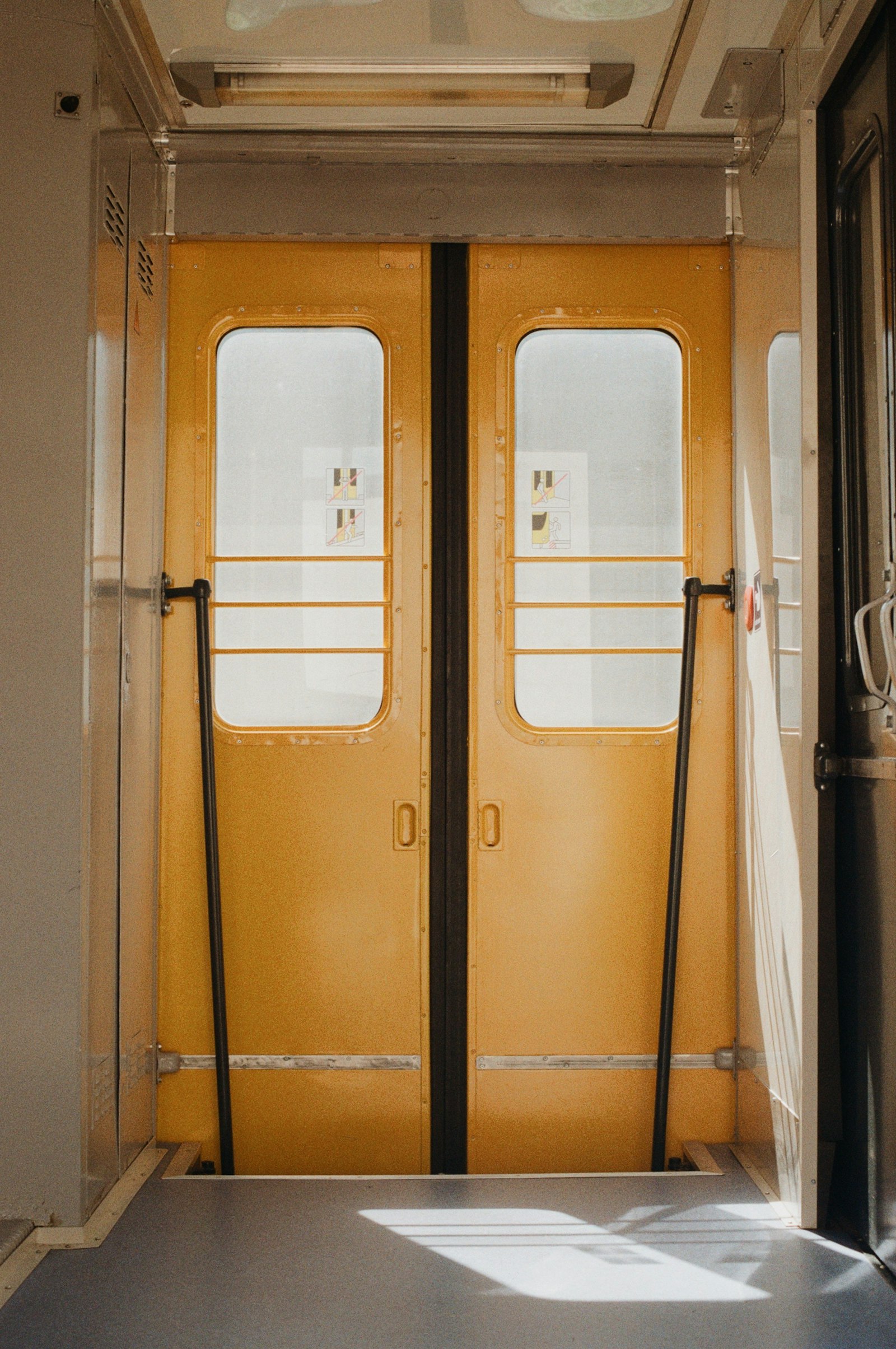
On some trains the correct doors open automatically. On others, particularly some regional rolling stock, the doors may be released by the train crew but remain closed until a passenger presses an illuminated opening button.
If you are standing at the correct side and nothing happens, look for a door-opening button beside the door. Press it once after the train has completely stopped and the door has been released.
Do not pull, force or operate an emergency mechanism simply because the ordinary door has not opened immediately.
The doors on the non-platform side should remain unavailable. That is a useful final check. Trenitalia’s passenger safety guidance tells travelers to get off only once the train is completely stationary and from the side facing the platform, not onto the track.
What if you could not understand the announcement?
Italian station and train announcements can be difficult to hear even when your Italian is good. Air-conditioning noise, conversations, tunnel noise and a suitcase rattling around a vestibule are not kind to railway vocabulary.
You still have several ways to work it out.
Look outside as the train approaches
The platform will usually become obvious shortly before the train stops. Be careful at stations with several tracks close together. A strip of concrete visible outside the window is reassuring; another railway track is not an invitation to open that door.
Watch the onboard information screen
Some trains display the next station and additional arrival information. The side may be shown on certain systems, but do not expect every train to display it.
Ask another passenger
The simplest question is:
Da che lato si scende?
It means “Which side do we get off on?”
You can also ask:
Le porte si aprono a destra o a sinistra?
“Do the doors open on the right or the left?”
If you have a larger Italy rail itinerary with several unfamiliar stations, you can also organize the rest of your trip in advance so you already know your stop order and connections before you start listening for the door announcement.
What if you are waiting at the wrong doors?
Usually, nothing dramatic happens. The doors beside you simply remain closed while passengers begin leaving from the other side.
Turn around and use the opposite doors in the same vestibule if available. Many trains have exterior doors opposite each other, so changing sides takes only a few steps.
If your carriage layout does not provide an opposite door at that point, follow the passenger flow toward the nearest usable exit. Avoid trying to squeeze through people who are boarding until those getting off have cleared the doorway.
With a suitcase, stroller or several bags, this is exactly why moving toward the vestibule before the train stops helps. Discovering that you need the opposite end of a busy carriage after everyone has started boarding is less entertaining.
If the announcement says one side but the other side appears to have the platform
Use what actually happens when the train stops. Operational information can change, and recorded announcements can occasionally be incomplete or poorly timed.
Never attempt to descend simply because you heard the word destra or sinistra. Confirm that there is a passenger platform outside and that the door has been normally released for use.
If the expected door remains closed, first check for an illuminated opening button. If that does nothing, use another door that passengers are already using. If there is an obvious malfunction and no usable exit nearby, alert the capotreno, the train manager/conductor.
Traveling with a stroller, wheelchair or reduced mobility
If railway assistance has been arranged, follow the staff member handling your boarding or alighting rather than positioning yourself solely according to a generic right-or-left announcement. A ramp, lift or assisted doorway may be arranged at a particular part of the train.
Similarly, a parent with a stroller should start preparing before arrival rather than trying to change sides at the last second. Keep children away from the door threshold until the train has stopped and the exit is clearly open onto the platform.
What to do if you miss your stop because you could not reach the door
Stay on the train and speak to the train staff as soon as possible. Say:
Non sono riuscito a scendere alla mia fermata.
“I wasn’t able to get off at my stop.”
Tell the capotreno which station you missed and show your ticket. They can tell you the sensible station at which to get off and how to travel back.
Do not use an emergency alarm merely because the doors closed before you managed to leave. Once the train has departed, the practical solution is to continue to the next suitable station and recover from there.
The habit that prevents most problems is simple: listen for prossima fermata, collect your belongings early, identify lato destro or lato sinistro, and confirm the platform with your own eyes before stepping out.