The safest way to handle Milan Design Week transport is to use the metro as your main network, walk the final part into each design district, and keep suburban rail as your backup for Rho Fiera. Surface buses, trams, taxis and cars are more vulnerable to temporary pedestrian zones and traffic restrictions. For 2027, Fuorisalone runs from April 12 to 18, while Salone del Mobile at Rho Fiera runs from April 13 to 18.
The important catch is that the detailed transport plan is published much closer to the event. Extra metro trains, extended evening service, temporary street closures and tram diversions can change from one edition to the next. Build your route around metro and railway stations first, then check ATM again on the day.
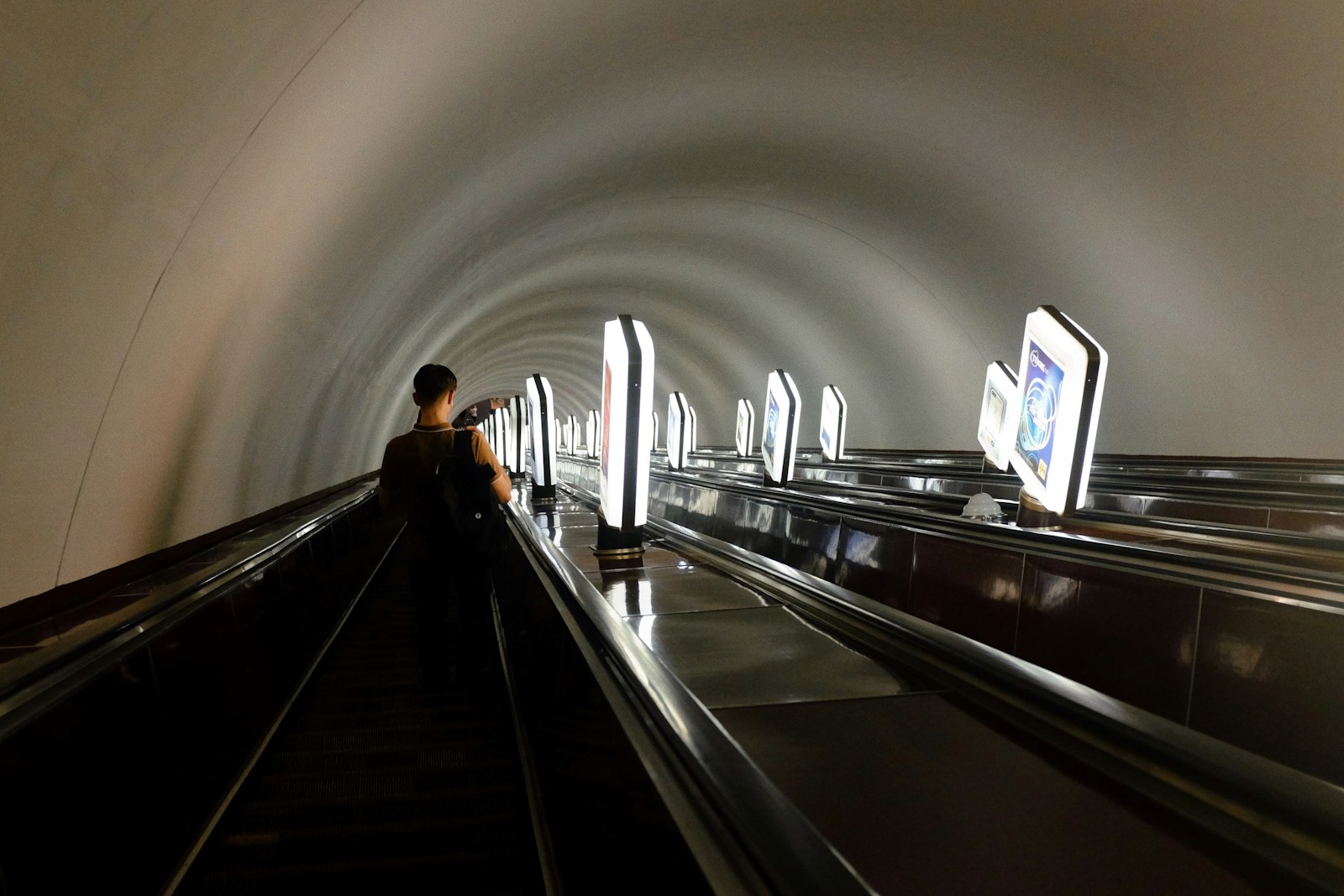
The transport strategy that works during Design Week
Milan’s design events fall into two very different transport problems. Salone del Mobile is concentrated at Fiera Milano Rho, west of the city. Fuorisalone is scattered across Brera, Tortona, 5VIE, Porta Venezia, Isola, Porta Nuova and other districts.
For Rho, you need one long transport leg. For Fuorisalone, repeated short trips across the city are usually the mistake. Group nearby events and walk between them instead. Our Milan Design Week and Fuorisalone guide is useful for deciding which districts actually belong together.
- Rho Fiera: M1 is the simplest option. S-line and regional trains are the strongest backup.
- Brera and 5VIE: arrive by metro, then walk.
- Tortona: M2 works, but M4 gives you several useful alternative stations when Porta Genova is overloaded.
- Isola and Porta Nuova: Garibaldi gives you metro plus suburban rail, with Isola and Gioia as useful alternatives.
- Porta Venezia: M1 plus the suburban railway station give you more than one way in and out.
Getting to Salone del Mobile at Rho without getting trapped on M1
The normal route is the M1 red line to Rho Fieramilano, the western terminus. From central Milan you can join M1 at stations including Cadorna, Duomo, San Babila, Loreto and Lotto.
Expect the greatest pressure around the fair’s opening and closing periods. The 2027 exhibition is currently scheduled to open to visitors from 9:30 to 18:30, so a large share of the crowd is trying to move in the same direction at roughly the same time.
Know the two Rho station names
This small distinction prevents a surprising amount of confusion:
- Rho Fieramilano is the M1 metro station.
- Rho Fiera is the railway station used by suburban and regional trains.
Both serve the exhibition complex. If a journey planner suddenly sends you to a railway platform instead of the red metro line, it may be offering a perfectly sensible alternative rather than sending you to the wrong place.
Use the S lines when M1 is the problem
Rho Fiera railway station is served by suburban lines including S5, S6 and S11, although the exact service pattern should always be checked for your travel date. This becomes particularly useful if you are already near Porta Venezia, Repubblica, Porta Garibaldi or another station on the suburban network.
From Milano Centrale, selected regional trains also stop at Rho Fiera. Do not board simply because a train is heading west. Check the departure board and make sure Rho Fiera appears among the scheduled stops.
The official Salone del Mobile directions list the current metro, suburban railway and regional-train options.
The ticket detail that matters at Rho Fiera
Rho is outside the Municipality of Milan, so a purely urban travel pass is not enough by itself. ATM currently lists the Mi1-Mi3 fare for travel between central Milan and the exhibition area. At the time of writing, the ordinary Mi1-Mi3 ticket is €2.20, while holders of an urban ATM pass need a €1.70 fare-zone extension. Check the current fare before the 2027 event because prices can change.
There is another trap. ATM’s contactless payment system works on ATM metros, buses, trams and trolleybuses, but the contactless journey itself is not a Trenord railway ticket. If you abandon M1 and switch to an S-line train, make sure you have a valid integrated ticket for the railway journey rather than assuming the bank card you tapped at an ATM gate covers it.
When using contactless on the metro, use the same physical card, phone or watch at the relevant gates. ATM explains the current rules on its contactless payment page.
Brera: avoid trying to reach the exact address by surface transport
Brera is compact enough that the most reliable tactic is to get to its edge and walk. ATM identifies several useful stations:
- Cadorna on M1 and M2
- Cairoli on M1
- Lanza and Moscova on M2
- Montenapoleone on M3
Choose the station based on the event address rather than automatically using one famous stop. For Via Solferino and the northern part of Brera, Lanza or Moscova may save you from pushing south through the densest streets. For the Castello side, Cairoli or Cadorna often makes more sense.
Temporary pedestrian controls are normal during the week. In 2026, the city imposed vehicle restrictions on part of Via Solferino and Largo Treves during specified afternoon and evening periods. That does not mean the same streets or hours will be used in 2027, but it shows why a taxi should not be your only plan for reaching a door inside Brera.
Tortona: Porta Genova is not your only station
Porta Genova M2 is the station most visitors associate with Zona Tortona, which is exactly why it can become uncomfortable at popular times. The district now has considerably better alternatives.
ATM also recommends Sant’Agostino on M2 and California, Coni Zugna and Bolivar on M4 for the Tortona area. This gives you a useful rule:
If your event is around the eastern end of Via Tortona, Via Savona or Via Bergognone and Porta Genova looks overloaded, check whether an M4 station puts you within a reasonable walk.
This matters even more when temporary road restrictions are active. During the 2026 edition, Milan created a large traffic-restricted area covering Via Tortona, Via Savona, Via Bergognone, Piazzale Stazione Genova and numerous surrounding streets. The exact 2027 order has not yet been published, so treat the previous arrangement as a warning about the type of disruption, not as next year’s confirmed map.
Surface routes crossing the district may be diverted around these closures. A metro station followed by a ten-minute walk is often more dependable than waiting for a tram or bus that is following a temporary route.
5VIE and the centre: approach from more than one side
For 5VIE, useful stations include Sant’Ambrogio on M2 and M4, Cordusio on M1, Duomo on M1 and M3, and Missori on M3.
Do not treat Duomo as the mandatory gateway. It is useful if your event is genuinely close to Piazza del Duomo, but changing there can mean joining large tourist and event crowds. Sant’Ambrogio is particularly handy for the western side of 5VIE, while Missori works well from the south.
For the Durini and central showroom area, San Babila on M1/M4 is the obvious anchor, with Sforza and Santa Sofia on M4 and Missori on M3 giving you alternatives. Milan’s newer M4 is especially useful during the week because it lets you cross the centre east to west without relying on surface traffic.
Porta Venezia: use the railway as well as M1
Porta Venezia is served both by M1 and by the underground suburban railway. That second network is easy to overlook.
If M1 is very crowded, check rail services from Porta Venezia or nearby Repubblica instead. This is especially useful when your next destination is Rho Fiera, because some S-line services continue directly toward the exhibition station.
Lima and Palestro on M1 can also be better choices for events at opposite ends of the district. Walking one metro stop above ground is often quicker than fighting your way back through an overloaded Porta Venezia entrance.
Isola and Porta Nuova: Garibaldi is the fallback hub
Garibaldi is one of the strongest transport nodes of the week because it combines M2, M5 and suburban rail. For Isola itself, Isola M5 is convenient, while Gioia M2 and Zara M3/M5 cover other approaches.
If Garibaldi becomes heavily crowded, do not automatically queue there merely because your map chose it. For an event inside Isola, walking from Isola station may be easier. For Porta Nuova, Gioia can remove an unnecessary interchange.
Garibaldi becomes more valuable again when you need to travel farther, particularly toward Rho by rail.
What street closures actually change
The metro normally remains the dependable backbone. The disruption is more noticeable above ground.
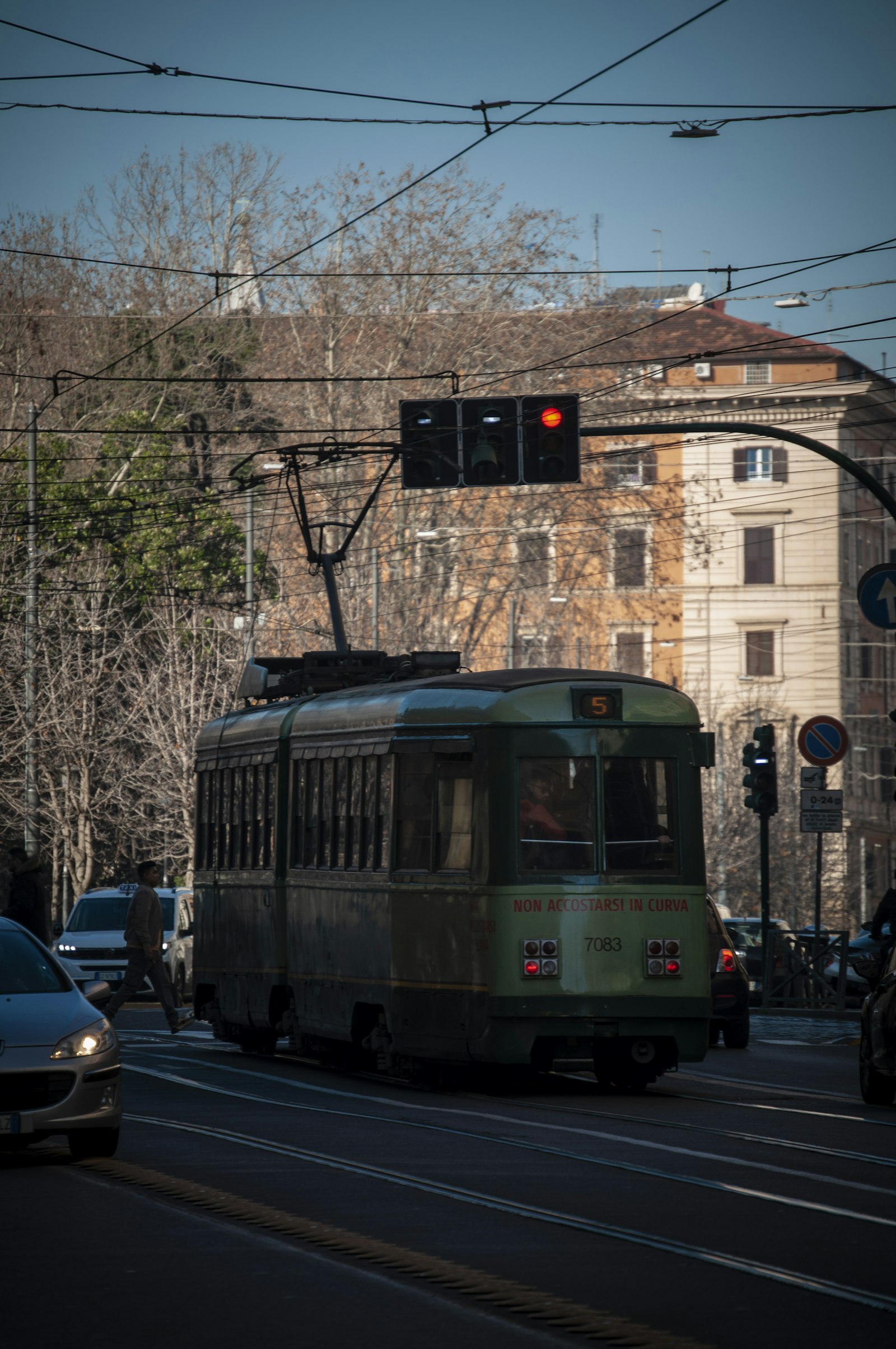
Temporary pedestrian zones can lead to tram and bus diversions, relocated stops, blocked taxi access and longer pickup times. A route shown in a journey planner several days earlier may therefore be technically correct but operationally poor on the afternoon you use it.
Italian notices worth recognizing include deviazione for a diversion, fermata soppressa for a suspended stop, uscita for exit, cambio for an interchange and binario for a railway platform.
Check ATM’s live service notices before setting off, particularly when your route depends on a tram or bus through Brera, Tortona or the historic centre.
Do not copy last year’s extended metro hours
Extra service during Design Week is common, but the exact arrangement is not permanent. In 2026, ATM added trains on M1 and additional evening trains on M2, and the city announced an exceptional metro extension until 2:00 in the morning on one Saturday.
That does not mean every metro line runs until 2:00 throughout the next Design Week. The 2027 special-service plan has not yet been published.
If you are organizing several evening events, use the Italy on Foot trip planner to keep each night’s venues in one part of Milan rather than depending on a late cross-city transfer.
What to do after the metro closes
ATM operates night buses that replace M1, M2, M3 and M4 after metro trains stop. They are identified as NM1, NM2, NM3 and NM4. There are also additional night routes, particularly on weekends.
There is one important limitation for anyone sleeping or parking near the fairgrounds: NM1 does not run all the way to Rho Fieramilano. On the western side its replacement service reaches Molino Dorino. If your hotel, car or destination is in Rho, check the last actual M1 or railway departure instead of assuming the night bus will finish the journey.
For late events in Tortona, NM2 and NM4 give the area useful overnight alternatives. From Isola, walking toward Garibaldi can be more practical after M5 finishes because Garibaldi connects with the M2 corridor and its night replacement service.
ATM publishes the current routes and operating pattern on its night network page.
If your route fails, switch modes instead of waiting
A useful recovery sequence is:
- Metro station closed or entrance packed: walk to the next station on the same corridor or approach the district using another line.
- M1 to Rho is uncomfortably crowded: check S-line or regional trains to Rho Fiera.
- Tram or bus disappears from the stop display: check for a deviazione and walk toward the nearest metro rather than waiting indefinitely.
- Taxi cannot enter the event street: set the pickup point on a larger road outside the pedestrian zone.
- Metro service has ended: look for the corresponding NM night route before paying for a long taxi journey.
Luggage, strollers and step-free travel
Large luggage is particularly awkward on M1 during the fair rush. If you are arriving from an airport or railway station with suitcases, avoid building a tight connection that requires squeezing onto the first train that arrives. Suburban rail may offer a better route to Rho from some parts of the city, although it can also be busy during the event.
For travelers using wheelchairs, mobility aids or strollers, check the lift you actually need before leaving. M1 and M2 are Milan’s older metro lines, and step-free access is not identical at every station or entrance. M4, which is particularly useful around Tortona, was built with lifts throughout its stations.
ATM provides real-time lift and accessibility information. During a week when changing to the next convenient station can save considerable time, checking a broken lift before committing to the route is especially worthwhile.
The mistakes that cost the most time
The first is trying to cross Milan repeatedly. Rho in the morning, Tortona after lunch, Porta Venezia in late afternoon and Brera at night looks possible on a map. During Design Week it turns your day into a sequence of platforms and queues. Pair the fair with one city district, or spend a full day walking through neighboring Fuorisalone zones. Our Salone del Mobile city-planning guide explains how the fair and city districts fit together geographically.
The second is treating a surface route as fixed. Temporary traffic orders are exactly what make trams and buses less predictable during the busiest evenings.
The third is assuming contactless ATM travel automatically continues onto Trenord trains. It does not.
The fourth is assuming an advertised late opening applies every night. Check the specific day’s last departures.
And the fifth is waiting for the crowd to solve itself. Milan gives you unusually good alternatives during Design Week: M1 versus suburban rail for Rho, M2 versus M4 around Tortona, several metro approaches to Brera and 5VIE, and rail as well as metro at Porta Venezia and Garibaldi. When one route becomes unpleasant, the better move is often one station and a ten-minute walk away.