At a Naples pastry counter, the choice is simple: ask for una riccia if you want a crisp shell made from many thin, flaky layers, or una frolla if you prefer a softer, tender shortcrust pastry. The traditional filling is broadly similar in both, based on ricotta, semolina, sugar, candied citrus and aromatic flavorings. For a first taste of sfogliatella riccia vs frolla, ordering one of each is the easiest solution, especially if two people can split them.
You do not need to say the full name at the counter. Once you are standing in front of a tray of sfogliatelle, “Una riccia, per favore” or “Una frolla, per favore” is perfectly clear.
The difference you will actually notice
The filling is not what separates the two versions most dramatically. The outside does.
- Riccia: shell-shaped, ridged and visibly layered. The pastry is thin, crisp and prone to scattering flakes down your shirt.
- Frolla: smooth, rounded or slightly oval, with a compact shortcrust shell. It is softer, less messy and generally easier to eat while walking.
The Campania Region lists both versions as part of the traditional Neapolitan pastry tradition, while the Naples heritage authority’s history of the sfogliatella describes the riccia as a highly layered pastry and the frolla as the shortcrust version.
If texture is your priority, choose the riccia for crunch and the frolla for tenderness. If you have no idea which camp you belong to, Naples has provided a remarkably convenient scientific method: buy both.
Exactly what to say at the counter
The most useful orders are short:
- Una riccia, per favore. = One riccia, please.
- Una frolla, per favore. = One frolla, please.
- Una riccia e una frolla, per favore. = One of each, please.
- Due ricce, per favore. = Two ricce, please.
- Due frolle, per favore. = Two frolle, please.
You may hear staff ask “Riccia o frolla?” after you request a sfogliatella. They are simply asking which type you want.
If several kinds of pastries are packed together in the display and you cannot remember the vocabulary, pointing is completely adequate. “Quella, per favore” means “that one, please.”
How to recognize them before you order
The riccia looks like a layered shell
The riccia is the distinctive one. Its surface is formed from tightly stacked pastry layers that fan outward into ridges. From the side, it can resemble a shell or a small stack of paper-thin leaves.
Those layers are also why eating one over black trousers immediately before a photograph may not be your finest logistical decision. Hold it inside its paper wrapping rather than taking the pastry completely out.
The frolla looks smooth
The frolla has none of those exposed layers. It looks like a small domed shortcrust pie, usually with a smooth golden surface. The filling is enclosed much more completely, so crumbs and ricotta are easier to control.
For a traveler carrying a bag, pushing a stroller or trying to eat between metro stops, the frolla is often the more manageable choice. That is a practical distinction, not a judgment on which one tastes better.
Do the two versions have the same filling?
Traditionally, they are close. Classic recipes use a filling built around cooked semolina and ricotta with sugar, egg, candied citrus and flavorings such as cinnamon, vanilla or orange. Recipes vary between pastry shops, so the exact sweetness, amount of candied fruit and aroma can differ substantially.
The shell changes how that filling tastes. Against the dry, brittle layers of a riccia, the soft center creates a stronger contrast. Inside a frolla, the filling and pastry feel more unified and cake-like.
Do not assume every shop uses an identical recipe simply because the pastries have the same name.
Ask whether a fresh batch has just come out
A freshly baked riccia is especially dependent on texture. As it sits, moisture from the filling gradually works against the crispness of the pastry.
If freshness matters, ask:
“Sono appena sfornate?”
Are they just out of the oven?
Or:
“Quali sono appena sfornate?”
Which ones have just been baked?
Sfornare means to take something out of the oven, so appena sfornata is a useful phrase to recognize in pastry shops.
You can also ask “È calda?”, meaning “Is it warm?” But warm and freshly baked are not exactly the same thing. If what you care about is the crispest possible shell, asking about the latest batch is more useful than simply asking for heat.
How ordering works in a Naples bar or pasticceria
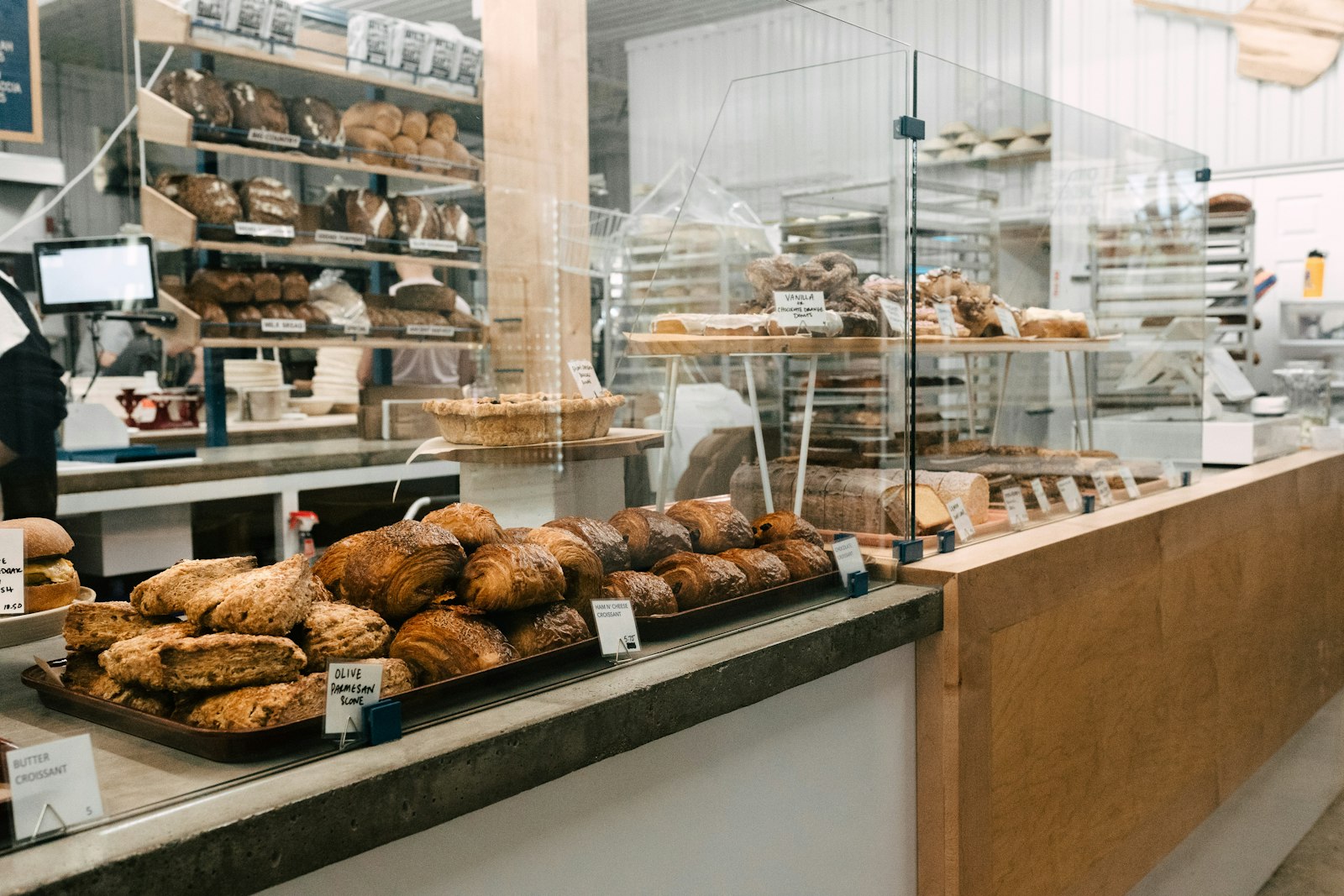
A pasticceria is a pastry shop. A bar in Italy is often a café selling espresso, cappuccino, pastries and snacks, so you can easily find sfogliatelle in either.
There is no universal payment sequence. Some establishments want you to pay at the cassa first, keep the scontrino or receipt, and then take it to the pastry or coffee counter. Smaller places may serve you first and collect payment afterward.
If the system is unclear, ask:
“Si paga prima?”
Do I pay first?
For the broader café routine, including what to do when the cash register and service counter are separate, see the Italy on Foot guide to ordering coffee in Italy.
Standing at the counter or taking a table
If you want a fast pastry and coffee, al banco means consuming them at the counter. Al tavolo means sitting at a table.
Do not automatically buy at the counter and then carry everything to an empty café table. Some establishments have separate table service and different prices for seated customers.
Ask “Possiamo sederci?” if you want to sit and the arrangement is not obvious.
For a quick breakfast stop, a very normal order is:
“Una frolla e un caffè, per favore.”
Remember that un caffè in Naples means an espresso unless you specify another coffee.
If you are carrying luggage
Large luggage changes the calculation more than the pastry does. In a crowded bar, standing at a narrow counter with a suitcase, hot coffee and an explosively flaky riccia can become a three-handed job when you possess only two.
If the shop is busy, consider buying the pastry da portare via, meaning to take away. You can say:
“Da portare via, per favore.”
If you are buying several for later, ask:
“Me le può mettere in una scatola?”
Can you put them in a box for me?
The frolla travels more neatly. A riccia can still be boxed, but its delicate layers are easier to crush, so keep the package flat rather than wedging it vertically into a backpack.
Check the ingredients if pork fat matters to you
This is one detail travelers can easily miss. Traditional recipes for Neapolitan sfogliatelle may use strutto or sugna, meaning lard, in the pastry dough. The official historical material published in Naples describes lard in preparations for both classic shells.
Modern pastry shops may use different fats, so do not assume either that a pastry contains lard or that it does not. If you avoid pork, ask directly:
“Contiene strutto?”
Does it contain lard?
Or:
“È fatta con lo strutto?”
Is it made with lard?
This also means a sfogliatella should not automatically be treated as vegetarian without checking the recipe.
Allergies: ask about the specific shop’s recipe
Traditional versions commonly contain wheat, milk and egg, and recipes can include additional ingredients or cross-contact risks. If you have a serious allergy, do not rely on the appearance of the pastry or a generic ingredient list from the internet.
Ask staff to check their own allergen information. Useful language includes:
- Contiene latte? = Does it contain milk?
- Contiene uova? = Does it contain eggs?
- Contiene frutta a guscio? = Does it contain tree nuts?
- Posso vedere gli allergeni? = Can I see the allergen information?
Do not confuse a riccia with a coda d’aragosta
A coda d’aragosta, literally “lobster tail,” can look related because it also has conspicuous flaky layers. It is not simply another name for the classic pastry.
The lobster-tail version is generally longer and is commonly filled differently, often with cream-based fillings. The traditional Neapolitan riccia has its characteristic ricotta-and-semolina center.
If the display contains several dramatic layered pastries and you want the classic version, saying “sfogliatella riccia” removes the ambiguity.
Santa Rosa is another relative, not a third name for the same pastry
You may also encounter Santa Rosa or Santarosa, particularly when exploring the wider Campania and Amalfi Coast pastry tradition. It is connected historically to the sfogliatella but should not be treated as simply another word for the Naples version.
Traditional Santa Rosa preparations are larger and can incorporate cream and sour cherries. If you specifically want the familiar Naples pastry, order a riccia or a frolla rather than assuming every shell-shaped relative will be identical.
Which one should you choose?
Use the texture you want as the decision rule:
- Choose riccia if crispness and flaky pastry are the main attraction.
- Choose frolla if you prefer shortcrust, a softer bite or something easier to eat while moving.
- Order one of each if this is your first stop and you want to understand the difference rather than appointing a winner on sight.
If you are arranging food stops around museums, stations and neighborhoods, you can organize the rest of your Naples route so the pastry break lands naturally between places rather than becoming a special cross-city mission.
What to order with it
An espresso is the simplest companion. Order un caffè for a standard espresso, or a cappuccino if that is what you actually want. There is no requirement to match the pastry to a particular drink.
If you order coffee and pastry together at a pay-first establishment, tell the cashier the full order before paying:
“Una riccia e un caffè, per favore.”
Take the receipt if one is handed to you, then watch whether customers move toward a separate coffee or pastry counter.
If the version you want has sold out
Ask “Quando esce la prossima infornata?”, meaning “When does the next batch come out?” A pastry shop that bakes repeatedly may have more coming, while another may simply be finished for the day.
If there is no further batch, switching versions is entirely reasonable. A freshly baked frolla is a better consolation prize than spending an hour crossing Naples in pursuit of one specific pastry texture.
And if the person behind the counter asks the classic “Riccia o frolla?”, you now have the most useful Naples answer of all: “Una di tutte e due, grazie.” One of each.