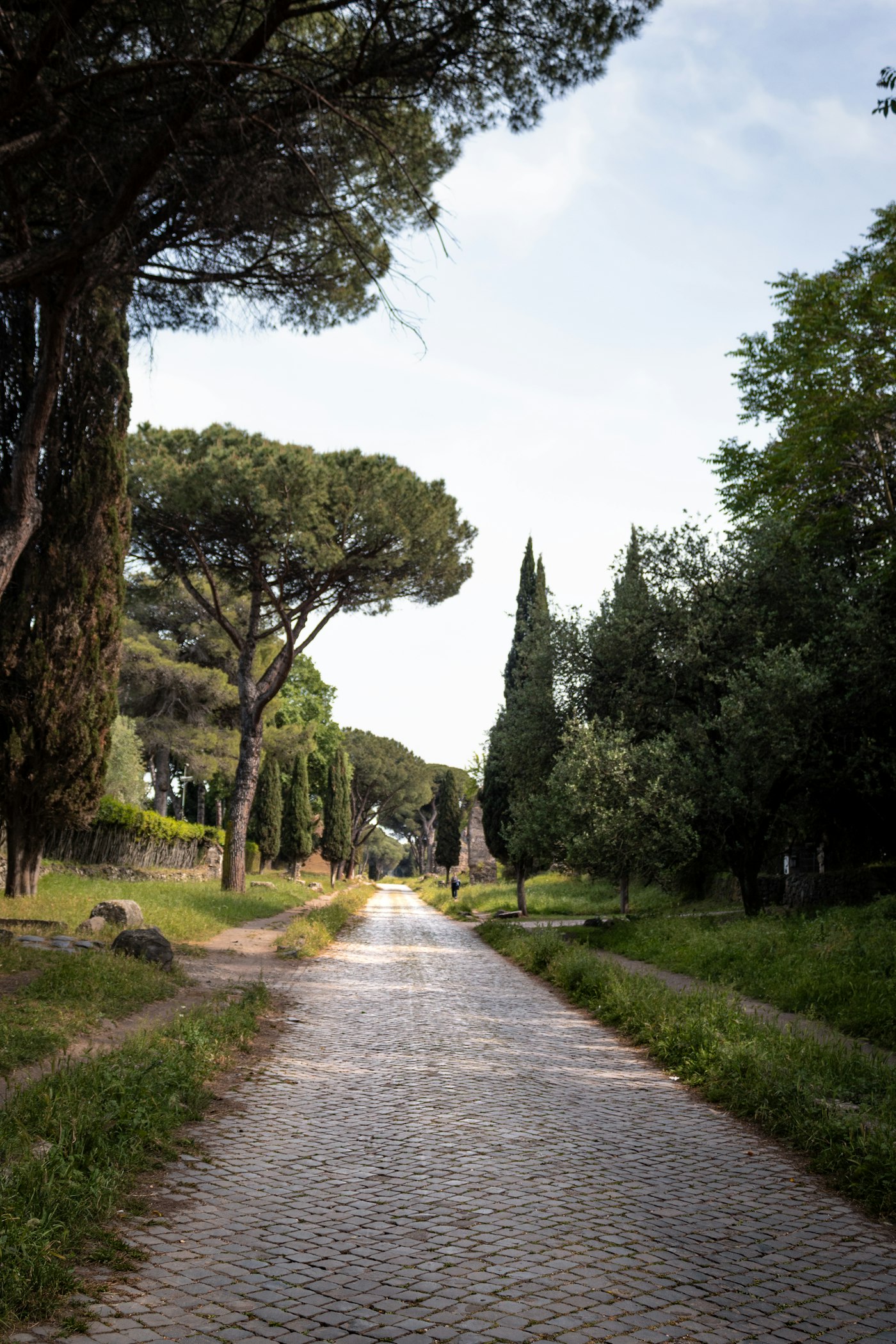
Sunday is one of the easiest days to walk or cycle Rome’s ancient road, but it is not completely vehicle-free. Under the current rules, motor traffic is restricted from 09:00 to 18:00 on Sundays and public holidays along Via di Porta San Sebastiano and Via Appia Antica from Viale di Porta Ardeatina toward the Grande Raccordo Anulare. Appian Way on Sundays therefore means far fewer cars, not a sealed pedestrian street. Public buses and several authorized vehicle categories can still pass.
What actually closes to traffic on Sunday
Roma Servizi per la Mobilità lists a Sunday and public-holiday ban on motor vehicles from 09:00 to 18:00 along Via di Porta San Sebastiano and Via Appia Antica, covering the long stretch from Viale di Porta Ardeatina toward the GRA. This is the rule that makes Sunday noticeably calmer for walkers and cyclists.
There are two important catches. First, traffic can cross the ancient road at the intersections of Via di Tor Carbone with Via Erode Attico and Via di Torricola with Via Casal Rotondo. Second, the restriction has exemptions. ATAC and other public transport vehicles, emergency services and some tourist coaches may still use the road. Taxis, residents, people with disability permits and vehicles serving certain businesses have controlled access at specified intersections. Authorized vehicles are subject to a 30 km/h limit.
In other words, walking down the middle of the road simply because it is Sunday is not a good habit. On the quieter archaeological sections it may feel like a giant cycle path, but listen for buses and cars and move aside when necessary.
The hours matter more than many visitors expect
The standard motor-traffic restriction currently begins at 09:00. An early-morning cyclist arriving at 07:30 can therefore find considerably more ordinary traffic than someone arriving two hours later. The same issue appears at the other end of the day: after 18:00, normal access rules begin changing back.
If your route includes the more exposed first section near Porta San Sebastiano, Domine Quo Vadis and the catacombs, aim to cover it during the restricted period rather than assuming Sunday means a 24-hour closure.
The road itself is not a gated attraction with opening and closing times. The regional park explains that the park remains accessible, while individual archaeological sites, catacombs, rental offices and private routes through the area keep their own hours.
Can you still take the bus along the Appian Way?
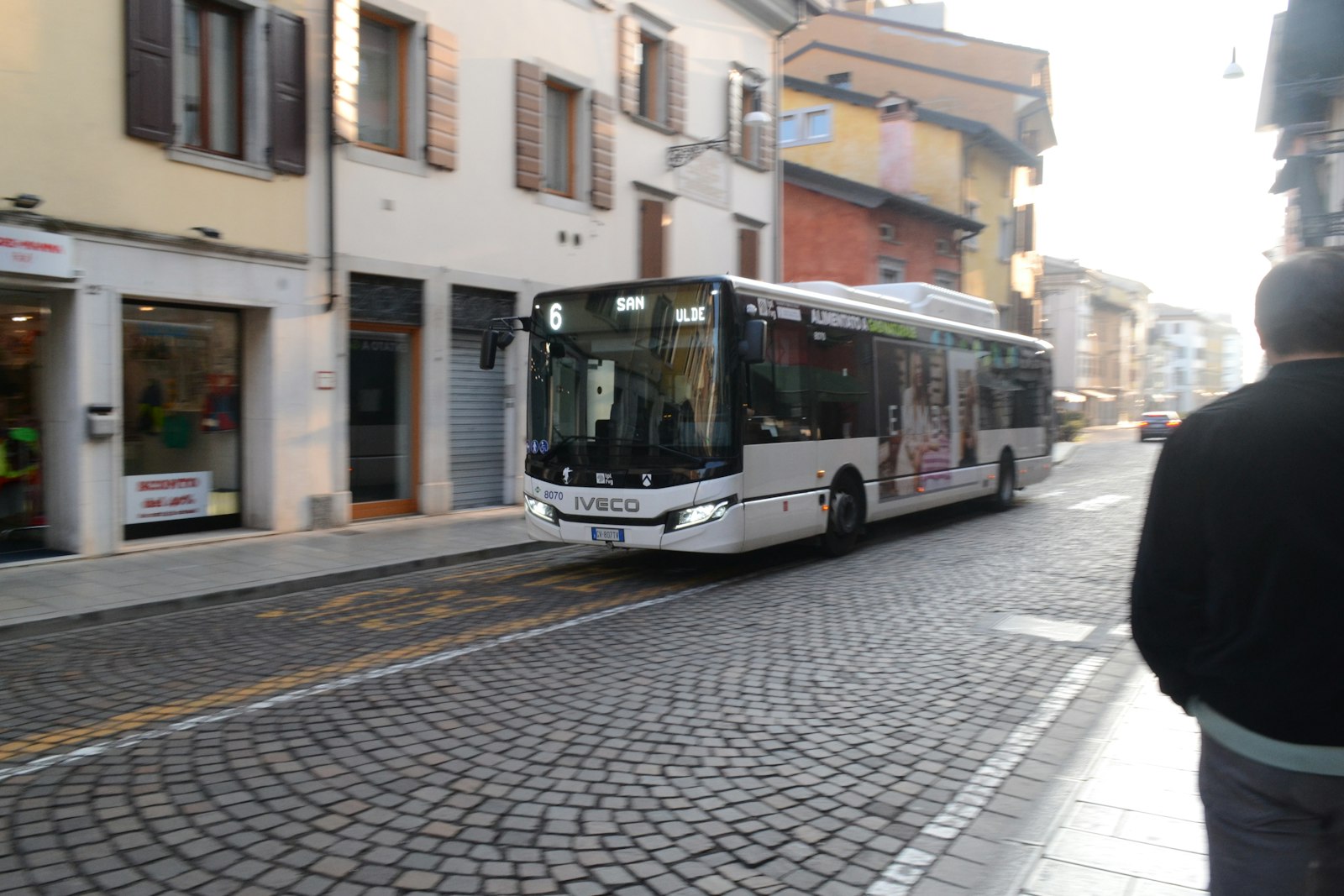
Yes. The normal Sunday traffic restriction specifically exempts public transport, which is why seeing a city bus coming toward you on an otherwise quiet ancient road is perfectly normal.
Bus 118 from central Rome
The 118 is usually the most useful route for visitors coming from central Rome. The archaeological park lists stops at Circo Massimo, Piazza Venezia and the Colosseum before the bus continues toward Via Appia Antica and Villa dei Quintili. It can be used for stops around the catacombs and Cecilia Metella rather than walking the whole way from the city centre.
For a straightforward outing, get off around Appia Antica/Domine Quo Vadis if you want to begin near the northern end of the archaeological road. From there you can continue south on foot or by bike.
Bus 660 from Metro A
The 660 is useful if your priority is the more atmospheric section around Cecilia Metella and Capo di Bove. It connects with Metro A at Arco di Travertino, and the archaeological park lists it as serving both Cecilia Metella and Capo di Bove.
This can be a better choice than starting at the city end if you have limited time. The stretches beyond Cecilia Metella are where the road begins to feel much more rural and where sections of ancient paving become especially prominent.
Bus 218 and the Domine Quo Vadis area
The Appia Antica service centre also lists the 218 for the stop at Appia Antica/Domine Quo Vadis. It provides another approach to the beginning of the park area rather than forcing every visitor onto the 118.
Why a Sunday bus can suddenly be diverted
The normal traffic restriction and a special-event closure are not the same thing. Rome occasionally closes a larger section completely for races, cycling events or mobility initiatives. During those events even buses that are normally exempt can be diverted.
Past full pedestrianization events have rerouted the 118 and altered the 218 and 660, sometimes removing stops directly on the ancient road. That is why a journey planner showing an unexpected Sunday diversion is not necessarily wrong.
If your bus changes route, do not wait indefinitely at an apparently abandoned pole. Check the posted notice for fermata sospesa (stop suspended), linea deviata (route diverted) or fermata provvisoria (temporary stop). Major event diversions are also published by Rome’s mobility authorities.
A good backup is to approach from Metro A rather than trying to force a city-centre bus route through a closure. For a longer walking alternative, Metro A to Colli Albani also places you close to entrances into the Caffarella Valley, from which paths lead toward the Appian area.
Can you ride a bike on Sunday?
Yes. Cycling is one of the main reasons the traffic restriction is useful. The Sunday rule targets motor vehicles, and the park actively provides bicycle access and rental facilities. The official rental point is at Via Appia Antica 58/60.
The difficulty is not traffic so much as the surface. The famous ancient paving, or basolato, consists of large blocks of volcanic stone. Some portions are reasonably rideable while others are deeply uneven. Cyclists commonly alternate between the ancient stones and the smoother dirt tracks running beside them where the route permits.
A lightweight city bicycle can work for a short ride, but wider tyres are much more comfortable. An e-bike helps with distance, although the motor does nothing to make ancient Roman paving less bumpy. Slow down rather than trying to maintain city-bike speed across polished stones, gaps and ruts.
With children or less confident riders
Sunday removes much of the stressful vehicle traffic, but it does not turn the route into a smooth family cycleway. Young riders need enough control to deal with irregular stone, gravel and occasional passing vehicles. Child seats and trailers can also become uncomfortable over long stretches of basolato.
For a mixed-ability group, starting closer to Cecilia Metella and choosing how far to continue south is often easier than committing everyone to a long ride from central Rome.
The best place to start depends on what you want to see
- Start near Domine Quo Vadis: choose this if you want the traditional approach from the Rome side, easy access to the service centre and the option of visiting the catacombs.
- Start near Cecilia Metella: choose this if your priority is ancient paving, tombs and the more open landscape without spending much of the day reaching it.
- Start from Villa dei Quintili: useful for a one-way exploration back toward Rome, particularly if you are comfortable coordinating buses and walking several kilometres.
The 118 reaches Villa dei Quintili, while the 660 provides the Metro A connection near Cecilia Metella. This makes a one-way route possible without having to retrace every kilometre.
If this Sunday excursion is one part of a longer trip, you can organize the rest of your Italy route around the day rather than squeezing the ride between two timed attractions.
Do not drive to the park entrance expecting to park there
Sunday is a poor day to aim a rental car directly at Via Appia Antica. The regional park says its parking area at Via Appia Antica 50 is available Monday through Saturday, while on holidays it directs motorists toward the Largo Galvaligi and Via Tito Omboni area, from where visitors can continue on foot or by bicycle.
Parking outside the restriction is also less stressful than trying to decide whether your vehicle qualifies for an exemption. A rental car does not become authorized simply because your hotel map suggests driving down the ancient road.
Signs worth recognizing include divieto di transito, meaning no through access; eccetto autorizzati, meaning except authorized vehicles; and ZTL, short for Zona a Traffico Limitato.
A new weekend ZTL system is arriving in late 2026
Rome is in the middle of changing how access is controlled. The city has announced a new territorial limited-traffic zone, the ZTLT Appia Antica. Testing of electronic access gates is scheduled to begin on 19 September 2026, with a pre-enforcement period lasting at least 30 days before automatic penalties begin.
Once the new system is fully operational, the planned ZTLT hours are 07:00 to 19:00 on Saturdays and Sundays, throughout the year except August. The controlled area includes the first section between Via delle Mura Latine and Via Appia Pignatelli, as well as part of Via Ardeatina. The new electronic arrangement is intended to replace the existing police-managed holiday traffic block in that area.
This transition is important if you are reading older advice saying simply “the road closes 09:00 to 18:00 every Sunday.” That remains the published standard rule before the new system takes over, but travelers visiting from autumn 2026 onward should pay attention to the signs at the access points rather than relying on an old blog timetable.
What Sunday feels like once you are past Cecilia Metella
The section farther south is much easier to explore slowly. Public through-traffic is heavily restricted beyond the central archaeological area even outside the Sunday arrangement, although residents and other authorized vehicles can still appear. The regional park itself advises walkers and cyclists that the area beyond Cecilia Metella is the heart of the traffic-limited archaeological route.
That is also where the original paving becomes a bigger part of the experience. Do not measure progress using ordinary city-walking or cycling speeds. Stopping for tombs, moving around broken paving and giving way to other visitors can make a few kilometres here take much longer than the same distance on a Roman pavement.
If something goes wrong
- Your bus stop says suspended: look for a temporary-stop notice and check whether a race or special pedestrianization is affecting the road. Do not assume the next bus will eventually arrive at the same pole.
- You arrive before 09:00: expect more motor traffic on the initial section under the current rules. Either wait for the restriction or use a bus to start farther south.
- You are still cycling near the city end after 18:00: remember that the standard Sunday ban is ending. Move onto the safest available side route rather than assuming the road remains quiet into the evening.
- The ancient paving is too rough: slow down or walk the bicycle. Continuing on foot for a section is considerably better than fighting for balance over the stones.
- You have reduced mobility: use buses to shorten the distance between major sites. Reduced traffic helps, but original Roman paving, gravel and irregular verges mean the archaeological road should not be treated like a uniformly step-free urban promenade.
The simplest Sunday plan is therefore to arrive after the motor restriction begins, use the 118 or 660 to avoid unnecessary approach walking, and spend most of your time around Cecilia Metella and the quieter road beyond it. Keep an eye out for the occasional authorized vehicle, and check the day’s transport changes whenever a major race, festival or city mobility event is taking place.