For Roma San Pietro station to the Vatican, walking is usually the simplest choice if you are heading to St. Peter’s Square. Allow roughly 15 minutes from the station forecourt, a little more with luggage or crowds. The route has short slopes but no long sustained climb. A bus can remove some walking, while the Vatican Museums are a different destination entirely: their public entrance is around the Vatican walls on Viale Vaticano, farther from the station and with more noticeable uphill walking.
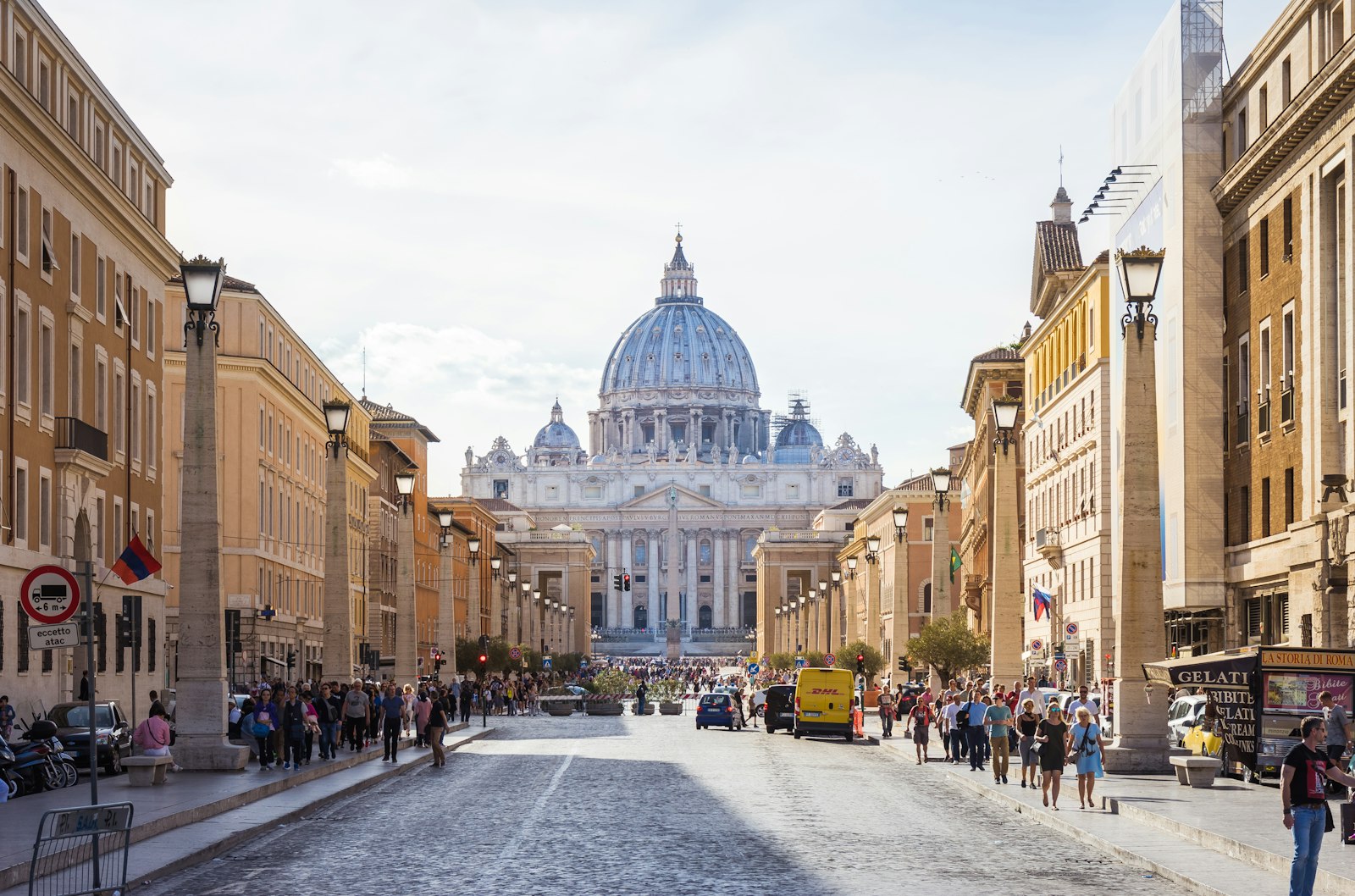
The first decision, then, is not “walk or bus?” It is which part of the Vatican are you actually trying to reach? St. Peter’s Square, St. Peter’s Basilica and the Vatican Museums do not share one visitor entrance. If that distinction is new to you, the Italy on Foot guide to visiting the Vatican explains how the main sights fit together.
Which route should you choose?
- St. Peter’s Square or Basilica: walk from the station unless luggage, mobility or bad weather makes the short bus ride preferable.
- Vatican Museums: expect a longer walk around the Vatican walls, or consider bus 982 from the Gregorio VII/Cavalleggeri area toward Piazza del Risorgimento.
- Heavy suitcase or stroller: use the station’s signed accessible route rather than automatically taking the nearest stairs, then consider the 62 or 64 for the final approach to St. Peter’s.
- Large papal event: follow the temporary pedestrian routing on the day. Police barriers can make the normal shortest route irrelevant.
Leaving Roma San Pietro: choose the right side of the station
Roma San Pietro is smaller than Termini or Tiburtina, but it has several ways out. RFI completed a major refurbishment before the 2025 Jubilee, renewing the station’s three underpasses, platform access, signs and outside areas and improving accessibility. You may therefore see signs for Uscita followed by different street names rather than one obvious “Vatican exit.” RFI has details of the station refurbishment and access improvements.
For the conventional street walk to St. Peter’s, the useful target is Piazza della Stazione di San Pietro, the forecourt beside the station building. Do not accidentally head away toward Clivo di Monte del Gallo simply because that exit is convenient from your platform.
There is also a second option from platform 1: the Passeggiata del Gelsomino. Rome’s tourism authority says the promenade can be reached from inside the station by continuing along platform 1 and following the signs. The route was redeveloped around the Jubilee works and runs beside the former Vatican railway alignment. It is a pleasant alternative to the traffic around the station, but treat it as another pedestrian approach rather than a magic shortcut to every Vatican attraction. You can check the current access information on the official Passeggiata del Gelsomino page.
The straightforward walk to St. Peter’s Square
From the main station forecourt, the street route is simple enough to follow without making a string of complicated turns:
- Leave the station toward Piazza della Stazione di San Pietro.
- Head toward Via della Stazione di San Pietro and the Via delle Fornaci side of the neighborhood. Signs may use San Pietro, Vaticano or Porta Cavalleggeri.
- Continue toward Largo di Porta Cavalleggeri. The dome will often help with orientation, but use street signs rather than trying to walk directly toward it.
- At the Vatican-side road junctions, follow the pedestrian route for Piazza San Pietro. Cross only at the marked crossings or use the pedestrian passage indicated on site.
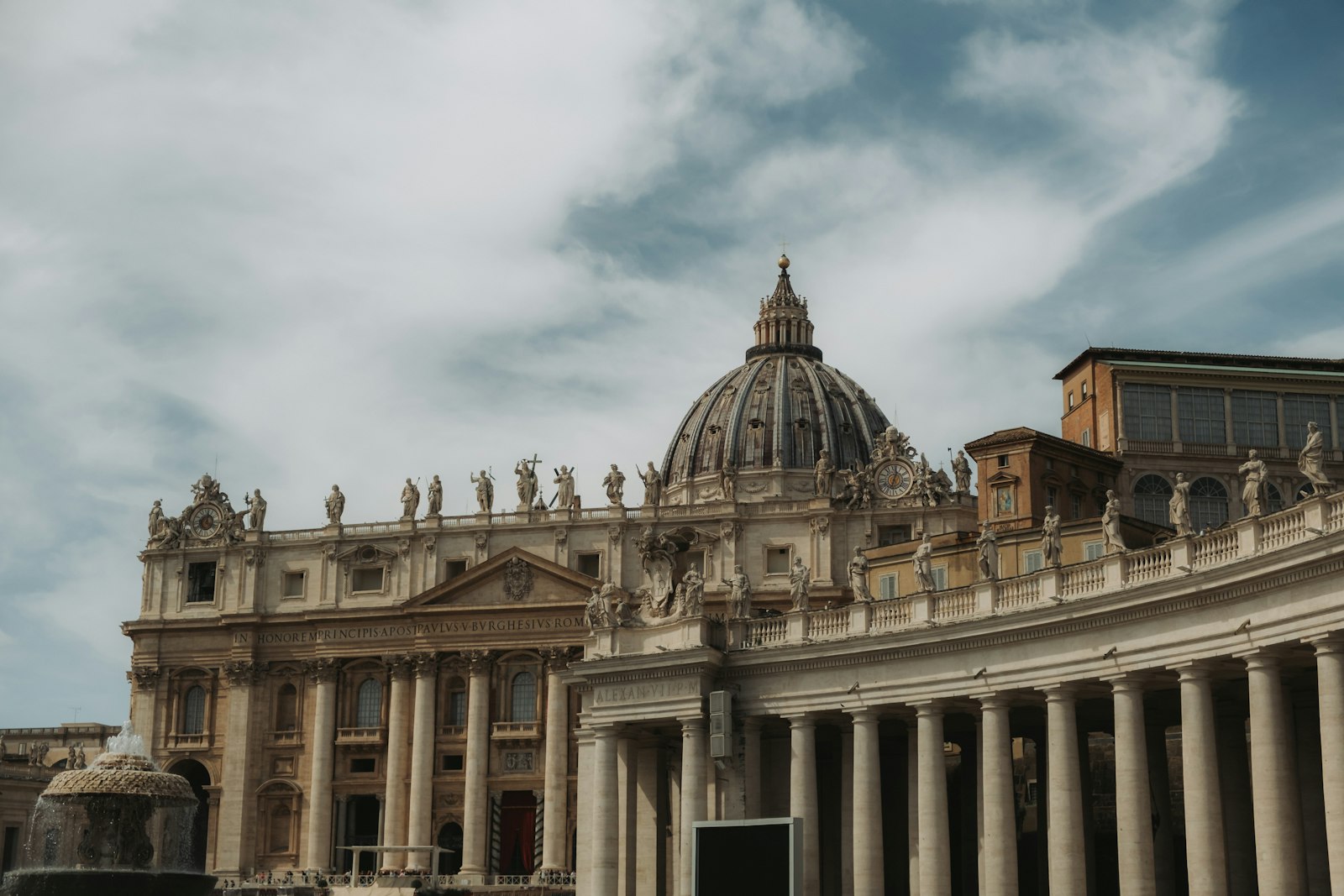
- Once the colonnade opens in front of you, you have reached St. Peter’s Square.
The station is less than a kilometre from the square by the practical pedestrian route. A brisk traveler can cover it quickly, but 15 to 20 minutes is a safer allowance once you include finding the correct exit, traffic lights and the heavy pedestrian flow around Porta Cavalleggeri.
Do not include the Basilica security queue in that walking time. If you are entering St. Peter’s Basilica, the official Basilica information says security screening begins on the right-hand hemicycle when you are standing in the square facing the Basilica. Crowds can make the queue much longer than the walk from the railway station. The Basilica publishes current security-entry information.
How much of the walk is uphill?
The walk to St. Peter’s Square is not a major hill climb. There are short rises, ramps and uneven sections around the railway approaches and the streets leading toward Porta Cavalleggeri, but there is no long continuous ascent comparable with walking up the Gianicolo.
Suitcases make these small changes in level more noticeable. The awkward parts are often the combination of pavement edges, busy crossings, station ramps and crowds rather than elevation itself. A traveler with a wheeled case may therefore prefer the street route over improvising through side streets in search of a supposedly flatter shortcut.
The more significant uphill issue appears when your real destination is the Vatican Museums. Their public visitor entrance is on Viale Vaticano, on the north-western side of the Vatican walls. Reaching it from the San Pietro station area means continuing around the walls, and sections around Via Aurelia and Viale Vaticano involve more climbing than the short approach to St. Peter’s Square.
Taking bus 62 or 64 from the station
The station forecourt is also a bus terminus. Look for the stop named P.za Stazione S. Pietro (FL) or similar wording. The letters FL refer to the regional railway network.
For the Vatican side, the useful departures are normally:
- 64 toward Termini
- 62 toward Staz.ne Tiburtina
Both leave the San Pietro terminal toward Via delle Fornaci. For St. Peter’s, Cavalleggeri/Fornaci is the useful stop to watch for. From the current station departure pattern, you pass stops such as Fornaci/Mura Aurelie and Fornaci before reaching the Cavalleggeri area. From there, continue on foot toward the square.
This bus ride is short enough that waiting for a vehicle can take longer than walking. It makes most sense with luggage, tired children, limited walking ability, strong heat or heavy rain.
You still need a valid ticket for the short ride
A single Rome BIT ticket currently costs €1.50 and is valid for 100 minutes from first validation. ATAC also supports contactless Tap & Go on surface transport. Paper tickets must be validated, and ATAC instructs passengers changing vehicles within the validity period to validate again. Current fares and rules are on the official ATAC BIT page.
If you reached the station using a valid Metrebus ticket on an urban regional train, that ticket may continue to cover an onward bus within its validity. A separate Trenitalia point-to-point rail ticket, however, does not turn into an ATAC bus ticket simply because the train stopped inside Rome.
Bus stops can move around San Pietro
Do not rely too heavily on a screenshot of a bus stop from months earlier. The streets between the station, Via delle Fornaci and Porta Cavalleggeri are regularly affected by roadworks, major ceremonies and security restrictions.
As of August 2026, ATAC has a temporary alteration affecting lines 62 and 64 around Via Innocenzo III on their approach to the San Pietro terminus. The practical lesson is more durable than the roadwork itself: check the electronic stop display or ATAC notice before walking several blocks in search of a bus that has been temporarily rerouted. ATAC posts current information for the affected 62 and 64 routes.
If your ticket says Vatican Museums, do not aim for St. Peter’s Square
This is the mistake that costs travelers the most unnecessary walking. The Vatican Museums entrance is not beside the Basilica and there is no normal public shortcut straight through Vatican City from the square to the museum doors.
The official Museums address is Viale Vaticano. From the railway station you can walk around the western side of the Vatican walls, but allow considerably more time than for St. Peter’s. The official Museums transport information lists bus 982 at Piazza del Risorgimento, which can be useful from the Gregorio VII/Cavalleggeri area. From Piazza del Risorgimento, continue toward Viale dei Bastioni di Michelangelo and the museum entrance. Check the official Vatican Museums directions before relying on a particular stop.
The 982 does not use the same station-forecourt terminal arrangement as the 62 and 64, so pay attention to the stop name and direction before boarding. If the bus would require a long wait, walking may still be quicker.
If the Vatican is one part of a larger Rome day, it helps to build your Italy itinerary around the entrance you actually need rather than treating “Vatican” as a single map pin.
Luggage, strollers and reduced mobility
RFI’s refurbishment substantially improved step-free movement through Roma San Pietro, so do not assume stairs are the only way out if you arrive on a platform away from the station building. Follow the accessibility and uscita signs through the appropriate underpass.
Outside the station, conditions are less controlled. Expect normal Roman pavements, curb transitions, busy crossings and occasional temporary barriers. With a stroller or rolling luggage, give yourself extra time at Porta Cavalleggeri rather than trying to keep pace with pedestrians carrying nothing.
If walking distance is the problem rather than stairs alone, bus 62 or 64 to the Cavalleggeri area is often the more useful compromise. For passengers who need railway assistance, Roma San Pietro is part of RFI’s assistance network; arrange support through RFI rather than assuming staff will be waiting on the platform without a request.
Arriving for a papal audience or major ceremony
Normal routing can change substantially on days with large events in St. Peter’s Square. Police may establish pedestrian screening points well before the colonnade, close individual streets or send arrivals through a particular approach. Via delle Fornaci, Porta Cavalleggeri and the roads immediately around the station have all been used for managed pedestrian flows during major Vatican events.
In that situation, follow the temporary signs and police instructions even if your navigation app insists a closed street is the shortest route. A five-minute detour is preferable to reaching a barrier and having to retrace the entire block.
Allow a generous buffer for any timed Vatican booking. Railway arrival time, the walk to the Vatican and attraction security are three separate parts of the journey. A train reaching San Pietro ten minutes before an entry slot does not mean you are ten minutes from being inside.
If you take a wrong turn
If you emerge toward Clivo di Monte del Gallo or find yourself climbing away from the dome, return toward the station signs rather than continuing in the hope that every uphill street eventually reaches the Vatican. Look for Piazza della Stazione di San Pietro, Via delle Fornaci or Porta Cavalleggeri.
If you reach St. Peter’s Square but actually need the Museums, do not panic. Walk around the Vatican walls toward Piazza del Risorgimento and Viale Vaticano, or use local transport if your timed entry is tight. Just expect this correction to add meaningful walking time.
If you are still deciding which Rome railway stop best suits the rest of your trip, the Italy on Foot overview of train stations in Rome explains where San Pietro fits alongside Termini, Tiburtina, Ostiense and Trastevere.