Gladiator training experiences in Rome allow children to dress in Roman-style costumes, learn basic combat movements with practice weapons and take part in supervised mock battles. The established school on Via Appia Antica accepts participants aged six and older, and its standard visitor experience lasts approximately two hours. Parents can often join the training alongside their children, making it a hands-on family activity rather than a conventional sightseeing tour.
Before booking a Rome gladiator school experience, confirm the minimum age for every child, whether adults must purchase participation tickets, how physically demanding the lesson is and what happens if a child decides not to take part. The training takes place outside the Colosseum, so you also need to account for travel to the venue and any separate plans to visit the ancient amphitheater.
What happens at a gladiator school in Rome?
Rome’s established gladiator training school is operated by Gruppo Storico Romano, a historical re-enactment association with a training venue at Via Appia Antica 18.
The association organizes activities inspired by ancient Roman military and gladiatorial traditions. Its visitor program combines historical explanations, costumes, basic physical training and a simulated combat experience.
The typical two-hour program follows several stages:
- Introduction to gladiator history: The instructor explains the role of gladiators in ancient Rome, including their equipment and training.
- Museum visit: Participants explore educational displays featuring Roman-style weapons, armor and historical reproductions.
- Costume preparation: Children and adults put on supplied gladiator-style clothing and receive appropriate training equipment.
- Warm-up: The group practices basic movements to prepare for the physical part of the lesson.
- Combat techniques: Instructors demonstrate simple stances, defensive movements and controlled practice attacks.
- Mock gladiator battle: Participants use the movements they have learned in a supervised, theatrical combat activity.
The exact order can vary according to the group and instructor. Some sessions include additional games or challenges, while others spend more time explaining weapons and historical fighting styles.
The activity is based on historical interpretation and modern teaching methods. Families should expect an educational re-enactment rather than a reconstruction of every detail of ancient gladiator training.
What is the minimum age for gladiator training?
The Rome training experience operated by Gruppo Storico Romano currently sets a minimum participation age of six. This requirement also appears on the association’s published experience listing.
Other Roman-themed activities and family workshops may have different age policies, so check the actual operator and product you intend to book.
Children under six
Children younger than six are generally not eligible for the standard active training session.
Some arrangements may permit younger siblings to accompany a parent as spectators, but this should be confirmed directly. Do not assume that a four-year-old can join the mock battles simply because an older sibling has a reservation.
If one child is too young to participate, ask whether a non-training adult can stay with them in a designated spectator area and whether there is a charge.
Also consider whether the younger child can comfortably wait throughout the session. Two hours may be a long time for a preschooler to watch an older sibling participate.
Children aged 6 to 8
Children in this age group may enjoy the costumes, equipment and physical activities, particularly when the instructor explains the exercises using clear demonstrations.
The main consideration is whether the child can follow safety instructions and remain engaged during a session that combines learning with physical movement.
Ask whether the instructor adjusts the equipment and activities for younger participants. A six-year-old and a teenager should not automatically be expected to complete exercises with the same level of strength or complexity.
If your child becomes uncomfortable with competitive activities, find out whether they can participate in the training without taking part in the final mock battle.
Children aged 9 to 12
Many children in this age range can follow more detailed instructions and participate in the physical exercises with less parental assistance.
They may particularly enjoy learning how different gladiators used swords and shields, practicing defensive movements and understanding the historical purpose of the equipment.
A two-hour session can work well when the child enjoys active games and historical stories.
If the child is particularly interested in ancient Rome, ask whether the instructor includes explanations of gladiator types, training schools and the difference between gladiatorial combat and the Roman army.
Teenagers
Teenagers can generally take part in the standard training activities, subject to the operator’s requirements.
Older participants may enjoy more involved physical exercises and detailed discussions about Roman combat equipment.
However, the standard family program is still an introductory experience. A teenager who practices fencing, martial arts or historical European martial arts should not expect an advanced technical training course unless the operator explicitly offers one.
Ask whether the group is mixed-age or whether a more specialized session can be arranged.
How physically demanding is gladiator school?
Gladiator training involves more movement than an ordinary museum visit. Participants may practice stepping, turning, raising their arms, holding shields and performing controlled fighting movements.
The standard session lasts around two hours, although the actual time spent exercising is divided between demonstrations, activities and other parts of the experience.
You do not generally need previous martial arts experience, but participants should be comfortable standing and moving for moderate periods.
Ask whether the session involves:
- Running or repeated fast movements.
- Squatting, kneeling or bending.
- Holding wooden training weapons for extended periods.
- Partner exercises or controlled physical contact.
- Standing on sand, compacted earth or another uneven surface.
- Competitive activities that children may choose to skip.
- Scheduled opportunities to rest and drink water.
The operator should be able to describe the exercises and explain whether modifications are possible.
For a child with asthma, a recent injury, joint problems or another condition affecting physical activity, discuss the proposed exercises with the provider and follow any relevant medical advice.
A child who can comfortably walk around the Colosseum may still find repeated combat movements tiring, particularly during hot weather.
Are the swords and shields safe for children?
The standard visitor experience uses training equipment, including wooden practice swords, rather than sharpened combat weapons.
Nevertheless, wooden equipment can still cause injury if swung carelessly or used outside the instructor’s directions.
Ask about the equipment and supervision arrangements before booking, particularly when young children will participate alongside adults.
Useful safety questions include:
- Are training weapons selected according to participants’ ages and sizes?
- What materials are used for the swords and shields?
- Are participants instructed how to hold and move the equipment safely?
- Is physical contact permitted during the mock battles?
- Do children practice in pairs with others of comparable size?
- How many instructors supervise the group?
- Is protective equipment supplied when necessary?
- Can a participant stop an exercise immediately if uncomfortable?
Parents should explain that children must follow instructions even when the activity is presented as a game.
The final battle is a supervised theatrical exercise, and children should understand that they are practicing controlled movements rather than attempting to strike another person forcefully.
Do parents have to participate?
Adults can normally join the active gladiator training alongside their children. This can be useful when a younger participant is more comfortable taking part with a parent.
However, parents who do not want to train may be able to watch instead. Published descriptions of the experience indicate spectator arrangements, but the exact admission policy can differ by booking channel.
Ask whether a non-participating parent needs a ticket and whether at least one adult must remain with children throughout the session.
If you have two adults and two children aged eight and ten, possible arrangements include both adults participating, one adult participating and one watching, or both adults observing while the children train.
Do not assume the price will be the same for these arrangements.
Some booking platforms sell packages by the number of active participants, while others use adult-labelled ticket categories even when the stated minimum participation age is six.
For a family booking, ask for the total price based on exactly who will participate and who will only watch.
Shared lesson or private family session?
A shared lesson usually includes other visitors, potentially with a mixture of children, teenagers and adults.
This can be enjoyable for children who like group games and interacting with others. It may also be the more economical way to book one or two participants.
Some booking descriptions explicitly state that reservations for one or two people may be combined with other guests.
Ask about the maximum group size, the number of instructors and whether children are separated into suitable age groups for practical exercises.
A private or closed-group session may be available by arrangement, particularly for larger families, school groups or groups celebrating a birthday.
Before paying a private-session premium, clarify what private means. It might mean exclusive instruction for your family, or it could mean a separately arranged lesson while other activities continue elsewhere on the premises.
If you have children of different ages or someone who requires adaptations to the exercises, discuss whether a private session would genuinely offer more flexibility.
How long does the entire activity take?
The standard visitor training program is advertised at approximately two hours and includes the historical and practical portions of the experience.
Some packages use slightly different durations, particularly when additional museum time or specialized group arrangements are included.
Ask whether the two-hour period covers:
- Registration and the initial introduction.
- The historical museum visit.
- Changing into the supplied costume.
- Warm-up and basic training.
- The simulated final battle.
- Photographs and changing back into ordinary clothes.
Allow some extra time before the session for finding the entrance, checking in and getting everyone ready.
For a family with young children, arriving around 15 minutes before the agreed start is a reasonable planning allowance, unless the booking confirmation requests something different.
Also remember that the venue is outside the main Colosseum visitor area. Transport to and from the school adds time to the outing.
A two-hour lesson can therefore occupy a significant part of your morning or afternoon once travel and preparation are included.
Where is the gladiator school located?
The established training venue operated by Gruppo Storico Romano is at Via Appia Antica 18, 00179 Rome, near the beginning of the historic Appian Way.
This location is outside the Colosseum archaeological complex. The school does not operate inside the actual Colosseum arena, and a training reservation does not provide admission to the ancient amphitheater.
The address also differs from the Appian Way Regional Park visitor center at Via Appia Antica 60. These are separate locations, so make sure your taxi driver or navigation app uses the address shown on your booking confirmation.
Ask the operator for a map pin or entrance photograph. The exact training entrance may be less obvious than the main entrance of a museum or hotel, particularly when approaching from a bus stop.
How to get there from central Rome
Families can reach the school by taxi or public transport. The most convenient choice depends on your accommodation, children’s ages and how much walking you want to do before the lesson.
Taking a taxi
A taxi can be practical when traveling with younger children, especially if the session begins early or you are unfamiliar with the area.
Give the driver the complete address: Via Appia Antica 18. Do not simply request the Appian Way or the gladiator school near the Colosseum, as those descriptions could lead to confusion.
Allow additional time during busy traffic periods. A journey from the Colosseum area may be relatively short by car, but the actual duration depends on traffic and the starting location.
If you need child restraints, arrange the appropriate transport in advance rather than assuming an ordinary taxi will have suitable car seats available.
Taking the bus
Bus routes 118 and 218 serve parts of Via Appia Antica. The school’s published visitor information identifies the Appia Antica/Travicella stop as a nearby option.
Check the operating route and stop location for your travel date, since temporary diversions can affect services along the Appian Way.
The Appian Way Regional Park’s official transport information explains access by bus to different sections of the historic road.
Allow time to walk from the bus stop to the venue, and do not assume the bus stops immediately outside the training entrance.
If the family will be tired after the lesson, consider planning the return journey before arriving rather than trying to arrange transport at the last minute.
What should children wear?
Comfortable sports clothing is the most practical choice. Children should be able to bend, step, turn and move their arms freely.
Closed-toe trainers or other suitable athletic shoes are preferable to sandals, flip-flops or shoes with slippery soles.
Although the school supplies Roman-style clothing for the experience, this does not replace the need for practical clothes and footwear underneath.
Useful items to bring include:
- A reusable water bottle.
- Comfortable closed-toe shoes.
- Lightweight sports clothing.
- Sunscreen and a hat for time spent outside.
- A light jacket during cooler months.
- Insect repellent when appropriate.
- Any necessary medication.
- A small bag for personal belongings.
- The booking confirmation and required identification.
Ask whether there is a place to change clothes and whether participants can securely store their belongings during training.
Avoid arriving with large suitcases. Storage facilities may be limited, and the activity is easier when the family brings only what it needs for a few hours.
What happens during hot weather or rain?
Gladiator training can involve outdoor movement, so seasonal weather affects the experience.
During July and August, Rome can be very hot, particularly in exposed areas away from shaded streets. Physical activities may become uncomfortable during the middle of the day.
For summer bookings, a morning session is usually a sensible starting point. Ask how much of the experience takes place outdoors, whether shade is available and how often children can stop for water.
In autumn and winter, rain and cooler temperatures create different challenges. An outdoor training surface may become wet or slippery, and some activities may need to be modified.
Before booking, ask:
- Does the training continue during light rain?
- Is there a covered training area?
- What happens during thunderstorms or unsafe weather?
- Can the instructor modify the activities because of heat?
- Can the session be rescheduled if conditions prevent training?
- Who decides whether weather-related cancellation is necessary?
Do not assume that bad weather automatically entitles you to a refund. The cancellation conditions depend on the booking provider and the circumstances.
Can children with disabilities or reduced mobility participate?
Accessibility needs to be discussed in relation to both entering the venue and completing the training activities.
The operator’s published Airbnb experience lists step-free access, wide entrances, accessible parking and mainly level ground. That information is useful for assessing arrival arrangements, but it does not establish that every practical training exercise is accessible.
If a child uses a wheelchair, walking aid or other mobility equipment, ask which parts of the session can be adapted.
Someone who cannot safely stand or hold a training weapon may still be interested in the historical explanations, costumes and museum, but the provider must confirm what participation is possible.
For children with sensory sensitivities, ask about group size, noise, unexpected physical contact and whether a quiet area is available.
A mock combat activity can involve shouted instructions and excited participants. If your child finds those conditions difficult, discuss a smaller group or a modified experience before paying.
Also confirm whether the venue has an accessible restroom and whether a parent or caregiver can remain beside the child throughout the activity.
What is normally included in the booking?
The Gruppo Storico Romano’s official training description lists approximately two hours of instruction, gladiator clothing and training equipment, a complimentary drink and access to its historical and educational museum.
Third-party bookings may describe additional items, but the exact inclusions should be checked for the product you choose.
Confirm whether the following are included in your reservation:
- The full training session.
- Instruction in English.
- Gladiator-style costume hire.
- Wooden practice weapons and shields.
- Museum admission.
- A drink for each participant.
- Any certificate of participation.
- Photograph opportunities.
- Applicable booking fees and taxes.
Items that should not be assumed include hotel transfers, meals, admission to the Colosseum, a professional photography package and tickets to a separate gladiator show.
Ask whether families may take photographs during the exercises. Some instructors may permit photographs at designated moments while limiting phone use during active training for safety reasons.
How much does gladiator school cost in Rome?
Prices depend on the booking channel, the number of participants and whether you are joining an ordinary group or arranging a private session.
As a published October 2026 example, the booking platform Fever lists a two-hour training experience at €130 for one participant. It also advertises multi-person packages, including €176 for two participants and €220 for four.
These are that platform’s displayed rates and should not be treated as a fixed price for every family booking. The larger packages use adult-labelled categories while showing a minimum age of six, so parents should confirm the correct ticket selection for children.
The official association also accepts enquiries for group arrangements and mentions special pricing for student groups.
When comparing prices, calculate the total based on who will actively train. A family with two children participating and two adults watching may need a different booking from a family in which all four people participate.
Ask whether any separate spectator charge applies before assuming the lower participant count will be sufficient.
If you are booking a private session, request a complete quotation including the number of participants, duration, instructors and included equipment.
How to avoid booking the wrong gladiator experience
Several Roman-themed activities have similar names, so read the booking details carefully.
A gladiator training session involves active participation, with instruction and practice equipment.
A gladiator show is primarily a performance in which visitors watch trained re-enactors demonstrate combat.
A Colosseum guided tour involves visiting the ancient amphitheater and learning about the historical site. It does not normally include handling practice weapons or participating in mock battles.
A Roman theme-park experience may combine several activities in a separate venue outside central Rome.
Gruppo Storico Romano advertises both gladiator training and re-enactment performances, but these are separate activities with different arrangements.
If your children want to practice with wooden swords, make sure you are purchasing the training session. If they would prefer to watch performers in historical costumes, check the show program instead.
Do not assume a combined ticket exists simply because two activities take place at the same venue.
Booking and cancellation rules
Cancellation policies can differ even when two platforms sell access to the same underlying activity.
For example, the Fever booking page currently states that sales are final and tickets cannot be refunded or modified under its standard terms.
In contrast, the experience hosted by the school on Airbnb currently advertises a full refund when the booking is cancelled at least one day before the start time.
These policies belong to the respective booking channels and may change. Check the terms displayed for your specific date before paying.
Also establish what happens if:
- Your child becomes ill before the activity.
- You arrive after the session has started.
- The operator cancels because of weather.
- The assigned instructor becomes unavailable.
- Your family cannot attend because of a delayed flight or train.
- A child refuses to participate after arrival.
- The session must finish early because of an unexpected problem.
Ask whether rescheduling is possible and whether the same conditions apply to shared and private bookings.
If you reserve a private session for a larger family, confirm the deadline for changing the number of participants.
Can you visit the Colosseum on the same day?
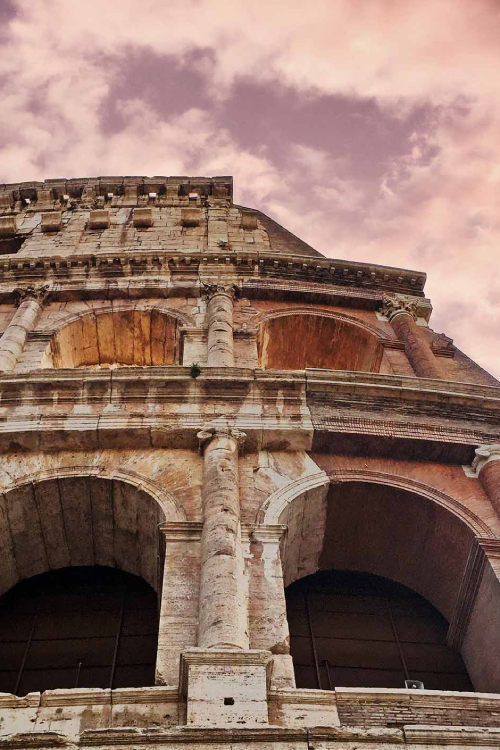
Yes, although a gladiator training session and an ordinary Colosseum visit are separate bookings at different locations.
The Colosseum Archaeological Park operates timed admission, and the type of ticket determines which areas you can enter.
Children under 18 generally qualify for free admission under the applicable rules, but they still require the appropriate admission arrangements.
Check the official Colosseum opening times and ticket information before reserving a visit.
A practical family itinerary might involve visiting the Colosseum in the morning, having lunch and attending a gladiator training session later in the day.
However, this could be tiring in summer, especially for younger children. The Colosseum and Forum involve substantial walking, and the training adds more physical activity.
For families with children aged six to eight, separating the two activities across different days may be more comfortable.
If you want to compare the available entry options, our guide to visiting the Colosseum explains the main ticket categories and practical arrangements.
Should you combine gladiator training with the Appian Way?
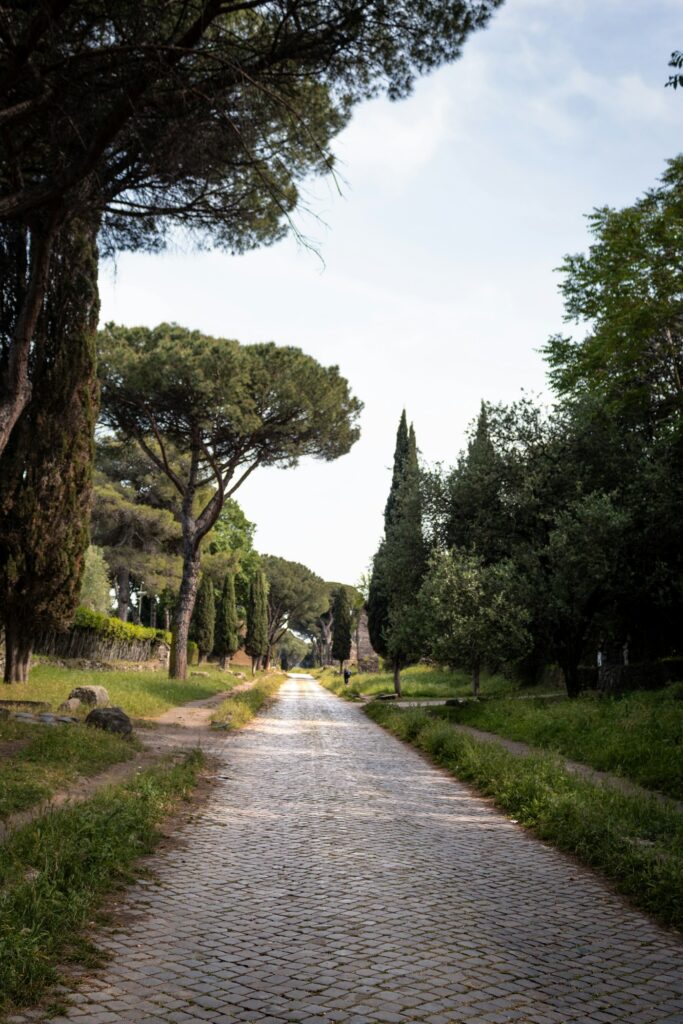
The school’s location near the beginning of Via Appia Antica makes it possible to combine the activity with a shorter visit to the surrounding historic area.
The Appian Way is an ancient Roman road with surviving paving, archaeological remains and green spaces. It offers a different view of Roman history from the central monuments.
However, the road extends for a considerable distance, and not every section is equally comfortable for walking with children.
If you have already spent two hours training, consider a short walk or another relaxed activity rather than planning a long archaeological excursion immediately afterward.
The Italy on Foot guide to visiting Rome with children offers practical ideas for balancing major attractions with less demanding activities.
You can also use the Italy on Foot trip planner to organize the training around your other Rome bookings, allowing time for transport, meals and rest. Include the school’s exact Via Appia Antica address instead of marking the Colosseum as the meeting point.
What if your child decides not to participate?
Children may enjoy the idea of becoming a gladiator but feel uncomfortable once they see the equipment or group activity.
Ask before booking whether participation in every exercise is optional and whether a child can watch a particular activity without leaving the session.
Some children may enjoy the costume and museum but feel reluctant to take part in the final simulated battle.
A good arrangement allows the instructor to explain the activities calmly and gives the child an opportunity to understand what is expected.
However, do not assume that a child who declines to participate will automatically receive a refund. The operator may have reserved equipment and an instructor place specifically for them.
If your child has previously struggled with unfamiliar group activities, ask whether a private family lesson or a spectator experience is available.
When a gladiator training session may not be suitable
The activity is most appropriate for children aged six and older who enjoy physical games, can follow safety instructions and are interested in ancient Roman history.
It may be less appropriate for a child who dislikes competitive games, cannot tolerate holding or swinging training equipment or has difficulty with the physical movements involved.
For a child under six, the standard training program is generally outside the permitted age range. A gladiator demonstration or a shorter child-friendly museum experience may be a more realistic option.
Families who mainly want to learn about historical gladiators may also prefer a guided Colosseum visit rather than an active training session.
If your child is already tired from several sightseeing days, spending another two hours on their feet may be less enjoyable than choosing a quieter activity.
There is no need to book gladiator training simply because it appears on a list of activities for children in Rome. The activity should match your child’s interests, abilities and age.
Questions to ask before booking gladiator school
When contacting the operator, provide your children’s ages, the number of adults who want to participate and any relevant physical or accessibility requirements.
Then confirm the following details:
- What is the minimum participation age for this specific session?
- Can children aged six and older participate alongside adults?
- Are exercises adapted to different ages and physical abilities?
- Will the session be shared with other families?
- How many participants and instructors will there be?
- Can we arrange a private family lesson?
- Must parents participate, or can they watch?
- Do non-participating adults need a ticket?
- Can a younger sibling attend as a spectator?
- What physical activities and movements are involved?
- What training weapons and protective equipment are provided?
- Can children opt out of the final mock battle?
- Is the session conducted entirely in English?
- Does the advertised duration include the museum visit and changing time?
- Are costumes, equipment and drinks included?
- Will children receive a certificate, and is it included in the price?
- Can parents take photographs during the activity?
- Does the venue provide restrooms, changing facilities and a place to store small bags?
- Is the venue accessible for participants with reduced mobility?
- What happens if the weather is unsuitable for outdoor training?
- Where exactly is the entrance at Via Appia Antica 18?
- What is the total price for our participating adults and children?
- What happens if we arrive late or a child becomes ill?
- What are the cancellation and rescheduling conditions?
Before paying, make sure the reservation identifies the active participants, the exact session time and the equipment and instruction included. For families with children aged six to twelve, the standard two-hour experience can provide an introduction to Roman history through physical activities and role-playing. The most important checks are whether every child meets the age requirement, can safely complete the planned exercises and has enough energy for the session. Confirm the entrance and transport arrangements as well, since the school is on Via Appia Antica rather than at the Colosseum itself.