Food tours through Rome’s Jewish Quarter usually last between two and four hours and combine traditional Roman-Jewish dishes with stops at historic streets, bakeries and restaurants. Depending on the itinerary, you might taste fried artichokes, salt cod, pastries or other Roman specialties. Some tours remain within the compact Jewish Quarter, while others continue to Campo de’ Fiori or Trastevere, adding walking distance and a wider selection of food.
Before booking a Rome Jewish Quarter food tour, confirm the actual tasting menu, how far you will walk and whether the food meets any dietary requirements. A tour exploring Jewish culinary traditions is not automatically kosher, and a listing that promises ten tastings may include several small samples rather than a full meal. Those distinctions matter when comparing prices and deciding which experience suits your group.
What does a Jewish Quarter food tour involve?
Most tours combine walking, food tastings and explanations of the neighborhood’s history. You meet a guide at a designated square, visit several food businesses and stop at landmarks along the way.
The Jewish Quarter, also known as the former Roman Ghetto or Ghetto Ebraico, occupies a relatively small area near the River Tiber, between Piazza Venezia and the Theatre of Marcellus. Its central streets include Via del Portico d’Ottavia, Via Catalana, Via della Reginella and Via del Tempio.
Rome’s Jewish community has existed for more than two thousand years. The neighborhood’s food traditions reflect that long history, including the period from 1555 to 1870 when Jews were forced to live in a segregated ghetto under papal rule.
The area is still connected to a living Jewish community, with kosher food businesses, religious institutions and important memorial sites. A thoughtful guide should explain this history alongside the culinary traditions rather than treating the neighborhood simply as a collection of restaurants.
Most commercial food tours follow a sequence similar to this:
- Meet the guide at a square or landmark close to the Jewish Quarter.
- Hear a short introduction to the neighborhood’s history.
- Visit several bakeries, food counters or restaurants for tastings.
- Walk past landmarks such as the Portico d’Ottavia or Great Synagogue.
- Continue to additional tasting stops, sometimes in another neighborhood.
- Finish with a dessert, drink or seated meal, depending on the package.
The actual balance between walking, eating and historical commentary varies substantially. One tour may spend most of its time discussing Jewish-Roman cuisine, while another devotes only 20 or 30 minutes to the Jewish Quarter as part of a broader street-food walk.
Which foods can you expect to taste?
Roman-Jewish cuisine developed through centuries of interaction between Jewish dietary traditions and the ingredients available in Rome and the surrounding Lazio region.
Several dishes are closely associated with the neighborhood, although no operator can guarantee that every specialty will be available on every date.
Carciofi alla giudia: Jewish-style fried artichokes
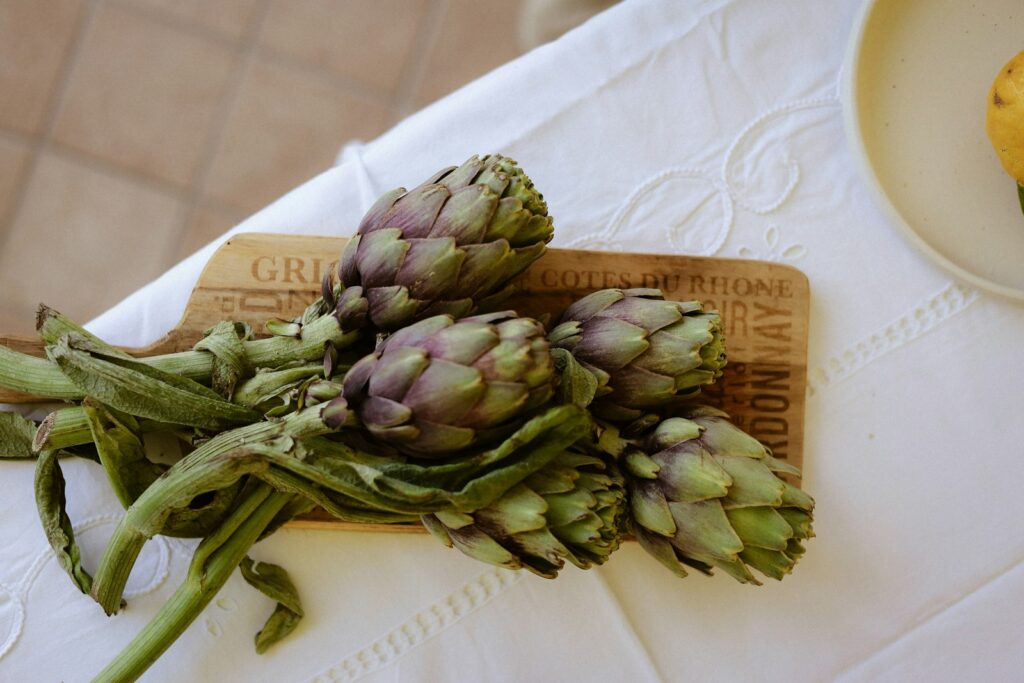
Carciofi alla giudia are probably the neighborhood’s most recognizable specialty. Whole artichokes are carefully trimmed and fried until the leaves open outward and become crisp, while the center remains tender.
The traditional dish is closely associated with Romanesco artichokes, known locally as mammole or cimaroli.
Artichoke season matters. According to Rome’s official tourism information, Romanesco artichokes are particularly associated with the period from January to May, with March and April generally offering the best seasonal availability.
Restaurants may serve artichokes at other times using different supplies, but the fresh seasonal product cannot be guaranteed throughout the year.
Ask whether the tasting includes an individual artichoke, a portion shared between participants or a small sample. Also check what replaces it when suitable artichokes are unavailable.
Traditional Jewish-style fried artichokes can be prepared using artichokes, oil and seasoning without wheat flour. However, a naturally gluten-free recipe does not establish that the restaurant’s fryer is safe for someone with celiac disease or a serious wheat allergy.
Filetti di baccalà: fried salt cod
Filetti di baccalà are pieces of salted cod, typically soaked to remove excess salt and then fried in batter.
This dish is part of Rome’s wider fried-food tradition and is commonly associated with the historic center and Jewish-Roman cooking.
It can be a substantial tasting rather than a small snack. A full fried cod fillet may be quite filling, particularly if the tour also includes pizza, pasta and dessert.
For dietary purposes, remember that baccalà contains fish and the batter commonly contains wheat. Ask about the exact preparation and frying oil when allergies or cross-contact are concerns.
Concia di zucchine: marinated zucchini
Concia di zucchine is a traditional preparation of zucchini that are fried and marinated with ingredients such as vinegar, garlic and herbs.
It may be served cold or at room temperature and can provide a welcome change from heavier fried foods.
The dish can be suitable for vegetarian or vegan diets depending on the recipe and preparation, but do not assume that every restaurant handles it without animal-derived ingredients or cross-contact.
Ask whether it is available as a tasting, particularly if you prefer vegetable-based dishes.
Aliciotti con l’indivia: anchovies and endive
Aliciotti con l’indivia is a traditional Jewish-Roman dish combining anchovies with endive, sometimes prepared as a layered baked dish.
It is less familiar to international visitors than fried artichokes, which makes it an interesting inclusion on a tour focused specifically on the neighborhood’s culinary history.
However, it is not served on every food walk, and some restaurants offer it only according to their menu and ingredient availability.
The dish contains fish, so it is unsuitable for vegetarian and vegan participants and requires careful checking for fish allergies.
Crostata di ricotta e visciole: ricotta and sour cherry tart
The traditional crostata di ricotta e visciole combines pastry, ricotta and sour cherry preserves. The cherries, called visciole, have a tart flavor that balances the richness of the cheese.
It is one of the classic desserts associated with Rome’s Jewish community. The city’s official tourism website also explains the historical traditions surrounding the pastry.
A slice may be included on a tour that visits a bakery or pastry shop, although some tours replace it with gelato or another dessert.
Because the tart usually contains wheat, dairy and eggs, it is unsuitable for several common dietary restrictions without a specially prepared alternative.
Pizza ebraica: a dense Roman-Jewish pastry
Despite its name, pizza ebraica is a sweet baked specialty rather than an ordinary savory pizza.
It is traditionally made with a dense dough containing ingredients such as nuts, raisins and candied fruit, with variations between recipes.
It is particularly important to check ingredients here because nuts and wheat are common components. Some versions also contain other allergens.
If you specifically want to try this pastry, ask whether it is included. A generic promise of pizza tasting may refer instead to ordinary pizza al taglio, the sliced pizza sold throughout Rome.
Roman-Jewish food or general Roman street food?
Many tours advertised as Jewish Quarter food experiences include foods that are popular across Rome rather than specific to the Jewish community.
These may include supplì, pizza al taglio, cheeses, cured meats, gelato or traditional pasta dishes.
That can be enjoyable if your main goal is sampling a variety of Roman food. However, a tour including prosciutto, pork-based pasta sauces or meat and dairy served together should not be confused with a kosher dining experience.
Before booking, ask how many tastings are specifically associated with Roman-Jewish cuisine and how much time the tour actually spends inside the Jewish Quarter.
For a broader overview of the city’s food traditions, see the Italy on Foot guide to traditional Roman foods and dishes.
Does a Jewish Quarter food tour serve kosher food?
This is one of the most important questions to resolve before booking.
A tour about Jewish food traditions is not necessarily a kosher food tour. A guide may explain Jewish culinary history while serving food from restaurants that do not operate under kosher supervision.
Kosher, or kasher in Italian, involves religious dietary rules governing permitted foods, ingredient sourcing, preparation and the separation of meat and dairy, among other requirements.
The Jewish Community of Rome maintains an official directory of kosher restaurants, identifying establishments according to categories such as meat and dairy.
If you observe kosher dietary rules, ask the operator for the names of every food establishment used during the tour. Check whether each relevant stop has current kosher certification, often referred to as a teudà, from an authority you accept.
Do not rely on statements such as “traditional Jewish restaurant,” “kosher-style food” or “located in the Ghetto.” These descriptions do not establish religious certification.
Also clarify whether the tour involves food prepared or served outside the certified establishment, and how any wine, packaged products or additional tastings meet your requirements.
What if you keep kosher strictly?
For travelers requiring strict kosher observance, a general group food tour may be unsuitable unless the operator can verify every stop and all food served.
Some guests also have specific requirements concerning supervision, meat standards, dairy products or wine.
Tell the operator exactly which standards you follow. Request written confirmation of the establishments, current supervision and menu arrangements before paying.
If the tour cannot meet those requirements, consider a dedicated Jewish history walk followed by a meal at an appropriately certified establishment of your choosing.
This can provide better control over the food while still allowing you to learn about the neighborhood.
Vegetarian options on Jewish Quarter food tours
Vegetarian participants may have several options, including artichokes, zucchini dishes, vegetable pizza and some pastries.
However, vegetarian availability is not guaranteed across a fixed tasting itinerary.
Some tours include cod, anchovies, cured meat or meat-based sauces. Others may have prepared tasting portions for the group and limited ability to substitute individual dishes once the tour begins.
For example, Food Tours of Rome currently advertises a Jewish Quarter and Campo de’ Fiori street-food walk that can accommodate vegetarians when notified beforehand. The same tour explicitly excludes several other dietary categories.
Ask how many tastings will remain available to you and what you will receive instead of any meat or fish course.
A vegetarian participant should not have to pay the full price only to discover that several advertised tastings are unavailable and no replacements have been arranged.
Can vegan travelers join?
A vegan tour is possible only when the operator has arranged suitable food at each stop.
Some Roman-Jewish vegetable dishes are naturally compatible with vegan eating, depending on their preparation. However, popular desserts may contain ricotta, butter or eggs, and savory dishes may include anchovies or cheese.
Even fried vegetable dishes require checking because batter, garnishes and shared preparation equipment can introduce animal-derived ingredients.
Do not assume a tour can become vegan simply by removing the cheese from a pizza.
Ask for the proposed vegan tasting menu before booking, including dessert. If the operator can offer only one or two substitutions, a self-guided visit to suitable restaurants may be a better option.
Gluten-free food and celiac disease
Traditional pastries, pizza, fried fish and many other Roman street foods commonly contain wheat.
Some operators offer gluten-free alternatives, but others clearly state that their tours cannot accommodate gluten-free participants.
For example, the published terms of the Food Tours of Rome Jewish Quarter and Campo de’ Fiori experience explicitly exclude gluten-free, dairy-free and vegan participants.
For someone with celiac disease, the issue extends beyond ingredients. Shared fryers, flour-covered surfaces, cutting boards and utensils can introduce gluten cross-contact.
A fried artichoke may contain no gluten ingredients in its traditional recipe but still be unsuitable if cooked in oil shared with battered foods.
Before booking, ask:
- Which tasting establishments can provide food suitable for celiac disease?
- Are separate preparation surfaces and utensils used?
- Are fried foods prepared in dedicated oil?
- How does the operator verify the arrangements with each restaurant?
- Will the same precautions apply to pastries and desserts?
- What happens if a planned establishment cannot provide the agreed food?
If the operator cannot explain its cross-contact precautions, do not assume that a gluten-free substitution will be safe.
Food allergies: what needs checking
Several common allergens appear in Roman-Jewish cooking and in the wider selection of foods served on neighborhood tours.
- Wheat and gluten: Pastries, pizza, bread and many fried batters.
- Milk: Ricotta tart, cheese-based snacks and some desserts.
- Eggs: Certain pastries, pasta preparations and batters.
- Tree nuts: Traditional sweet baked goods, including some versions of pizza ebraica.
- Fish: Baccalà, anchovies and dishes containing fish-based ingredients.
- Sesame: Some breads and baked goods.
- Sulphites: Wine and some other prepared foods or ingredients.
Under European Union food-information rules, businesses serving non-prepacked foods must provide information about specified allergens present in their products.
That requirement does not guarantee that an establishment can prevent cross-contact with a particular allergen.
If you have a serious food allergy, contact the tour provider before paying and explain the exact allergen and the severity of the reaction. Ask whether each planned food stop can provide a suitable tasting safely.
Do not rely solely on mentioning the allergy to the guide when the tour begins. The guide may not have time to verify ingredients and preparation procedures at several busy food counters.
If the company cannot accommodate the allergy safely, choose an alternative activity. Travelers at risk of anaphylaxis should follow their prescribed medical emergency plans and carry any prescribed adrenaline auto-injectors.
How much walking is involved?
The Jewish Quarter itself is compact. A tour staying within its central streets may involve only several hundred metres of movement between food stops.
However, many commercial tours extend into other areas of central Rome. The walking distance can increase significantly when the itinerary includes Campo de’ Fiori, Piazza Navona, Tiber Island or Trastevere.
For planning purposes, a route covering multiple neighborhoods may involve approximately 1.5 to 3 kilometres or more on foot. This is a general estimate, not a verified measurement for any particular tour.
The exact distance depends on the selected restaurants, meeting point, order of stops and whether the operator uses the same streets to return.
Ask the company to confirm:
- The total walking distance in kilometres.
- Whether the tour stays inside the Jewish Quarter.
- Which other neighborhoods are included.
- How much time is spent standing at food counters.
- Whether the group sits down during any tastings.
- How many rest breaks are planned.
- Where the tour finishes.
Two tours lasting three hours may have very different physical demands. One might spend much of the time seated at restaurants, while another keeps participants walking or standing for nearly the entire session.
What walking surfaces should you expect?
The Jewish Quarter has narrow streets and areas paved with Rome’s traditional sampietrini, small stone paving blocks that can be uneven or slippery when wet.
Some streets have smooth sections, while others involve gaps between stones, raised edges and narrow pedestrian space around outdoor restaurant tables.
Wear comfortable shoes with a secure grip. Fashion sandals with thin soles or high heels may be uncomfortable over a long walking tour.
If the itinerary crosses toward Trastevere, expect additional cobbled streets and busy pedestrian areas.
The neighborhood is relatively flat compared with Rome’s hillier districts, but that does not guarantee an easy route for someone using a wheelchair, walking aid or stroller.
Can people with reduced mobility join?
Some food tours advertise wheelchair accessibility, but you should ask about the actual route and individual tasting establishments.
Historic restaurants and bakeries may have entrance steps, narrow doors, limited circulation space or restrooms that are difficult to access.
Even when a venue has step-free entry, it may not offer suitable seating or an accessible restroom.
Ask the operator to confirm the following for the specific itinerary:
- Whether the entire route is step-free.
- Whether wheelchair users can enter every food establishment.
- Whether there are accessible restrooms.
- How much time guests must stand.
- Whether a chair can be provided at standing-only tastings.
- Whether a shorter route is available.
- Whether the tour can finish near an accessible taxi pickup point.
A private tour may offer more flexibility with pace and route selection, but it does not automatically make historic buildings accessible.
If the operator cannot confirm the accessibility of a particular food stop, request an alternative that meets your needs before booking.
Are food tours suitable for children and strollers?
Many food tours accept children, although minimum ages and child pricing vary.
For younger children, the main challenges are standing, waiting at counters and trying unfamiliar foods. A two-hour tour with several short stops may be easier than a four-hour evening experience involving wine and a late sit-down dinner.
Ask whether children receive smaller portions, the same tastings as adults or a separate menu.
If your child is selective about food, confirm whether familiar options are available. Ordinary pizza and gelato may be included on a broader Roman street-food tour, but should not be assumed on a tour focused specifically on Jewish cuisine.
A compact stroller can be useful for toddlers, but check whether the route and restaurant entrances accommodate it.
Also ask whether the child must have a paid ticket if they are too young to eat the tastings. Some operators offer reduced prices or free participation for infants, while others charge according to the number of people in the group.
Which landmarks might the tour pass?
The historic and religious landmarks are an important part of understanding the neighborhood. The specific route depends on the operator, but several locations frequently appear in tour descriptions.
Portico d’Ottavia
The Portico d’Ottavia is an ancient Roman monumental complex that later became associated with the neighborhood’s historic fish market.
It stands beside Via del Portico d’Ottavia, close to several food businesses associated with Roman-Jewish cooking.
The ancient remains provide an opportunity for a guide to explain how the area’s Roman, medieval and Jewish histories overlap.
Great Synagogue of Rome
The Great Synagogue, or Tempio Maggiore, stands near the Tiber and houses the Jewish Museum of Rome within its complex.
Many food tours pass the building and explain its history from outside.
Do not assume synagogue admission is included. The museum and synagogue have separate organized visiting arrangements, tickets and security procedures.
Piazza delle Cinque Scole
The name Cinque Scole refers to the five historic synagogues or prayer communities associated with the former ghetto.
This area can provide useful historical context about the community’s religious and cultural life.
A guide should explain the significance of the location rather than treating it only as a photographic stop.
Fontana delle Tartarughe
The Turtle Fountain stands in Piazza Mattei, a short walk from the Jewish Quarter’s central streets.
It is a common meeting or orientation point for guided walks because it is easy to identify and close to several historic landmarks.
If your booking says the tour meets at Piazza Mattei, check whether the exact instruction is to wait beside the fountain.
Theatre of Marcellus and Tiber Island
The Theatre of Marcellus stands near the southern side of the Jewish Quarter and is sometimes included as an exterior stop.
Other itineraries cross Ponte Fabricio to Tiber Island before continuing toward Trastevere.
That extension changes the route considerably. Ask whether the tour actually crosses the river or simply passes the bridge while remaining in the Jewish Quarter.
Does a food tour include the Jewish Museum or synagogue?
Usually, food tastings and visits to the Jewish Museum are separate experiences.
The Jewish Museum of Rome offers its own educational visits to the former ghetto. Its published neighborhood tour lasts approximately one hour and explicitly states that it does not include the synagogue.
Meanwhile, the museum’s individual admission ticket includes access to the museum and an organized guided visit to the main synagogue.
The museum is closed on Saturdays and Jewish holidays, with shorter Friday opening hours that vary by season.
You can check its official opening calendar and admission arrangements before planning a combined visit.
If you want to explore both Jewish history and local food, consider booking the museum separately. This allows enough time for the exhibits and avoids rushing between a scheduled museum entry and a food tour.
Are tours available on Friday evenings and Saturdays?
Some commercial food tours operate seven days a week, but the availability of individual kosher establishments changes around Shabbat and Jewish holidays.
Shabbat begins before sunset on Friday and ends after nightfall on Saturday. Businesses observing Shabbat generally close before it begins and reopen afterward, according to their own schedules.
Closure times therefore vary throughout the year.
A tour operating on Saturday might use restaurants that remain open, but this does not mean those establishments are kosher-certified.
If kosher food or particular traditional bakeries are important to you, ask which stops are available on your planned date.
Jewish holidays can also affect restaurants, shops, religious institutions and museum access. The dates follow the Hebrew calendar and change from year to year.
For travel in 2027, check the published museum holiday calendar and confirm restaurant opening arrangements directly. Do not assume that ordinary weekday schedules apply during Passover, Rosh Hashanah, Yom Kippur or other religious holidays.
Choosing a two-hour, three-hour or four-hour tour
Duration is a useful starting point, but the itinerary and amount of food are more important.
Two-hour food tours
A shorter tour may concentrate on the Jewish Quarter and neighboring historic-center streets, with several tastings and relatively brief explanations.
It can suit families with younger children, visitors with limited time or anyone who prefers a smaller amount of walking.
However, some two-hour options advertised within a larger tour listing omit the Jewish Quarter entirely. Read the specific package description rather than assuming every version includes the same stops.
Two-and-a-half to three-hour tours
This is a common format for street-food walks combining the Jewish Quarter with Campo de’ Fiori or nearby parts of central Rome.
There is usually time for several food stops, a short introduction to the neighborhood’s history and some walking between landmarks.
Whether the tour replaces lunch depends on portion sizes. Five generous tastings may provide more food than ten tiny samples.
Three-and-a-half to four-hour tours
Longer tours may extend to Trastevere, include more drinks or finish with a seated restaurant meal.
For example, Walks Inside Rome currently advertises a private Jewish Quarter and Trastevere food experience lasting three and a half hours, including food and wine tastings and a sit-down dinner.
This format can be suitable if you want the tour to serve as your main evening meal.
However, check how much of the advertised duration is spent walking, as well as where the tour finishes. Returning to your accommodation from Trastevere may require a different journey from one ending near Piazza Venezia.
How many tastings are enough to replace a meal?
Food-tour advertisements sometimes count each sample as a separate tasting. A bite of cheese, a small glass of wine and a piece of bread may all contribute to the advertised total.
For that reason, a tour offering fifteen tastings does not necessarily provide three times as much food as one advertising five.
Ask whether the experience includes a full plate of pasta, an individual fried artichoke, a seated meal or only small street-food portions.
Also establish which drinks are included. Some tours provide wine, beer and water, while others offer one drink or charge separately for additional beverages.
If you are booking around lunchtime or dinner, ask whether participants are expected to arrive hungry and whether a separate meal will be necessary afterward.
For children, dietary restrictions or guests who prefer smaller meals, ask whether tasting portions can be adjusted.
How much do Jewish Quarter food tours cost?
Prices depend on duration, group size, tasting quantities and whether the experience is shared or private.
Current published examples show a wide difference between formats.
Food Tours of Rome advertises its Jewish Quarter and Campo de’ Fiori street-food tour starting at €45 per person, including a guide, food tastings and samples of wine or beer. Its published terms exclude certain dietary requirements, so the lowest price is not necessarily suitable for every traveler.
Walks Inside Rome advertises its three-and-a-half-hour private Jewish Quarter and Trastevere food experience from €490 for two participants, with a sit-down dinner and drinks included in the described package.
These are individual advertised offers, not standard prices for the neighborhood. Check the operator’s current quotation for your date and group size.
When comparing tours, confirm:
- Whether the price is per person or for the whole private group.
- The actual number and size of food portions.
- Which drinks are included.
- Whether the experience includes a full seated meal.
- How many neighborhoods are covered.
- The maximum group size.
- Whether children receive reduced prices.
- Any charges for dietary substitutions.
- Whether tips and booking fees are included.
- The cancellation and refund conditions.
A shorter tour with clearly identified regional dishes can be a more suitable purchase than a longer package if your priority is understanding Roman-Jewish cuisine rather than eating across several neighborhoods.
Shared group tour or private food tour?
A shared group tour is generally the more economical choice for one or two adults who are comfortable following a fixed itinerary.
However, groups may include people with different interests and walking speeds. The guide must also coordinate food orders and keep the group together across busy streets.
Ask how many people can join. A group of eight is a different experience from one of twenty, particularly when several participants are trying to hear explanations outside a small bakery.
A private tour can be useful when your group has mobility limitations, young children or specific interests in Jewish history. It may also allow the operator to select fewer stops with more time seated.
Dietary restrictions require separate attention. A private booking does not automatically guarantee kosher food, an allergen-safe kitchen or suitable substitutions. These arrangements still need to be confirmed with the individual establishments.
What should you look for in the guide?
For a tour centered on the Jewish Quarter, historical knowledge matters alongside familiarity with local restaurants.
The guide should be able to explain the difference between Roman-Jewish recipes and modern kosher requirements, as well as the history of the former ghetto and the Jewish community living in Rome today.
Some specialist tours are led by members of Rome’s Jewish community. Others use licensed guides or food specialists who have studied the neighborhood.
If a community perspective matters to you, ask directly about the guide’s background. Do not assume the guide belongs to the Jewish community simply because the itinerary includes the neighborhood.
A useful tour should also acknowledge the persecution associated with the area, including the Nazi roundup of October 16, 1943, and the memorials to Jewish residents who were deported.
These places deserve respectful treatment. A food tour can include historical stops without presenting memorial sites as entertainment or disrupting the people who live, worship and work nearby.
Where do the tours meet and finish?
Food tours commonly use recognizable central meeting points such as Campo de’ Fiori, Piazza Mattei or another square near the Jewish Quarter.
These locations are not interchangeable.
For example, a tour meeting at Campo de’ Fiori begins outside the Jewish Quarter, while one meeting at Piazza Mattei starts very close to its historic streets.
Before booking, ask for the full meeting instructions, including the exact fountain, statue or street corner where the guide will wait.
Also confirm the end point. A tour continuing to Trastevere might finish across the Tiber, while another could end near Largo di Torre Argentina or the Pantheon.
If you are arranging a taxi or have another reservation afterward, the finishing location matters as much as the starting point.
How to fit the tour into your Rome itinerary
A food tour can work well as a lunch or evening activity, particularly when it includes enough tastings to replace a separate meal.
If the tour begins around Campo de’ Fiori, you can organize nearby sightseeing earlier in the day without making a long journey across Rome.
For an evening tour, avoid booking a substantial restaurant meal immediately beforehand. The operator may expect participants to arrive with an appetite, especially when several tasting courses are included.
You can use the Italy on Foot trip planner to coordinate the food tour with nearby sightseeing, transport and meal times. Include the actual meeting and finishing points rather than assuming the entire experience takes place inside the Jewish Quarter.
If you are staying nearby, the neighborhood is convenient for exploring the historic center on foot. The Italy on Foot guide to where to stay in Rome explains the Jewish Quarter and neighboring central areas.
Allow some time after the tour before another timed activity. Restaurant service, crowded streets and group coordination can affect the finishing time.
What happens if a tasting stop is closed?
Food-tour routes can change because of holidays, restaurant closures, seasonal ingredients or other operational reasons.
A restaurant might be unavailable on a particular date, or the expected seasonal artichokes may not be suitable for the planned tasting.
Ask what the operator provides when a featured food is unavailable. Will there be a comparable substitute, another restaurant or a different dish?
If a specific traditional specialty is your main reason for booking, request confirmation that it is expected to be served.
Similarly, if a particular establishment’s kosher certification or allergen procedures are essential, a last-minute replacement should not be treated as automatically acceptable.
Ask whether you will be notified about significant itinerary changes and whether a refund or rescheduling option is available when an essential part of the advertised experience cannot be provided.
Cancellation and late-arrival policies
Shared and private tours often have different cancellation terms. Some shared tours allow free cancellation until 24 hours before departure, while private experiences may require more notice.
Check the exact terms shown during booking rather than relying on a general statement about flexible cancellation.
Ask what happens if your flight or train is delayed, if a member of your group becomes unwell or if heavy rain affects the walking route.
For late arrivals, remember that food tours depend on scheduled visits to several businesses. A guide may be unable to delay the departure without affecting the rest of the group.
Find out whether you can join the tour at a later stop and whether the operator will provide instructions for doing so.
Also ask what happens if the tour is shortened or cancelled by the operator. The agreement should explain whether you receive a refund, replacement experience or opportunity to reschedule.
When a guided food tour may not be necessary
The Jewish Quarter is small enough to explore independently, and you do not need a tour ticket to walk along Via del Portico d’Ottavia or see the neighborhood’s exterior landmarks.
If you mainly want to try fried artichokes and a traditional pastry, it may be simpler to visit suitable food establishments independently, paying only for what you order.
For visitors who keep kosher, this approach can also provide more control over which certified establishments are used.
A guided food tour becomes more useful when you want help understanding the culinary traditions, historical background and differences between dishes, or when you prefer to sample several foods without arranging each stop yourself.
For a deeper understanding of Jewish religious and cultural history, consider a dedicated Jewish Quarter or museum tour rather than expecting a food-focused experience to cover everything.
Questions to ask before booking a Jewish Quarter food tour
Send the operator your preferred date, number of participants and any relevant food or mobility requirements. Before paying, clarify the details that will affect your experience.
- Does the tour focus specifically on the Jewish Quarter, or is it a broader Rome street-food experience?
- How much time will we actually spend inside the historic Jewish Quarter?
- Which traditional Roman-Jewish dishes are included?
- Are fried artichokes included, and what happens when they are out of season?
- Is the food served at kosher-certified establishments, and can you identify them?
- Can you accommodate our exact dietary requirements at every tasting stop?
- What precautions are available for serious allergies or celiac disease?
- How many tastings are included, and are they full portions or small samples?
- Will the food be sufficient to replace lunch or dinner?
- Are wine, water and other drinks included?
- What is the total walking distance?
- How much of the tour involves standing?
- Are any tasting stops seated?
- Is the route suitable for wheelchairs, walkers or strollers?
- Are accessible restrooms available along the route?
- How many participants will be in the group?
- Does the guide have experience explaining Rome’s Jewish history and culinary traditions?
- Does the experience include the Jewish Museum or synagogue, or are these exterior stops only?
- Will Shabbat or Jewish holidays affect the planned establishments?
- Where exactly does the tour begin and finish?
- What is included in the total price, and what costs extra?
- What happens if an advertised food stop is unavailable?
- What are the cancellation, rescheduling and late-arrival policies?
For most visitors, a two-and-a-half- to three-hour food walk provides enough time to explore the Jewish Quarter and try several dishes without occupying the entire day. If traditional Roman-Jewish cuisine is your priority, choose an itinerary that identifies its food stops and gives the neighborhood substantial attention. If you need kosher food, allergy precautions or reduced walking, obtain specific written confirmation before booking. The location of the tastings, their preparation and the route between them are more important than the number of samples advertised.