The famous trip around Etna is no longer a case of turning up at Catania Borgo, boarding one little diesel train and staying aboard to the coast. The Catania Circumetnea railway currently involves several different vehicles: Catania Metro, an FCE replacement bus, the extraurban train, another bus toward Giarre and Riposto, then usually a Trenitalia regional train back to Catania. It is still a rewarding way to see Etna’s towns and lava country, but the connections need to be planned before you leave.
The most important detail is the day of travel. FCE’s extraurban railway and bus services are currently suspended on Sundays and public holidays. The Catania Metro may still be running, but that does not make the circuit possible.
Do you still board the Circumetnea train at Catania Borgo?
Not for the current through journey around Etna. Catania Borgo, at Via Caronda 352/A, remains an FCE station, metro stop, ticket office and useful information point. The historic above-ground station is also where many older guidebooks tell travelers to begin.
However, the current extraurban train timetable does not start its rail services at Borgo. FCE’s June 2026 transport conditions describe the operating extraurban railway as beginning at Santa Maria di Licodia Sud, while the corresponding replacement service connects that station with Catania.
For the cleanest timed connection from central Catania, use the metro to Nesima. From the historic center, board at Stesicoro; from Catania Centrale, use the adjacent Giovanni XXIII metro station. Take a train in the direction of Monte Po and get off at Nesima.
The replacement timetable identifies the onward departure as CATANIA (Stazione METRO NESIMA). Do not wait on an old Circumetnea railway platform at Borgo expecting a train to Randazzo. Some ordinary FCE bus services do still call around Borgo, but the timed train-replacement chain begins at Nesima.
What the current circuit actually looks like
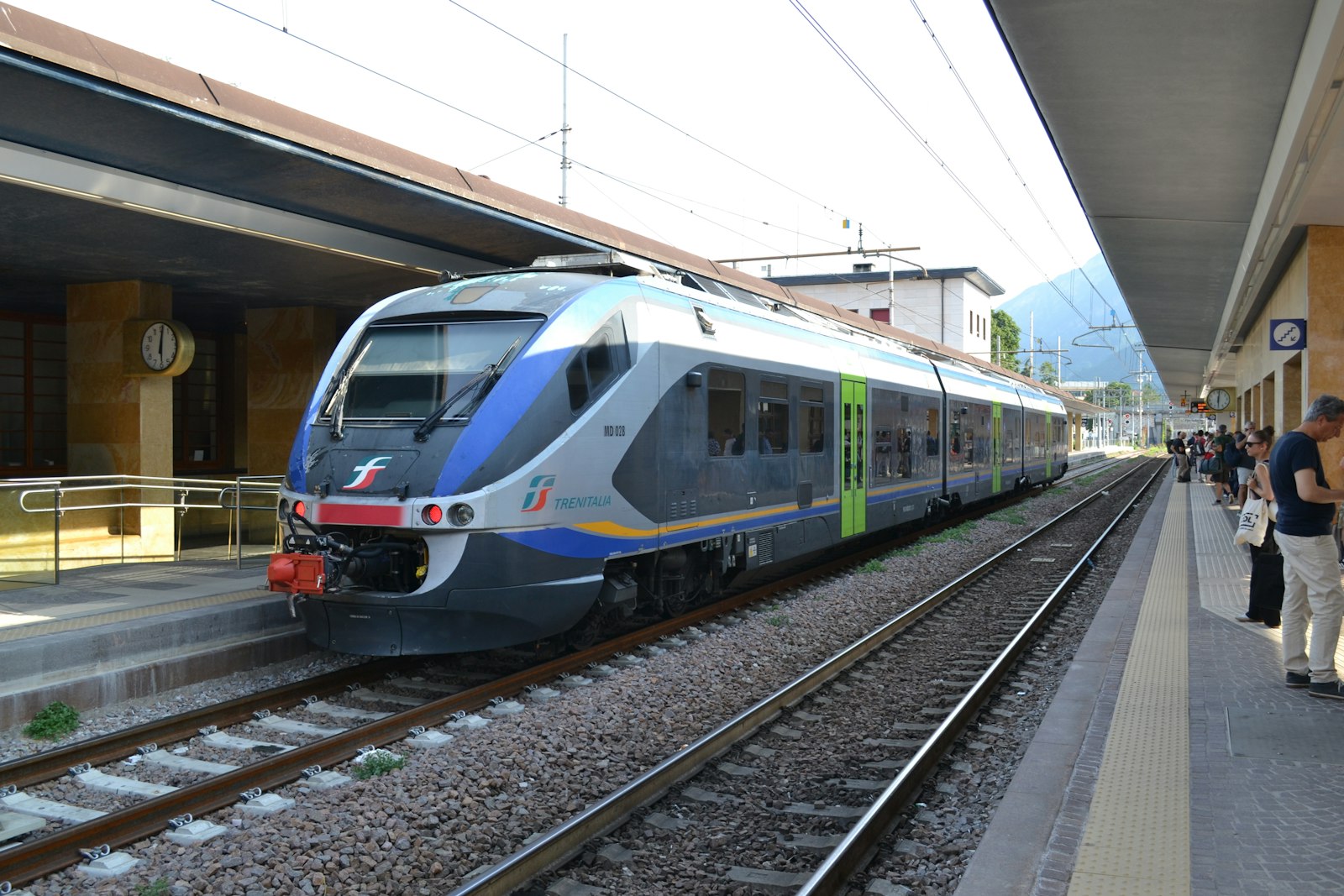
Think of the journey as five separate pieces:
- Catania center to Nesima: FCE Metro.
- Nesima to Santa Maria di Licodia Sud: FCE replacement bus.
- Santa Maria di Licodia Sud to Randazzo: FCE extraurban train through Biancavilla, Adrano, Bronte and Maletto.
- Randazzo toward Giarre and Riposto: FCE replacement bus, because the railway toward the Ionian coast is not operating continuously by train.
- Giarre-Riposto to Catania: Trenitalia regional train down the coast, which closes the practical circuit back to the city.
FCE publishes the live train and bus documents on its official lines and timetables page. Check both the Ferrovia and Autolinee sections. Looking only at the railway PDF is not enough because replacement buses are part of the journey.
A workable connection using the current timetable
The timetable in force in 2026 gives a good example of how the pieces fit together. It should be treated as an example rather than a permanent itinerary:
- replacement bus from Nesima at 08:00;
- arrival at Santa Maria di Licodia Sud at 08:50;
- train departure at 09:06;
- arrival at Randazzo at 10:30;
- replacement bus from Randazzo at 11:50;
- arrival near the Trenitalia station at Giarre at 13:00;
- continuation to Riposto FCE at 13:10.
This version gives you roughly an hour and twenty minutes at Randazzo between services, enough for a short walk or coffee without turning the connection into a sprint.
If your objective is to complete the circuit back to Catania rather than specifically visit Riposto, the useful stop is Giarre (Bivio Stazione Trenitalia). From there, make your way to Giarre-Riposto railway station and take a Trenitalia regional service toward Catania Centrale. FCE’s own tourism information recommends this coastal rail return.
Regional trains between Giarre-Riposto and Catania normally make the final leg far faster than retracing the slow route around Etna, but check the current departure before committing to the day’s connections.
Why the “full loop” is slightly misleading
The Circumetnea is not a circular railway with trains running endlessly around Etna. Historically, the line ran from the Catania side around the western and northern slopes to Riposto on the Ionian side. Travelers then used the conventional coastal railway to return south.
Today the description is even less literal because parts of that route are temporarily handled by buses. The scenery and foothill towns remain the reason to make the trip, not the satisfaction of staying on a single train.
It is also not transport to Etna’s summit facilities. FCE explicitly notes that its towns and stations are outside the higher protected area of Etna and that there is no normal public-transport connection from these stations to the mountain’s medium and high-altitude excursion bases. If your destination is Rifugio Sapienza, the cable car or a summit excursion, this is the wrong route.
Randazzo to Linguaglossa: the extra train that can cause confusion
The current railway timetable includes some trains between Randazzo and Linguaglossa. That can make it appear that rail service continues normally toward Riposto. It does not.
If your priority is maximizing the amount of time spent on the train, it may be possible to ride from Randazzo to Linguaglossa and join the coast-bound replacement bus there. Check the two timetables side by side first. Services are sparse, and choosing the wrong train can create a wait of several hours.
For a straightforward one-day circuit, taking the scheduled Randazzo-to-Giarre replacement bus is usually the safer choice.
Tickets and validation
FCE’s extraurban transport is integrated between its trains and buses. Fares are calculated according to the origin and destination, and an FCE ticket whose origin or destination is Catania also permits one metro journey. Current ticket options and fare rules are listed on the FCE extraurban ticket page.
The useful rule is to buy before boarding whenever possible. FCE requires validation:
- at the metro gates;
- at a surface railway station before boarding the train;
- on an FCE bus every time you board, including after transferring from another vehicle.
If a validator is not working, show the ticket immediately to the driver, conductor or inspection staff rather than simply taking a seat. FCE’s current passenger conditions specifically require passengers to keep the ticket for the whole journey.
The official FCE Catania app can sell digital tickets, but open the QR code before entering a station where mobile coverage may be weak. The app periodically refreshes its QR code using a data connection.
The final Trenitalia journey from Giarre-Riposto to Catania is a different operator. Buy the appropriate Trenitalia regional ticket unless your chosen product explicitly includes both operators. Trenitalia also offers certain combined FCE connections through Giarre-Riposto, described on its official Trenitalia-FCE page.
How much of a day should you allow?
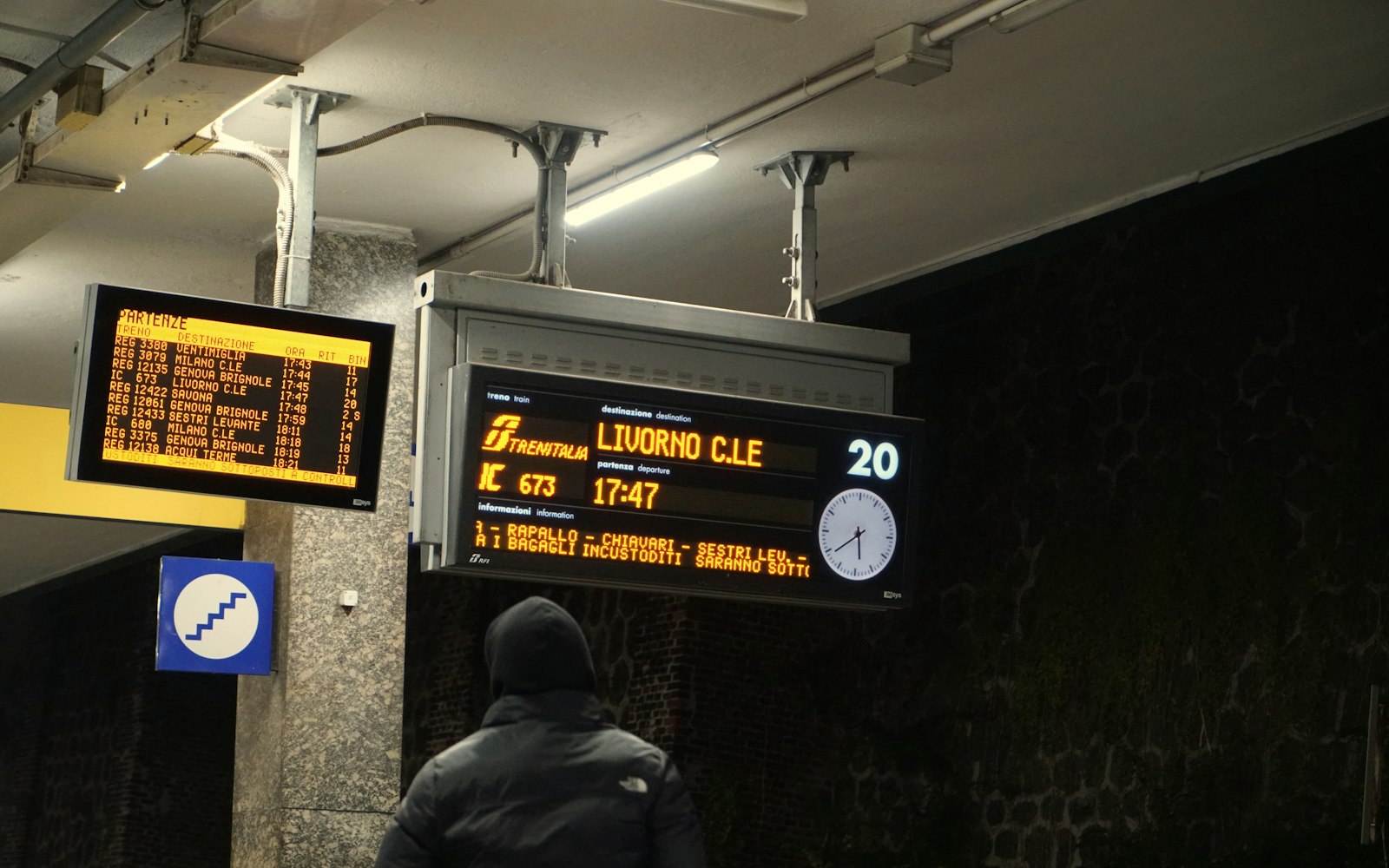
Allow most of a day. Even without a long sightseeing stop, the current sequence contains a metro ride, two buses, the slow mountain railway, waiting time at Randazzo and the coastal train home.
A timetable that works perfectly can bring you back to Catania in the afternoon. Add lunch in Randazzo, a stop in Bronte or time in Linguaglossa and the day becomes considerably longer. Because services are not frequent, adding a stop is not simply a matter of catching another vehicle 20 minutes later.
Before fitting it among other Sicily days, it helps to build your Italy itinerary with the whole circuit blocked as one excursion rather than treating it as a quick train ride.
Luggage, children and reduced mobility
FCE permits passengers to carry luggage free as long as it fits within the space available to them. If bags occupy additional seats, the rules allow FCE to require an additional ticket for the occupied seat.
The practical problem is not the railway carriage. It is the repeated transfers. A cabin-size case is manageable; dragging several large suitcases through the metro, onto replacement buses, off at a rural station and onto another train makes this a poor choice for a hotel-transfer day.
Children under four currently travel free on FCE when accompanied by an adult and not occupying their own seat. At metro gates, small children must be carried through with the accompanying adult because each gate activation is intended for one passenger.
Passengers who need step-free access or mobility assistance should contact FCE before attempting the entire circuit. FCE provides assistance where possible, but this particular journey combines metro stations, surface stations and replacement buses. A route that works well on the railway portion may still present difficulties at a temporary bus stop.
Do not plan it for Sunday
This catches travelers surprisingly often because the Catania Metro itself operates on Sundays. The extraurban railway does not. FCE currently states that its railway service and extraurban buses are suspended on Sundays and holidays.
A Saturday trip therefore needs the Saturday timetable, not assumptions based on weekday commuter frequencies. Also check the Italian calendar for national holidays before building a one-day circuit around a specific date.
What to do if you miss a connection
Missing the Nesima replacement bus is not like missing an urban metro. The next suitable service may be much later and may no longer connect sensibly with the Randazzo-to-coast bus. Check the entire chain before deciding simply to wait for the next departure.
If you reach Randazzo after your planned coast-bound connection has gone, ask FCE staff or check the current bus timetable for services toward Catania, Linguaglossa or Giarre. Randazzo is a much better place to reorganize the day than continuing blindly to a smaller stop.
If you have already reached Giarre, the Trenitalia coastal railway is usually the simplest recovery route to Catania. Look for Stazione FS, Giarre-Riposto, Partenze and a regional train heading south toward Catania.
As of September 2026, FCE has not published a confirmed 2027 extraurban railway timetable. For a 2027 trip, use the current bus-train-bus pattern only as a planning model and recheck the official FCE timetable shortly before travel. With this route, one reopened railway section or one revised replacement bus can change the best boarding point and the entire day’s connection pattern.