Walking is usually the simplest option. The Udine station to the historic centre route is about 1 km to Piazza Libertà and takes roughly 12 to 15 minutes at an ordinary pace. Leave the railway station onto Viale Europa Unita, turn right along the station frontage toward Porta Aquileia, then follow Via Aquileia north. The street continues as Via Vittorio Veneto, passes the Duomo and delivers you almost directly into Piazza Libertà.
There is no need to climb the Castle hill, catch a bus, or thread through residential side streets. Piazza Libertà is the most useful target for the monumental centre, with the Loggia del Lionello, Torre dell’Orologio and the entrance toward the Castello all immediately around it.
The walking route step by step
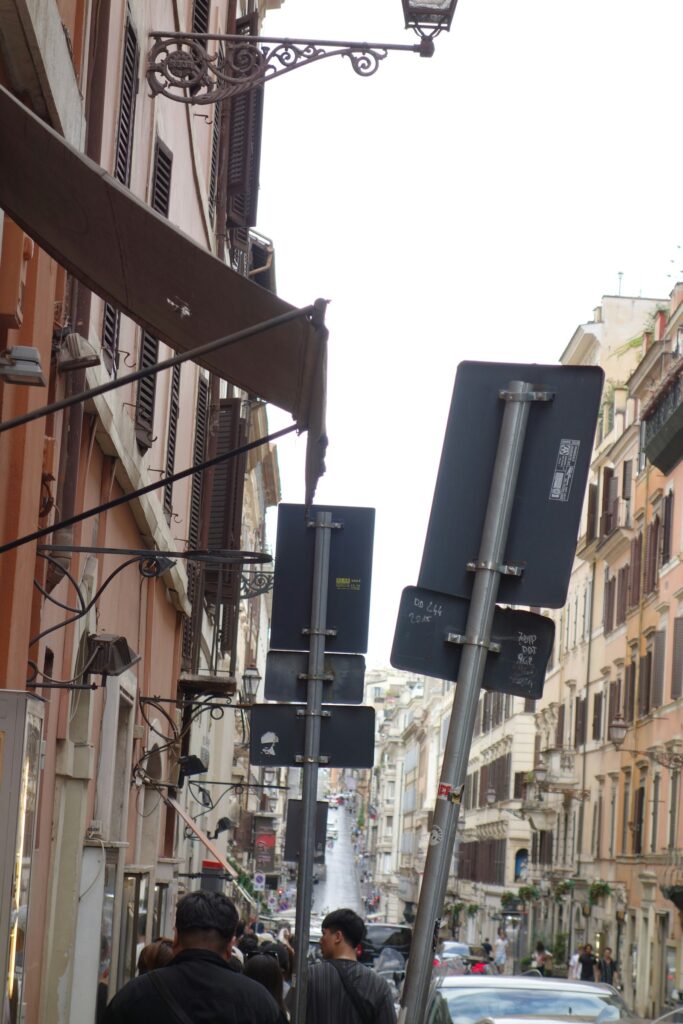
- Exit the station onto Viale Europa Unita. Use the main city-side exit. Outside, you will see urban bus stops along the station frontage and on the opposite side of the road.
- Turn right. Walk east along Viale Europa Unita in the direction of Piazzale Gabriele D’Annunzio and Porta Aquileia. It is only a few minutes from the station.
- Aim for Porta Aquileia. This old city gate is the useful landmark that confirms you are heading toward the centre rather than along Via Roma or away from town.
- Continue straight along Via Aquileia. This is the long, easy-to-follow approach into central Udine. An official regional cycling itinerary uses the same axis from the railway station toward Piazza Libertà.
- Keep going when the street name changes. After the junction around Via Gorghi and Via Piave, Via Aquileia continues as Via Vittorio Veneto. Do not turn off just because the street name on your map changes.
- Pass Piazza del Duomo. Udine Cathedral will be on this final central stretch. From here, Piazza Libertà is only a short walk farther along Via Vittorio Veneto.
- Finish at Piazza Libertà. The Loggia del Lionello and Torre dell’Orologio make the arrival obvious. For the Castle, continue through Arco Bollani and take the uphill approach from the square.
The station exit is where people most often get turned around
The railway station faces Viale Europa Unita. Several buses, an extraurban bus station and stops on both sides of the road make the forecourt look more complicated than the walk actually is.
On local transport signs, stazione FS means the railway station. You may also see lato stazione FS, meaning the stop on the station side, and fronte stazione FS, meaning the stop opposite the station. These labels are for buses, not different railway exits.
For the walking route, resist the temptation to follow whichever crowd is heading toward the coach station. Face Viale Europa Unita, turn right and look for the approach toward Porta Aquileia. Use the marked pedestrian crossings around the busy station roads rather than cutting between buses.
Why Via Aquileia is easier than cutting through Via Roma
Via Roma also leads away from the station toward central Udine, and the municipality describes Via Roma, Piazzale della Repubblica and Viale Europa Unita as an important access corridor for people arriving by public transport. It is therefore not a wrong direction.
For a first-time visitor heading specifically to the monumental centre, however, the Porta Aquileia route is harder to lose. Once you reach the gate, Via Aquileia and then Via Vittorio Veneto form an almost continuous line toward the Duomo and Piazza Libertà. The route is also supported by official regional itineraries linking the station with the central square.
Walking with a suitcase
The distance is short enough that a normal wheeled suitcase should not be a reason to take a taxi. The route is largely level by historic Italian city standards, although paving becomes less suitcase-friendly as you enter the older streets. Expect sections of stone and porphyry rather than perfectly smooth modern pavement.
Via Vittorio Veneto has porticoes along part of the route. Accessibility surveys for central Udine describe broad sections beneath them as level and surfaced in relatively smooth stone, although café furniture and street furnishings can reduce the clear walking space in places.
A large hard-shell case, multiple bags, a stroller with very small wheels or mobility limitations change the calculation. In that situation, allow more than 15 minutes and do not judge the walk purely by the distance shown on a map.
For wheelchairs or reduced mobility
Udine railway station is included in RFI’s assistance network for passengers with disabilities and reduced mobility. Platform accessibility depends on the platform and the functioning of lifts, so anyone needing rail assistance should check the current RFI information for Udine station before travelling.
The city-centre approach itself does not require climbing to the Castle. Piazza Libertà sits below the hill, so you can stop there without taking the uphill Castle route. Surfaces and kerbs in the older centre are less uniform than the modern station area, so travellers who need a consistently step-free route should allow extra time rather than relying on a standard walking-time estimate.
If you would rather take a bus
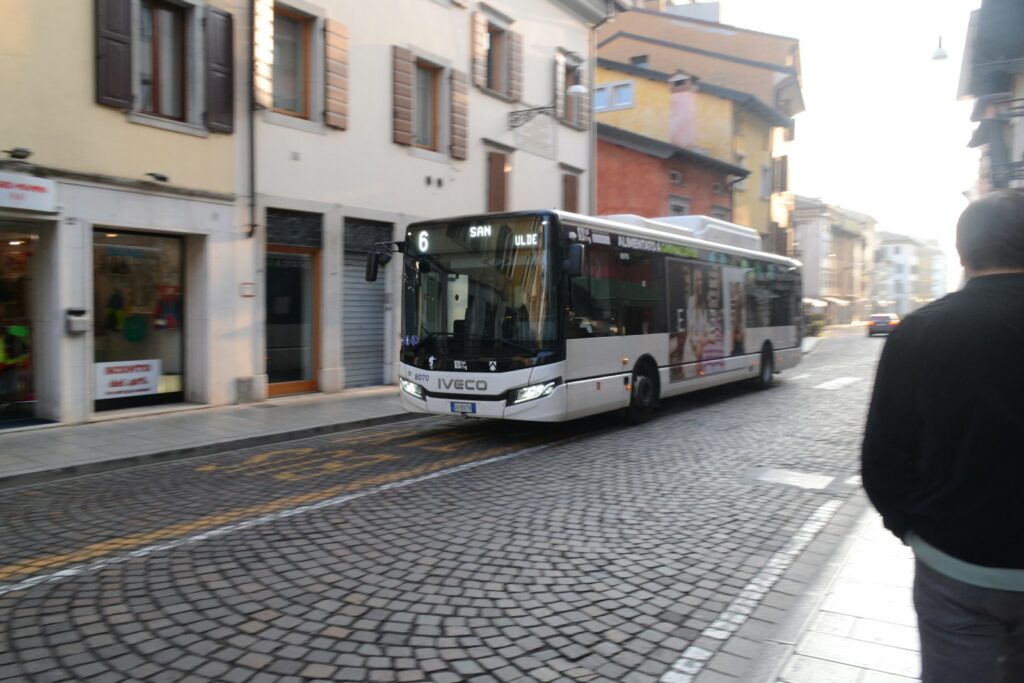
Urban buses serve Viale Europa Unita directly outside the station and connect the railway area with the centre. Routes can change for roadworks, holidays and major events, so checking the official TPL FVG Udine service page is more reliable than choosing a bus number from an old travel post.
A bus makes most sense in heavy rain, with difficult luggage or when walking is uncomfortable. For everyone else, waiting for the next service can take nearly as long as simply reaching Piazza Libertà on foot.
If your hotel is not actually near Piazza Libertà
“Historic centre” covers several different useful areas. Piazza Libertà is the best general target, but it may not be the best endpoint for your accommodation.
- Piazza Duomo or Via Vittorio Veneto: stay on the route described above and stop before Piazza Libertà.
- Piazza Matteotti: continue a few minutes west from Piazza Libertà into the pedestrian centre.
- Via Mercatovecchio: you are already beside it once you reach Piazza Libertà.
- Piazza Primo Maggio: this is northeast of Piazza Libertà, so continuing all the way to the central square may add an unnecessary bend.
- Castle accommodation or attractions: remember that reaching Piazza Libertà is the flat part. The ascent begins afterward.
If Udine is one stop in a larger Friuli or northeastern Italy trip, it can help to plan your Italy route around the actual station, accommodation and onward connections rather than treating the city centre as a single point.
Late arrivals and early departures
The walk does not depend on attraction opening hours. Via Aquileia, Via Vittorio Veneto and Piazza Libertà remain ordinary public streets, so a late train does not leave you locked out of the route.
Late at night, keep the directions simple: station, Porta Aquileia, Via Aquileia, Via Vittorio Veneto, Piazza Libertà. There is little reason to experiment with shorter-looking side streets when carrying luggage in an unfamiliar city.
For an early train the following morning, reverse exactly the same route. When Via Vittorio Veneto becomes Via Aquileia, continue toward Porta Aquileia and then Viale Europa Unita. The railway station façade will be ahead once you reach the station district.
Sundays, holidays and city events
Walking is especially useful on Sundays and public holidays because you do not need to worry about reduced bus frequencies or ticket-office hours. Large events are the main exception to normal conditions. Udine sometimes restricts vehicle traffic around Via Aquileia, Piazza Libertà and other central streets during major festivals, which can divert local buses even while pedestrians still have access.
The municipality is also progressing with a redevelopment project affecting Via Roma, Piazzale della Repubblica and Viale Europa Unita around the station district. If temporary works are active during your visit, follow on-site pedoni signs for pedestrians rather than assuming a construction barrier means the whole route is closed. The city publishes current project and traffic information on the Comune di Udine website.
The landmarks that tell you you are still on course
You really only need four names: Viale Europa Unita, Porta Aquileia, Via Aquileia and Piazza Libertà. Add Via Vittorio Veneto so the street-name change does not make you think you have missed a turn.
If you reach Porta Aquileia, you are heading correctly. If you pass the Duomo, you are almost there. If the Torre dell’Orologio and Loggia del Lionello appear in front of you, you have reached the heart of central Udine. The only significant uphill section begins if you choose to continue to the Castle.