To visit an olive oil mill from Florence, choose a producer that offers guided visits, reserve a time, and arrange transport to the property. The closest options are in the hills around Fiesole and the countryside south and east of Florence. Allow around one to two hours for the visit itself, plus travel. If you want to see olives being processed rather than simply taste finished oils, aim for the autumn harvest and confirm that the mill will be operating.
Listings for an olive oil tour Florence can describe anything from a short tasting at a farm to a full countryside excursion with harvesting, milling and lunch. The important distinction is what you will actually see, how much time is spent learning about the oil, and whether transport from Florence is included.
What Happens During an Olive Oil Mill Visit?
A working olive oil mill is called a frantoio in Italian. It is where harvested olives are cleaned, crushed and processed to extract oil. Many modern Tuscan mills use stainless-steel equipment and mechanical extraction systems rather than the traditional stone presses often shown in photographs.
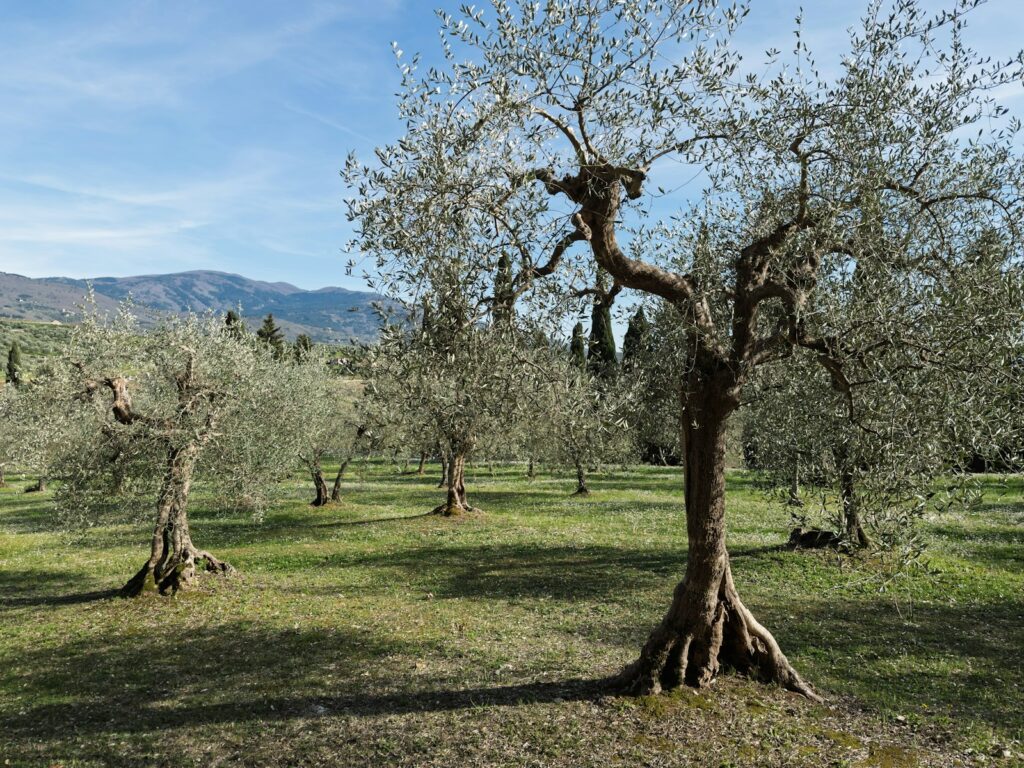
A proper guided mill visit usually covers the journey from olives to finished extra virgin olive oil. Depending on the property and season, you may see the olive groves, harvesting equipment, washing and crushing machinery, extraction equipment and storage tanks.
The visit normally finishes with a tasting. A knowledgeable host explains how to recognize fresh olive aromas, assess bitterness and pepperiness, and distinguish different varieties or styles of oil.
However, three experiences are commonly advertised under similar names:
- Olive oil tasting: A guided sampling of one or several oils, sometimes with bread, vegetables or other Tuscan foods. There may be little or no access to production equipment.
- Mill tour and tasting: A visit to an actual production facility, an explanation of the extraction process and a structured tasting. The machinery may be idle outside harvest season.
- Harvest experience: A longer seasonal activity that can include picking olives, learning harvesting techniques, visiting the mill and tasting freshly extracted oil. Some programs also include lunch.
If your main interest is learning how olive oil is made, choose the second or third format. A tasting alone can be enjoyable, but it does not necessarily justify a long journey into the countryside.
When Is the Best Time to Visit an Olive Oil Mill Near Florence?
Late October and November are generally the most interesting months for seeing olive oil production in the Florence area. This is when many producers harvest their olives and take them to the mill. The exact dates depend on weather, altitude, olive varieties and the condition of the crop.
During the harvest, you may see olives arriving from nearby groves, machinery processing freshly picked fruit and new oil coming directly from the extraction equipment. The resulting olio nuovo, or new-season olive oil, often has pronounced green, grassy, bitter and peppery characteristics.
The regional tourism authority explains the harvest traditions and seasonal events in its guide to new olive oil around Florence.
There are two important booking details:
- Harvest season does not guarantee live milling. A mill may process olives on particular days or at particular hours. Ask whether pressing is expected during your actual appointment.
- Production takes priority over tourism. A working mill may alter its visiting arrangements during busy periods, so a fixed demonstration should not be assumed unless the operator confirms one.
Outside autumn, some farms and mills offer visits throughout the year by appointment. You can still learn about the equipment and taste the oil, but there will generally be no fresh olives going through the machinery.
For 2027 travel, confirm the producer’s specific harvest calendar before arranging transport. Published 2026 dates and seasonal activities should not be treated as confirmed schedules for 2027.
Where to Look for Olive Oil Experiences From Florence
You do not have to travel deep into Tuscany to find olive groves and mills. Several productive areas are within a manageable drive of Florence, although the exact location matters more than the name of the nearest town.
Fiesole and the hills northeast of Florence
Fiesole is one of the most convenient areas for a shorter countryside visit. The surrounding hills contain olive farms, agricultural estates and mills, some of which offer guided tastings and visits by appointment.
This area works particularly well if you want to spend part of the day learning about olive oil and return to Florence for other activities. Depending on the property, a half-day outing may be sufficient.
Be careful with transport descriptions. A farm advertised as being near Fiesole may be some distance from Fiesole’s main square, along a rural road.
Bagno a Ripoli, Impruneta and the southern Florentine hills
The countryside south and southeast of Florence is another useful area to investigate. Olive cultivation is common around Bagno a Ripoli, Impruneta and neighboring agricultural properties.
These locations can suit a standalone oil tasting or a longer farm visit. Some estates combine olive oil production with wine, food or other agricultural activities.
Ask whether the oil is produced at the property you will visit or whether the experience takes place at an estate that sends its olives to an external mill.
Chianti and the countryside toward Greve
Chianti is an option if you also want to explore vineyards, villages and the wider Tuscan countryside. Many agricultural estates produce both wine and olive oil.
However, an advertised Chianti excursion may devote most of its time to wine tasting and offer olive oil as a small accompaniment. If oil production is your primary interest, check that the itinerary includes a proper mill visit or a substantial tasting led by someone familiar with production.
Allow more time for travel, especially when the estate is beyond the main towns or the itinerary includes several stops.
Reggello and the eastern Florentine countryside
Reggello has a strong olive-growing tradition and is associated with autumn celebrations of new-season olive oil. Its mills and producers can be interesting for visitors who particularly want to understand local production.
The area’s annual olive oil events may provide opportunities to meet producers and sample oils without reserving a complete private excursion. Check the dates and participating locations through official regional or local tourism information.
Getting to an Olive Oil Mill Without a Car
Transport is often the most important practical decision. A visit lasting 90 minutes can become a much longer outing if the property is difficult to reach.
Organized transport from Florence
A countryside tour with transport is convenient when the mill is far from a bus stop or when you want to combine several activities.
Check whether the advertised departure point is a central meeting location or your hotel. Many shared excursions use a fixed pickup point in Florence, while private arrangements may offer hotel collection.
Florence has a restricted traffic zone, known as the Zona a Traffico Limitato or ZTL, covering much of its historic center. Vehicle access is regulated, so even a private driver may need to meet guests on an accessible street nearby. The municipality publishes the relevant rules on its official Florence ZTL information page.
Before confirming transport, obtain the exact pickup address, departure time and return arrangements.
Driving yourself
A rental car provides flexibility if you want to visit one mill, have lunch in the countryside and stop somewhere else afterward.
Before reserving, ask for the visitor entrance and parking instructions. Agricultural properties can have multiple gates, gravel driveways and entrances intended only for farm vehicles.
Also check your route out of Florence against the ZTL restrictions. A GPS route through the historic center does not automatically mean a rental car is permitted to follow it.
Public buses and taxis
Public transport can work for certain locations, provided you plan around the actual property rather than the nearest town.
Autolinee Toscane operates services between Florence and Fiesole, including line 7, as well as routes serving other parts of the surrounding countryside. Check current routes and departure times through Autolinee Toscane.
A bus reaching Fiesole, Impruneta or Greve does not necessarily stop near the mill. Rural roads may lack pavements, and the final approach can involve steep slopes or substantial walking distances.
If you plan to use public transport, confirm the walking route with the producer before paying for a tasting. Check the return journey too. Do not assume you can easily find an unreserved taxi at a rural property.
For a more detailed comparison of transport choices, see visiting Tuscan wineries without a car. The same practical issues apply to many rural olive farms and mills.
How Much Time Should You Allow?
The duration depends on how much the program includes.
- Short guided tasting: Often around 45 to 60 minutes, with an introduction to olive oil and samples of several products.
- Mill visit with tasting: Commonly around one to two hours on site, depending on the size of the property and depth of explanation.
- Visit with substantial food tasting or lunch: Often two to three hours or longer.
- Hands-on harvest activity: May take half a day or much of the day, especially if picking, milling and a meal are included.
These are planning estimates rather than fixed industry standards. Always use the duration stated by the individual operator.
For a mill relatively close to Florence, a visit with transport may fit comfortably into a half-day. For a property farther into Chianti, allow extra time for rural roads, pickup arrangements and possible delays.
If you have a train departure or another fixed appointment afterward, tell the operator in advance. Avoid booking a countryside activity that leaves no margin for the return journey.
What Does an Olive Oil Mill Tour Cost?
Prices vary considerably because the experiences themselves differ. A simple tasting at a producer’s property may be sold at a per-person rate, while a private countryside excursion can include vehicle hire, a driver, guiding, food and several hours of service.
The lowest advertised price may cover only the tasting. It may exclude the journey from Florence or access to particular parts of the farm.
When comparing offers, check the following:
- Is the price per person, per vehicle or for the entire private group?
- Does it include a guided walk through the actual mill?
- How many olive oils will be tasted?
- Are bread, cheese, other food pairings or a full meal included?
- Does the package include transportation from Florence and back?
- Are there minimum group sizes or private-visit supplements?
- Are children charged the same price as adults?
- Are taxes, parking, waiting time and any additional activities included?
Some farms offer relatively short visits with no transport, while others sell more elaborate culinary experiences. Compare the entire itinerary rather than treating every tour as equivalent.
A private experience can be useful for a family, a group with mobility requirements or travelers particularly interested in the technical side of oil production. For two adults happy with a scheduled tasting, a shared visit or a direct appointment with a mill may be simpler.
How to Book a Mill Tour and Tasting
Some producers offer online reservations. Others arrange appointments through email, telephone or WhatsApp. An enquiry is not necessarily a confirmed booking, especially during harvest season.
A reliable booking sequence is straightforward:
- Choose the type of experience. Decide whether tasting finished oil is enough or whether seeing production equipment and the actual milling process matters to you.
- Select a location. Check the exact property address and realistic travel time from your accommodation.
- Ask about availability. Give your preferred date, approximate arrival time, number of adults and ages of any children.
- Confirm the program. Request the duration, activities, language, tasting details and food inclusions.
- Arrange transport. Establish whether collection is included or whether you must reach the property independently.
- Review payment terms. Check deposits, balance deadlines, cancellation conditions and any minimum-participant requirement.
- Keep the confirmation. Save the appointment time, full address, contact number and directions somewhere accessible without mobile data.
For a private visit, your first enquiry should include any special interests. For example, say if you want to compare different olive varieties, understand modern extraction, learn about quality testing or see a working harvest.
This helps distinguish a detailed educational experience from a general introduction followed by product sampling.
Questions to Ask Before Paying
The most useful questions are specific and easy for a producer to answer:
- Will we enter an operating olive oil mill or only visit a farm tasting room?
- If we visit during harvest, is live extraction likely on our date?
- Is the visit guided in English throughout?
- Is the tasting led by the producer, a trained tasting professional or a general tour guide?
- Are the oils produced from the farm’s own olives, locally sourced olives or a combination?
- How long will the guided portion last?
- Does the price include every activity advertised in the description?
- Is payment required in full, or is a deposit sufficient?
- What happens if the mill cannot operate or the provider cancels?
If an excursion includes wine, ask how much of the itinerary is actually dedicated to olive oil. A listing that mentions wine, olive oil and traditional food may offer a wine-focused tasting with only a few minutes spent discussing oil.
For travelers considering that type of combined outing, the guide to small-group Chianti wine tours from Florence explains the practical differences between winery stops, tastings, lunches and transport arrangements.
Children, Accessibility and Weather
Visiting with children
Many olive farms can accommodate families, and seeing how olives become oil may be particularly interesting for older children. However, individual operators set their own age policies and activity restrictions.
Working mills contain machinery, moving vehicles and areas where visitors must remain behind barriers or follow staff instructions. Children may need close supervision throughout the production area.
For a family visit, ask about toilets, stroller access, seating during the tasting and whether children can participate in any harvest activities. If transportation is included, confirm appropriate child restraints in advance.
A short mill visit with bread and olive oil tasting is often easier to manage with younger children than a long technical tasting followed by several additional countryside stops.
Reduced mobility and accessibility
Accessibility varies significantly between properties. A modern tasting room may be easy to enter while the production area, olive grove or historic mill building has steps, uneven surfaces or narrow passages.
Tell the operator about wheelchair use, walking aids or difficulty managing stairs before reserving. Ask specifically about step-free access to the mill and tasting room, accessible toilets, parking close to the entrance and the surfaces along any outdoor route.
Do not assume that a property described as accessible has a fully accessible olive grove or production tour.
Rain and seasonal conditions
Indoor tastings can often go ahead in rainy weather. Outdoor grove walks and hands-on harvesting are more weather-dependent.
During the autumn harvest, expect potentially muddy ground, wet leaves and cooler temperatures. Closed-toe shoes with good grip are a sensible choice. For a harvest activity, ask whether gloves or other necessary equipment are supplied.
Before paying, establish whether poor weather leads to an indoor alternative, postponement or cancellation. These outcomes depend on the individual operator’s terms.
How to Get More From the Olive Oil Tasting
Extra virgin olive oil tasting is different from simply dipping bread into oil. A guided session may begin with a small quantity poured into a tasting glass or cup.
The host may ask you to warm the glass gently in your hand, smell the oil and take a small sip. Fresh, well-made olive oil can have aromas reminiscent of grass, artichoke, herbs or green almonds.
Bitterness and a peppery sensation in the throat are normal positive characteristics in many high-quality extra virgin olive oils. They do not necessarily indicate that the oil is too acidic or defective.
Visit Tuscany offers a useful explanation of extra virgin olive oil characteristics and tasting.
Useful things to ask during the tasting include:
- Which olive varieties were used?
- When were the olives harvested?
- How quickly were they processed after harvesting?
- How does early-harvest oil differ from oil made with riper olives?
- How should the bottle be stored after opening?
- Which oil would suit vegetables, grilled meat, beans or everyday cooking?
If several oils are offered, try comparing them before adding bread or strong-flavored foods. A structured tasting helps you understand differences that can be difficult to notice once the oil is part of a seasoned dish.
Understanding Tuscan Olive Oil Labels
A mill visit can also help you understand what you are buying. Three terms are particularly useful.
- Olio extravergine di oliva: Extra virgin olive oil, a regulated quality category subject to production and chemical and sensory standards.
- IGP or PGI: Protected Geographical Indication. Toscano IGP identifies olive oil produced under the registered geographical specification.
- DOP or PDO: Protected Designation of Origin. Tuscany has several olive oil designations, including Chianti Classico DOP and Terre di Siena DOP, with specific production requirements.
These designations provide information about provenance and production standards. They do not mean that every oil with a particular label will taste identical.
Look at the harvest information and ask how the oil was stored. Freshness matters, particularly for bottles that may spend months in a warm kitchen after purchase.
Buying Olive Oil to Take Home
Many mills sell their own oil directly. Purchasing a bottle is generally optional unless the booking explicitly describes a purchase requirement.
Before buying, consider how you will transport it. A one-liter bottle is heavier than it may appear once you have several in your luggage, and glass packaging needs protection from impact.
If you are flying, check the liquid restrictions for every airport on your itinerary. Italian airport procedures differ, and larger liquids may be allowed at certain airports but restricted at others. The Italian civil aviation authority, ENAC, publishes official hand-luggage liquid guidance.
For checked luggage, ask for a well-sealed bottle or tin and pack it carefully against leaks and breakage. Check airline baggage allowances and any food import requirements at your destination.
Some producers offer shipping, but confirm the delivery countries, shipping price, taxes and who is responsible if the package arrives damaged before ordering.
If this countryside outing is part of a longer stay, you can use the Italy on Foot trip planner to organize your Florence activities and other Italy stops around the time needed for the visit.
What if the Mill Visit Changes or Gets Cancelled?
Agricultural visits depend on real production conditions, particularly during harvest. Weather, crop timing, equipment maintenance or changes in the milling schedule may affect what is possible on the day.
Before paying, establish what happens in each situation:
- The machinery is not operating: Does the visit still proceed with an explanation of the equipment and a tasting, or can you reschedule?
- Rain prevents harvesting: Is an indoor activity offered, and is any price difference refunded?
- The operator cancels: Will you receive a refund or an alternative date?
- You need to cancel: What is the deadline for a refund, and are deposits refundable?
- Your transport is delayed: Is there a grace period, and can the start time be adjusted?
For excursions sold through a tour company or booking platform, distinguish the experience provider from the company handling payment. The cancellation and refund process may depend on which company issued your reservation.
If the provider is late or the meeting arrangements are unclear, contact the number on your confirmation before leaving the agreed location. Keep any written messages and receipts in case you need to resolve a disputed missed appointment.
Is a Full Countryside Tour Necessary?
It depends on what you want to learn.
If you mainly want to understand how Tuscan olive oil is made and taste a few examples, a single appointment at a mill relatively close to Florence may be sufficient. You can devote more time to the producer and spend less of the day traveling.
If you want to combine olive groves, wine, villages and a traditional lunch, a longer countryside itinerary may make sense. Check that the additional stops are activities you actually want rather than simply features that increase the tour’s duration.
If your only goal is to taste different Tuscan oils, you may not need to leave Florence at all. A specialist tasting or suitable producer event in the city can introduce you to different styles without the expense of countryside transport. You would, of course, miss seeing the mill and its production process.
For a genuine working-mill visit, the safest booking decision is to confirm the specific frantoio, what will be operating on your date, the exact visitor entrance and your return transport before paying. Those details make a much bigger difference than the number of activities advertised in the tour description.