Palanca is usually the best stop for central and western Giudecca, Redentore serves the area around the famous church, and Zitelle is the right choice for the island’s eastern end. The three Giudecca vaporetto stops sit in that west-to-east order along the waterfront. Lines 2, 4.1 and 4.2 are the main daytime services, while Line N covers the overnight hours. The detail that catches people out is direction: at Palanca and Zitelle, the A and B pontoons serve opposite directions.
Which Giudecca stop should you use?
- Palanca: choose it for central or western Giudecca, the Sant’Eufemia and Junghans areas, many hotels and apartments, and the quickest connection across the canal to Zattere.
- Redentore: choose it for the Chiesa del Santissimo Redentore and accommodation around the central-eastern waterfront.
- Zitelle: choose it for the eastern end of Giudecca, the Chiesa delle Zitelle and properties facing the Bacino di San Marco. It is the first Giudecca stop reached from San Zaccaria on several services.
Do not automatically get off at Palanca simply because it is the best-known of the three. Giudecca is long, and walking from the wrong landing can mean dragging luggage over pedestrian bridges that you could have avoided by staying on the boat for another stop.
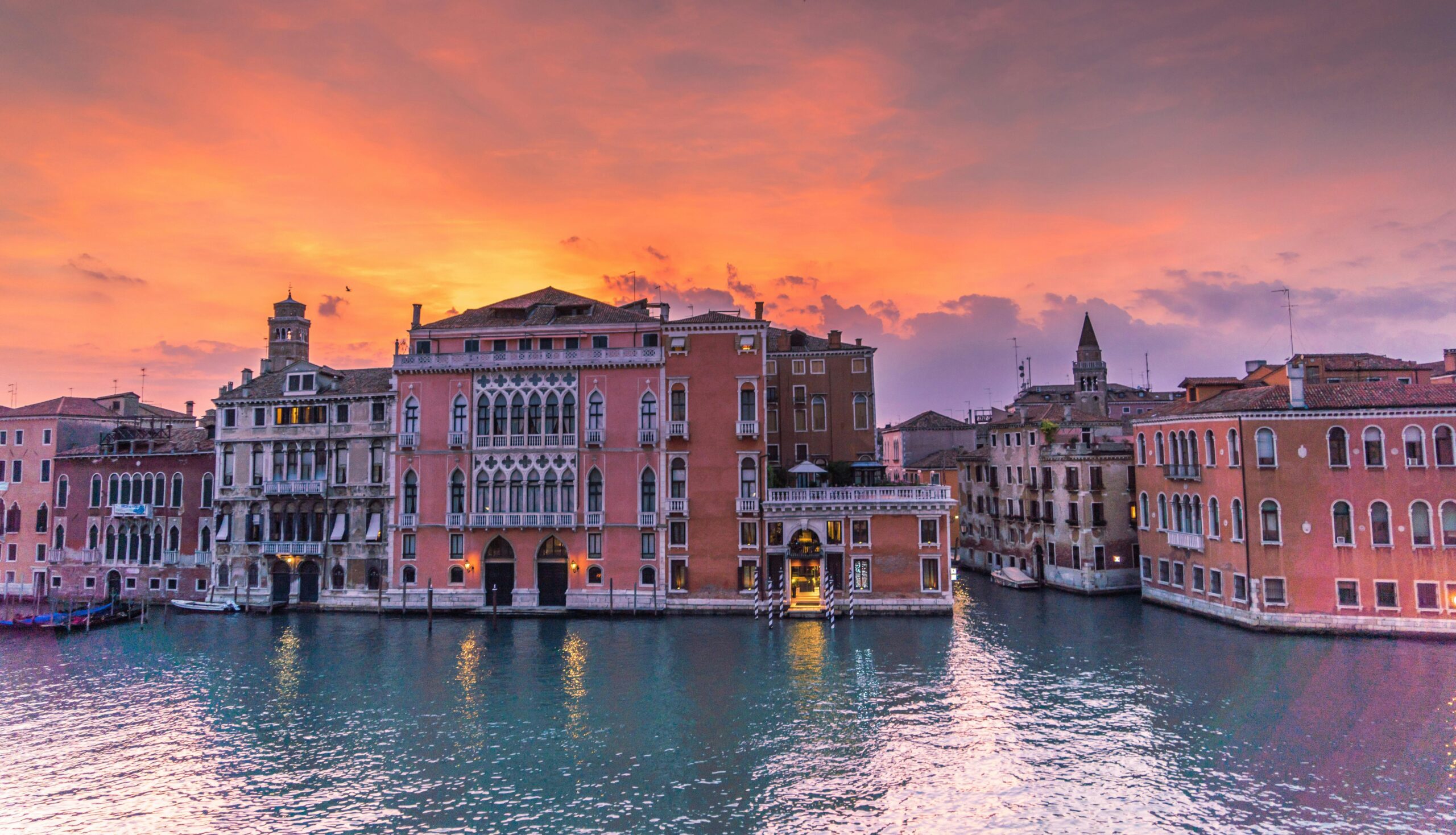
The stops in order along Giudecca
Looking east toward San Marco, the useful sequence is Sacca Fisola → Palanca → Redentore → Zitelle. Sacca Fisola lies farther west and is not one of the three stops covered here, but seeing it on the departure board is useful for orientation.
In the opposite direction, boats coming from San Zaccaria normally encounter Zitelle first, then Redentore, then Palanca. That simple sequence is worth remembering because electronic signs may show the boat’s final destination rather than the name of the neighborhood you are trying to reach.
Palanca: the most useful all-round stop
Palanca is the practical default for much of Giudecca. It sits around the island’s central-western section and has frequent links in both directions. It is also particularly useful if you want Dorsoduro because Line 2 crosses directly between Palanca and Zattere.
Palanca has two adjacent landings, marked A and B. Under the normal current service pattern:
- Palanca A is used by boats heading east toward Redentore, Zitelle and San Zaccaria.
- Palanca B is used in the opposite direction, including services heading toward Zattere or Sacca Fisola and onward toward Tronchetto or Piazzale Roma, depending on the line.
The letter matters. Standing at the correct stop but on the wrong floating pontoon is an easy way to watch your boat leave from twenty metres away.
Palanca is also the public-transport stop identified by Hilton Molino Stucky for its hotel. The hotel describes the walk from Palanca as roughly 500 metres and involving two bridges, a useful reminder that a short distance on a Venice map does not necessarily mean an effortless luggage transfer.
Redentore: best for the church and central-eastern Giudecca
Redentore is beside the Chiesa del Santissimo Redentore, the Palladian church that gives Venice’s July Festa del Redentore its name. It is the logical stop for accommodation around this stretch of the waterfront rather than a secondary stop you should automatically skip.
Unlike Palanca and Zitelle, Redentore is normally shown simply as Redentore in ACTV’s standard timetable rather than as a permanent A/B pair. Around the Festa del Redentore, however, ACTV can activate additional landing arrangements and temporary A/B instructions while the votive bridge and special services are in operation.
That distinction matters if you find an old July transport map online. Festival routing is not the normal routing for the rest of the year. During the celebration, Giudecca Canal services can be diverted, stops can be temporarily suspended and the usual sequence may change. Use the current ACTV information rather than saving a festival diagram for a later trip.
Zitelle: the eastern stop closest to San Zaccaria
Zitelle serves the eastern end of the island beside the Chiesa delle Zitelle. For accommodation in this section of Giudecca, it can save a surprisingly inconvenient walk from Redentore or Palanca.
It also has A and B pontoons. In the normal service pattern:
- Zitelle A is for boats continuing toward San Giorgio and/or San Zaccaria, depending on the line.
- Zitelle B is for boats coming away from San Zaccaria and continuing west through Redentore and Palanca.
From the San Marco side, Zitelle is therefore usually the first of these three landings that you reach. If your hotel is at the eastern end, do not remain aboard for Palanca simply because a booking confirmation describes its address broadly as “Giudecca.”
Line 2, 4.1 or 4.2: which one should you take?
Line 2
Line 2 is the simplest general-purpose choice because it serves Palanca, Redentore and Zitelle and connects Giudecca with San Zaccaria, Zattere, San Basilio, Sacca Fisola, Tronchetto, Piazzale Roma and Ferrovia as part of its wider route.
From San Zaccaria toward Giudecca, the current normal sequence is San Zaccaria, San Giorgio, Zitelle, Redentore and Palanca. At San Zaccaria, Line 2 currently uses landing B for this direction in the summer timetable. San Zaccaria is a row of separate ACTV pontoons along the waterfront, so “go to San Zaccaria” is not enough. Check the letter on the electronic departure display.
Line 2 is particularly convenient between Zattere and Palanca. If you are coming from Dorsoduro, there is little reason to travel around by road or walk toward another vaporetto connection.
Line 4.1
Line 4.1 runs through Giudecca in the direction Piazzale Roma/Santa Lucia area → Sacca Fisola → Palanca → Redentore → Zitelle → San Zaccaria.
That makes it a useful choice after arriving at Venezia Santa Lucia station or Piazzale Roma. When a 4.1 departure is reasonably close, it is often a more direct way to reach Giudecca than taking Line 2 around its wider Tronchetto and Zattere routing.
On Giudecca, 4.1 normally uses the A pontoons at Palanca and Zitelle because it is travelling east toward San Zaccaria.
Line 4.2
Line 4.2 works in the opposite direction through this part of the network: San Zaccaria → Zitelle → Redentore → Palanca → Sacca Fisola → Piazzale Roma → Ferrovia.
From San Marco, it can therefore be a very sensible alternative to Line 2. At San Zaccaria the current timetable places 4.2 at landing D, rather than the Line 2 landing. On Giudecca it normally uses the B pontoons at Zitelle and Palanca.
The simplest rule is not to memorize every loop in Venice. Check line number + destination + pontoon letter on the ACTV display before boarding. ACTV publishes the current sailing times on its official waterbus timetable page and recommends checking close to the day of travel because seasonal schedules and operational changes do occur.
What the A and B letters actually tell you
At Palanca and Zitelle, the current normal routing gives you a useful local rule:
- A generally means toward San Zaccaria.
- B generally means away from San Zaccaria.
Use that as a Giudecca shortcut, not as a Venice-wide rule. Pontoon letters elsewhere in the city do not follow a universal A-equals-east or B-equals-west system.
Also read the destination shown on the electronic sign. A display for P.le Roma, Ferrovia, Tronchetto or another final stop may not mention Giudecca even though the boat calls at your landing on the way.
If you board in the wrong direction
There is usually no need for a dramatic recovery plan. Get off at the next practical stop, look at the departure screen for the opposite direction and board the correct service. Do not remain on a circular route assuming it will quickly bring you back. Some Venice lines make long loops before returning to the same area.
If you are still within the validity of the same timed ticket, changing boats does not automatically mean buying another one, but validate again when changing service. ACTV requires validation at the beginning of the journey and on each subsequent boarding.
Tickets and validation before boarding
As of August 2026, ACTV’s standard Venice urban ticket for visitors without a Venezia Unica resident card costs €9.50 and is valid for 75 minutes from first validation on the covered urban network. Longer-duration passes can make more sense if you will use several vaporetti during the day. Current fares and validity rules are listed on the official ACTV urban services page.
Do not wait until you are physically on the boat to deal with validation. Tap or scan at the validator beside the entrance to the floating pontoon before boarding. If you change onto another service, validate the ticket again.
ACTV also supports contactless bank-card payment at enabled validators. Keep using the same card or device for the journey so the system can correctly associate your taps.
Arriving with luggage, a stroller or reduced mobility
Choosing the closest landing matters more on Giudecca than the flat waterfront on a map suggests. The fondamenta is interrupted by canals and pedestrian bridges. With a large suitcase, stroller or wheelchair, walking from Palanca to Redentore or from Redentore to Zitelle may be much less convenient than travelling one more stop by boat.
ACTV’s transport conditions currently allow each passenger to carry up to three pieces of baggage within its stated dimensional limit of 150 cm as the sum of length, width and height. Staff can still restrict bulky items when loading would create a safety problem or when a vessel is crowded. The detailed rules are in ACTV’s General Transport Conditions.
The Comune di Venezia states that vaporetto boarding pontoons and ACTV waterborne vessels are accessible to passengers with disabilities, although ramp gradients can become difficult during unusually high water. The bigger issue on Giudecca may be the route after you leave the boat because bridges can interrupt a step-free path. The city’s public transport accessibility information is useful if mobility is a deciding factor.
If step-free access is essential, ask your accommodation which landing reaches its entrance without an unsuitable bridge rather than choosing solely by walking distance.
What happens after the daytime services finish?
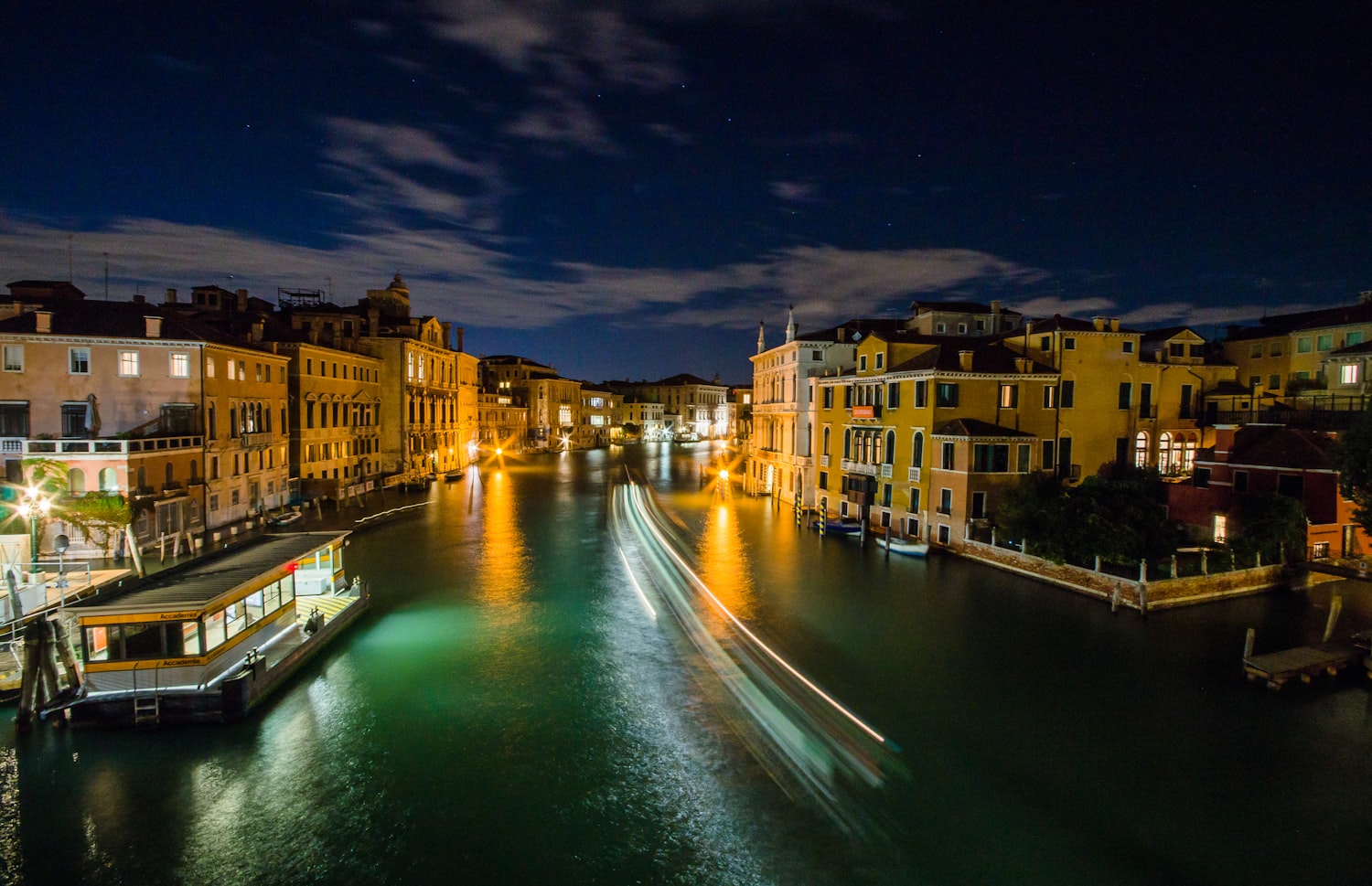
Line N serves Palanca, Redentore and Zitelle overnight. Do not assume the daytime 2, 4.1 and 4.2 patterns continue unchanged into the small hours. Night boats are less frequent, and the exact sequence and departure pontoons should be checked for the date you are travelling.
This is especially important after a late dinner around San Marco. San Zaccaria consists of several separate lettered landings, and walking to the stop name without checking the letter can leave you at the wrong pontoon while the night boat is boarding elsewhere.
Seasonal and unusual services
Line 8 can also serve Palanca, Redentore and Zitelle during its seasonal operation toward the Lido, but it is a directional summer service rather than something to build an ordinary Giudecca transfer around. Treat it as a useful bonus when the live departure board offers it.
Fog, very high water and major events can alter the normal network. The Festa del Redentore in July is the obvious Giudecca-specific example, with temporary landings, the votive bridge and significant changes to boat movements through the canal.
If you are fitting Giudecca into a wider Venice stay, you can build the rest of your Venice route around the landing nearest your accommodation rather than repeatedly crossing the island on foot.
The easiest choice from common starting points
- From San Marco/San Zaccaria: take Line 2 or 4.2 and get off at Zitelle, Redentore or Palanca according to your actual destination.
- From Venezia Santa Lucia or Piazzale Roma: check Line 4.1 first if its departure suits you. It takes the Giudecca direction through Sacca Fisola and then Palanca, Redentore and Zitelle.
- From Zattere: Line 2 to Palanca is the straightforward cross-canal connection.
- For eastern Giudecca: use Zitelle rather than adding an unnecessary walk from Palanca.
- For the Redentore church: get off at Redentore. There is no advantage in continuing to another stop and doubling back over bridges.
- Late at night: look for Line N and verify the departure landing on the live board.
At the pontoon, make one final check before the gate opens: correct stop, correct line, correct direction, correct A/B letter, ticket validated. On Giudecca, those five checks are far more useful than trying to memorize the entire Venice vaporetto map.