Rialto is not one single boarding point. The main stop on the San Marco side has four lettered docks, A, B, C and D, while Rialto Mercato is a separate stop across the Grand Canal on the San Polo side. For most daytime trips, Line 1 uses A or B and Line 2 uses C or D. The confusing part about the Rialto vaporetto stops is that the correct dock depends on both your direction and the time of day.
If you remember one rule, make it this: choose the bank first, then the letter. Getting the bank wrong can leave you facing the steps of the Rialto Bridge with a suitcase. Getting the letter wrong is much easier to fix because the A/B and C/D boarding areas are only about 50 metres apart along the same waterfront.
Quick Rialto stop decoder
- Rialto A: daytime Line 1 toward Ferrovia, the Santa Lucia railway station, and Piazzale Roma.
- Rialto B: daytime Line 1 toward Accademia, San Marco and Lido. Alilaguna’s Orange airport boat also uses the A/B boarding area, with the current ACTV map assigning it to B.
- Rialto C: Line 2, 2/ and night service toward Ferrovia, Piazzale Roma and Tronchetto. Line 1 also moves here later in the evening when travelling in that direction.
- Rialto D: Line 2 and night service toward Accademia, San Marco and Lido. Later in the evening, Line 1 toward San Marco also moves here.
- Rialto Mercato: a separate Line 1 stop on the opposite, San Polo side of the Grand Canal. Choose it for the Rialto Market and many addresses in San Polo.
ACTV publishes a useful official map of the Rialto boarding points. It is worth saving because it shows the letters, directions and evening changes much more clearly than a general Venice transport map.
Where A, B, C and D actually are
The four letters do not represent four widely separated stops. They are two pairs of pontoons on the San Marco side of the Grand Canal.

A and B are on Riva del Carbon. This is the boarding area normally used by Line 1 during the day. C and D are on Riva del Ferro, closer to the Rialto Bridge and the Banca d’Italia building. ACTV’s current map shows roughly 50 metres between the two boarding structures.
That means you should not cross the Rialto Bridge because you have accidentally walked to C instead of A. Stay beside the Grand Canal and follow the waterfront to the other pair of pontoons. Look for the large yellow letter signs above the entrances.
Which dock for the train station and Piazzale Roma?
If you are heading toward Venezia Santa Lucia railway station or Piazzale Roma, you need the direction usually shown as Ferrovia or P.le Roma.
- For daytime Line 1, use Rialto A.
- For Line 2, Line 2/ or the N night service, use Rialto C.
- Later in the evening, Line 1 also switches from A to C.
Ferrovia means railway station, and per Ferrovia means toward the railway station. This wording is more useful than trying to work out compass directions beside the Grand Canal.
If you are continuing elsewhere after Santa Lucia or Piazzale Roma, the broader Venice transport guide explains how the city’s walking, vaporetto and mainland connections fit together.
Which dock for San Marco, Accademia or the Lido?
For boats continuing along the Grand Canal toward Accademia, San Marco and Lido S.M.E., use the opposite-direction docks:
- For daytime Line 1, use Rialto B.
- For Line 2 or the N night service, use Rialto D.
- Later in the evening, Line 1 toward San Marco moves from B to D.
This is why checking only the route number is not enough. A sign saying Line 1 tells you which boat is coming, but the destination line underneath tells you whether it is going toward San Marco or toward Ferrovia.
What changes after about 8:20 p.m.?
Rialto has an evening shuffle that catches people who used the same pontoon earlier in the day. Under the ACTV boarding arrangement in force from 30 May 2026, daytime Line 1 uses A and B, but its later services move to the C/D boarding area.
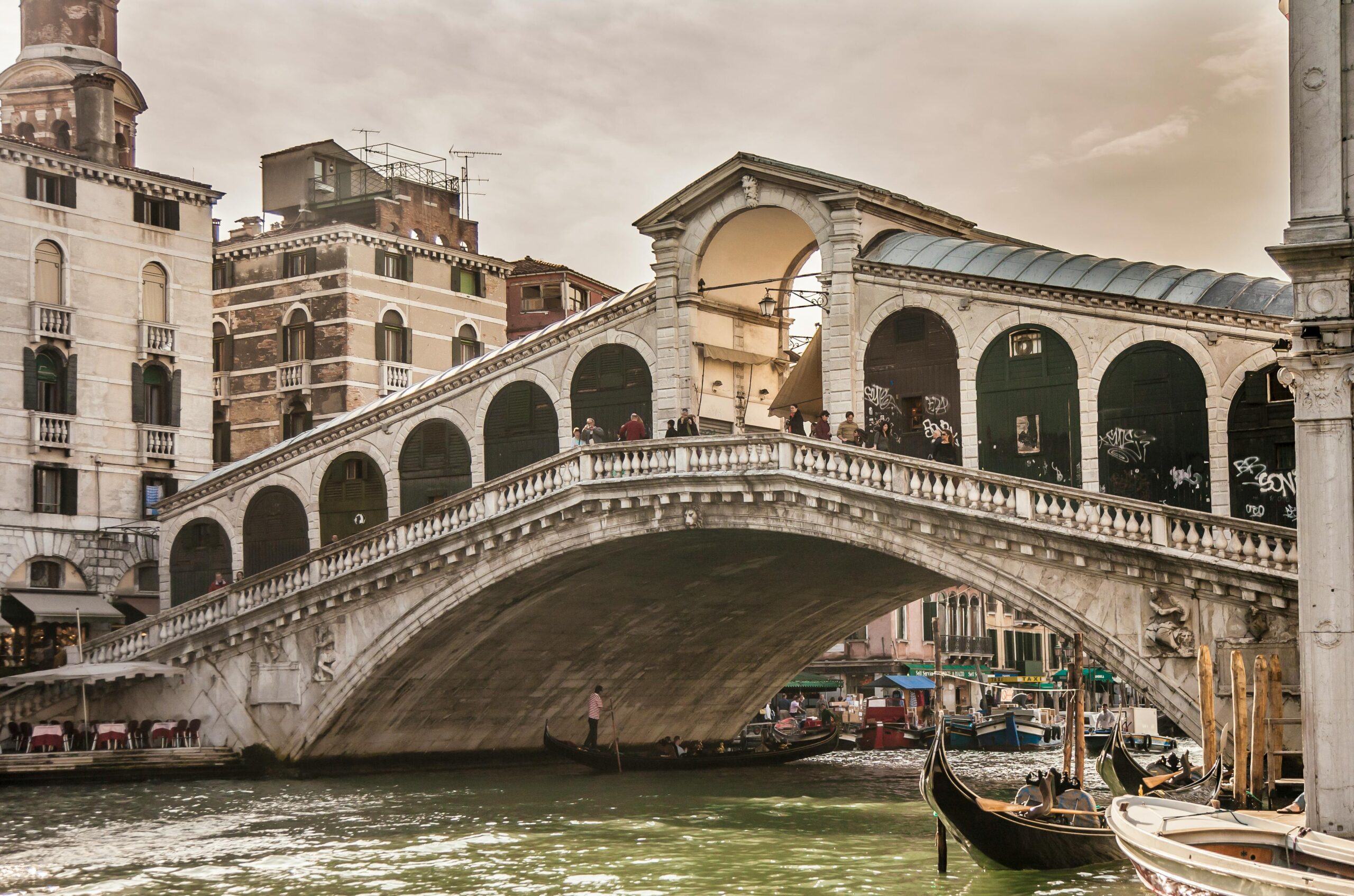
In the current timetable, Line 1 toward San Marco switches to Rialto D from the 20:19 departure, while Line 1 toward Ferrovia and Piazzale Roma switches to Rialto C from the 20:27 departure.
Do not rely on those times months in advance. Venice changes waterbus arrangements for seasonal schedules, events, works and major boat traffic restrictions. At the stop, read the electronic display and the printed departure board before joining a queue. The letter on an old screenshot is less useful than the sign in front of you.
Rialto Mercato is not another lettered Rialto dock
Rialto Mercato is the stop travelers most often mistake for part of the A/B/C/D complex. It is actually across the Grand Canal in the San Polo sestiere, beside the historic market area.
Line 1 serves both sides in succession. In one direction it calls at Rialto Mercato before the main Rialto stop; in the other direction it calls at the main stop and then Rialto Mercato.
This distinction matters far more when you have luggage. The Rialto Bridge has stairs, so a hotel described as “near Rialto” may still involve hauling a suitcase over the bridge if you choose the wrong bank.
Choose Rialto Mercato when
- your accommodation is in San Polo close to the market;
- you are going specifically to the Pescheria or Rialto market streets;
- your walking route stays on the San Polo side of the Grand Canal;
- you have luggage and want to avoid crossing the Rialto Bridge.
Choose the main Rialto A-D stop when
- your destination is in San Marco;
- you are walking toward Campo San Bartolomeo, the Mercerie or Piazza San Marco;
- your hotel directions specifically mention Riva del Carbon or Riva del Ferro;
- you are connecting to Line 2 or the airport boat.
When arranging several Venice stops in the same day, you can build your Italy itinerary around the correct side of the Grand Canal rather than repeatedly crossing bridges.
Which Rialto stop for Marco Polo Airport?
The direct airport boat calling at Rialto is Alilaguna’s Orange Line, not an ACTV vaporetto. The Orange Line connects Marco Polo Airport with Rialto and continues toward Santa Maria del Giglio. At Rialto it uses the Riva del Carbon A/B boarding area, with the current stop map showing departures from B.
There is an important ticket difference here. Normal ACTV tickets and tourist passes do not include Alilaguna services. You need the appropriate Alilaguna ticket even though the companies share the same waterfront boarding area. Check the current Alilaguna Orange Line timetable before an airport journey.
For the full choice between airport boat, bus and taxi, see the Italy on Foot guide to getting from Marco Polo Airport to Venice.
If your hotel says only “Rialto,” check the sestiere
Hotel directions often create more confusion than ACTV’s signs. “Five minutes from Rialto” does not tell you which side of the Grand Canal the front door is on.
Look at the address before travelling. If the address begins with or mentions San Marco, the main A-D boarding area will normally be the useful one. If it says San Polo and the property is near the market, Rialto Mercato can remove an unnecessary bridge crossing.
If the hotel is particularly close to the bridge, ask for the exact recommended fermata, the Italian word for stop. A useful question is “Qual è la fermata vaporetto più comoda”, meaning “Which vaporetto stop is most convenient” Better still, ask them to specify Rialto A, B, C, D or Rialto Mercato.
Luggage makes the correct bank more important
With a small day bag, getting off on the wrong side is mostly an annoyance. With two rolling suitcases, it becomes a logistics problem.
The Rialto Bridge is stepped on both approaches and is heavily used by pedestrians. If your accommodation is on the San Polo side, staying aboard Line 1 until Rialto Mercato can be much easier than leaving at the main stop and dragging bags across the bridge. The reverse applies to accommodation on the San Marco side.
If you have already got off at the wrong one, you have two practical choices. Cross the bridge if you can manage the steps, or use Line 1 for the short hop between the two banks. If your ACTV ticket remains valid, validate it again before boarding, as ACTV requires validation at the beginning of each journey and when changing service.
Wheelchairs and step-free travel at Rialto
The landing pontoons themselves are designed for accessible boarding, but the Rialto Bridge is not a step-free way to change banks. For wheelchair users, choosing between the main Rialto stop and Rialto Mercato is therefore part of the route, not a minor detail.
There is also a special evening arrangement. ACTV’s current accessible Rialto map states that after 20:19, wheelchair users who would otherwise have to use C or D can arrange to board at A or B instead by calling 800 845 065 at least 20 minutes before the departure. Passengers already aboard can ask the crew to make the additional A/B stop for disembarkation.
Because temporary works and high water can affect ramp gradients or boarding arrangements, confirm the current stop display before travelling rather than assuming the daytime setup will remain unchanged.
What to do if you are standing at the wrong Rialto dock
Wrong letter, correct bank: do not panic and do not cross the bridge. A/B and C/D are close together. Walk along the waterfront and follow the large dock letters.
Wrong direction: look for per followed by the destination. Per Ferrovia points toward the train station. Accademia, San Marco and Lido indicate the other direction along the Grand Canal.
At Rialto Mercato when you wanted San Marco: cross the Rialto Bridge if stairs are not a problem, or use Line 1 across the canal if that makes more sense with luggage or limited mobility.
Your expected boat is missing: check C/D if it is evening, then read the electronic departure board for temporary changes. During major Venetian events, races, works or unusual water conditions, ACTV can move or suspend individual departures.
You see an airport boat but hold an ACTV pass: do not board assuming the pass works. Alilaguna is a separate operator and requires its own valid ticket.
The simplest way to use Rialto without memorising every letter
First decide which side of the Grand Canal you actually need. Use Rialto Mercato for the San Polo market side and the main Rialto complex for the San Marco side. Once there, read the line number, destination and dock letter together. During the day, think A/B for Line 1 and C/D for Line 2. At night, expect more services to consolidate at C/D.
That small check at the entrance is usually all it takes to avoid the classic Rialto mistake: boarding the correct numbered boat from the wrong side of its route.