Paying for luggage help in Venice makes sense when the problem is not distance but bridges, stairs, multiple heavy suitcases, children, or an awkward transfer between a train, boat and hotel. A Venice porter service can remove the hardest part of arrival day, but first check what you are actually buying. Some porters carry bags by handcart, some transfer them by boat, and some provide only station assistance. Those are very different services.
With one manageable suitcase per person and a hotel close to your arrival stop, you can usually save the money. With three large cases, six bridges and a tired family, the calculation changes quickly.
The simple rule: count bridges, not walking minutes
A map may show your hotel only 700 metres from Venezia Santa Lucia station or Piazzale Roma. That does not tell you how difficult the walk will be. Venice’s pedestrian routes repeatedly climb stepped bridges, and a wheeled suitcase normally has to be lifted or bumped up and down every one.
Before deciding, map the route from the place where you will actually enter Venice to your accommodation. Then look specifically for canal crossings. Better still, ask the hotel:
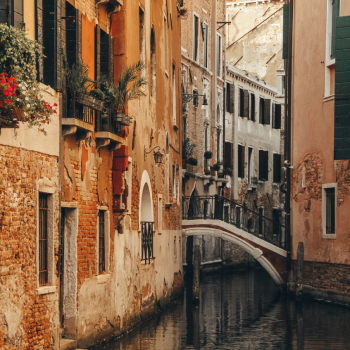
- How many bridges are there from the nearest vaporetto stop to the entrance?
- How many bridges are there from Santa Lucia or Piazzale Roma if we walk?
- Can a luggage boat or water taxi reach your own landing, or only a nearby dock?
That last distinction matters. A hotel described as “accessible by water taxi” may use a landing several minutes away rather than a door directly on the canal.
When a luggage porter is usually worth paying for
You have several full-size suitcases
Two adults with one roller bag each can normally deal with a few bridges. Add two more large cases, backpacks and hand luggage and the transfer becomes a relay race. Hiring help becomes particularly sensible when no one in the group can keep a free hand for doors, tickets, phones or children.
Your hotel is several bridges from the boat stop
A vaporetto can eliminate much of the cross-city walk, but it cannot eliminate the final pedestrian section. The relevant question is therefore not simply “Can I take a boat” It is “What happens after I get off the boat”
If the answer is four bridges with two 20-kilogram suitcases, porter help can be more useful than paying extra for a faster boat.
You are traveling with young children or a stroller
Bridge steps become considerably less amusing when one adult is handling a stroller and the other has the luggage. Paying someone to move the cases allows the adults to concentrate on the child and the steps rather than trying to balance everything at once.
You have limited strength, balance or grip
A porter can solve a baggage problem, but do not confuse baggage assistance with accessible transport. You will still need to cross whatever bridges and stairs lie on your own walking route unless the transfer has been designed to avoid them.
Travelers with a disability or reduced mobility arriving by train should also check RFI’s assistance information for Venezia Santa Lucia. The station has Sala Blu assistance, and RFI lists its Venice Sala Blu at platform 14. The service can include assistance through the station and, on request, transport of one piece of hand luggage. It is not a substitute for moving a family’s collection of suitcases across the city.
You are moving luggage without moving yourself
This is one of the situations where Venice-specific baggage transport is especially useful. Some operators can collect luggage from an arrival terminal or hotel and deliver it separately while you continue by another route. That can work well after checkout, before a late train, or when a group wants to travel through the city without taking every suitcase onto public transport.
What “porter service” can mean in Venice
Do not assume every quote covers door-to-door delivery. Ask which of these you are being offered:
- Station porterage: carrying bags between your train area and the station exit or another agreed point.
- Handcart transfer: a porter moves the luggage through the pedestrian streets and over bridges.
- Boat baggage transfer: luggage is loaded onto a work boat and taken nearer the accommodation.
- Hotel-to-terminal delivery: bags travel separately to Santa Lucia, Piazzale Roma, Tronchetto or another departure point.
- Storage plus delivery: luggage is held after checkout or before check-in and delivered later.
For example, Cooperativa Trasbagagli advertises baggage transport between Venice’s principal terminals and hotels, including boat transport from Piazzale Roma and Santa Lucia. Its normal staffed locations operate during the day, while additional services can require advance arrangement. For a late-night arrival, confirm a meeting time instead of assuming someone will be waiting when you appear.
Arriving at Venezia Santa Lucia station
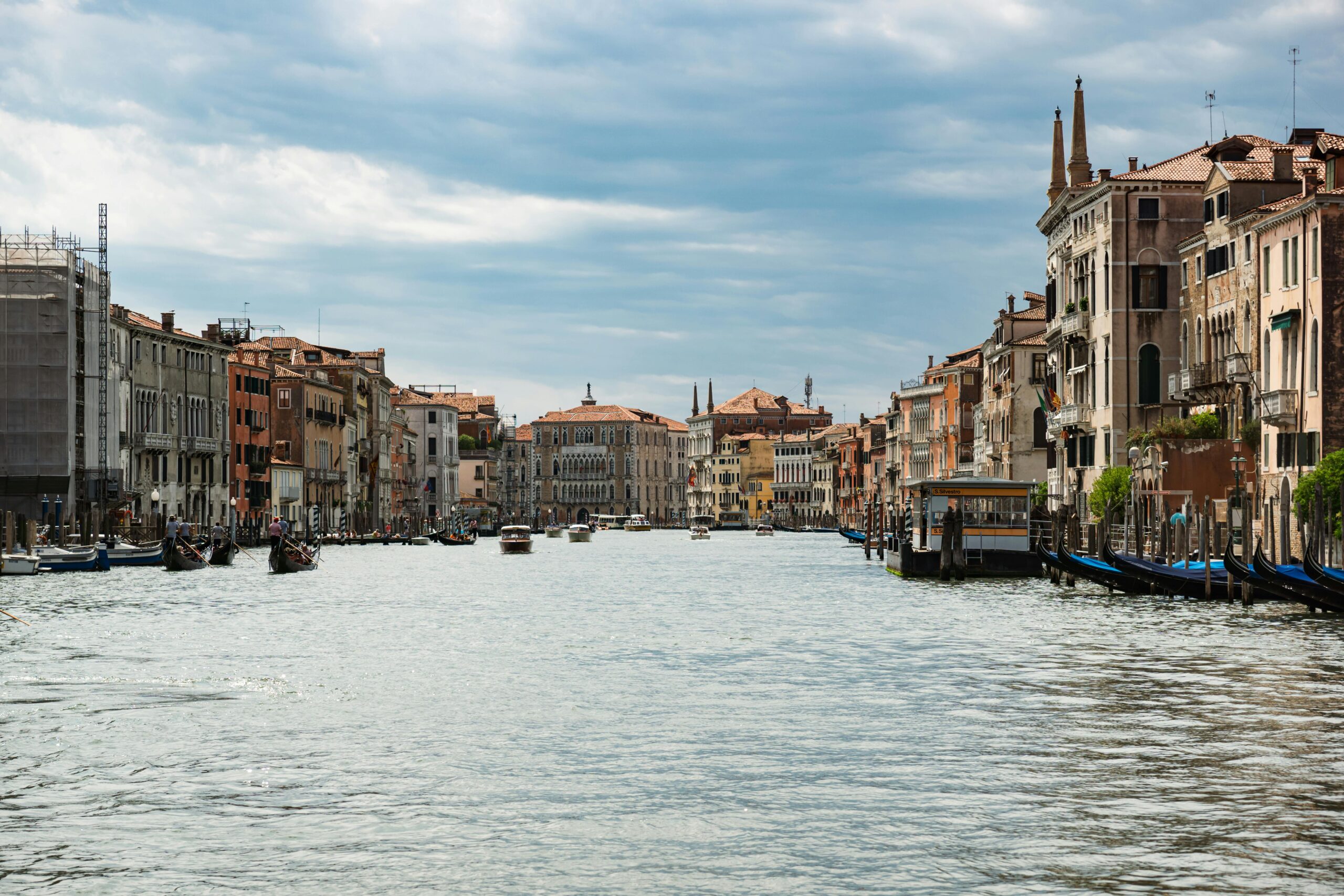
Santa Lucia is already in the historic city. Walk through the front of the station and the Grand Canal is directly outside. The vaporetto pontoons are in front of you, while the pedestrian routes split toward Cannaregio, San Polo and Piazzale Roma.
If you need someone to handle luggage inside the station, use the official station service rather than accepting an unexplained offer. Trenitalia identifies KiPoint as the authorized station porter service at Venezia Santa Lucia and says the service can be booked in advance or requested from its station operators. The KiPoint location itself is beside platform 1.
This distinction has become more relevant because access to Santa Lucia’s platforms is controlled. Travelers need a valid ticket to pass the platform access points. If an outside company is collecting your bags, establish whether the meeting point is inside the station or outside the main exit.
A useful confirmation message is simply: “Meet outside the main station entrance, facing the Grand Canal.” That is much clearer than “meet at Santa Lucia.”
Arriving at Piazzale Roma
Piazzale Roma is where buses, road taxis and most private cars stop. From there, Venice becomes a walking-and-boats city.
This is one of the most useful places to hand luggage over because it lets a porter or baggage boat take over before you start crossing bridges. If your hotel is deep in San Polo, Dorsoduro, San Marco or Cannaregio, ask for a quote from Piazzale Roma all the way to the accommodation rather than paying for help across only the first bridge.
If your bags are manageable, another sensible option is to switch straight to a vaporetto. The Italy on Foot guide to getting around Venice explains how Santa Lucia, Piazzale Roma, Tronchetto and the waterbus network fit together.
Check the vaporetto luggage limits before deciding you need a porter
For many travelers, public transport remains perfectly practical. Current ACTV baggage rules allow each ticketed passenger to carry up to three qualifying pieces free: two pieces with a maximum combined length, width and height of 120 cm each, plus one piece up to 150 cm. No individual piece may exceed 150 cm in total dimensions, and baggage outside the free allowance can require an additional ticket.
Check the current wording on ACTV’s official baggage page, especially if you have oversized cases.
That 150 cm limit is easy to overlook. Measure length + width + height, not merely the height printed on the suitcase label. Very large checked-luggage cases can exceed it.
On board, keep luggage on the floor or in the designated area rather than blocking the passage. At busy stops, be ready to move promptly when passengers need to get past. If you have so much baggage that boarding a crowded boat feels like a tactical exercise, that is another sign that separate luggage transport may be worth the cost.
When paying a porter probably does not make sense
Skip the service if you have light luggage and your accommodation is genuinely easy to reach. Good candidates for carrying their own bags include travelers staying close to Santa Lucia, Piazzale Roma or a vaporetto stop with no difficult final walk.
You may also be better off spending the money on a water taxi if your hotel has a usable private landing and your main problem is a long cross-city journey rather than the bags themselves. Conversely, a water taxi that leaves you two bridges from the hotel has not completely solved your luggage problem.
Another alternative is storage. If your accommodation will not accept bags before check-in, leaving them at a proper deposito bagagli can be cheaper than paying for an immediate delivery just to avoid carrying them for a few hours.
Get the quote before anyone touches the suitcase
Porter prices vary with the number and size of bags, the route, whether a boat is required, the time of day and whether you need immediate or scheduled delivery. A single citywide “official price” should therefore not be assumed.
Before handing anything over, agree on:
- the total price, not merely a price “per bag” without the final calculation;
- the exact pickup point;
- the exact delivery address or hotel entrance;
- how many pieces are included;
- whether bridge carrying and boat transport are both included;
- whether you travel with the luggage or it is delivered separately;
- the expected delivery window;
- what happens if your train or flight is late;
- how you will contact the company if the meeting fails.
Keep passports, medication, money, electronics, keys and anything required that day in a small bag that remains with you. Photographing your checked suitcases before a separate transfer is also a simple way to make identification easier.
Late arrivals need a different plan
Do not arrive at 23:30 expecting the same walk-up baggage services available during daytime hours. Some operators accept prearranged work outside their normal staffed hours, but that is a booking question, not something to rely on after the fact.
For a late arrival, contact both your accommodation and the luggage company beforehand. Get the exact meeting point in writing and keep the phone number accessible offline. If the porter does not appear, do not stand indefinitely at the terminal. Call the provider, then switch to the simplest workable backup: vaporetto, water taxi or a short walk if the route is manageable.
It also helps to know your arrival geography before the day itself. You can build your Italy itinerary around the correct Venice gateway so the hotel, station and onward transport are not treated as interchangeable points on a map.
Ask the hotel before booking an independent porter
Venice hotels deal with luggage transfers every day, and the reception desk often knows exactly which landing, bridge or porter arrangement works for its building. Apartments are more variable, especially if there is no staffed reception.
Send the accommodation your arrival method and number of bags. Ask for the nearest practical drop-off point, not merely the nearest vaporetto stop. If they arrange baggage handling for you, confirm who will meet you and how the charge is paid.
This is also a good moment to check the pedestrian route itself. Venice’s narrow calli and bridges are working public spaces, so dragging a large group of suitcases through crowded routes is not merely tiring. It can make movement awkward for everyone around you. The Venice do’s and don’ts guide covers the practical street and bridge habits that make walking through the city less frustrating.
The best use of a porter is to remove one specific problem
Do not hire one simply because Venice has canals. Identify the difficult part of the journey first. If it is six bridges, pay to remove six bridges from your luggage transfer. If it is a huge suitcase that exceeds the public boat allowance, arrange separate transport. If it is a late arrival, prebook the handoff. If it is reduced mobility rather than heavy baggage, organize accessible assistance and an appropriate route instead.
The service is most valuable when it lets you separate moving yourself from moving your suitcases. In Venice, those are often two different transport problems, and treating them that way can turn a miserable arrival into a fairly ordinary walk to the hotel.