Visiting the Uffizi Gallery is one of the most important experiences you can have in Florence, especially if you want to truly understand why this city shaped Western art and culture. The Uffizi is not just another museum filled with beautiful paintings. It is a carefully organized journey through the birth and rise of Renaissance art, told room by room, artist by artist. Many travelers underestimate how large and information-heavy the gallery is, which can lead to rushing, fatigue, or missing key works. With the right plan, though, the visit becomes one of the most rewarding moments of a Florence trip. If you are planning your stay, it pairs perfectly with a structured walking plan like this two days in Florence itinerary, which helps you balance museums with outdoor exploring and food breaks.
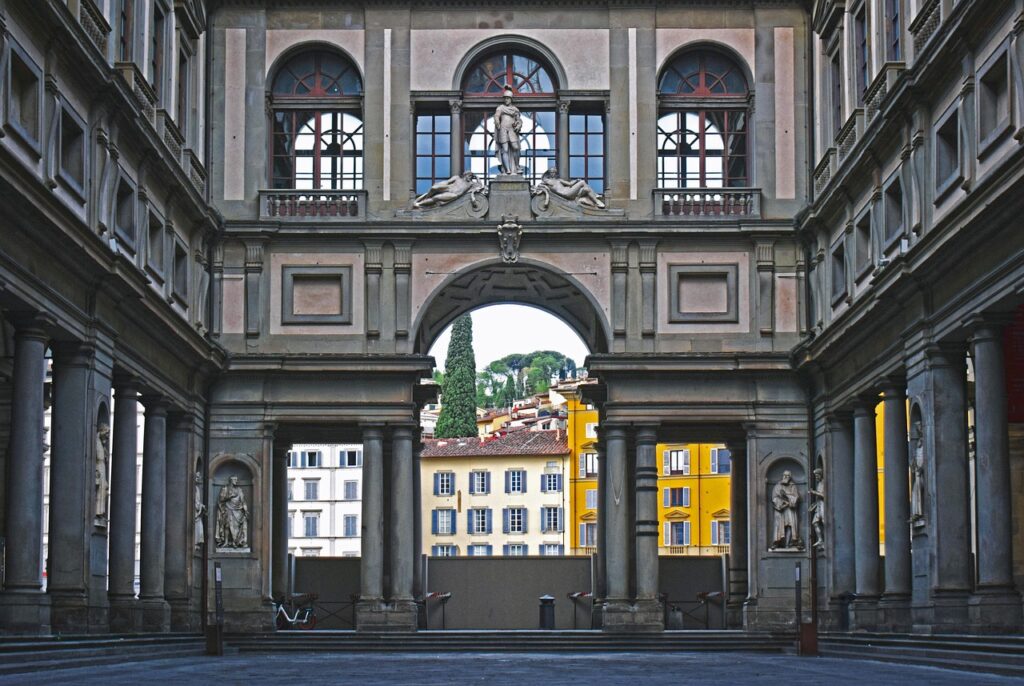
The Uffizi Gallery is located between Piazza della Signoria and the Arno River, inside a historic building originally designed as offices for Florence’s ruling family. Today, it holds one of the world’s most important collections of Italian Renaissance art, with works spanning from the Middle Ages through the Baroque period. Most visitors spend between two and four hours inside, depending on interest level and crowd conditions. The gallery follows a mostly one-directional, chronological layout on its upper floor, which means you are guided through art history in order, starting with medieval painting and ending with dramatic later works. Understanding this layout before entering is essential, because it helps you pace yourself and prioritize what matters most. This guide focuses on what to see, why it matters, and how to approach the visit in a way that feels meaningful instead of overwhelming.
Understanding the Layout Before You Enter
One of the biggest mistakes visitors make at the Uffizi Gallery is walking in without understanding how the museum is organized. The main collection is located on the upper floor, where long corridors connect a series of rooms that branch off on both sides. The layout follows a clear timeline, starting with early religious art and gradually moving toward more realistic, emotional, and human-centered works. This design is intentional and helps visitors see how painting techniques, use of color, and storytelling evolved over time. Skipping randomly between rooms can make the visit confusing and tiring, especially for first-time visitors who are still learning the names and styles of major artists.
The visit usually begins with medieval and early Renaissance works, which may look simple or stiff at first glance. These rooms are important because they show how artists moved away from flat, symbolic figures and began experimenting with depth, emotion, and realism. As you continue, you reach the heart of the museum, where famous Renaissance masters are grouped by artist or period. Later rooms highlight Venetian painters and dramatic Baroque works, which feel very different from earlier Florentine styles. Knowing this progression helps you appreciate not just individual paintings, but the story behind them. If you start feeling overwhelmed, it is often best to pause, step onto one of the gallery’s windows or terraces, and reset before continuing.
The Absolute Must-See Masterpieces
Botticelli and the Spirit of Florence
No visit to the Uffizi Gallery is complete without seeing the works of Sandro Botticelli, whose paintings are deeply connected to Florence’s identity. His rooms are among the most visited in the museum, and for good reason. Botticelli’s style is graceful, poetic, and filled with symbolic meaning. His most famous works, The Birth of Venus and Primavera, represent a shift in art toward mythology, beauty, and human emotion. These paintings were created during a time when Florence was embracing new ideas about philosophy, nature, and the role of humanity in the world. Standing in front of them, you are not just looking at art, but at the values of an entire era.
The Birth of Venus shows a goddess arriving on shore, carried by the wind, painted with soft colors and flowing movement. Primavera is more complex, filled with figures that represent seasons, love, and renewal. Many visitors rush through these works because of the crowds, but they reward slow observation. Try to stand back and take in the entire scene rather than focusing on details right away. If possible, plan your visit early in the morning or later in the day, when the rooms are slightly calmer. These two paintings alone can take thirty minutes to fully appreciate if you allow yourself the time.
Leonardo da Vinci and the Mind of a Genius
Leonardo da Vinci’s works at the Uffizi offer a rare look into the early career of one of history’s greatest thinkers. Unlike some artists who completed many polished paintings, Leonardo left several works unfinished. This makes his paintings especially interesting, because you can see his thought process and experiments. The Annunciation is one of his most important pieces here, showing his early mastery of perspective, landscape, and human gesture. The angel and Mary are placed in a carefully balanced scene that feels both calm and alive.
Another key work is the Adoration of the Magi, which was never finished. At first glance, it may look incomplete or chaotic, but it reveals how Leonardo planned movement, emotion, and structure. Sketch-like figures emerge from the background, offering insight into how Renaissance artists built complex scenes. Many visitors overlook unfinished works, but this is one of the most educational stops in the museum. Spending time here helps you understand why Leonardo is admired not just as a painter, but as an innovator who changed how art was approached.
High Renaissance Powerhouses: Michelangelo and Raphael
As you move deeper into the Uffizi Gallery, you encounter works from the High Renaissance, a period marked by confidence, balance, and technical mastery. Michelangelo’s Doni Tondo is one of the most striking paintings in the museum and the only completed panel painting by the artist. Its circular shape immediately sets it apart. The figures are powerful and sculptural, reflecting Michelangelo’s background as a sculptor. The colors are bold, and the composition feels intense compared to earlier, softer works. This painting often surprises visitors who associate Michelangelo mainly with sculpture or ceiling frescoes.
Nearby, you will find works by Raphael, whose style offers a gentle contrast. His Madonna paintings are calm, harmonious, and emotionally warm. The Madonna of the Goldfinch is a favorite among visitors because of its tenderness and balance. Seeing Michelangelo and Raphael in the same visit highlights how different artistic personalities can exist within the same period. This comparison is one of the reasons the Uffizi is so valuable as a learning experience. You are not just seeing famous names, but understanding how each artist interpreted beauty, faith, and humanity in a unique way.
Venetian Color and Baroque Drama
The later rooms of the Uffizi Gallery introduce a noticeable change in mood and style. Venetian painters like Titian focused heavily on color, texture, and sensuality. His Venus of Urbino is one of the most talked-about paintings in the museum. The figure looks directly at the viewer, confident and relaxed, set within a domestic space. This painting influenced centuries of artists and changed how the female form was represented in art. Unlike earlier idealized figures, this Venus feels real and present.
Further along, the mood shifts again with the works of Caravaggio. His paintings are darker, more emotional, and deeply human. Bacchus and Medusa stand out for their realism and dramatic use of light and shadow. These works can feel intense after the calm balance of Renaissance art, but they mark an important turning point in art history. Many visitors are surprised by how modern Caravaggio’s work feels. This section of the museum is smaller, but it leaves a strong impression and rounds out the story of Italian painting.
Important Highlights Many Visitors Miss
Beyond the famous masterpieces, the Uffizi Gallery holds many works that are often overlooked but essential for understanding the full story. Early medieval rooms featuring artists like Cimabue and Giotto show the transition from symbolic religious images to more natural figures. These paintings may seem simple, but they represent major artistic breakthroughs. Skipping these rooms removes important context for everything that comes later. Taking even a short amount of time here makes the Renaissance rooms more meaningful.
The gallery corridors also display ancient Roman sculptures, which were studied closely by Renaissance artists. These statues influenced how painters understood anatomy and proportion. Additionally, portraits of the Medici family appear throughout the museum, reminding visitors that art was closely tied to power and politics in Florence. Finally, the open windows and terrace areas offer beautiful views over the city and provide a much-needed mental break. Stepping outside for a few minutes can make the rest of your visit far more enjoyable.
Planning Your Visit and Buying Tickets
Because the Uffizi Gallery is one of the most visited museums in Italy, planning ahead is essential. Tickets should always be purchased in advance from the official website to avoid long lines and sold-out time slots. You can buy tickets directly at https://www.uffizi.it. Choosing an early morning or late afternoon entry time usually results in a calmer experience. Guided visits are helpful for first-time visitors who want deeper explanations, but even self-guided visits are rewarding with a little preparation.
Below is a simple overview to help you plan efficiently without overloading your schedule.
| Visitor Type | Recommended Time | Focus Areas |
|---|---|---|
| First-time visitor | 3 hours | Botticelli, Leonardo, Michelangelo, Raphael, Titian |
| Art lover | 4 hours or more | Full chronological route |
| Limited time | 2 hours | Major highlights only |
With the right expectations and pacing, the Uffizi Gallery becomes less intimidating and far more enjoyable. It is not about seeing everything, but about understanding what you are seeing and why it matters. This approach turns a crowded museum visit into one of the most memorable experiences in Florence.