Venice is one of those places that looks easy on a map and then surprises you in real life. Streets turn into bridges, bridges turn into crowds, and a quick snack can become a problem if you sit in the wrong spot. That’s why this guide focuses on practical do and don’ts that help you enjoy Venice while avoiding stress and fines. You’ll learn the rules that are actually enforced, how to move around without getting stuck in bottlenecks, how to ride the vaporetto like a pro, what to know about gondolas, and how to handle high water days. If you want a ready-made plan for seeing the highlights without feeling rushed, start with this internal guide early in your planning: Two Days in Venice Itinerary.
It pairs perfectly with the tips below because the best way to avoid problems in Venice is to plan your timing and your route. Venice is small, but it’s also fragile. The city’s rules are designed to protect public spaces, reduce crowding, and keep walkways clear. Many “tourist mistakes” are not about being rude, they’re about not knowing what is normal here. So think of this article as your Venice common sense checklist. Read it once, save it, and you’ll be the traveler who looks calm, knows where to stand, and never has to argue with an inspector, a security guard, or an annoyed local trying to cross a bridge.
Venice access rules and the day-tripper entry fee
Before you even book your train or park your car, check whether your visit falls on a controlled access day. Venice uses an entry system on certain peak days and times that mainly affects day visitors. If you are coming just for the day, you may need to register and pay an access fee for specific dates and a defined time window (commonly 8:30 to 16:00). If you are staying overnight in Venice, you often won’t pay this fee because your accommodation tax covers the city’s visitor charge, but you still may need to register depending on the rules for that date. The easiest approach is simple: check the official portal, follow the instructions, and keep your QR code or confirmation available in case you are asked.
Do this early, not on the platform five minutes before arrival. It’s also smart to plan your arrival and departure around the busiest hours, even if you are exempt, because checks and crowds tend to concentrate in the same spots. Use this official site for rules, calendars, and payment instructions: cda.ve.it. While you’re planning, treat Venice like a small town with big-city crowds. If you arrive mid-morning on a peak day, you’ll step straight into the most crowded lanes between the train station, Rialto, and St. Mark’s. If you can, arrive early and do your photos and major sights before lunch.
Then use the afternoon for calmer neighborhoods, museums, or a lagoon island. This one change in timing can make Venice feel twice as enjoyable. When you plan around access days and peak hours, you also reduce the chance of breaking rules by accident, like stopping in the wrong place because you feel squeezed by the crowd.
Public behavior rules: what gets tourists fined (and what to do instead)
Eating, sitting, and “picnic mode” in historic areas
Venice is strict about how people use public spaces, especially in the most famous areas. The big rule to remember is that you cannot treat landmark zones like your personal picnic spot. Sitting on the ground, sitting on steps, camping out on bridges, leaning on monuments, and blocking lanes can trigger warnings or fines. This matters most around St. Mark’s Square, Rialto, and other high-traffic places where a few people stopping can create a dangerous bottleneck. Another common mistake is eating or drinking in ways that are not allowed in certain areas, like standing with takeaway right in the center of major squares. Venice wants people to keep moving and keep public spaces clear, and enforcement is most visible where crowds are thick.
The “do instead” is easy and still fun: eat like locals do. Step into a bacaro for cicchetti, grab a quick snack at the counter, or move to a calmer campo where sitting is normal and you aren’t blocking anyone. If you need a rest, stop in a café and pay for that seat time, or rest in a less crowded area off the main routes. You’ll enjoy your break more and you’ll avoid that uncomfortable moment when an officer tells you to move.
Also remember that Venice has very few wide sidewalks. What feels like “I’m just standing here” can quickly become “I’m blocking the only path.” This is especially true on bridges, where people naturally slow down for photos. Take your photo, then step fully to the side where you’re not in the flow, or wait until early morning when there’s room.
| Don’t | Why it’s a problem | Do this instead |
|---|---|---|
| Sit on steps, monuments, or bridges | Blocks narrow routes and damages historic surfaces | Rest in a café, on a less busy campo, or off the main lanes |
| Picnic on the ground in landmark areas | Creates crowding and litter in fragile zones | Eat in a bacaro or take food to a quieter area |
| Stop in the middle of bridges for long photos | Bridges are major choke points | Snap fast, then move to the side or return early morning |
| Carry open food around St. Mark’s in busy zones | Some areas have special restrictions | Finish food near your vendor or sit inside a venue |
More don’ts tourists forget: canals, birds, street vendors, and clothing
Some Venice rules are famous for a reason because they’re often enforced and they protect the city’s safety. First, canals are not for swimming. Even if it looks tempting on a hot day, jumping in, wading, or swimming in canals can lead to fines and it’s unsafe due to boat traffic, tides, and water quality. If you want a swim day, plan it the right way with a beach visit at Lido or a boat trip that includes proper swimming spots. Second, do not feed pigeons or seagulls. Birds in Venice are bold, and feeding them creates a mess, encourages aggressive behavior, and damages buildings. Keep snacks sealed and don’t wave food around near St. Mark’s. Third, avoid illegal street sellers and counterfeit goods.
Buying from unlicensed vendors can put you at risk of confiscation and fines, and it also supports the worst kind of tourist economy. If you want souvenirs, shop in real stores, artisan workshops, or official market stalls. You’ll get better quality and you won’t have to look over your shoulder. Another overlooked rule is clothing. Venice is a city, not a beach town, and walking around in swimwear or bare-chested away from beach areas can cause trouble and looks out of place. Keep a light shirt or cover-up in your day bag and put it on before leaving Lido or stepping off a boat. These small choices also help you blend in and get better service. Finally, remember that Venice is not designed for bikes in the historic center.
Cycling is generally not allowed, and in many areas even walking a bike is restricted. If you need wheels, use the vaporetto or walk. If you want a bike day, do it on Lido where the streets are more suitable. Venice rewards travelers who adapt to its rhythm: slow walking, short stops, and clear paths.
Getting around on foot: bridge strategy, crowd flow, and luggage reality
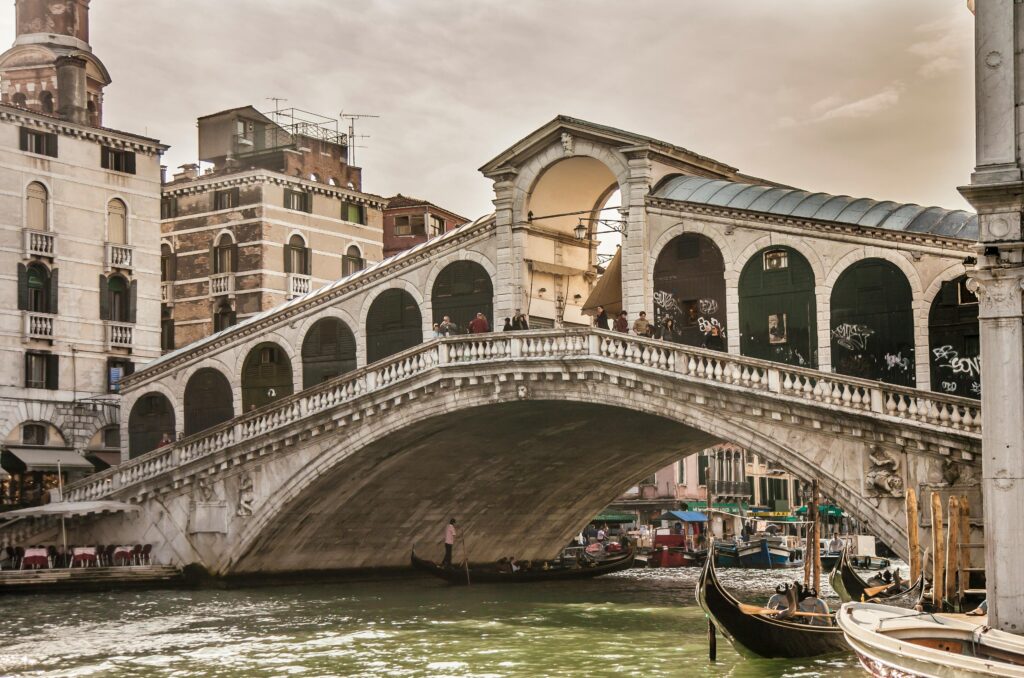
Walking is the main way you’ll experience Venice, so a few habits will save you a lot of time and stress. Start with the flow rule: keep right when possible, and don’t stop suddenly in narrow lanes. Venice has many tight calli where two-way traffic barely fits, especially when someone has a suitcase or a stroller. When you need to check your map, step into a doorway edge or a wider pocket area, not the center of the lane. Bridges need special care. Bridges are the city’s pinch points, and they are also where people slow down for photos. If you want that classic bridge shot, do it early in the day or later in the evening, and keep your stop short when it’s busy. Luggage is another reality check. Venice has steps everywhere, and you will carry your bag more than you expect.
There is a long-running rumor about Venice “banning wheeled suitcases,” but the real issue for travelers is practical, not legal: wheels on stone steps are loud, awkward, and slow. Pack lighter than you think you need, choose a bag you can lift easily, and plan your accommodation location with bridges in mind. If you arrive by train, you may have a smooth roll for a bit and then suddenly face stairs. If you arrive by boat, you may still have bridges between the stop and your hotel. Another tip is to use landmarks instead of only GPS. GPS works, but Venice can confuse it. Learn a few anchor points (Rialto, San Marco, Accademia, your nearest vaporetto stop) and your walking becomes simpler.
Finally, respect quiet zones. Venice is a living place, and loud groups in tight lanes echo strongly. Speak normally, keep music off, and you’ll feel more welcome. When you walk with awareness, Venice feels less like a maze and more like a beautiful set of connected neighborhoods.
Vaporetto and public transport: tickets, validation, and smart pass choices
The vaporetto is Venice’s public water bus system, and it can be a lifesaver when your feet are done or when you need to cross the Grand Canal fast. But this is where many tourists get fined because they don’t validate tickets or they assume a purchase is enough. In Venice, you need to buy the right ticket and validate it as required before riding. Inspectors do checks, and they do not accept “I didn’t know” as a reason. For buying tickets and passes, the easiest official hub is Venezia Unica, which covers many city services and transport options: veneziaunica.it. You can also use the official AVM/ACTV site for transport details and rules: avm.avmspa.it. The best ticket choice depends on your day plan. If you’re mainly walking and only using boats for one or two rides, a single ticket may be enough. If you plan to use boats multiple times in one day, a day pass can quickly become worth it.
Think about your route: going from the train station to your hotel, then to Murano or Burano, then back, can add up fast. Also consider timing. Lines can be long at popular stops, so allow buffer time if you have timed museum entry or a train to catch. On the boat, basic etiquette helps everyone: let people exit first, keep bags out of the doorway, and move inside so others can board. If you are traveling with kids, hold hands near the edge and use the center areas on busy rides. The vaporetto is not just transport, it’s part of the Venice experience. If you ride it with the right ticket and the right expectations, it becomes one of the easiest ways to enjoy the city without the stress of getting lost.
| Your plan | Best approach | What to remember |
|---|---|---|
| Mostly walking, 1 to 2 boat rides | Buy single tickets | Validate properly before riding |
| Several rides in one day (Grand Canal plus islands) | Consider a day pass | Plan time for queues at busy stops |
| Multiple days with frequent boat use | Multi-day pass can be simpler | Keep your pass handy for inspections |
| Short crossing of the Grand Canal only | Use a traghetto crossing where available | It’s a quick cross, not a sightseeing loop |
Gondolas: how to enjoy the ride without overpaying or feeling awkward
Gondolas are iconic, but they can also be confusing if you don’t know the basics. The most important tip is to check the official city-approved gondola tariffs before you go, so you understand what a standard ride costs and what “extras” might mean. Venice publishes gondola service information and official rates on the city site here: comune.venezia.it. When you arrive at a gondola station, confirm the ride length and the total price before you step in. Many visitors assume the cost is per person, but gondola pricing is usually per gondola up to the allowed capacity, which means sharing can be a way to reduce the cost if your group fits. Also ask about anything extra you might want, like live music, because that can change the final price. If you want a romantic, quiet ride, avoid the busiest canals near St. Mark’s in the middle of the day.
Those routes can feel crowded and less special. Instead, consider going early or later, or choosing a gondola point in a calmer area where you’ll glide through smaller canals. If you want the experience of being in a gondola but you don’t need the full private tour, look for a traghetto crossing. A traghetto is a gondola ferry that crosses the Grand Canal at certain points. It’s short and practical, not a scenic loop, but it’s a fun local-style moment. Finally, keep your behavior respectful. Don’t play loud music, don’t stand up unless told it’s safe, and keep hands inside the boat. Gondolas look like tourist entertainment, but they’re also part of Venice’s working culture. When you treat the ride as a real service, you’ll get a better experience and you’ll avoid misunderstandings.
Churches, St. Mark’s Basilica, and high water days: what to pack and how to act
Venice has many churches and historic interiors, and your outfit and bag can affect whether you get in smoothly. For churches, keep it simple: cover shoulders and knees, avoid beachwear, and carry a light layer in your day bag so you can adapt quickly. St. Mark’s Basilica is the most important place where these rules are enforced. It also has practical entry conditions about bag size and what you can bring inside, so don’t show up with big luggage or a bulky backpack and expect it to work. For tickets and official visitor rules, use the Basilica’s official ticket site: tickets.basilicasanmarco.it. Buying official tickets in advance can save you time and reduce stress in the square, especially if you are visiting on a busy day. Another Venice reality is acqua alta, also called high water. You don’t need to panic about it, but you do need to check the official tide forecast if you’re visiting in seasons when tides can rise. The city provides high water information and updates through its official pages here: comune.venezia.it.
If high water is expected, pack footwear you can handle getting wet, or bring compact overshoes, and plan your route so you’re not stuck in the lowest areas at the worst time. St. Mark’s area is famously low, so it can flood even when other neighborhoods are fine. One more tip that protects your experience is group behavior. Venice limits and manages tour groups in the historic center, and even when your group is within the rules, loudspeakers and blocking lanes can cause problems. If you join a tour, choose one that uses respectful audio and keeps the pace moving. To wrap it up, use this quick recap before you leave your hotel: keep your bag small, keep a layer for churches, keep your tickets and QR codes ready, and keep your walking flow polite. Venice is easier when you treat it like a real city, not an outdoor theme park.
Quick recap checklist
- Check controlled access days and register if required on cda.ve.it.
- Don’t sit on steps, bridges, or monuments in busy areas; take breaks in cafés or quieter campos.
- Never swim in canals and don’t feed birds, especially near St. Mark’s.
- Buy and validate vaporetto tickets properly via veneziaunica.it or avm.avmspa.it.
- Check official gondola tariffs on comune.venezia.it and confirm duration before you ride.
- Dress for churches and review St. Mark’s rules on tickets.basilicasanmarco.it.
- Watch tide forecasts for high water on comune.venezia.it.