The main difficulty is rarely finding the next train. It is getting from one platform to another with a suitcase before the doors close. The key to changing trains in Italy with luggage is knowing which kind of station you are in. Some major terminals let you walk between platforms on one level. Many through-stations require a sottopassaggio under the tracks, reached by stairs, lifts, or escalators. A few large stations add several floors to the equation.
With a light bag, a short connection can be straightforward. With a large roller, stroller, several bags, or limited mobility, the same connection may need considerably more time. Do not judge a transfer only by the number of minutes printed in the timetable.
The three station layouts you will encounter
1. Terminal stations where the platforms meet at one end
At a terminal station, trains stop at tracks that end beside a common concourse. You normally walk toward the front of your arriving train, cross the platform-head area, then walk back along the next platform.
Roma Termini, Firenze Santa Maria Novella, Napoli Centrale and Torino Porta Nuova are important examples. RFI currently lists their passenger platforms as reachable by step-free routes in the station rather than requiring a lift to each individual platform.
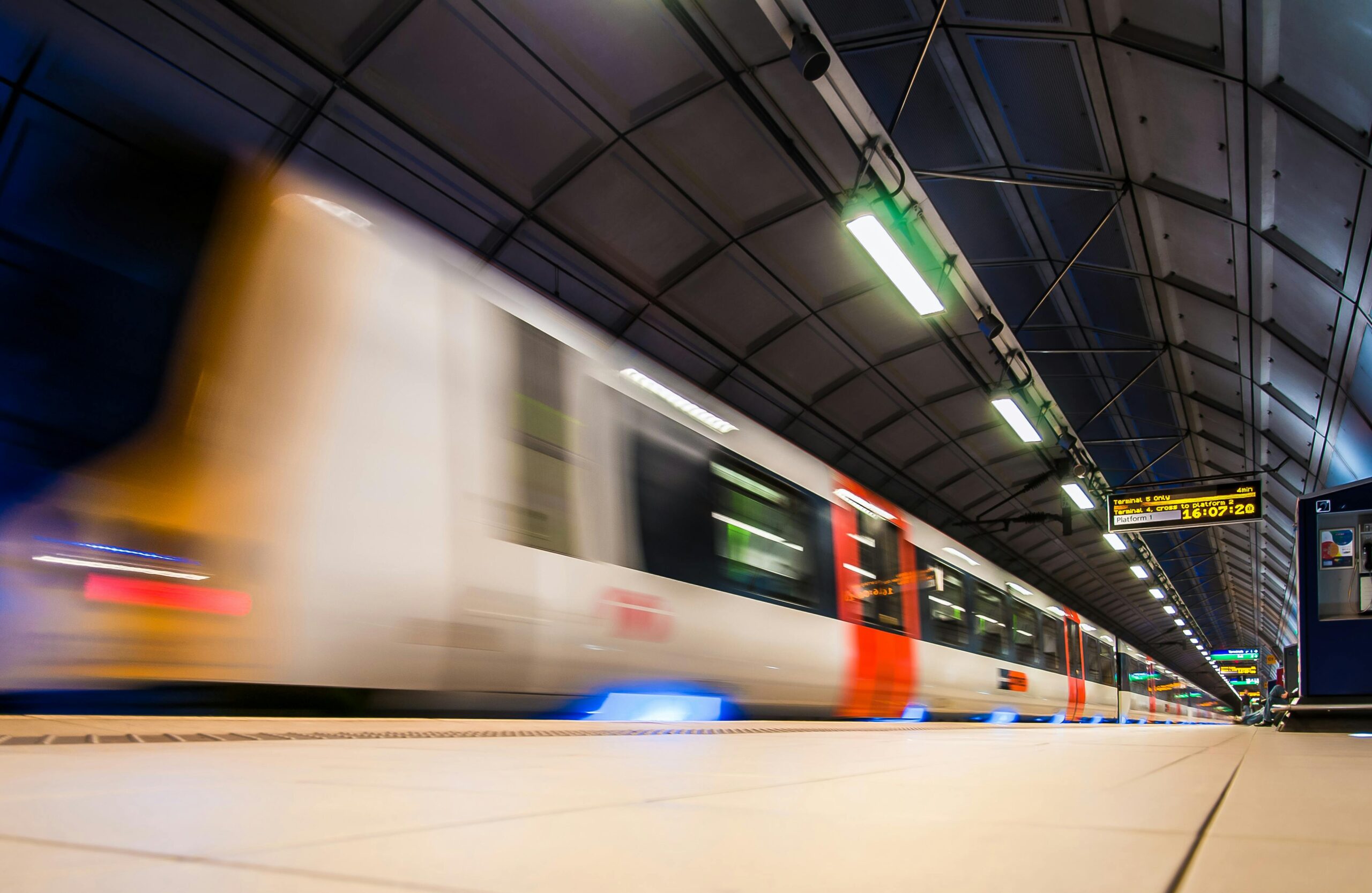
This is good news for suitcases, but do not confuse same level with short walk. Roma Termini in particular has a broad spread of tracks, including sections with names such as Est and Bis. Walking from a carriage near the rear of one long train to a distant departure platform can consume most of a tight connection.
2. Through-stations with an underpass
At many medium-sized and regional stations, the railway tracks continue straight through the station. You cannot simply cross them at ground level. Instead, you leave your arriving platform by stairs, lift, or ramp, enter a tunnel below the tracks, then go back up to the departure platform.
The words to recognize are:
- Sottopassaggio or sottopasso: underpass or platform tunnel
- Ascensore: lift/elevator
- Scale: stairs
- Scale mobili: escalators
- Binario: track/platform
- Binari: tracks/platforms
- Uscita: exit
The closest route off the platform is not necessarily the best route with luggage. A staircase may appear immediately beside your carriage while the lift is farther along the platform. Before hauling a heavy suitcase down the steps, look in both directions for the lift symbol and signs marked Ascensore.
3. Multi-level stations where the next train may be far above or below you
This is the layout that deserves a larger connection buffer. Bologna Centrale is the classic example. Its high-speed station, Bologna Centrale AV, has tracks 16, 17, 18 and 19 underground. RFI lists those four tracks as accessible by lift. The conventional station uses surface tracks, so a connection between a regional or conventional train upstairs and a high-speed departure underground involves a real vertical transfer rather than a quick walk across the concourse.
Do not see “Bologna Centrale” twice on your itinerary and assume both trains leave from adjacent platforms. If one uses track 16–19 and the other uses the surface station, follow the signs for Alta Velocità, AV and your specific track number as soon as you get off.
What to do the moment your first train arrives
- Get yourself and every bag completely off the train. Move away from the doorway before stopping to check your phone.
- Find a departures screen. Look for Partenze, not Arrivi.
- Identify the next train by time and train number. The destination shown on the board may be the train’s final destination, not the city where you are getting off.
- Check the live Binario. Do not rely on a platform number you saw earlier in the day.
- Follow signs for that platform. At a terminal station this may mean walking across the head of the tracks. At a through-station it usually means going down into the underpass.
- Choose stairs, escalator, or lift according to what you can safely handle. Saving two minutes is not worth falling with a 20 kg suitcase.
- Check the platform display again when you arrive. Platform changes can happen after you have started walking.
Do not follow the crowd blindly
Most passengers getting off your train are probably leaving the station, not making your connection. Following them can send you toward Uscita, the taxi rank, metro, bus station, or street when you actually need another railway platform.
In an underpass, watch for arrows labelled with platform numbers. A sign reading Uscita / Binari 1–3 in one direction and Binari 4–7 in another is telling you that different routes branch inside the tunnel.
At large stations, use the train number as your anchor. If your ticket says Frecciarossa 9524 or Italo 9927, for example, locate that number on the departure board. Two trains can leave for similar destinations within minutes of each other.
Stairs or lift: which is actually faster?
For someone with a small carry-on that can be lifted securely, stairs are often the fastest route during a tight connection. You avoid waiting for a lift and can move with the passenger flow.
A lift is the better choice when you have a large suitcase, two rolling bags, a stroller, a wheelchair, limited mobility, or anything you cannot comfortably control on a staircase. Station lifts can also become busy when an entire train empties at once, so allow for the possibility that you will need to wait for another lift cycle.
For a stroller, use the lift rather than trying to balance the stroller and child on an escalator. Solo travelers carrying several pieces should also avoid making two trips on the stairs while leaving one suitcase unattended.
RFI publishes platform-by-platform accessibility information for its stations. Before a journey where using stairs would be difficult or impossible, search the station on the official RFI accessibility pages. The listing distinguishes routes that are level or ramped from routes requiring lifts and warns that temporary lift failures can change a station’s accessibility.
How much transfer time to allow with bags
There is no single railway-wide minimum that works for every station. These are useful planning buffers rather than promises that a connection will work:
- 15–20 minutes: reasonable for a straightforward same-level change at a terminal station when you have manageable luggage.
- 20–30 minutes: more comfortable when an underpass, lift, unfamiliar station, or large suitcase is involved.
- 30–40 minutes: sensible for complicated multi-level transfers, especially when moving between surface and underground platforms at a major hub.
- 40 minutes or more: worth considering with several large bags, a stroller, slower walking speed, children, or a journey where missing the onward train would cause a serious problem.
The location of your carriage matters too. A ten-minute connection may look possible while the train is moving, then shrink quickly if your carriage stops hundreds of metres from the stairs or platform concourse.
For a broader look at selecting trains and building sensible connections, the Italy by train beginner’s guide covers the differences between high-speed, Intercity and regional services.
Major stations where the layout changes the calculation
Roma Termini
The main railway platforms are arranged as a terminal, so a normal rail-to-rail transfer does not require descending into a platform tunnel. Walk toward the platform heads, check Partenze, then cross to the new track.
The catch is distance. Termini has 32 passenger tracks in RFI’s current station listing, including named variants such as 1 Est, 2 Est and 20 Bis. A connection between distant parts of the station can involve much more walking than the words “same station” suggest. The Italy on Foot guide to Rome’s train stations is useful if Termini is also your arrival or departure point for the city.
Firenze Santa Maria Novella
SMN is another terminal-style station. RFI currently lists the passenger tracks with step-free routes in the station rather than individual platform lifts. For most train-to-train changes, the main job is walking toward the end of the arriving platform, checking the board, and heading back along the correct departure platform.
Napoli Centrale
The national railway platforms are also terminal-style and generally straightforward for luggage. The potential confusion comes when your onward journey is not another national train. Metro and local railway connections around Napoli Centrale and Piazza Garibaldi involve different levels and signage, so allow extra time whenever your itinerary changes transport system rather than simply changing Trenitalia or Italo trains.
Bologna Centrale
Give Bologna special attention. Surface tracks and underground high-speed tracks are part of the same station complex but not the same physical level. If your board shows 16, 17, 18 or 19, you are heading to the AV station below ground. Follow the signs rather than assuming the next numbered staircase leads there.
If your Italy itinerary includes several rail changes, you can plan your Italy route with the difficult connections in mind instead of choosing every journey purely by the shortest advertised travel time.
Check the station board even if the app already shows a platform
Platform assignments can change. Once you are physically inside the station, give priority to the official station displays and announcements, particularly in the final minutes before departure.
Useful words include:
- Partenze: departures
- Arrivi: arrivals
- Ritardo: delay
- Soppresso: cancelled
- Cambio binario: platform change
- In partenza: departing
If a platform suddenly changes, do not assume everyone running in one direction is boarding your train. Check the train number before committing yourself and your suitcase to another staircase.
What if the lift is out of service?
If you can use stairs safely, the decision is simple, although the transfer may take longer. If you cannot use stairs, do not start carrying or dragging a heavy bag down them because the connection is tight.
Look along the platform for another signed accessible route and ask railway or station staff whether another lift, ramp, or route reaches the required platform. RFI specifically warns that temporary lift and ramp failures can affect station accessibility, which is why checking the station’s accessibility information before travel matters when a lift is essential rather than merely convenient.
Do not assume that because a station has lifts, every platform is reachable by one. RFI’s station pages specify accessibility track by track.
Passengers who need mobility assistance should plan the connection differently
RFI’s Sala Blu assistance is intended for passengers with disabilities or reduced mobility, including people with walking difficulties, temporary limb problems, older passengers and pregnant travelers. It is not simply a porter service for anyone who has packed too much.
For eligible passengers, assistance can include accompaniment from an arriving train to the next train and, on request, help transporting one piece of hand luggage. RFI currently specifies 30 minutes for assisted train-to-train connections. Shorter transfers may only be accepted exceptionally.
Booking deadlines vary according to the station and the method used to request assistance, so check the current procedure on the official RFI Sala Blu assistance page rather than relying on an old travel forum or blog post.
If your arriving train is late and the connection becomes very tight
Prepare before the train stops. Put away chargers and food, close your suitcase, put on your backpack and have the next train number visible on your phone. Do not block the vestibule excessively early, but do not wait until everyone else has started leaving before gathering three loose bags from different racks.
Once off the train, check the live platform immediately. If the connection is still physically possible, go directly there rather than stopping at a ticket machine, café or information desk.
If you miss a reserved high-speed or Intercity service, do not simply board the next train and assume the old ticket is valid. What happens next depends on the operator, fare conditions and whether the journeys were sold together. Speak to the train operator’s staff, ticket office or customer-service point and explain that the incoming train was delayed.
With separate tickets, your protection can be different from a journey sold as one connected itinerary, which is another reason not to build extremely tight changes purely because a booking search happens to display them.
The safest rule for heavy luggage
Plan the connection around the moment when the wheels stop being useful. A large roller is easy across a concourse and considerably less pleasant when the only route is a flight of stairs into a narrow underpass.
If you cannot comfortably lift your own bag up and down a normal staircase, choose connections with enough time to find and wait for lifts. At smaller stations, check RFI’s platform accessibility before travel. At Bologna, pay particular attention to surface versus AV tracks. At terminal stations, budget for horizontal distance even when no stairs are involved. That small amount of planning is far more useful than trying to save five minutes on the timetable.