On reserved trains in Italy, your ticket normally gives you a carriage (carrozza) and a seat (posto). On many Frecciarossa 2+2 layouts, A and D are window seats while B and C are aisle seats. That rule does not apply to every train or every class, and the number does not reliably tell you which way you will face. Regional trains are different again: most have no assigned seats at all.
The safest way to read Italian train seat numbers is to use the seat map for your exact train rather than memorizing an airline-style code. Train type, service class and operator all affect the layout.
First, find the two numbers that actually matter
A reserved ticket may contain several numbers, so it is easy to stare at the wrong one while standing in the aisle. Look for these Italian words:
- Carrozza or Vettura: your coach.
- Posto: your seat.
- Binario: the platform. This is not your coach number.
If your ticket says Carrozza 5, go to coach 5. Once inside, follow the seat labels until you reach the posto printed on your ticket. The coach number is normally displayed near the exterior doors, while seat labels are fixed beside or above the seats.
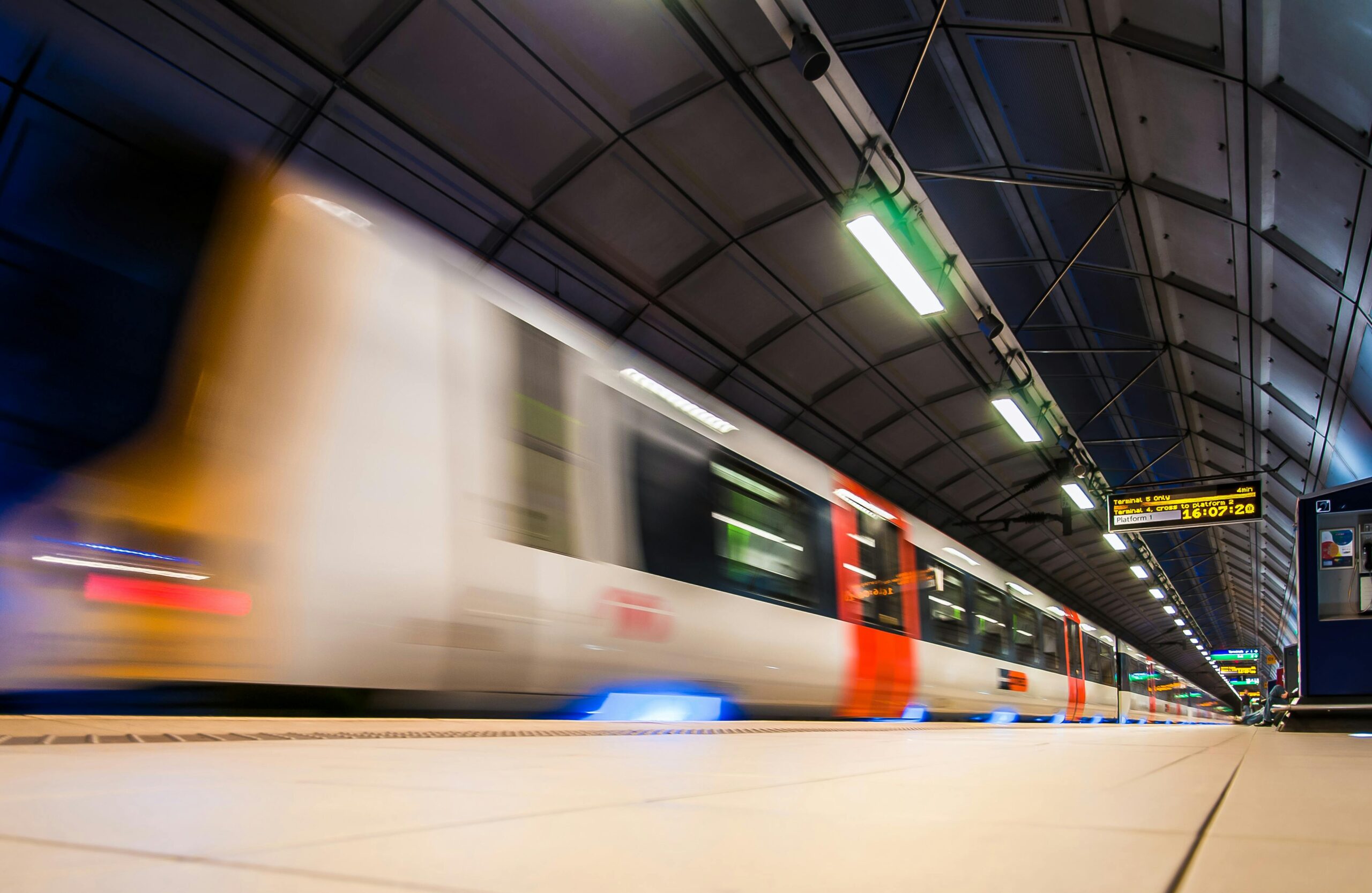
On a long high-speed train, finding the correct coach before boarding saves an awkward walk through several crowded carriages with a suitcase. Platform displays at major stations sometimes indicate where each coach is expected to stop, but the exterior coach number is the final check when the train arrives.
Do A, B, C and D mean window or aisle?
On the common 2+2 seating arrangement used in Frecciarossa Standard and similar coaches, the usual pattern is:
- A: window
- B: aisle
- C: aisle
- D: window
So seats such as 11A and 11B are normally beside each other, with 11A against the window. Seats 11C and 11D form the pair across the aisle, with 11D at the window.
Do not turn that into a rule for every Italian train. Business-class coaches can use a 2+1 arrangement, Executive has a very different layout, older or different rolling stock may be numbered differently, and other operators use their own systems. The official Trenitalia seat-selection information is useful when you want to choose rather than accept an automatically assigned place.
What about Italo?
With Italo, use the graphical seat plan rather than trying to decode the seat number itself. Italo’s current booking map shows the coach, numbered seats, which seats are beside the window or aisle, tables, toilets, exits and other useful features. Its official seat-selection page explains the current options.
This matters because Italo operates different train types and several travel environments. A number that looks similar to one on another train does not create a universal window-seat rule.
Your seat number does not tell you which way you will face
This is the part that catches travelers who are prone to motion sickness. Neither the row number nor the A/B/C/D letter should be treated as a reliable code for forward-facing versus backward-facing travel.
A seat marked 8A, for example, can tell you its location within the coach layout, but the number alone does not establish which end of the train will be leading on your particular journey. Likewise, odd numbers do not mean forward and even numbers do not mean backward.
Seat maps may show which seats physically face each other, especially around tables, but do not assume that the top of a diagram is guaranteed to be the direction of travel on the day. Operational train orientation is separate from the seat identifier.
There is one useful exception at the top end of Trenitalia’s service: current Frecciarossa Executive seats are designed to rotate through 180 degrees so passengers can be oriented in the direction of travel. Ordinary Standard, Premium and most Business seats should not be booked on the assumption that this will be possible.
Facing another passenger is different from facing backward
Italian high-speed coaches usually contain a mixture of airline-style rows and groups arranged around tables. A seat can therefore be:
- facing the seat in front of it across a table;
- facing the back of the seat in front, airline-style;
- facing what turns out to be the direction of travel;
- facing opposite the direction of travel.
If you want four people around one table, choose that arrangement directly on the booking map. Do not try to reconstruct it from consecutive seat numbers. Two consecutive rows may face each other on one coach and face the same way on another configuration.
The Italian word to look for is tavolino, meaning table. Posto con tavolino means a seat with a table arrangement.
Trenitalia and Italo seat choice is optional, but the assigned seat is not
On Trenitalia Frecciarossa, Frecciargento and Frecciabianca services, the system can assign a seat automatically at no additional charge if you do not pay to choose a particular one. As of August 2026, Trenitalia lists standard seat selection at €3 on those services, with several fare, status and passenger categories receiving it free. Seat choice on Intercity and Intercity Notte is listed as free.
Italo also assigns a place automatically if you skip seat selection. Its optional selection currently starts from promotional prices of €2.50 in several travel environments, while standard selection is included with some fares and loyalty levels.
The distinction is useful: choosing a particular place may cost extra, but once your ticket has an assigned posto, that is the seat you should use.
Regional trains usually have no seat assignment
A normal Regionale or Regionale Veloce ticket generally does not reserve a particular seat. You board and take an available place. If the train is busy, that can mean standing until somebody gets off.
Do not become concerned if your regional ticket contains no carrozza and no posto. That is normally exactly what you should expect.
High-speed and regional tickets also follow different booking and ticketing rules. If you are mixing them on the same trip, the broader Italy by train guide explains the practical differences between Frecciarossa, Italo, Intercity and regional services.
How to find your seat quickly after boarding
- Check the train number first. At the platform, make sure you are boarding the correct service, not simply a train going to the same city.
- Find your carriage. Match the exterior carrozza number to your ticket.
- Enter and check the seat sequence. Seat numbers normally progress through the coach, so the first labels will quickly tell you which direction to walk.
- Match the complete seat identifier. If your ticket has a letter, 12A and 12D are different seats.
- Put large luggage away before sitting down. Avoid blocking the aisle while searching repeatedly through your phone for the ticket.
A useful trick is to open the ticket before the train arrives and remember just two things: carrozza and posto. You can deal with the PNR, ticket code and other booking numbers later.
If you care about a window, choose from the map
For Frecciarossa Standard, the A/D shortcut is useful, but the visual map is still better. It tells you more than the letter can: whether you are at a table, near a door, in a particular part of the carriage or beside another passenger on the same booking.
For Italo, the map is especially useful because the operator explicitly marks the window and inner/aisle position. If the view matters, make your choice there rather than assuming that a particular number always means the same thing.
Window alignment is another small complication. A seat can technically be on the window side without having a perfectly centered pane beside it because carriage windows and seat rows do not always line up exactly.
If you get motion sick, do not rely on the booking code
If facing backward causes problems, the most reliable approach is to inspect the available seating map for your specific service and choose based on the displayed arrangement where possible. Even then, avoid treating the seat code itself as a guarantee of the train’s operating direction.
For a longer trip, you may also prefer an aisle seat. It gives you an easier escape to stand, walk to the vestibule or visit the toilet without asking another passenger to move.
If several train legs are involved, you can organize the rest of your Italy trip separately from these coach-level details, then check each operator’s seat map as you book the reserved legs.
What if someone is sitting in your place?
First check the carriage. A surprising number of apparent seat disputes come from two passengers having the same seat number in different coaches.
If you are definitely in the correct carriage, show the other passenger the relevant line on your ticket. A simple sentence is:
Scusi, credo che questo sia il mio posto. Ho il posto 12A.
Sorry, I think this is my seat. I have seat 12A.
Usually the problem is nothing more dramatic than somebody misreading a number or taking an empty seat temporarily. If both tickets genuinely appear to show the same place, ask the capotreno, the train manager/conductor, rather than arguing about it.
What if your carriage or seat seems not to exist?
Occasionally an operational change means the train running that day is not exactly the configuration passengers expected. If you reach the correct train and cannot find the carriage or seat shown on your booking, check the operator app for an updated assignment and listen for announcements.
Then ask onboard staff. Do not simply choose another reserved seat and assume it is free for the whole journey. Its passenger may be boarding at the next station.
Useful Italian words around your seat
- Posto: seat
- Numero del posto: seat number
- Carrozza / vettura: carriage or coach
- Finestrino: window
- Corridoio: aisle
- Posto singolo: single seat
- Tavolino: table
- Senso di marcia: direction of travel
- Binario: platform or track
- Capotreno: train manager/conductor
The practical rule is simple: use the letters as a shortcut only when you know the train layout, use the operator’s seat map when the exact position matters, and never use the seat number alone to predict which way the train will be moving.