The fastest way to check ZTL in Italy is to take your hotel’s exact street address and compare it with the municipality’s official restricted-traffic map, then ask the hotel how vehicle access works for guests. A hotel being inside a restricted zone does not automatically mean you cannot drive to it. Some accommodations can register a guest’s license plate, some can authorize only a short luggage stop, and others cannot provide access at all.
The crucial point is to confirm the rules before you drive past a ZTL sign or camera. A booking confirmation by itself is not a driving permit.
First, understand what a ZTL actually restricts
ZTL stands for Zona a Traffico Limitato, or Limited Traffic Zone. Under the Italian Road Code, it is an area where vehicle access or circulation is limited during specified times or to specified categories of users and vehicles. The national framework exists across the country, but individual municipalities decide their own boundaries, operating hours, permits and exemptions.
That is why advice such as “hotel guests can enter a ZTL” is too broad. A procedure that works in Florence may not be the procedure in Bologna, Rome or Milan. The Ministry of Infrastructure and Transport publishes national guidance on ZTL regulation and signage, but your practical access rules come from the municipality where you are staying.
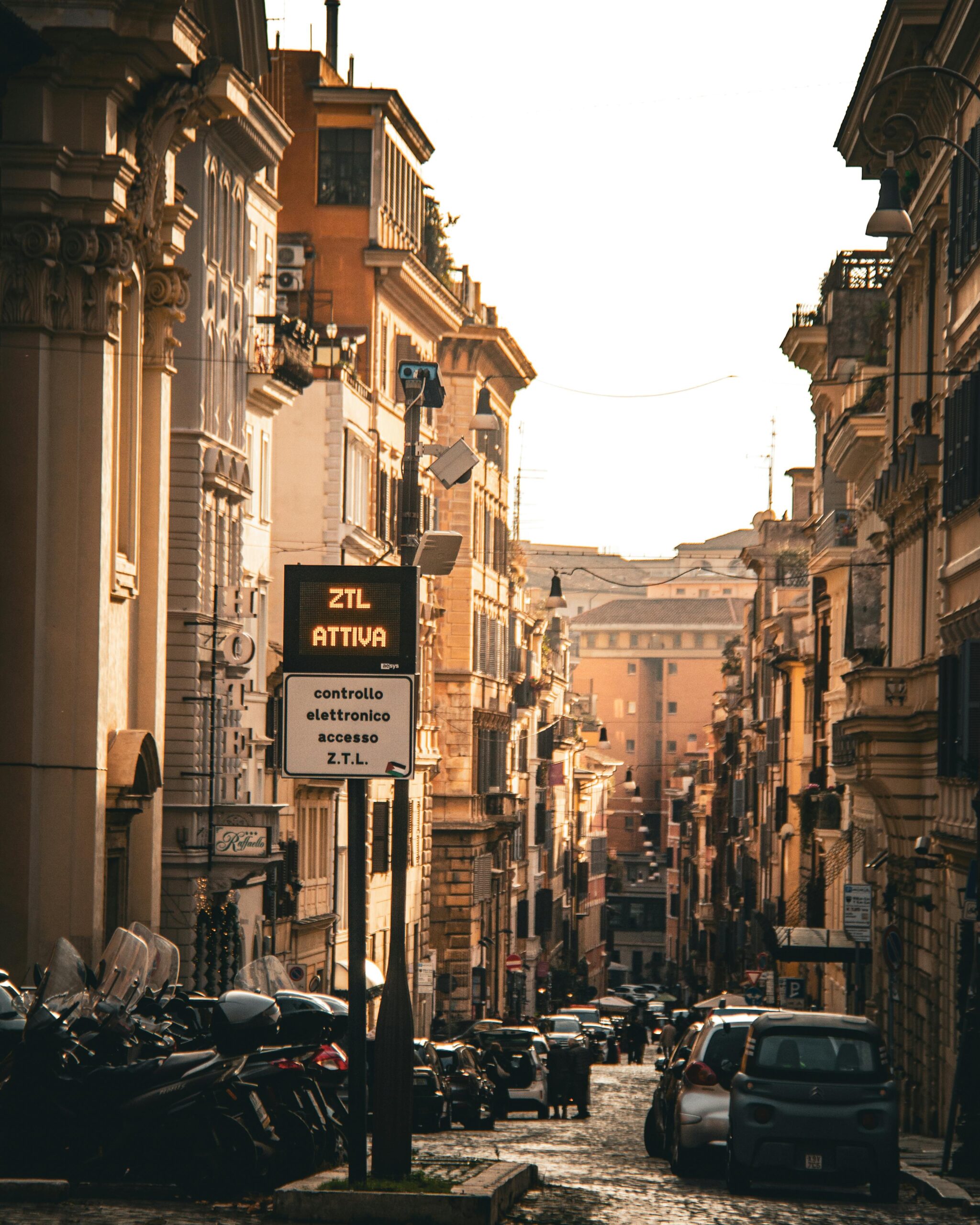
There are also three separate questions that travelers often accidentally combine:
- Is the hotel inside the restricted zone?
- Is your particular vehicle allowed to enter?
- Once inside, are you allowed to stop or park?
A yes to one does not automatically mean yes to the other two.
How to check if your hotel is inside the ZTL
1. Get the exact street address
Use the hotel’s full address, including the street number. Do not rely only on the pin shown by a booking site. Boundaries can run along individual streets, and a hotel near the edge may have its main entrance outside the zone while its garage entrance is inside it, or vice versa.
If the property gives a different address for its parking garage, save that address too. For drivers, the garage entrance can matter more than the reception desk.
2. Find the municipality’s official map
Search for Comune di [city] ZTL mappa. Prefer a municipal transport authority or city website over an old screenshot, travel forum or third-party map.
Look for terms such as:
- mappa ZTL or planimetria ZTL, restricted-zone map
- perimetro, boundary
- varchi, access gates
- orari, operating hours
- settore, sector
- accesso, entry/access
Florence, for example, publishes its ZTL rules through Servizi alla Strada. Rome has official maps and rules for its different central zones on Roma Mobilità. Milan provides a map and vehicle checker for Area C.
3. Check the vehicle route, not just the hotel pin
This catches a surprising number of mistakes. Your hotel may be outside the boundary, while the quickest route suggested by your phone cuts through a restricted street. A hotel inside the zone may instead have one permitted approach from a particular gate.
Ask the accommodation for the exact street or varco you should use. Then set your navigation to that approach or to the garage entrance rather than simply typing the hotel name.
Be especially cautious with shortcuts through the historic center. A navigation app can calculate a perfectly valid road route without knowing that your rental car lacks a local permit.
The question to ask your hotel before arrival
Do not stop at “Are you in the ZTL?” What you really need is the hotel’s procedure for your car.
A useful message is:
Buongiorno, arriviamo in auto a noleggio. La struttura è dentro una ZTL? Potete registrare la targa? Entro quando devo inviarvela? Da quale varco dobbiamo entrare e dove possiamo parcheggiare? L’autorizzazione vale anche per la partenza?
That asks: “We are arriving in a rental car. Is the property inside a restricted traffic zone? Can you register the license plate? By when do I need to send it? Which gate should we enter through, and where can we park? Does the authorization also cover departure?”
Get answers to five points:
- Can the accommodation authorize your type of vehicle?
- Who registers the targa, or license plate?
- Must registration happen before entry, or can the hotel do it shortly afterwards?
- Which entrance and route should you use?
- Where are you allowed to leave the car after unloading?
If the answer is simply “send us your plate,” ask when they need it and what to do if you receive the rental car after reception closes.
Why the license plate matters so much
Many restricted zones use electronic gates that read vehicle plates. There may be no barrier, attendant or warning ticket. You simply drive through the entrance, and the system records the vehicle.
Hotels that are permitted to arrange guest access commonly work by communicating your plate number to the local authorization system. You may hear this called a lista bianca, literally a whitelist.
The deadlines are city-specific. Florence illustrates why you should never invent a universal rule. Its municipal ZTL regulations allow qualifying accommodation providers to place a guest vehicle on a temporary whitelist, with access regularized by the property according to defined timing and route conditions. Other cities use different procedures and deadlines.
With a rental car, you normally cannot give the hotel the final plate until you collect the vehicle. Send it as soon as you have the keys, and check every character. One wrong digit means the camera has recorded a different vehicle from the one the hotel registered.
What ZTL signs look like
The sign to watch for is based around a white circular field with a red border, accompanied by information identifying the limited traffic zone and its restrictions. At camera-controlled entrances you may also see an electronic display.
Useful Italian wording includes:
- ZTL ATTIVA: the restriction is active.
- VARCO ATTIVO: older wording you may still encounter. It means the controlled gate is active, not that you are welcome to drive through.
- ZTL NON ATTIVA or VARCO NON ATTIVO: the particular ZTL restriction is not active at that moment.
- controllo elettronico: electronic camera enforcement.
- eccetto autorizzati: except authorized vehicles.
- targa: license plate.
- varco: controlled entrance or gate.
- sosta: parking or stopping, depending on context.
“Non attiva” does not erase every other road rule. A street can still contain a pedestrian restriction, residents-only section, bus lane, one-way restriction or temporary closure.
A ZTL permit does not necessarily let you drive everywhere inside it
This is particularly important around historic hotels. A property can sit within a normal restricted traffic zone but also beside an area pedonale, pedestrian area, or a corsia preferenziale/corsia riservata, a lane reserved for buses, taxis or other authorized traffic.
Florence explicitly warns that ordinary ZTL authorization does not by itself authorize access to pedestrian areas or reserved lanes. Some hotel guests have specific permitted routes, but those routes depend on the applicable authorization.
So do not think of a registered plate as an all-access pass for the old town. Follow the hotel’s exact approach directions and the road signs you encounter.
What different hotel answers actually mean
- “Send us your plate and we will register it.” Good sign, but confirm the deadline, authorized route and parking arrangements.
- “You can enter to unload your luggage.” This may mean a short stop only. It does not necessarily authorize overnight street parking.
- “Our garage handles the ZTL.” Get the garage’s exact address and drive directly to its entrance.
- “You can enter after the ZTL switches off.” Check your actual arrival and departure times, plus any separate nighttime restrictions.
- “Park outside the center.” Treat that as the instruction. Ask for the recommended garage or legal drop-off point.
If you are arranging several car-and-train stops, it helps to organize the rest of your Italy route around where the car is genuinely useful. In major historic centers, leaving it parked for a few days is often easier than repeatedly crossing controlled boundaries.
Florence, Rome and Milan show why the rules cannot be generalized
Florence
Florence uses camera-controlled sectors in its historic center. Qualifying accommodation providers have a formal system for registering guest plates, but the authorization is tied to the permitted procedure and route. Parking is a separate issue. If you are driving there, the Florence parking guide explains the practical options around the restricted center.
Rome
Rome does not have one simple central zone with one timetable. Centro Storico, Tridente, Trastevere, Testaccio and San Lorenzo have different restrictions, and rules can differ between daytime and nighttime periods. Vehicle type matters too. Rome changed its rules for fully electric and hydrogen cars on July 1, 2026, so “it’s electric” is no longer a reliable reason to assume unrestricted entry.
For a hotel stay, check the current municipal map and the property’s instructions rather than assuming that a central garage or hotel reservation automatically permits access. See the practical guide to parking in Rome for ways to leave a car outside the most troublesome areas.
Milan
Milan’s Area C demonstrates another model. It is a central limited-traffic zone where eligible vehicles generally enter under a charging system rather than a simple “hotel guest equals exempt” rule. As of 2026, Area C normally operates Monday to Friday from 7:30 to 19:30, excluding public holidays. The city’s official site lets drivers check the zone, vehicle eligibility and access-ticket procedure.
Some participating garages offer their own Area C arrangements, so if your accommodation recommends a particular garage, use the garage’s exact instructions rather than assuming every central parking facility works the same way.
Hotels on the boundary need extra checking
A property described as “outside the ZTL” can still be awkward by car. The boundary may run down the street outside, with the legal approach available only from one direction. The hotel entrance and car park can also sit on different streets.
Ask:
Qual è l’indirizzo esatto dell’ingresso auto?
That means, “What is the exact address of the vehicle entrance?”
Also ask the hotel to tell you which major road to approach from. This prevents your navigation app from sending you around the block through a camera-controlled gate.
Arriving late at night
Do not assume late arrival automatically solves the problem. Some daytime restrictions finish in the evening, but certain cities also operate nighttime zones. Seasonal rules can change too.
If reception will be closed, arrange the procedure before you travel. You need to know:
- how the plate will be registered after hours;
- which entrance remains legal at your arrival time;
- where you should stop for luggage;
- where you will park overnight;
- how you should leave the following morning if restrictions are active again.
If the hotel cannot give a clear answer, the safer plan is usually to park at a confirmed garage outside the controlled area and continue by taxi, public transport or on foot.
Do not confuse authorization with parking
This is one of the most expensive misunderstandings. Permission to drive to a hotel does not necessarily include permission to leave your car on the street.
You may be permitted to enter, unload bags for a limited period and then move the vehicle to a private garage. Resident spaces, pedestrian streets, loading bays and ordinary paid parking retain their own rules.
If the hotel says “you have 15 minutes” or “30 minutes for unloading,” take that literally and ask where the permitted stop is. Do not simply leave the car beside reception because other vehicles appear to be doing it.
If you are already at the ZTL gate and are not sure
Do not cross the camera line just to ask the hotel what to do.
Continue only if you already know that your vehicle is authorized. Otherwise, stay on the unrestricted road, find a legal place to stop away from the entrance, and call the property. Ask for the approved gate or an outside parking location.
Do not reverse suddenly, stop underneath the sign, block traffic or make an illegal turn because you spotted the camera at the last second. Road safety comes first.
If you accidentally entered
Once you realize you have crossed a restricted entrance, avoid wandering around the center looking for an exit. More movement can mean passing additional controlled points or entering roads with separate restrictions.
Find a safe legal route out or to your confirmed hotel or garage, then contact the accommodation immediately. Some municipal systems allow an authorized hotel or garage to regularize a qualifying guest’s plate after entry within a specific window. Others do not, and the timing is not the same everywhere.
Tell the hotel:
- your license plate;
- the approximate entry time;
- which street or gate you used, if known;
- that you are a registered guest;
- the dates of your stay.
Keep the booking confirmation, rental agreement and any written message showing that the hotel authorized or registered your vehicle. If a notice arrives later, those records can help establish exactly what happened.
The safest rule before driving to a historic-center hotel
If the accommodation is anywhere near an old town, assume there may be a traffic restriction until you have checked. Use the official municipal map, obtain the hotel’s vehicle instructions, give them the correct plate number and follow the specified entrance rather than a navigation-app shortcut.
Most ZTL problems are avoidable once you know three things before arrival: the legal gate, the plate-registration procedure and the place where the car is supposed to end up.