For traditional food markets, go in the morning. Sant’Ambrogio is essentially a morning stop, the Tuesday Cascine market finishes sales at 14:00, and the fresh-food ground floor of Mercato Centrale closes long before its upstairs food hall. Afternoon is better for San Lorenzo’s outdoor stalls, the Porcellino and the flea market. After dinner time, Mercato Centrale’s upstairs food hall is the main market-style option still operating.
The useful way to think about Florence markets by time of day is to separate the official final sales hour from a sensible arrival time. A market listed until 14:00 is not a good 13:50 destination. Florence’s municipal schedules distinguish between fine vendita, when selling ends, and sgombero dell’area, the later deadline by which traders must clear the space.
Quick timing guide
- Before 10:00: Sant’Ambrogio is already active. Mercato Centrale’s traditional ground floor is beginning its visitor day. On Tuesday, Mercato delle Cascine is underway.
- 10:00 to 13:00: this is the safest window if food markets are your priority. You still have good time to browse rather than watching traders approach closing.
- 13:00 to 15:00: treat this as the final round for traditional market shopping. Cascine and Sant’Ambrogio finish first.
- 15:00 to 18:00: switch to outdoor San Lorenzo, the Porcellino or Mercato delle Pulci. The upstairs food hall at Mercato Centrale is also open.
- After 18:30: do not expect Florence’s produce markets to be operating. Mercato Centrale’s first-floor food hall is the dependable central option into the evening.
Sant’Ambrogio: go before lunch, not after it
Mercato di Sant’Ambrogio sits in Piazza Lorenzo Ghiberti, east of Santa Croce. Florence’s official visitor information lists the market from 07:00 to 14:00 Monday through Saturday, with Sundays and public holidays closed. The outdoor stalls around the building are also a morning operation.
There is a slight bureaucratic wrinkle. The city’s market trading schedule gives the covered market a sales window extending to 15:00, while its visitor-facing information lists 14:00. For travelers, 14:00 is the useful number. If seeing the food stalls properly matters, aim for 12:30 or earlier rather than making the last official hour part of your itinerary. You can verify the current visitor hours on the official FeelFlorence Sant’Ambrogio page.
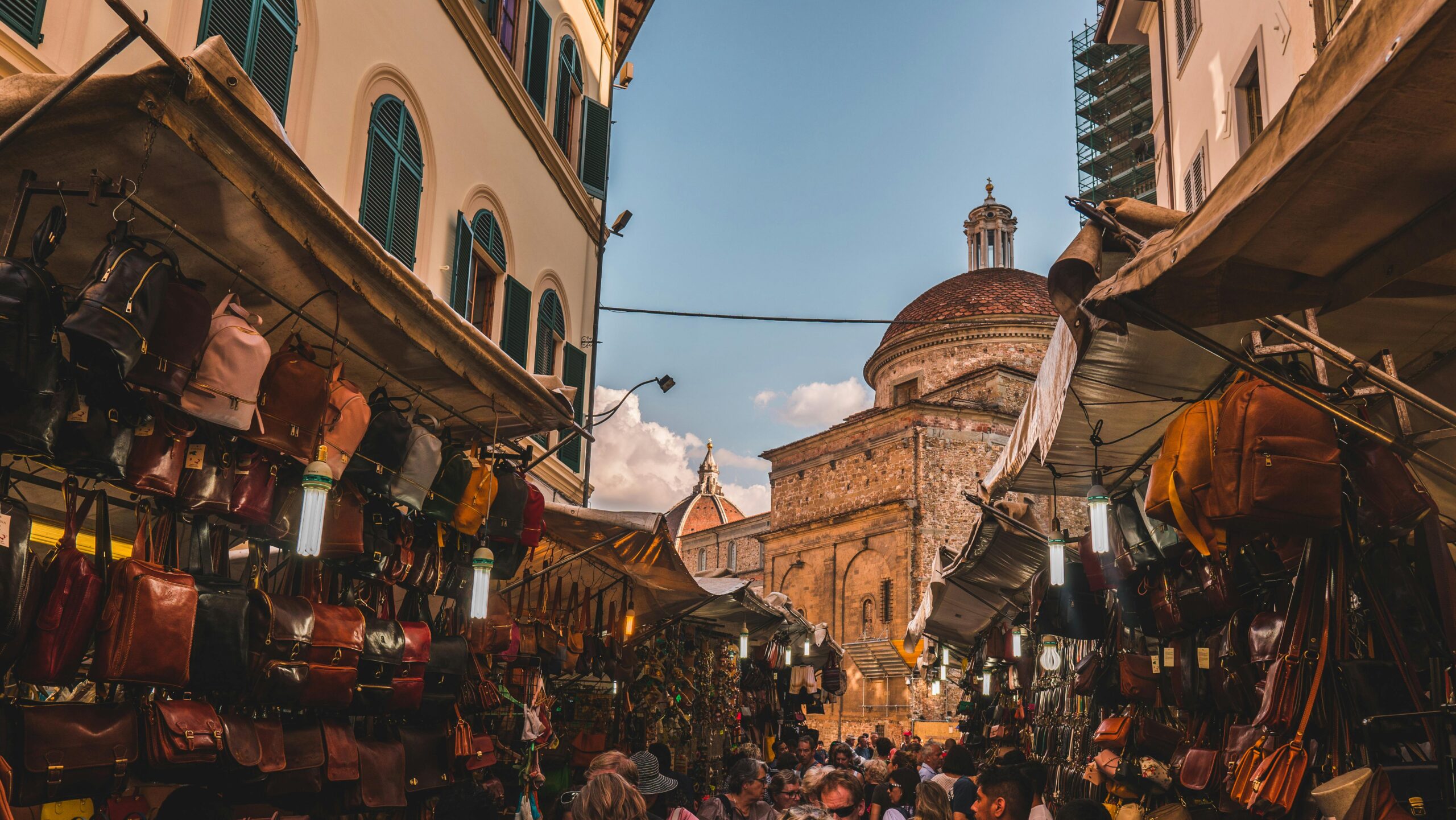
The layout is straightforward. The permanent food vendors are inside the covered building, while additional produce, flowers, clothing and household stalls occupy the surrounding outdoor area. If you arrive from Piazza Annigoni, you will pass the Mercato delle Pulci before reaching the main market building.
Mercato Centrale: the ground floor and first floor run on different clocks
This is the Florence market that causes the most timing mistakes. The historic building in San Lorenzo contains two very different operations.
Ground floor: the traditional food market
The piano terra, or ground floor, contains the traditional fruit, vegetable, meat, fish, bread and other food vendors. Current city tourism information lists 09:00 to 15:00 Monday to Friday and 09:00 to 17:00 Saturday, with Sundays and holidays closed. Municipal trading rules allow market activity to begin earlier, which explains why you may encounter different opening times elsewhere.
For a traveler, arriving around 09:30 to 13:30 works well. Saturday gives you more afternoon leeway, but do not assume the Saturday closing time applies on weekdays.
First floor: the food hall
Go upstairs to the primo piano and you enter the modern Mercato Centrale food hall. Its official site currently lists daily opening from 09:00 to 23:00.
This distinction matters if you arrive at 19:00 after reading that “Mercato Centrale is open.” The building is indeed active, but the traditional greengrocers, butchers and fresh-market stands downstairs are no longer what you are coming to see. Upstairs is for prepared food, drinks and dining.
The market occupies the large iron-and-glass building beside Via dell’Ariento, a short walk from Firenze Santa Maria Novella station. Look for the actual market hall rather than stopping at the outdoor souvenir stalls around it. Those belong to the separate San Lorenzo street market.
Mercato delle Cascine: Tuesday means morning
The regular Mercato delle Cascine takes place on Tuesday in Parco delle Cascine. Florence’s municipal market schedule sets sales from 08:00 to 14:00, with the market area cleared by 15:00. In December, the authorized Tuesday trading period is extended to 18:00.
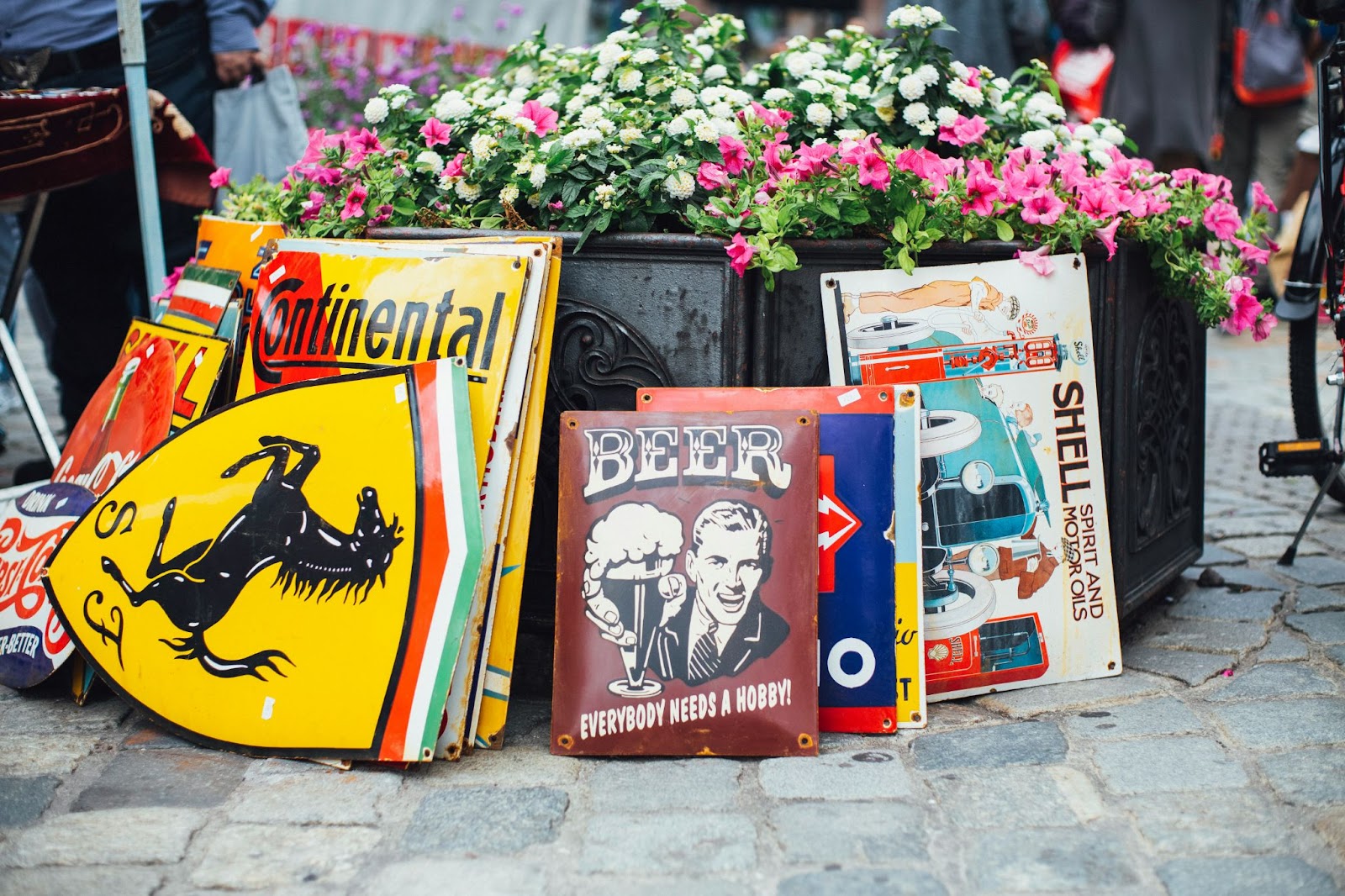
This market is long rather than compact, running through the park around Viale Lincoln and the Arno. Arriving at noon gives you far more useful browsing time than turning up just before 14:00 and trying to cover a large line of stalls before closing.
From the center, tram T1 stops at Cascine. The stop makes a useful starting point for entering the park, after which you follow the market activity along the park avenues. Check the current T1 route if you are coming from Santa Maria Novella or another tram stop.
Do not assume that a Sunday event in Cascine follows the Tuesday timetable. Special fairs and seasonal market days have their own hours and can continue into the evening.
San Lorenzo outdoor market: afternoon works, but check Monday first
The outdoor Mercatino di San Lorenzo occupies Via dell’Ariento and streets around Mercato Centrale, with clothing, leather accessories and souvenirs rather than the fresh food sold inside the hall.
Florence’s municipal trading plan permits the San Lorenzo outdoor grouping to sell until 19:00 from November through March and 19:30 from April through October. Some visitor-facing listings use an earlier 18:30 closing time, so the practical rule is simple: shop before 18:00 if this market is important to you. Do not construct your evening around the latest possible municipal trading hour.
Monday requires extra attention. Florence introduced a specific calendar of suspended trading days for the outdoor San Lorenzo market, and many Mondays are market-free in 2026, including several consecutive Mondays during parts of winter and August. Check the city’s 2026 San Lorenzo closure notice before making a special trip on a Monday.
A closed outdoor market does not mean the entire Mercato Centrale complex is shut. The indoor market and upstairs food hall follow their own schedules.
Mercato del Porcellino: use 18:30 as your cutoff
The Mercato del Porcellino is under the Loggia del Mercato Nuovo, between Piazza della Repubblica and Piazza della Signoria. It is mainly a leather, clothing, accessories and souvenir market rather than somewhere to buy groceries.
The market’s own current site lists 09:00 to 18:30 daily, with closure on 25 and 26 December and 1 January. You may encounter Florence municipal pages showing a broader evening trading window for tourist-market stalls, but 18:30 is the safer specific closing time for the Porcellino itself.
If you want time to compare leather goods rather than make a rushed purchase, arrive by about 17:30. The bronze boar fountain and loggia remain there after the stalls close, of course, but the shopping experience does not.
Mercato delle Pulci: 19:30 is a maximum window, not a promise from every stall
Florence’s flea market is now in Piazza Pietro Annigoni, directly beside the Sant’Ambrogio area. Older travel material may still send you to Piazza dei Ciompi, its former home.
Official tourism information lists 09:00 to 19:30 Monday through Sunday, closing on 25 and 26 December and 1 January. There is an unusually useful detail in Florence’s municipal market rules: for Mercato delle Pulci, that timetable is explicitly described as the maximum permitted activity window rather than an obligation for every operator to remain open throughout it.
That makes this a poor place to save for 19:15 if antiques or vintage shopping are important to you. A roughly 10:00 to 17:00 visit gives you a better margin. The last Sunday of the month normally brings additional antiquarian stalls into the surrounding area, creating a larger market than on an ordinary weekday. Current details are available from the official Florence tourism page.
What is actually open in the evening?
After the traditional stalls have disappeared, “going to a market” in Florence usually means eating rather than produce shopping. Mercato Centrale’s upstairs hall is currently open until 23:00 and is the obvious central choice.
San Lorenzo’s outdoor stalls can remain active into early evening, especially in the warmer months, but they are not a late-night market. The Porcellino’s own published closing time is 18:30. Sant’Ambrogio and Cascine should already be off your list.
If you are trying to fit a market stop between museum reservations, train times and meals, it helps to plan your Italy route around the morning-only stops first. An Uffizi ticket can usually be moved only with difficulty; a market that closes at 14:00 cannot be shifted to after dinner at all.
Sundays and holidays change which market you should choose
Sunday is particularly easy to get wrong. Sant’Ambrogio is normally closed, as is the traditional ground floor at Mercato Centrale according to Florence’s visitor information. The regular Cascine market belongs to Tuesday, not Sunday.
For Sunday browsing, Mercato delle Pulci and the Porcellino are more useful choices. San Lorenzo’s outdoor market requires checking its current closure calendar, while the upstairs Mercato Centrale food hall operates daily under its current published schedule.
Special fairs are separate events. Santo Spirito, Cascine and other parts of Florence host periodic Sunday markets, antiques fairs and seasonal events, sometimes with much longer hours. A special fiera advertised until 19:00 does not mean the normal neighborhood market stays open that late every week.
Italian words that explain what the timetable really means
- Mercato coperto: covered or indoor market.
- Mercato rionale: neighborhood market.
- Banco / bancarella: market stall.
- Piano terra: ground floor.
- Primo piano: the floor immediately above ground level. At Mercato Centrale, this is where the modern food hall is.
- Orario: opening or operating hours.
- Chiuso: closed.
- Festivi: public holidays.
- Prefestivi: days immediately before a public holiday.
- Fine vendita: end of sales. This is the figure shoppers should care about.
- Sgombero dell’area: deadline for traders to clear the market area. It is not extra shopping time.
What to do if you arrive too late
If Sant’Ambrogio is closing: walk across Piazza Annigoni if you want to browse the flea market, or head toward Mercato Centrale if the priority is getting something to eat. The latter is not a substitute for Sant’Ambrogio’s produce market, but it rescues the food part of the plan.
If you miss Cascine: do not return on Wednesday expecting the same stalls. Use Sant’Ambrogio or the markets around San Lorenzo instead. For more ideas on what different shopping areas are actually good for, see our guide to shopping in Florence.
If San Lorenzo is empty on a Monday: first check whether it is one of the scheduled suspension dates. Mercato Centrale may still be operating independently. The Porcellino is another central option for souvenir and leather browsing.
If it is already evening: stop chasing produce markets. Go upstairs at Mercato Centrale for food, or move on to dinner elsewhere and put the traditional market at the start of the following day.
Best arrival times if the market is a priority
- Sant’Ambrogio: arrive by 12:30.
- Mercato Centrale ground floor: late morning to early afternoon, rather than immediately before its weekday 15:00 close.
- Mercato delle Cascine: arrive by noon on Tuesday, earlier if you want to browse much of its long route.
- San Lorenzo outdoor market: afternoon is fine, but aim to finish by about 18:00 and check Monday closures.
- Mercato del Porcellino: arrive by 17:30 if you want unhurried shopping before the published 18:30 close.
- Mercato delle Pulci: mid-morning through late afternoon is safer than relying on the 19:30 maximum activity window.
- Mercato Centrale food hall: use it for lunch, dinner or an evening food stop, not as a late substitute for the traditional fresh market downstairs.
One last practical point: bulky rolling luggage and crowded market aisles are a miserable combination. Mercato Centrale is convenient to Santa Maria Novella, but do not assume any Florence market will store bags for you. Leave large luggage at your accommodation or a dedicated luggage facility, then browse with your hands free.