The easiest suitcase for Italy is not simply one that meets an airline’s cabin dimensions. It is one you can lift onto a train rack, carry up a station staircase, pull over uneven paving, and squeeze into an old building’s lift. For most independent trips, carry-on luggage in Italy works very well, but only if you keep the weight manageable. A technically cabin-sized case that you cannot comfortably pick up becomes surprisingly inconvenient once you leave the airport.
Before packing, try a simple test: fill your suitcase, carry it up one flight of stairs without dragging it, then lift it to roughly chest height. If that feels difficult at home, remove something. Italy has plenty of modern, accessible infrastructure, but a multi-city trip will eventually find the staircase, bridge, train doorway, or historic hotel that exposes an overpacked bag.
The real carry-on test is weight, not dimensions
Travelers often spend more time comparing suitcase measurements than thinking about how the bag will move. Airline dimensions matter for your flight, of course, but once you are traveling around Italy, your ability to lift the suitcase yourself matters more than shaving another centimeter off the shell.
A compact roller plus a small personal bag is a particularly practical combination. Keep your passport, wallet, medicine, electronics, tickets, and anything irreplaceable in the smaller bag. The suitcase can then go on a luggage rack without containing the things you need every ten minutes.
Useful features are less glamorous than luggage advertising suggests:
- A strong top handle: you will use it repeatedly on trains and stairs.
- A side handle: useful when lifting the case into a rack or through a narrow doorway.
- Wheels that tolerate rough paving: historic streets are not airport concourses.
- A compact depth: oversized expandable cases become awkward in small lifts and train aisles.
- A shape you can control with one hand: useful while opening doors, scanning tickets, or holding a handrail.
A four-wheel spinner is pleasant inside stations and airports. On broken paving, cobbles, ramps, and deep joints between stones, you may end up pulling it on two wheels anyway. Do not choose a suitcase solely because it glides beautifully across a shop floor.
For a broader look at what deserves space inside the case, see the Italy packing list for practical travel problems.
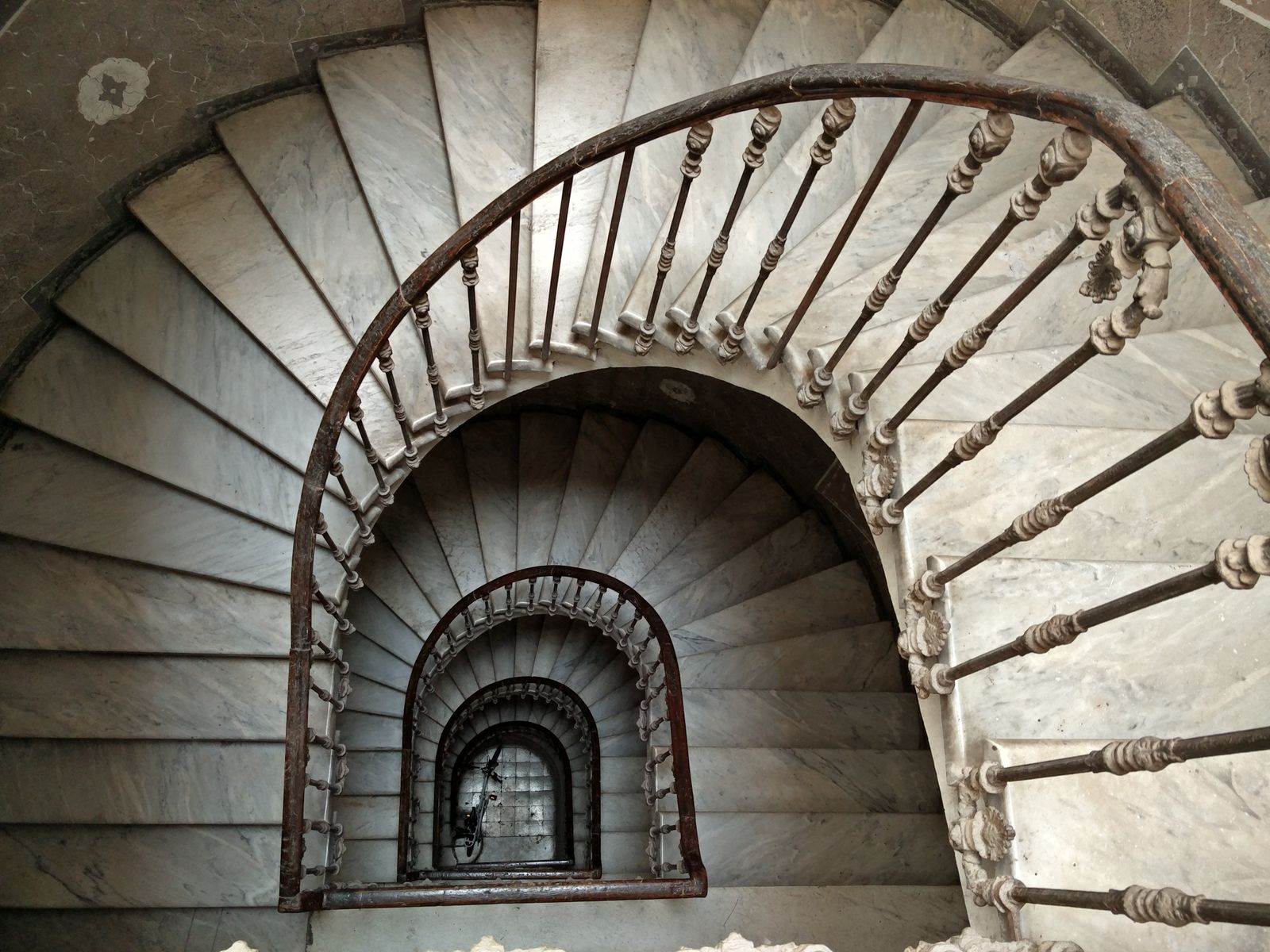
Expect stairs even when the journey looks simple
A train route on a map can look almost effortless: hotel, station, train, next hotel. The awkward parts are often the fifty meters that do not appear in the itinerary.
At railway stations, reaching another platform may mean using a sottopassaggio, the pedestrian underpass beneath the tracks. Signs you may need include:
- Binario: platform or track
- Sottopassaggio: underpass
- Scale: stairs
- Ascensore: lift or elevator
- Scala mobile: escalator
- Uscita: exit
Major stations often have lifts or escalators, but that does not mean every possible route through every station is step-free. Smaller stations can be simpler physically, yet some still require crossing an underpass to reach another platform. Lifts can also be temporarily unavailable.
If stairs are a significant mobility issue rather than merely an inconvenience caused by luggage, check the individual station before travel. RFI, the Italian rail infrastructure manager, publishes station accessibility information and operates the Sala Blu assistance network for passengers with disabilities and reduced mobility. RFI also publishes information about lift and ramp availability.
Do not build a tight connection around a working lift
A ten-minute train connection may be perfectly possible when the arriving and departing trains use nearby platforms. It feels very different when you leave one train, discover that the next departure is across the station, queue for a small lift, and then reach the platform as the doors are closing.
For an unfamiliar station with luggage, give yourself a more generous transfer than you would when traveling with a backpack. A buffer of roughly 20 to 30 minutes is comfortable for many ordinary connections, although the right margin depends on the station, the trains involved, and your mobility. This is a planning cushion, not a railway rule.
If the official itinerary gives you a short connection, check whether later trains exist before booking. Knowing the recovery option is much better than discovering it while carrying a suitcase down the wrong staircase.
How luggage actually works on Italian trains
You normally handle your own luggage. There is no airline-style check-in process for an ordinary train trip. You bring the bag aboard, find an appropriate storage space, and take it with you when you leave.
On Trenitalia services, current rules allow passengers to carry luggage free of charge provided it can be placed appropriately and does not obstruct passengers, staff, doors, or the train. Some trains have dedicated spaces for larger items. You can check the operator’s current guidance on the official Trenitalia website.
Italo has a more specific rule that catches some travelers: in Smart class, luggage larger than 75 x 53 x 30 cm is not permitted. The operator lists storage in overhead racks, end-of-coach areas, lockers on equipped trains, and spaces around or beneath seats where appropriate. Check the current policy on Italo’s official support page before traveling with anything unusually large.
A normal airline cabin suitcase is therefore generally much easier to handle than a large checked case, but do not assume every train has an enormous empty luggage rack waiting beside your seat.
Board with the bag ready to lift
Before the train arrives, put away anything dangling from the suitcase. Retract loose straps, close the expansion zipper, and move your water bottle or jacket to your personal bag if necessary.
For reserved trains, find your carrozza number before boarding. That is your coach. Your ticket also shows your posto, or seat. Starting near the correct coach saves you from dragging a suitcase through several narrow carriages after everyone has boarded.
Once aboard:
- Move away from the doorway so other passengers can board.
- Use an available luggage space appropriate for the size of your case.
- Use the overhead rack only if you can lift and lower the suitcase safely yourself.
- Keep aisles, vestibule doors, and emergency areas clear.
- Keep your small valuables bag with you rather than buried inside a suitcase at the end of the carriage.
If you cannot comfortably raise a loaded case above your shoulders, plan to use a lower luggage area rather than assuming another passenger will lift it for you.
Regional trains can require faster luggage handling
High-speed trains generally give you an assigned seat and a predictable coach number. Regional trains vary much more in layout, age, and boarding arrangement. Stops can also be brief.
As your destination approaches, gather your small belongings and be ready to move. Do not wait until the train has stopped to retrieve chargers, put on a coat, close three bags, and start wrestling a case from underneath other luggage.
At the same time, there is no need to stand blocking the exit far in advance. The useful middle ground is simple: be packed and ready before arrival, then move toward the door when appropriate.
The station-to-hotel walk is where heavy luggage gets old quickly
A hotel described as “ten minutes from the station” may indeed be ten minutes away. That does not tell you what those ten minutes contain.
You could encounter:
- stone paving that shakes small suitcase wheels;
- high curbs and narrow pavements;
- a pedestrian underpass before you have even left the station;
- an uphill street in a historic center;
- steps at the building entrance;
- a lift that begins one floor above street level;
- bridges if you are staying in Venice.
Ten flat minutes in modern Milan and ten minutes through a medieval hill town are not the same luggage transfer.
When planning several cities, use the Italy on Foot trip planner to look at the sequence of your stops rather than treating every hotel and station as an isolated booking. A slightly less romantic room with an easier arrival can be a very good choice on a one-night stop.
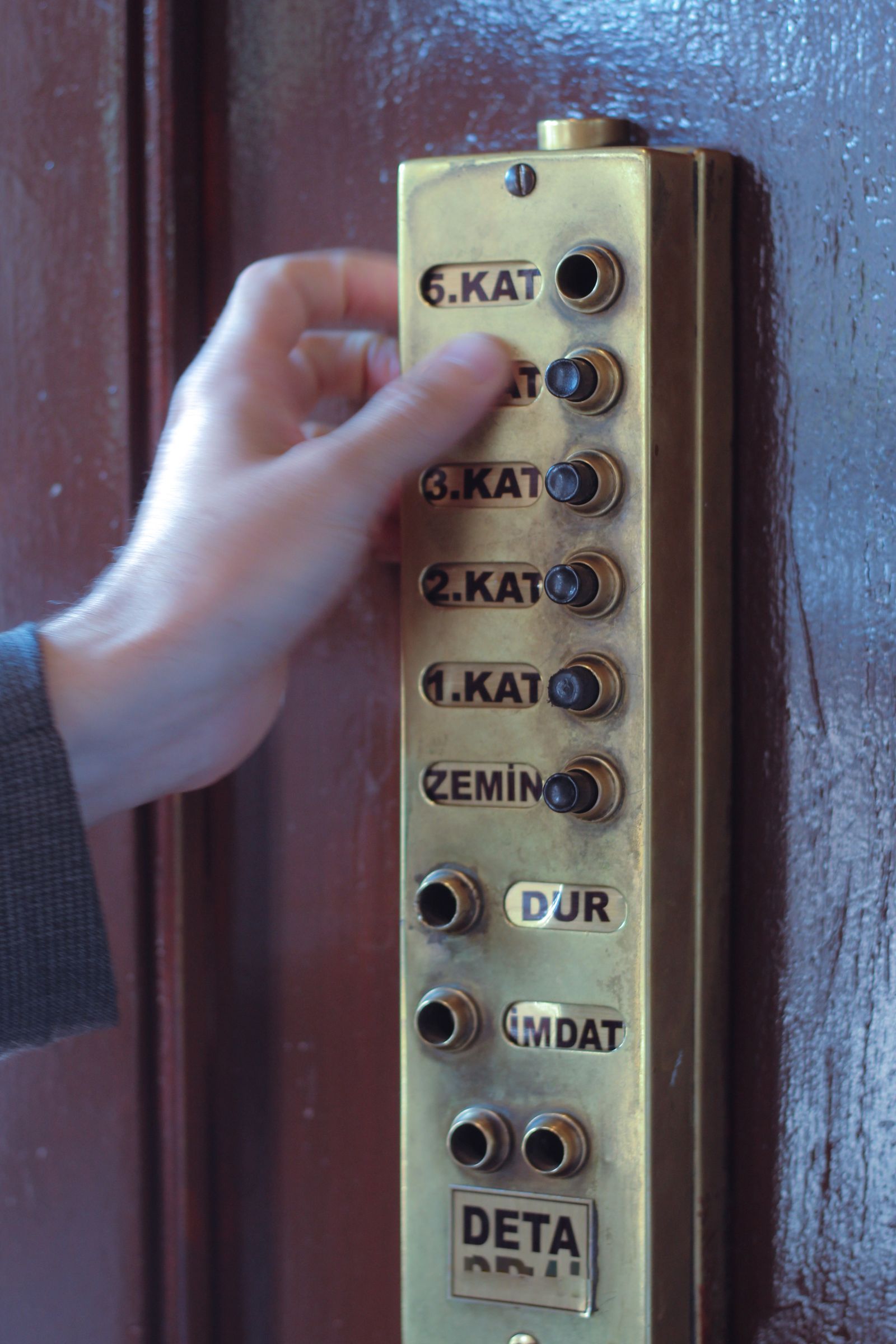
“Hotel has elevator” does not necessarily mean no stairs
This is one of the most useful questions to ask before booking accommodation in an old Italian building.
A listing may truthfully say that the property has an elevator, yet there can still be steps between the street and the lift. The reception might be upstairs. The lift might stop between floors. A room could be in an annex without lift access. None of these situations is universal, but they occur often enough in historic buildings that travelers with heavy luggage should verify the route rather than rely on an elevator icon.
If this matters, ask the property directly:
- “Is there step-free access from the street to my room?”
- “Are there any stairs before reaching the elevator?”
- “Does the elevator reach the floor of my room?”
- “Will one person and a cabin suitcase fit comfortably?”
The Italian word to look for is ascensore. A ground floor may be described as piano terra. The primo piano, first floor, is normally the level above it, so do not assume a “first-floor” room means street level.
Tiny lifts are normal in some historic buildings
Older buildings sometimes have lifts retrofitted into whatever space the architecture allowed. The result may be a cabin that comfortably takes one traveler and one suitcase, but not a family plus four bags.
That is not a serious problem when your luggage is compact. Take turns. Send one person with two bags and have the other follow. It becomes annoying when everyone is carrying multiple large suitcases and loose shopping bags.
If a lift has manually operated inner or outer doors, make sure they are properly closed when you leave. Otherwise the lift may remain unavailable to the next person on another floor.
Stairs at the hotel change the packing calculation
A few entrance steps are trivial with a light case. Forty old stone steps to a third-floor room are a different proposition.
Properties in historic centers, converted palazzi, guesthouses, B&Bs, and apartment rentals deserve extra checking if stairs would be difficult for you. Search reviews for practical words such as stairs, lift, elevator, luggage, and reception. Recent guest photographs can also reveal an entrance that the polished room photographs do not show.
If you discover the problem only after arrival, ask whether staff can help with the bag or whether another room is available. Do not assume porter service is included, particularly in a small guesthouse or self-catering apartment.
Venice is the strongest argument for packing lighter
Venice deserves special treatment because a wheeled suitcase may need to cross bridges rather than merely rough pavement. Some routes from a vaporetto stop to accommodation are straightforward. Others involve several bridges with steps.
Before choosing a hotel, inspect the walking route from the vaporetto stop or railway station and count the bridges. A property that appears only a few hundred meters farther away may require significantly more lifting.
If you have several bags, consider whether a water taxi or an accommodation with a convenient vaporetto connection is worth the extra cost. The cheapest room is less appealing when reaching it requires repeatedly hauling twenty kilos up and down bridge steps.
Hill towns create the same problem in a different direction
Siena, Matera, Assisi, Perugia, and many smaller historic towns can involve slopes, stairways, escalator systems, restricted traffic areas, or accommodation that cannot be reached directly by a normal taxi.
Do not read “500 meters from the station” or “300 meters from parking” as a complete description. Check elevation and pedestrian access. For a hotel inside a historic center, ask where a taxi can actually drop you and how far you must carry the suitcase from that point.
A compact suitcase is particularly valuable on trips that combine rail travel with hill towns. One large case may be manageable on a Rome-to-Florence high-speed train but miserable during the final fifteen minutes to a room above a medieval lane.
What to keep in the personal bag
Your smaller bag should contain everything you would regret losing access to for several hours. That usually means:
- passport and wallet;
- phone and power bank;
- medication;
- train tickets or booking details;
- hotel address and check-in instructions;
- glasses or contact-lens essentials;
- a small amount of water;
- anything fragile or particularly valuable.
This arrangement also makes train travel easier. You can put the suitcase in the appropriate rack once and leave it there instead of opening it repeatedly during the journey.
Give yourself a luggage margin on travel days
Without luggage, leaving a hotel can mean walking out the door. With a suitcase, there may be an elevator wait, checkout, a staircase, cobbles, a taxi loading problem, ticket gates, a station underpass, and a last-minute platform change.
That is why luggage days need more slack than sightseeing days. Do not plan to leave a hotel at the last possible minute because a map says the station is twelve minutes away.
A useful sequence is:
- Pack completely before breakfast or well before checkout.
- Keep tickets and valuables outside the main suitcase.
- Confirm the station name, especially in cities with several stations.
- Reach the station with enough time to find the departure board.
- Look for Partenze, departures, and then your binario.
- Check the platform again shortly before departure in case it changes.
- Position yourself for your coach when that information is available.
If you are using Roma Termini, Tiburtina, or another Rome rail hub, the Italy on Foot overview of Rome train stations explains which station is which and the practical connections around them.
If your suitcase is already too heavy
You do not necessarily need to spend the rest of the trip fighting it.
Start by removing low-value weight. Toiletries, duplicate shoes, books, and “just in case” clothes add up quickly. Laundry halfway through the trip is usually easier than carrying a different outfit for every day.
If you have a long stop between accommodation check-in times, use proper luggage storage rather than pulling the suitcase around a city all afternoon. Trenitalia currently lists luggage-storage partners and, for eligible Frecce and Intercity journeys, also offers a luggage-shipping service through a partner. Availability and prices change, so check the operator rather than building a trip around an old blog price.
For a particularly difficult transfer, a taxi can also be money well spent. Use it strategically for the section that creates the problem, such as station to hilltop accommodation, rather than assuming you need taxis for the entire trip.
The best suitcase is the one you can move without help
Italy does not require backpack-only travel, and plenty of visitors move around comfortably with wheeled cabin cases. The useful distinction is not backpack versus suitcase. It is manageable versus overpacked.
Choose a bag you can pick up without drama. Leave room rather than filling every expandable compartment before departure. Keep one hand free when possible. Check the actual route into historic accommodation, not just the distance on the booking page. Give station transfers enough time for stairs and lifts.
Do that, and the occasional staircase or miniature ascensore becomes a minor logistical detail instead of the moment you start reconsidering everything you packed.