Do not assume that a station shown as accessible on a map will have every elevator working when you arrive. RFI, the infrastructure manager for most of Italy’s national rail network, publishes station-specific accessibility information and lift outages. The safest approach is to check your exact station and, if stairs would be a serious problem, build a backup route before travel day. For anyone researching Italy train station lifts, the crucial detail is not simply whether a station has an elevator. It is whether that elevator reaches the platform your train will actually use.
Check the station, not just the train
Trenitalia or Italo can tell you about the train, ticket and departure. The physical station is a separate question. Most stations on the national network are managed by Rete Ferroviaria Italiana, usually abbreviated to RFI.
Start with RFI’s Lift and Ramp Status page. RFI publishes accessibility changes lasting more than 24 hours and, where available, an expected restoration date.
Then search for the individual station on the RFI website. Its accessibility section may tell you:
- which platforms have a step-free route;
- which platforms depend on an elevator;
- whether ramps provide an alternative;
- whether the station belongs to the Sala Blu assistance network;
- whether particular accessibility restrictions are currently in effect.
This matters because “station has elevators” does not necessarily mean “every platform can be reached by elevator.”
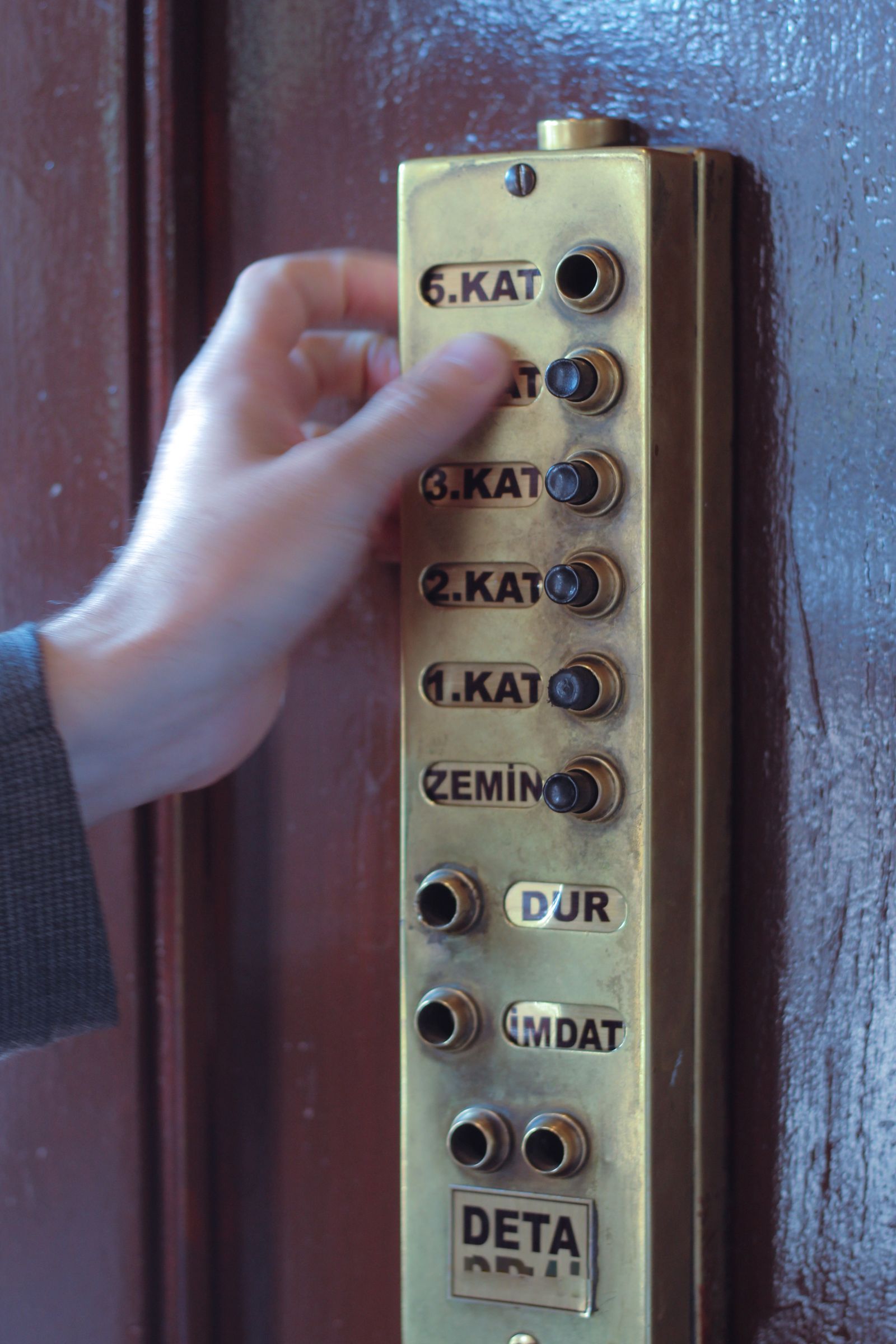
Why the platform number matters so much
Italian stations often use a pedestrian underpass, sottopassaggio, to connect the station building with the platforms. At a smaller station, the normal sequence may be:
- Enter the station.
- Go down to the underpass.
- Walk beneath the tracks.
- Go back up to your platform.
That can mean two separate elevator rides. If the lift from the underpass to your platform is out, discovering a perfectly functional elevator at the station entrance does not solve the problem.
Large stations can be more complicated still. Platforms may be grouped in different sections, underground levels or distant concourses. Bologna Centrale, Milano Porta Garibaldi and Napoli Centrale, for example, have railway areas that are not simply one flat row of tracks.
Check the number beside Binario, meaning platform, on the departure board. Do not confuse it with Carrozza, the coach number shown on your reservation.
Do not rely on tomorrow’s planned platform
A timetable may show the platform normally assigned to a train, but operational platforms can change. Treat an advance platform number as useful information, not a promise.
This creates a particular problem if only certain tracks have step-free access. You might check the station the night before, see that the expected platform is accessible, and still face a last-minute change.
If stairs are impossible rather than merely inconvenient, contact the railway operator or RFI assistance service instead of building the whole journey around a predicted platform.
What to look for when you reach the station
The words and signs are usually straightforward once you know them:
- Ascensore: elevator or lift
- Fuori servizio: out of service
- Guasto: broken or faulty
- Binario: platform or track
- Sottopassaggio: pedestrian underpass
- Uscita: exit
- Ingresso: entrance
- Rampa: ramp
- Scale: stairs
- Scala mobile: escalator
Do not immediately carry a heavy suitcase down a staircase when you encounter a closed elevator. First look along the corridor or platform for another lift, ramp or second underpass. Larger stations sometimes have more than one route between the same areas.
If the layout is unclear, show a member of staff your train and say, “C’è un ascensore per il binario?” That means, “Is there a lift to the platform?”
If you are travelling with ordinary luggage
A broken elevator is annoying with a suitcase but does not automatically mean you will miss your train. The best defence is time and manageable baggage.
Arrive earlier than you normally would if you know that stairs are difficult for you. Ten extra minutes can disappear surprisingly quickly when you have to find a second underpass or walk to the opposite end of a long platform.
With a wheeled suitcase, avoid trying to drag it down steps behind you. Carry it in a controlled position if you can do so safely. On the way up, keep it close rather than swinging it from one arm while people squeeze past.
If the bag is simply too heavy to move safely, do not gamble on a staircase because your departure is approaching. Ask station staff whether another route exists. Missing a train is inconvenient. Falling down station stairs with 20 kilograms of luggage is considerably worse.
For broader advice on platforms, tickets and bags, see our train travel in Italy guide.
What Sala Blu assistance can and cannot do
RFI operates the Sala Blu assistance network for passengers with disabilities and reduced mobility. This is not a general porter service for tourists who would simply prefer not to carry a suitcase.
RFI lists eligible passengers as including wheelchair users, people with impaired mobility or limb difficulties including temporary ones, people with visual or hearing disabilities, elderly passengers, pregnant women and people with certain intellectual or mental disabilities.
Assistance can include meeting the passenger at an agreed point, accompanying them through the station, helping with boarding or leaving the train and, where required, using suitable boarding equipment. RFI also states that one item of hand luggage can be transported as part of a booked assistance service.
You can check the current rules, eligible stations and booking channels on RFI’s official Sala Blu information page.
How far ahead should you arrange assistance?
The required notice depends on the station. RFI distinguishes between certain “Fast” stations and standard assistance stations.
At Fast stations, assistance for services between 07:45 and 22:30 can generally be requested by phone or in person up to one hour before departure or arrival. Overnight services require more notice. Standard stations generally require at least 12 working hours of notice, based on Sala Blu operating hours.
Do not assume that because one end of your journey is a major station, the shorter notice period applies to the entire trip. If you are travelling between a Fast station and a standard station, the standard station can determine how early the request must be made.
RFI currently asks passengers with confirmed assistance to report to the agreed meeting point at least 30 minutes before departure. For an itinerary involving assisted train changes, RFI normally plans around at least 30 minutes for the interchange process.
If the elevator fails after you have already booked assistance
This is exactly the situation in which having assistance arranged is valuable. Do not try to improvise your own inaccessible route because the platform has changed.
Go to the agreed meeting point or contact Sala Blu. Staff may be able to alter how you reach the train, coordinate boarding, move you to another suitable train or arrange the journey according to the station’s current accessibility conditions.
Passengers with disabilities and reduced mobility also have a right to updated information about failures of accessibility equipment and the expected restoration time. RFI publishes passenger-rights information covering these situations.
Build more transfer time when elevators are essential
The difference between a five-minute connection and a comfortable connection is much larger when you cannot use stairs.
Consider what has to happen during a transfer:
- Leave the arriving train.
- Reach the elevator.
- Possibly wait while other passengers use it.
- Descend to the underpass or concourse.
- Find the route to the departure platform.
- Take another elevator.
- Walk to the correct part of the platform.
- Board the next train.
At a large station, that is not the same task as hopping across to the next track.
If independent stair-free travel is essential, avoid deliberately booking very tight connections even when the booking engine permits them. A little more transfer time also protects you against late platform announcements and elevator queues.
When putting together several rail journeys, you can plan your Italy route with the transfer days visible rather than treating every train as an isolated booking.
Late-night and early-morning journeys need an extra check
Do not assume every station elevator operates around the clock simply because trains do. Individual RFI station pages can list lift operating hours, and some facilities follow station opening times.
This is especially relevant for the first regional train of the morning or a late arrival at a suburban station. Check the actual station rather than applying the timetable from a major station to the whole network.
Sala Blu offices themselves operate daily, including public holidays, from 06:45 to 21:30, although confirmed assistance services can be organized outside those office hours under the applicable booking rules.
A Sunday or public holiday does not change the basic strategy
Station layouts do not suddenly become different on Sunday, but staffing levels around the station can feel thinner and nearby shops or services may be closed. The RFI Sala Blu offices operate on weekends and public holidays, which is useful for eligible travelers who have arranged or need information about assistance.
For everyone else, check the lift status before leaving your hotel rather than assuming you can easily find someone to solve the problem at a small unmanned station.
What to do when you discover a broken lift five minutes before departure
Start with the departure board. Confirm the platform and make sure you are not rushing toward the wrong track.
Then look for an alternative accessible route. A second lift, ramp or another underpass may exist. Ask railway or station staff rather than relying on another passenger’s guess.
If you can safely use the stairs, decide quickly and move carefully. If you cannot use stairs, do not let the countdown to departure push you into an unsafe situation. Contact station staff, Sala Blu if applicable, or the train operator and ask what alternative can be provided.
If you miss the train, speak to the operator before buying an entirely new ticket. What can be changed or rebooked depends on your operator, train type, fare and the circumstances, so there is no single Italy-wide answer.
The simple rule that prevents most lift problems
Check three things separately: the station, the platform and your physical ability to manage the backup route.
A traveler with a 7-kilogram carry-on who can climb one flight of stairs has a very different risk from someone using a wheelchair, a traveler recovering from surgery, or a parent trying to move a stroller, toddler and two suitcases at once.
For the first traveler, an elevator outage may add five unpleasant minutes. For the second group, it can make the planned platform genuinely inaccessible. Plan accordingly, check RFI close to departure, and give yourself enough time to use the alternative rather than discovering the problem with the train already on the board as in partenza.