Venice can be visited step-free, but not by following one continuous walking route across the historic centre. The practical model for accessible Venice without bridges is to treat the city as a collection of separate accessible areas: take an ACTV vaporetto to the right stop, explore the bridge-free or ramped streets around it, then use another boat to reach the next area. The Comune di Venezia says almost 70% of the city can be reached by people with motor disabilities, largely because public boats connect otherwise isolated insule. That does not mean 70% forms one continuous wheelchair route.
This distinction changes how you should plan Venice. A destination may be only 400 metres away on a map and still require an impossible stepped bridge. Another sight two kilometres away may be easy because a vaporetto delivers you directly to its side of the canal.
The rule that makes step-free Venice work
Do not plan wheelchair routes by asking, “How far is it?” Ask, “Which vaporetto stop puts me on the correct island?”
A canal should be treated almost like a railway line. If a stepped bridge blocks the pedestrian route, you normally do not need to cross it. Return to an imbarcadero, the waterbus landing, and travel around the obstacle by boat.
The City of Venice describes its accessibility system in exactly this way. Accessible insule, or small urban islands, are connected through public water transport. Its official barrier-free itinerary collection identifies separate accessible areas around San Marco, Rialto, Zattere, Cannaregio, Castello, Frari, Murano, Burano and several other districts.
One caution matters: many individual municipal itinerary pages were last revised in 2019. The street geometry remains useful, but temporary ramps, seasonal installations and vaporetto services can change. Treat those routes as a planning base, then verify transport and temporary infrastructure for your actual dates.
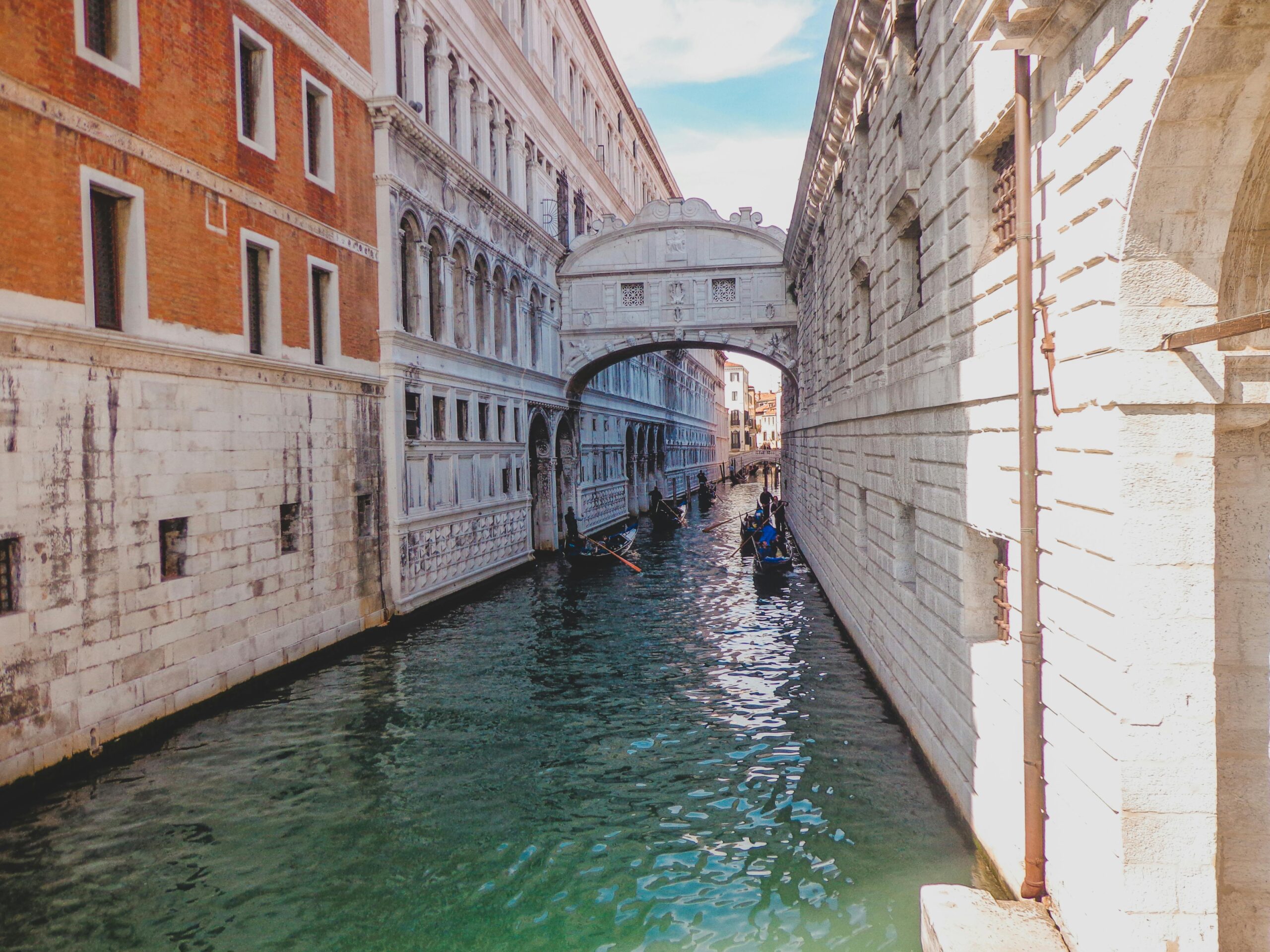
San Marco: use Vallaresso rather than approaching across Venice
Piazza San Marco is one of the easiest major sights to incorporate into a step-free itinerary if you arrive by boat instead of trying to reach it through the surrounding maze of bridges.
A useful landing is S. Marco Vallaresso. From the landing, enter Calle Vallaresso and continue toward Campo San Moisè. Near the Piazza, the obvious route beneath the Ala Napoleonica includes a level change with steps. The city’s accessible itinerary instead directs wheelchair users via Calle Larga Ascensione, toward Bacino Orseolo, then through Calle Salvadago to reach Piazza San Marco without that barrier.
This is a good example of why blindly following the pedestrian crowd fails in Venice. The accessible route may be only one calle away from the stepped route.
Once in the Piazza, you have a large level area around St Mark’s Basilica, the Campanile, Museo Correr and Palazzo Ducale. Accessibility inside each attraction is a separate question. A step-free route to the front door does not guarantee that every room, terrace or historic section is accessible.
Rialto: visit the district, not necessarily the bridge
Take the vaporetto to Rialto and you can explore a substantial part of the San Marco side of the Grand Canal without needing to cross the famous bridge. The municipal route runs through areas including Campo San Luca, Campo Manin, Campo San Salvador, the Mercerie and Campo San Bartolomeo.
The crucial decision is simple: treat the Rialto Bridge as a landmark rather than as your required Grand Canal crossing. If your next destination is on the opposite bank, use the vaporetto instead.
Rialto also has an accessibility detail that matters after dinner. ACTV currently states that after 20:19, wheelchair users who need the accessible A/B landings can ask the crew to make the appropriate stop when getting off. To board from A/B instead of the later-service C/D landings, ACTV requires a request at least 20 minutes before departure on the freephone number 800 845 065. Check the current procedure on the ACTV accessible mobility page before relying on a late-night connection.
San Basilio and the Zattere: one of the easiest waterfront stretches
For a low-stress roll beside the lagoon, San Basilio is a particularly useful starting point. The city’s accessible itinerary confirms that the section of the Fondamenta delle Zattere from the San Basilio landing to Ponte Longo can be travelled without architectural barriers.
This gives you a broad waterfront rather than narrow calli, with plenty of space to turn, stop and change direction.
Beyond this section, route planning becomes more seasonal. Venice has historically installed temporary ramps on several Dorsoduro bridges, including Longo, Calcina, Incurabili and Salute, particularly between September and June. Do not assume those installations are present simply because an older city route shows them. If complete independence is essential, treat the first unramped bridge you encounter as the end of that particular walking section and return to the vaporetto.
Sant’Elena and eastern Castello give you much more room
The Sant’Elena area is one of the best parts of central Venice for travelers who want more than a short accessible pocket. The municipal Castello Est route describes the residential streets and park area around Sant’Elena as largely free of obstacles, with several level or specifically adapted canal crossings.
From the Sant’Elena vaporetto stop you can use the paths through Parco delle Rimembranze and the quieter streets behind the Biennale gardens. Accessible infrastructure in this area includes level crossings and the adapted Ponte Quintavalle.
What you should not assume is that every westward continuation toward Arsenale and San Marco will be available without steps throughout the year. Some connections have depended on temporary ramps associated with the Biennale or other seasonal arrangements. For a reliably low-risk outing, explore the Sant’Elena and Giardini area and use the waterbus for the next major move.
Cannaregio near Santa Lucia works better than the map suggests
Arriving at Venezia Santa Lucia station does not mean you immediately need to tackle a bridge. The ACTV stops outside the station are called Ferrovia. That is the name to look for on transport signs and journey planners.
On the station side of the Grand Canal, the city identifies an accessible route along Fondamenta degli Scalzi, Lista di Spagna and toward Campo San Geremia. This gives arriving travelers a useful bridge-free section of Cannaregio.
Problems start when you assume that a nearby attraction across a canal can be reached by simply continuing forward. Ponte delle Guglie, for example, uses what the Comune calls a gradino agevolato. That is a facilitated step arrangement, not the same thing as a completely level ramp, and the city’s guidance describes its use by wheelchair users with assistance.
If you require fully independent step-free movement, distinguish carefully between accessibile, rampa and gradino agevolato.
Burano and Mazzorbo are unusually good choices
The Comune’s accessibility itinerary describes Burano as completely accessible and identifies the long bridge connecting Burano with Mazzorbo as having no steps. This makes the islands useful when you want several hours of exploring rather than repeated short accessible pockets.
Use the current ACTV journey planner rather than an old article for the boat connection. Lagoon routes and stopping patterns are easier to change than the streets on Burano.
Torcello requires more caution. The municipal route notes a five-step bridge on the way toward the island’s principal monuments, although the unusually deep treads can make assisted passage possible. That is very different from an independently step-free route.
How to use the vaporetto with a wheelchair
ACTV states that its waterborne services can accommodate wheelchair users and that dedicated spaces are provided. The floating landing stages are known as imbarcaderi or approdi. The connection between the floating pontoon and shore changes angle as the water level moves, so an otherwise accessible stop can become noticeably steeper during exceptional tides.
At several busy stops, wheelchair users may also use the red PRIORITY VENEZIA UNICA boarding entrance. ACTV currently lists priority facilities at locations including Piazzale Roma F, Ferrovia B, Rialto, Lido S. Maria Elisabetta, Murano Faro and Burano.
Wheelchair users currently qualify for a special ACTV waterborne ticket costing €1.50 and valid for 75 minutes from validation. An accompanying person travels free under the conditions specified by ACTV. The concession does not apply to Alilaguna airport boats. Check the current fare and exclusions on the official ACTV Venice fare page.
Validate the ticket at the start of the trip and again when changing service or vehicle. Look for the electronic validators before entering the landing area. If you are unsure, ask “Dove devo convalidare?”, meaning “Where do I validate?”
The Italian words that actually help
- Vaporetto: public waterbus.
- Imbarcadero / approdo: waterbus landing or boarding pontoon.
- Ferrovia: the vaporetto stop serving Venezia Santa Lucia railway station.
- P.le Roma: Piazzale Roma, the road-transport terminal.
- Ponte: bridge. Treat this word as a warning to check for steps.
- Rampa: ramp.
- Rampa provvisoria: temporary ramp. Never assume it is installed year-round.
- Gradino agevolato: facilitated step. This may still require assistance and is not equivalent to a flat ramp.
- Ponte a raso: essentially a level canal crossing.
- Senza barriere: barrier-free.
- Ascensore: lift or elevator.
- Uscita: exit.
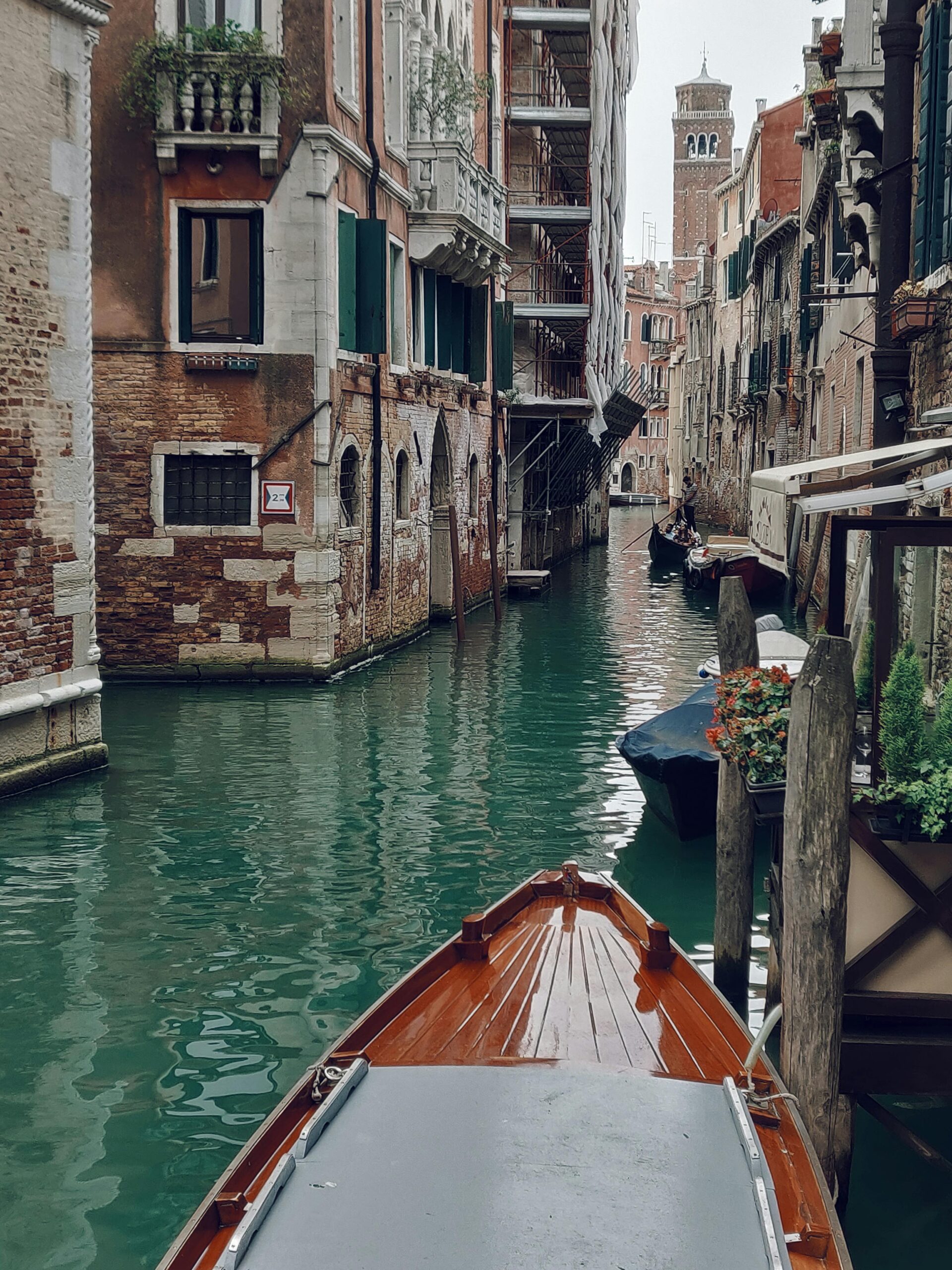
Choose your hotel by vaporetto stop, not neighborhood
“Five minutes from Rialto” is almost useless accessibility information. Those five minutes could contain no bridges or three steep ones.
Before booking, send the hotel three very specific questions:
- What is the nearest vaporetto stop for a guest using a wheelchair?
- How many bridges are there between that exact stop and the hotel entrance?
- Are there any steps at the entrance, reception or route to the accessible room?
Ask for the stop name and landing side, not simply “Rialto” or “San Marco.” Large ACTV stations have several lettered pontoons, and reaching the wrong one can put a canal or bridge between you and your intended route.
For more background on how Ferrovia, Piazzale Roma, Tronchetto and the waterbus network fit together, see our guide to getting around Venice. You can also organize the rest of your Italy trip around the arrival and departure points that work best for you.
A mobility scooter is not automatically treated like a wheelchair
Travelers using powered equipment should check ACTV’s definitions before departure. Current transport conditions allow motorised wheelchairs when their dimensions fit the designated onboard space, but mobility scooters are subject to different restrictions on navigation services.
Do not rely on a general statement that “the vaporetto is wheelchair accessible” if your device is a large mobility scooter, powered tricycle or unusually long chair. Send ACTV the device dimensions and type before travel if there is any doubt.
What to do if a normal route fails
If you reach an unexpected flight of bridge steps, the safest recovery is usually to reverse course. Do not assume there will be another accessible way over the same bridge and do not plan on strangers carrying a wheelchair.
- Return to the last known accessible vaporetto landing.
- Identify a stop on the same side of the canal as your destination.
- Ask ACTV staff or the boat crew if you are uncertain which landing letter you need.
- Revalidate when changing services.
- If a temporary ramp shown on an old map is absent, treat that bridge as unavailable and reroute by water.
This strategy is often faster than searching surrounding alleys for a mythical bridge without stairs.
There is an adapted boat service when ACTV is not enough
A standard Venetian water taxi should not automatically be assumed accessible. Many require passengers to negotiate steps into the boat.
The municipality separately authorizes boats specifically equipped to carry people with reduced mobility. As of 2026, Venice lists five authorized vessels and requires at least two to be available on call 24 hours a day. To arrange the service, call 041 2747332; the municipal operations centre connects the passenger with the operator on duty. Details are published on the Comune’s adapted boat transport page.
This can be particularly useful for an accommodation that is poorly connected to an ACTV landing, for very heavy powered chairs, or when an unexpected infrastructure problem breaks the planned route.
High water can change an otherwise good route
Venice’s floating vaporetto pontoons normally help rather than hinder accessibility because they move with the tide. During unusually high water, however, the shore ramp can become too steep. The Comune specifically warns that this can affect otherwise accessible landings.
Raised pedestrian walkways, called passerelle, should not be treated as a guaranteed wheelchair solution either. Their deployment changes according to tide forecasts, seasons, events and the operation of the MOSE flood barriers. Check the city’s current tide information when high water is forecast rather than relying on a permanent accessibility map.
A realistic step-free sightseeing day
A simple first day can work as a series of boat-connected loops rather than one long walk. Start at Ferrovia or Piazzale Roma, take an ACTV service along the Grand Canal to Rialto, explore the accessible streets on that side of the canal, then return to the same landing. Continue by boat to S. Marco Vallaresso, use the step-free approach into Piazza San Marco, and return to the water when you are finished.
If you still have time and energy, take the vaporetto east to Sant’Elena for a quieter, more spacious final section.
The important part is what this itinerary does not contain: no attempt to cross Venice from Ferrovia to Rialto on foot, no assumption that the Rialto Bridge is your Grand Canal crossing, and no need to carry a chair over steps. The boats connect the accessible pieces.
The biggest planning mistake is confusing “accessible” with “continuous”
Venice genuinely has substantial accessible territory, but it is fragmented. Municipal figures, accessible-attraction lists and green areas on accessibility maps can give the wrong impression if you imagine them connected by ordinary streets.
Plan each sightseeing area from its vaporetto landing outward. Confirm temporary ramps close to your travel date. Learn the stop names before leaving the hotel. When a bridge blocks the route, use the water rather than trying to defeat Venice’s geography.