On most Italian restaurant menus, the small numbers after a dish point to a legend covering the 14 allergens required by EU food-information rules. Italian menu allergen numbers often follow the order used in the EU list: 1 is cereals containing gluten, 3 is eggs, 7 is milk, 8 is nuts, and 14 is molluscs. The categories are standardized, but the restaurant’s presentation is not, so check its own legend before treating any number as definitive.
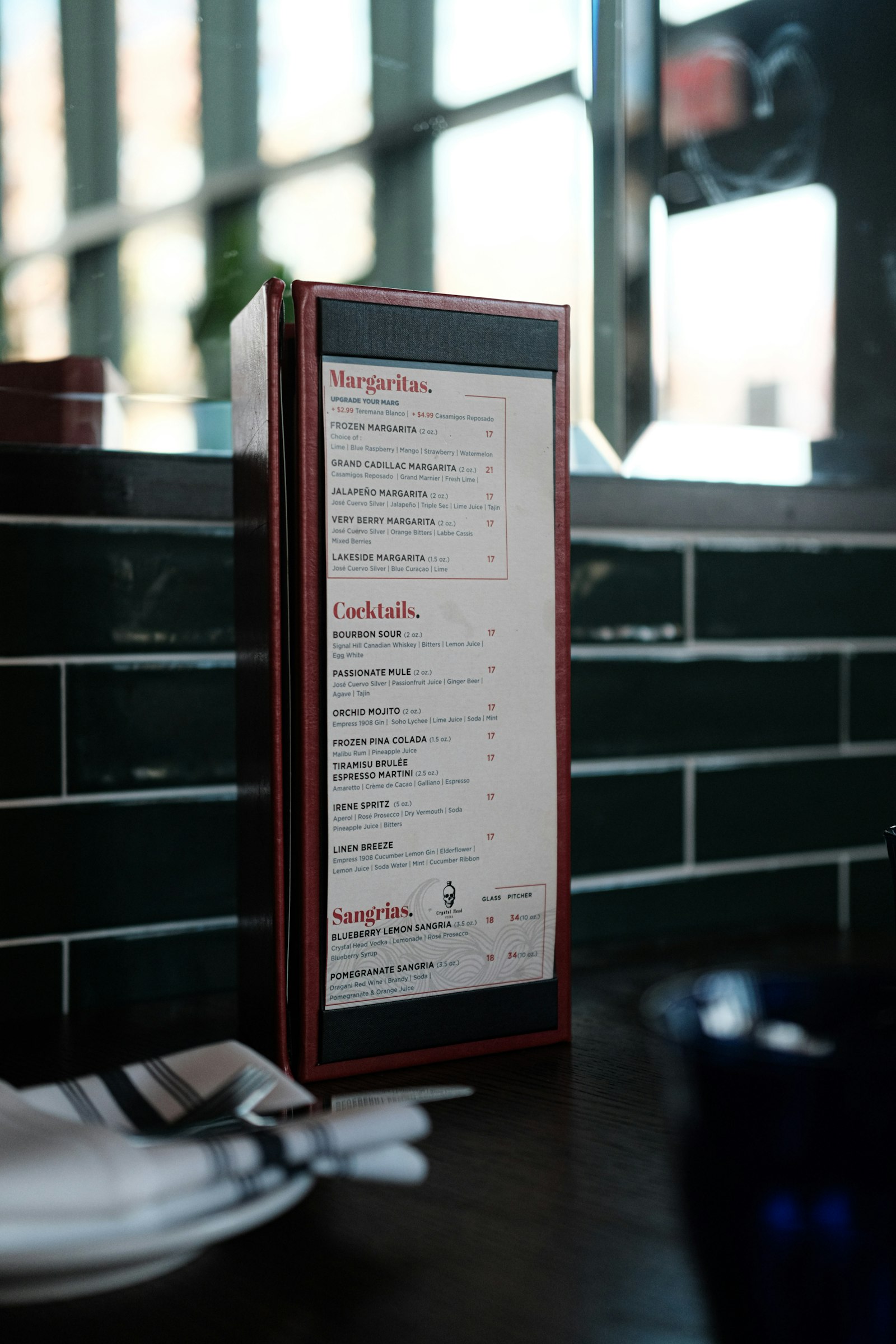
The system comes from EU Regulation 1169/2011, which identifies 14 categories of substances or products that must be declared when they are used in food. Italy applies these requirements to restaurants, bars, gelaterie, bakeries and other businesses serving non-prepacked food.
The 14 allergen numbers you will usually see
If a menu uses numbers 1 through 14 in the standard Annex II order, this is what they mean:
- Cereals containing gluten: cereali contenenti glutine. Wheat (grano), rye (segale), barley (orzo), oats (avena), spelt (farro), khorasan wheat and related products.
- Crustaceans: crostacei. Shrimp, prawns, crab, lobster, langoustines and similar crustaceans.
- Eggs: uova. Eggs and products made from them.
- Fish: pesce. Fish and fish-derived products, subject to specific regulatory exceptions.
- Peanuts: arachidi. Peanuts and peanut products.
- Soy: soia. Soybeans and soy-derived products, with certain regulated exceptions.
- Milk: latte. Milk and dairy products, including lactose.
- Nuts: frutta a guscio. Almonds, hazelnuts, walnuts, cashews, pecans, Brazil nuts, pistachios and macadamia nuts.
- Celery: sedano. Celery and products containing it.
- Mustard: senape. Mustard and mustard-derived ingredients.
- Sesame: sesamo. Sesame seeds and products made from them.
- Sulphur dioxide and sulphites: anidride solforosa e solfiti. These must be declared above the regulatory threshold of 10 mg/kg or 10 mg/litre, expressed as SO2.
- Lupin: lupini. Lupin and products made from it.
- Molluscs: molluschi. Clams, mussels, oysters, squid, cuttlefish, octopus, snails and similar molluscs.
That sequence is useful to memorize, but do not assume every restaurant has copied it exactly. Some menus use letters, colored symbols or small icons instead of numbers. The Italian Ministry of Health itself publishes allergen information in several formats. What is fixed is the list of regulated categories, not a particular restaurant’s graphic design.
How to read the code beside a dish
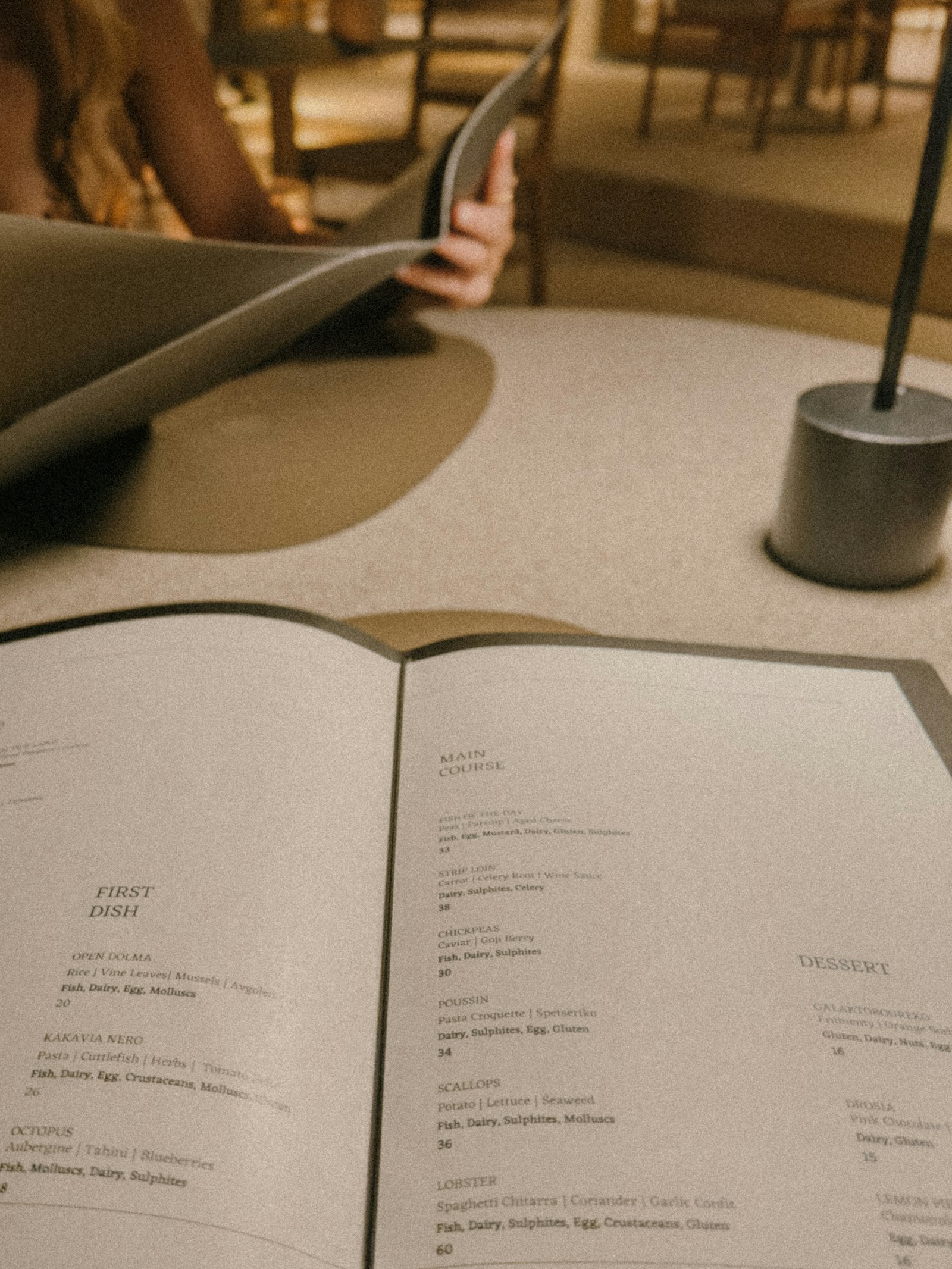
A menu entry might look like this:
Tagliatelle al ragù 1, 3, 7
Using the standard sequence, those numbers indicate cereals containing gluten, eggs and milk. They do not tell you which ingredient contains each allergen, how much is present, or whether the kitchen can prepare the dish differently.
You may also see something such as Allergeni: 1-3-7, Allergeni 1,3,7, or tiny superscript numbers beside the dish name. Look for Legenda allergeni, Elenco allergeni or simply Allergeni, often at the bottom of the page or near the back of the menu.
If the rest of the menu terminology is unfamiliar, our Italian menu translator explains course headings, cooking terms, price abbreviations and other words that commonly appear beside the allergen information.
Three pairs travelers commonly confuse
2 and 14: crustaceans are not the same as molluscs
English menus sometimes use the broad word “shellfish,” but the EU system separates them. Shrimp, lobster and crab belong to category 2. Mussels, clams, oysters, squid and octopus belong to category 14.
A seafood dish can therefore carry 2, 14, or both. A fritto misto di mare, for example, may contain several species as well as category 1 if flour or batter is used.
5 and 8: peanuts are separate from nuts
Peanuts are category 5. Almonds, walnuts, hazelnuts, pistachios and the other regulated tree nuts are category 8.
There is another trap here. The EU’s category 8 is a defined legal list, not a label for every food English speakers casually call a nut. Pine nuts (pinoli), for example, are not one of the category 8 nuts. Someone allergic to pine nuts should therefore ask about pinoli specifically rather than expecting an 8 beside every relevant dish.
7: milk is not the same question as lactose
Category 7 covers milk and milk products, including lactose. A product described as senza lattosio is lactose-free, but that does not automatically make it suitable for someone with an allergy to milk proteins. If milk itself is your allergen, say allergia al latte rather than simply asking whether something is lactose-free.
The code is not a complete ingredient list
The 14 categories cover allergens specifically regulated under EU food-information law. They are not a list of every food capable of causing an allergic reaction.
If you are allergic to something outside those categories, such as pine nuts or another particular ingredient, tell the restaurant its name directly. A dish showing no numbers relevant to you does not mean that every other ingredient has been screened for your allergy.
The same principle applies to recipes whose ingredients are not obvious from the name. Sauces, stocks, fillings, marinades and garnishes can introduce allergens that are difficult to guess. Celery may occur in a stock or soffritto, mustard in a dressing, milk in a filling, and egg in fresh pasta.
Where the restaurant’s allergen information may be hiding
Italian law does not require every restaurant to print fourteen numbers beside every dish. For food served by restaurants and similar businesses, the required information can be provided through a menu, register, clearly visible notice or an equivalent system, including a digital one. It must be connected to the individual food and available before it is served.
You may therefore encounter any of these setups:
- A number or symbol printed directly beside each dish.
- A legend on the final page of the menu.
- A separate binder called registro allergeni or libro allergeni.
- A chart displayed near the counter.
- A QR menu containing the allergen information.
- A written notice telling customers to ask staff for allergen details.
Italy’s rules also require written documentation to remain available when a digital system or a notice directing customers to staff is used. If the QR code refuses to load, your phone has no signal, or the waiter simply says “ask me,” you can request the written information.
Posso vedere la lista degli allergeni?
Can I see the allergen list?
Avete un registro degli allergeni?
Do you have an allergen register?
This is particularly useful at gelaterie, bakeries and takeaway counters, where the information may be kept in a binder rather than squeezed onto every display label.
Do not use the numbers as your only safety check for a serious allergy
The printed code primarily tells you about regulated allergens used in the food. It does not, by itself, answer questions about accidental cross-contact during preparation.
A dish containing no peanuts on its ingredient list could still be prepared near peanut products. Fried food may share oil. Utensils, cutting boards, grills, pastry equipment and serving spoons may be shared. Small kitchens may have fewer possibilities for separating preparation areas.
If avoiding traces matters for you, say so before ordering and ask the kitchen to check. Useful phrases include:
- Sono allergico / Sono allergica a… I am allergic to…
- Ho una grave allergia a… I have a severe allergy to…
- Questo piatto contiene…? Does this dish contain…?
- Potete controllare gli ingredienti? Can you check the ingredients?
- C’è rischio di contaminazione crociata? Is there a risk of cross-contact?
- La friggitrice è condivisa? Is the fryer shared?
Use allergia if you mean an allergy. Saying only intolleranza can give staff a different impression of the risk.
If you have coeliac disease
Category 1 is helpful because it flags cereals containing gluten, but reading “no 1” beside a dish does not automatically answer every question relevant to coeliac disease. Preparation and cross-contact still matter.
Tell staff clearly:
Sono celiaco. if you are male, or Sono celiaca. if you are female.
You can then ask:
Come gestite la contaminazione crociata?
How do you manage cross-contact?
For fried foods, ask about the fryer. In a pizzeria, bakery or pasta kitchen, ask how gluten-free preparation is separated from ordinary flour and dough. The allergen chart is the starting point, not a substitute for that conversation.
Italian dishes where the code can save you from a bad assumption
Some classic dishes contain allergens that are easy to miss if you translate only the dish name.
- Pasta and fresh pasta: category 1 is common, and fresh or filled pasta may also contain egg.
- Risotto: naturally rice-based, but butter, cheese, stock or other ingredients can introduce milk, celery, crustaceans, molluscs or other allergens.
- Pesto: normally contains cheese, while the nuts or seeds used can vary. Do not assume a single universal allergen profile from the word pesto.
- Fried seafood: may combine category 1 with crustaceans, fish or molluscs, plus a shared-fryer issue that the printed code alone cannot resolve.
- Tiramisù: commonly involves cereals containing gluten, eggs and milk.
- Gelato: milk, egg, nuts, soy and other ingredients vary considerably by flavor and producer.
Restaurant stops can be fitted around trains and sightseeing when you plan your Italy route, but dietary requirements are best checked with each individual business, especially when cross-contact or a non-standard ingredient matters.
What to do if the menu and staff give conflicting answers
Do not try to resolve a serious allergy by guessing which source is probably correct. Ask staff to check the restaurant’s written allergen documentation or confirm with the kitchen.
A useful sentence is:
Sul menù c’è scritto allergene 7, ma mi avete detto che non contiene latte. Potete controllare, per favore?
The menu lists allergen 7, but you told me it does not contain milk. Could you check, please?
Recipes and suppliers can change, and a stale menu is not something to gamble on. If staff cannot explain the discrepancy or cannot establish what is actually in the dish, choose something they can verify clearly or eat elsewhere.
If there is no allergen legend at all
First check the final menu pages, the counter area and any QR menu. Then ask Posso vedere la lista degli allergeni? The information may be in a separate register rather than on the menu in your hand.
If you are shown only a page numbered 1 to 14, verify what that particular restaurant means by those numbers rather than relying on memory. The familiar Annex II sequence is widespread, but the legal obligation is to communicate the allergen categories accurately, not to use one compulsory visual code.
For a serious allergy, the best sequence is simple: identify your allergen in Italian, read the restaurant’s own legend, check the specific dish, ask separately about cross-contact when relevant, and move on if nobody can give you a clear answer.