The number on a market stall is not always the amount you will pay. First check the unit beside it. Al kg or al chilo means per kilogram, al pezzo means per individual item, and all’etto means per 100 grams. Italian market price signs become much easier to read once you identify that unit before choosing a quantity.
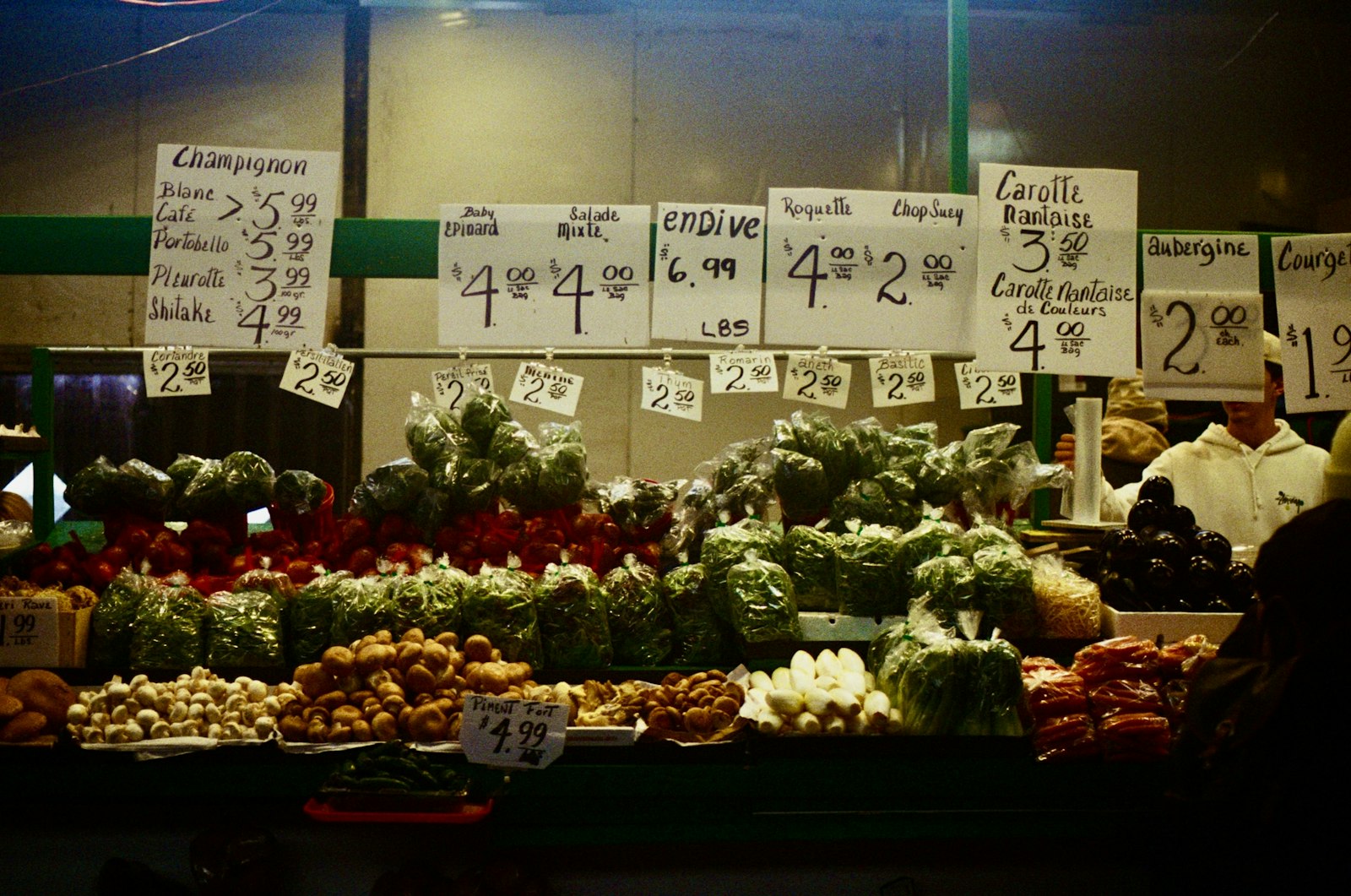
The difference matters most with expensive cheese, salumi, fish, dried goods and specialty foods. A sign reading €3,00 all’etto does not mean €3 per kilogram. It means €3 per 100 grams, equivalent to €30 per kilogram.
The three price units to recognize first
- €4,50/kg, €4,50 al kg, €4,50 al chilo: €4.50 for one kilogram.
- €2,00 al pezzo: €2 for one individual item.
- €2,80 all’etto or per etto: €2.80 for every 100 grams.
Italian prices use a decimal comma, so €3,50 means €3.50, not €350. You may also see the euro symbol before or after the number.
Per chilo: you do not have to buy a whole kilogram
Chilo is the everyday word for chilogrammo. Signs may use al chilo, al kg, €/kg or simply a price followed by kg. They all indicate a price based on weight.
A stall selling peaches at €4,80/kg will calculate the final amount after weighing your selection. If the peaches weigh 650 grams, the cost is €3.12.
You can ask for whatever quantity you need:
- Un chilo: 1 kg
- Mezzo chilo: 500 g
- Un quarto di chilo: 250 g
- Circa mezzo chilo: about half a kilo
For produce, saying “Me ne dà mezzo chilo, per favore?” is often more useful than trying to choose an exact number of tomatoes or peaches.
At a traditional fruit and vegetable stall, watch before touching the produce. Some sellers expect customers to choose their own; others prefer to select and bag it themselves. “Posso scegliere?” means “May I choose?” The routine is different from supermarket self-service weighing, which is covered in our guide to Italian supermarket produce scales and labels.
Per etto: the small unit that causes expensive mistakes
An etto, short for ettogrammo, is 100 grams. Ten etti make one kilogram.
This unit is particularly common at deli counters and stalls selling cheese, cured meat and other foods normally bought in relatively small quantities. You may see all’etto, per etto, /etto, 100 g or occasionally hg.
The easiest conversion is to multiply an etto price by ten:
- €1,50 per etto = €15/kg
- €2,40 per etto = €24/kg
- €3,90 per etto = €39/kg
This is worth doing before ordering a large amount. A cheese marked €3,50 all’etto may look cheap if you mistake the figure for a kilogram price, but 400 grams will cost €14.
How to order in etti
Ordering by etto is completely normal. Useful quantities are:
- Un etto: 100 g
- Un etto e mezzo: 150 g
- Due etti: 200 g
- Tre etti: 300 g
For example, “Due etti di prosciutto crudo, per favore” asks for about 200 grams of prosciutto.
The final weight may be slightly above or below your request, especially with cheese cut from a wheel or other products that cannot be divided with perfect precision. If the seller shows you a piece and asks “Va bene così?”, they are asking whether that amount is acceptable.
Al pezzo means each
Al pezzo means the displayed price applies to one item rather than its weight. You may also see:
- cad.: each, short for cadauno
- cadauno: each
- 1 pz: one piece
- 3 pezzi €5: three pieces for €5
This system is common for items naturally sold individually. Depending on the stall, that might include melons, avocados, artichokes, baked goods, plants, household items or clothing.
If a melon is marked €2,50 al pezzo, its weight does not change the price. Two cost €5.
Do not assume every item of the same type uses the same system. One vendor may sell avocados individually while another prices them by kilogram. Read the card attached to that particular pile.
Other abbreviations you may find on a stall
Markets use plenty of handwritten shorthand. These are useful clues:
- conf. / confezione: per package
- vaschetta: tray or punnet
- mazzo: bunch
- cassetta: crate or box
- sfuso: loose, not prepacked
- a peso: sold by weight
- offerta: special offer
- a partire da or da: starting from
A card saying fragole €4 vaschetta, for example, means €4 for the tray rather than €4 per kilogram.
How Italian price display rules fit into this
Italian retail rules require prices for goods offered to consumers to be displayed clearly, including products sold on public areas and market counters. The national rules on retail price display specifically cover goods displayed on sales counters and public areas.
Consumer rules also distinguish the selling price from the price per unit of measurement. The Ministry of Enterprises and Made in Italy explains that foods sold loose are generally displayed using a unit price, allowing the actual total to be calculated once the quantity has been weighed. The ministry provides further guidance on price display requirements.
For a traveler, the practical point is simpler: never read the large number without also locating kg, etto, pezzo or another unit beside it.
A quick way to calculate what you will actually pay
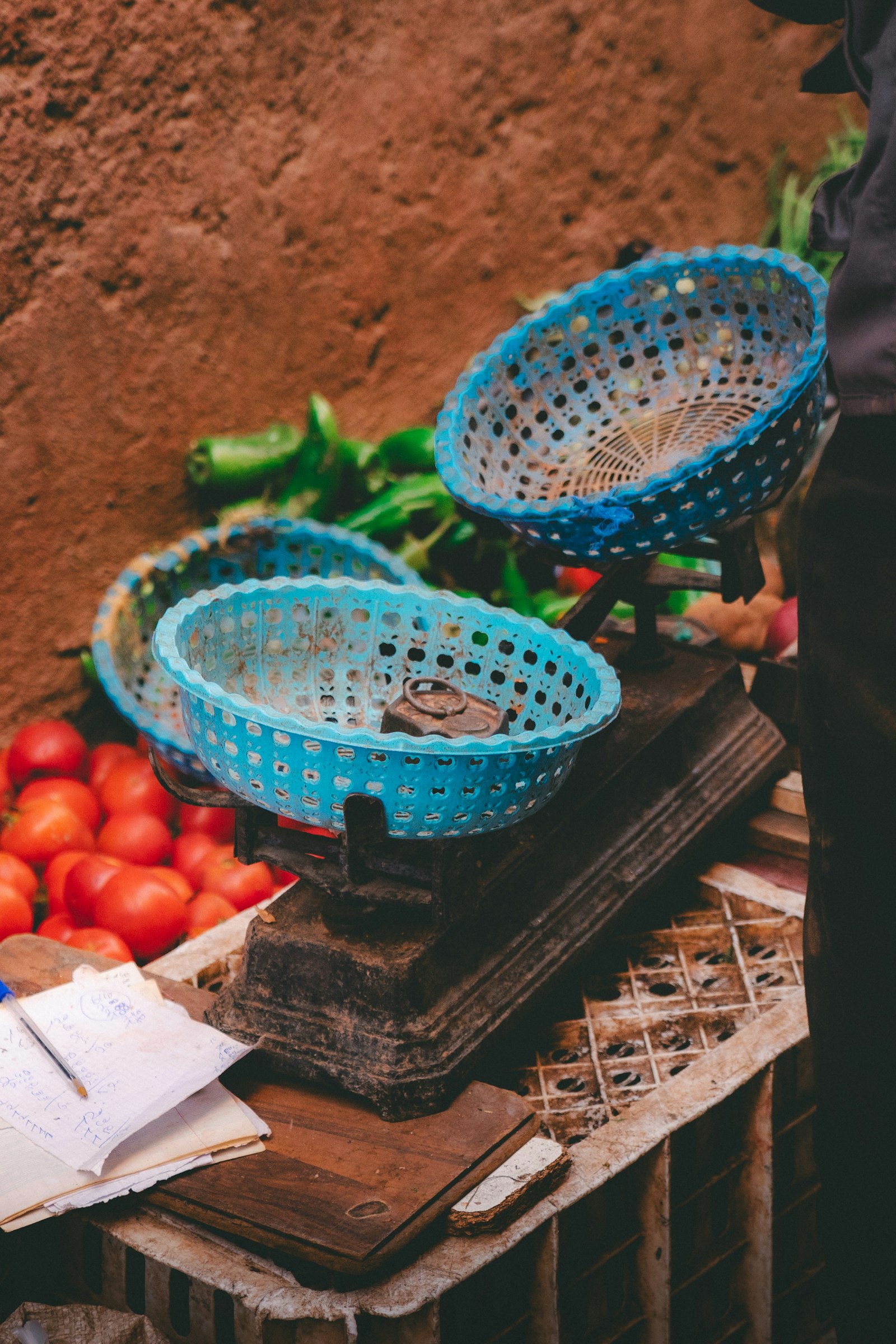
For kilogram prices, think of common fractions:
- 500 g costs half the kilogram price.
- 250 g costs one quarter of the kilogram price.
- 100 g costs one tenth of the kilogram price.
So if olives cost €18/kg, 200 grams will be about €3.60.
For an etto price, do the opposite. Count how many 100-gram portions you are buying. Three etti of something marked €2,50 all’etto will cost about €7.50.
If you are fitting market stops, food shopping and restaurant meals around several cities, you can organize the rest of your trip while keeping the individual shopping customs for each stop in context.
Ask the total before the seller cuts or prepares something expensive
For fruit and vegetables, changing the amount after weighing is usually straightforward. Cheese, salumi and other foods can be different because the seller may already have cut, sliced or wrapped your order.
If price matters, give the target quantity first:
- “Circa due etti, per favore.” About 200 grams, please.
- “Non più di mezzo chilo.” No more than half a kilo.
- “Quanto pesa questo?” How much does this weigh?
- “Quanto viene in tutto?” How much is it altogether?
That last question is especially useful for an irregular piece of cheese, a large portion of prepared food or anything expensive enough that a few extra hundred grams matter.
What to do when the sign is unclear
Handwritten cards sometimes have tiny units, faded ink or several prices crowded together. Do not guess. Point at the product and ask:
- “È al chilo?” Is that per kilogram?
- “È all’etto?” Is that per 100 grams?
- “È al pezzo?” Is that per item?
- “Quanto costa al chilo?” How much is it per kilogram?
If two varieties are next to each other, point to the exact one while asking. Market displays can contain several cultivars, sizes or quality grades with different prices only a few centimetres apart.
If the total is much higher than expected
First check the unit rather than assuming the arithmetic is wrong. Confusing an etto price with a kilogram price creates a tenfold difference.
Then ask “Quanto pesa?” to confirm the weight and “Il prezzo è questo, giusto?” while pointing to the price card.
If the vendor has simply weighed too much loose produce, say “È troppo, ne vorrei circa mezzo chilo” and give the amount you wanted. With something already sliced or cut, correcting the quantity may be less convenient, which is why stating a target weight before preparation is the safer approach.
The fastest market-stall check
Before ordering, read every price in this order: number, unit, product. €6 means almost nothing by itself. €6/kg, €6/etto and €6 al pezzo describe three very different purchases.
Remember just three conversions and most stalls become straightforward: a kilo is 1,000 grams, an etto is 100 grams, and al pezzo means one individual item. Then tell the vendor the quantity you actually want rather than trying to reverse-engineer the total after the bag is already on the scale.