If your bus is not appearing where the timetable says it should, first look for a service notice rather than assuming you missed it. The fastest way to handle an Italian bus stop moved for a market, roadworks, festival or street closure is to identify your line and direction, then look for terms such as fermata soppressa, fermata spostata, fermata provvisoria or deviazione. The replacement may be farther along the same street, around a corner, on the diverted road, or replaced by another existing stop entirely.
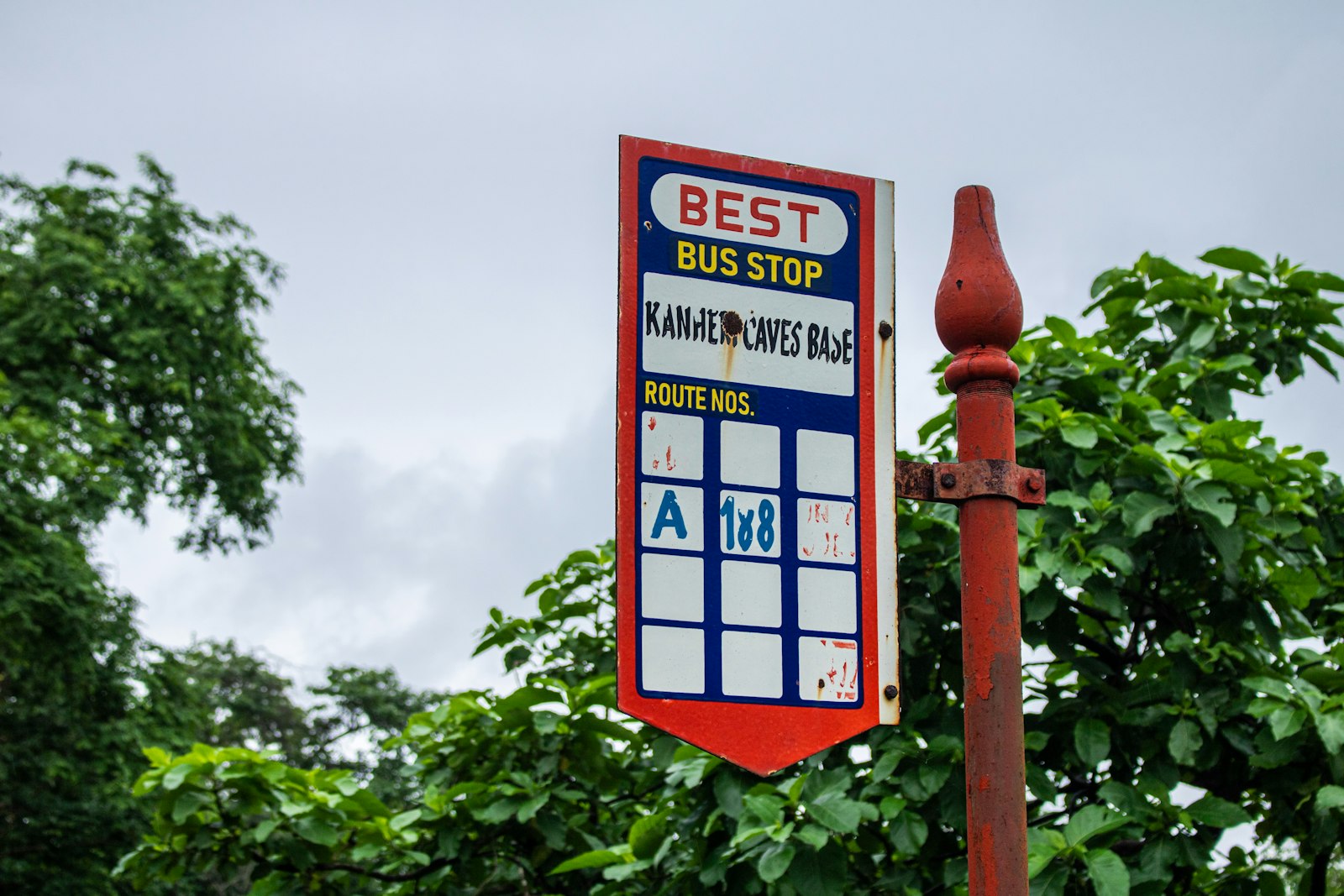
Start at the old stop, but do not simply wait there
Look closely at the stop pole, timetable case and shelter for a temporary notice. The permanent bus-stop sign may still be standing even when buses cannot use it.
Before moving anywhere, note three things:
- The line number. A closure may affect only some of the buses serving the stop.
- Your direction. Look for the destination or terminus after verso or direzione.
- The stop name or code. Stop codes can be particularly useful when several stops share similar street names.
Direction matters more than many visitors expect. A road closure can force buses travelling north onto a parallel street while buses in the opposite direction continue to use the normal stop. Official TPER notices in Bologna, for example, regularly list one direction as diverted while marking the other regolare. Milan‘s ATM notices similarly specify replacement stops separately according to direction.
The Italian words that tell you what has happened
You do not need much Italian to decode most disruption notices. These are the phrases worth recognising:
- Fermata soppressa: the stop is not being served. This does not necessarily mean the whole bus line is cancelled.
- Fermata temporaneamente soppressa: the stop is suspended temporarily.
- Fermata spostata: the boarding point has been moved.
- Fermata provvisoria: temporary stop.
- Fermata alternativa: alternative stop you should use instead.
- Deviazione or percorso deviato: the bus is following a different route.
- Capolinea provvisorio: temporary terminus.
- Verso or direzione: toward. Check the destination written after it.
- Regolare: operating normally.
- Fino al termine dei lavori: until the works are finished, without necessarily giving a fixed final date.
A notice saying fermata soppressa without mentioning a replacement is important. Do not assume there must be another temporary pole a few metres away. The operator may instead expect passengers to use an existing stop elsewhere.
How replacement stops are described
Italian transport notices often give remarkably literal street directions. They may be more useful than the stop name once you know how to read them.
Look for wording such as:
- al civico 59: at number 59
- all’altezza del civico 142: approximately level with number 142
- dopo via Roma: after the junction with Via Roma
- prima di via Verdi: before Via Verdi
- fronte civico 3: opposite number 3
- angolo via…: at the corner of the named street
- più avanti: farther ahead
- più indietro: farther back
This is not just theoretical wording. ATM’s Milan service-change notices currently describe relocated stops using combinations of distances, street numbers and nearby junctions. Autolinee Toscane likewise publishes temporary boarding points by road, intersection and direction on its official service-alert page.
Do not expect every provisional boarding point to have the same shelter, electronic display or substantial sign as the normal stop. Once you reach the stated location, look for a temporary bus sign or notice and confirm that your line number or destination is shown.
Use the operator’s alert before trusting the map pin
A journey-planning app is useful for locating streets, but the transport operator’s current disruption notice should be your reference for a temporary diversion. Short-lived road closures and one-day events are exactly the situations where the normal map location is least useful.
Search the operator’s website or app using the line number plus avvisi, deviazioni or the stop name. In Tuscany, for example, Autolinee Toscane lets you filter current notices by province and line. Milan ATM publishes planned changes by route. Bologna’s TPER publishes detailed diversion notices that can include suppressed stops, temporary stops and the streets buses will actually follow.
If you are unsure which local transport app covers the city you are in, the Italy on Foot guide to apps for navigating Italy lists the main operator tools by region and city.

Markets are especially easy to misunderstand
A weekly market may alter a bus route for only part of one day. The normal stop can therefore be correct on Wednesday afternoon and wrong on Thursday morning.
Read the entire validity period rather than stopping at the words mercato settimanale. A transport notice may specify both the day of the week and precise operating hours. Autolinee Toscane, for example, publishes recurring market diversions in which temporary stops operate only during the road-closure window.
Also remember that road restrictions may begin before the first market stall opens and continue after shoppers have left. The bus operator’s stated times matter more than the market’s advertised public opening hours.
Do not assume the replacement is the next normal stop
This is the mistake most likely to turn a short diversion into a long walk.
Suppose your normal route follows Via A, Via B and Via C. If Via B is closed, the bus might divert through Via D and Via E before returning to Via C. Walking to the next permanent stop on Via B achieves nothing because the bus never passes it.
Instead, identify one of these from the operator notice:
- the explicitly named temporary stop;
- the named alternative permanent stop;
- the first normal stop after the diversion rejoins the regular route.
If several stops are listed as soppresse, keep reading until the notice tells you where service resumes.
The bus may terminate somewhere different too
Closures sometimes move a capolinea, the end of the route, rather than an ordinary intermediate stop. This is particularly relevant around town squares, historic centres and bus stations used for markets or public events.
If your journey normally begins at a terminus, search specifically for capolinea provvisorio. The temporary departure point may be on another street and the timetable may still quote the scheduled departure time associated with the normal terminus.
Regional and extra-urban services deserve extra attention because missing one can mean a much longer wait than missing a frequent city bus.
If you cannot work out the notice
Show someone the line number and destination rather than asking vaguely where the bus stop is. A useful question is:
Dove si prende l’autobus 12 per Stazione durante la deviazione?
That means, roughly, “Where do I take bus 12 for the station during the diversion?”
Including the destination prevents someone from sending you to the stop for the opposite direction.
You can also ask:
Dov’è la fermata provvisoria? meaning “Where is the temporary stop?”
For a trip involving several buses, trains or changing plans elsewhere in the country, you can also organize the rest of your Italy route while keeping the local operator’s notice as the final authority for the disrupted service.
Allow more walking time with luggage, children or a stroller
A temporary stop is chosen because a bus can safely reach it, not because it is the most convenient place for pedestrians. It may require crossing the road, walking around barricades or reaching another side of a square.
With suitcases, a stroller or small children, leave extra time instead of planning to arrive at the normal stop immediately before departure. Do not climb over barriers or walk through a closed traffic area just because the original stop is visible on the other side.
For regional buses with luggage compartments, the boarding procedure itself normally remains the same after a stop relocation. The important difference is making sure you are waiting where the coach can actually pull in.
Reduced mobility needs a little more checking
A permanent accessible stop and its temporary replacement may not offer identical boarding conditions. The provisional location might have a different curb, less pavement space or no shelter.
If step-free boarding is important and the notice gives only a street location, contact the operator before travelling when possible. Ask specifically whether the provisional stop is suitable for your mobility needs rather than assuming that the accessibility features of the normal stop have moved with it.
Late at night, check the exact night-bus number
Do not assume a daytime line and its night equivalent share the same diverted stop. Italian networks may distinguish night services with identifiers such as N, NM or a different route number altogether.
If you arrive after most shops and information points have closed, check the operator notice before walking from one empty stop to another. Pay particular attention to the final departure and to whether the notice names a temporary terminus.
If the last bus is at risk, the sensible recovery plan is usually to head for a clearly identified major stop or transport interchange that the operator confirms is still served, rather than trying to intercept the bus somewhere along an unfamiliar diversion.
Your ticket rules usually do not change with the stop
A road diversion does not normally create a separate ticketing system. Continue to buy, activate, tap or validate your ticket according to the rules of that particular operator.
Do not rely on the fact that you spent extra time finding the replacement stop as a reason to leave a ticket unvalidated. Likewise, do not assume there is a nationwide automatic refund because a temporary relocation caused you to miss a bus. Ticket validity, refunds and passenger rights depend on the operator and the service involved.
What to do when there appears to be no temporary stop
Sometimes there genuinely is not one. A notice may simply say that several stops are skipped during a diversion.
- Confirm that you have the correct line and direction.
- Read the alert for a named fermata alternativa.
- If none is given, identify where the diverted bus next serves a normal stop.
- Check that you can reach that stop safely on foot.
- For an infrequent regional service, contact the operator rather than guessing.
Do not chase a bus along the street or stand at an unmarked point on its diverted road hoping the driver will stop. Drivers generally need to use authorised or specifically designated boarding locations.
The quickest decision rule
If the old stop has a clear temporary notice, follow that notice. If it does not, check the official operator alert using the line number and direction. If the alert says fermata spostata or fermata provvisoria, go to the location it specifies. If it only says fermata soppressa, find the named alternative or the next served stop on the actual diverted route.
And before walking away, check verso. Finding the right temporary stop on the wrong side of the road is still the wrong stop.