Autovelox signs in Italy mean that speed enforcement may take place ahead, but they do not tell you whether a particular roadside box is active at that moment. The orange columns commonly seen beside town and provincial roads are housings that may be empty or may contain a speed-measuring device. The safe rule is simple: read the posted speed limit, reduce speed smoothly if necessary, and do not assume an orange box is fake just because you cannot see a camera or police car.
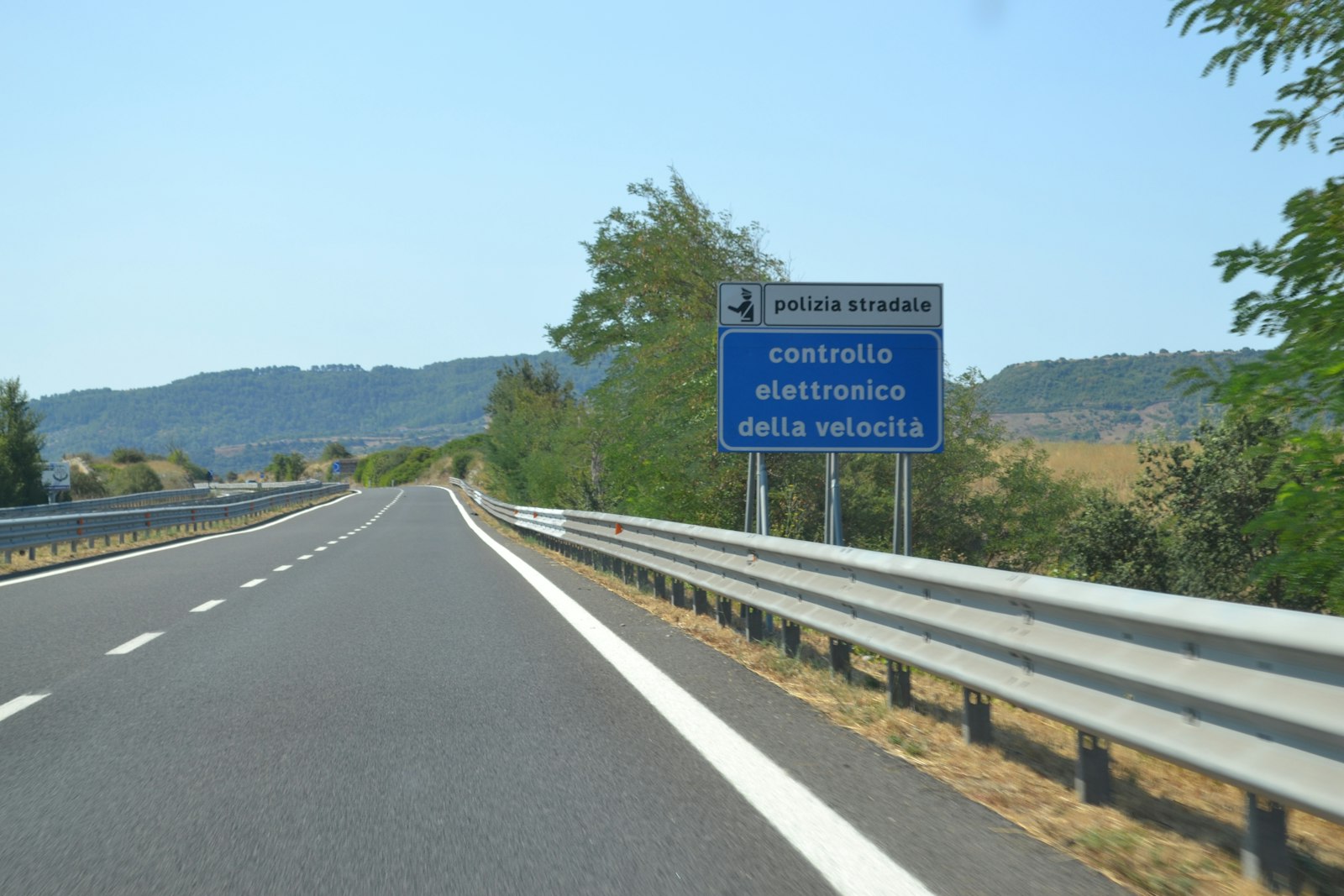
Italy requires stationary speed-control positions to be warned in advance and made visible. The official wording normally refers to controllo elettronico della velocità or rilevamento elettronico della velocità, rather than relying on the color or shape of the camera housing itself.
The warning sign and the orange box are two different things
This distinction clears up most of the confusion. A rectangular roadside sign warning of electronic speed control is part of the speed-enforcement warning system. An orange column such as a Velo OK, Speed Check or similar box is simply a physical container.
Those containers can be used to hold speed-measuring equipment, sometimes on a rotating or temporary basis. They may also be empty. The container itself is not a special category of traffic sign, so its orange color does not mean “camera active,” “camera inactive” or “dummy camera.” When measuring equipment is installed and used, the equipment and the way it is operated must comply with the applicable speed-enforcement rules.
You will also encounter blue, grey and other types of roadside camera cabinets. Do not use color as a decision rule. The old internet shortcut that “orange is fake and blue is real” is not reliable enough to drive by.
Words to look for on Italian camera-warning signs
The most useful phrases are:
- Controllo elettronico della velocità: electronic speed control.
- Rilevamento elettronico della velocità: electronic speed measurement.
- Controllo velocità: speed control, often used in shorter displays.
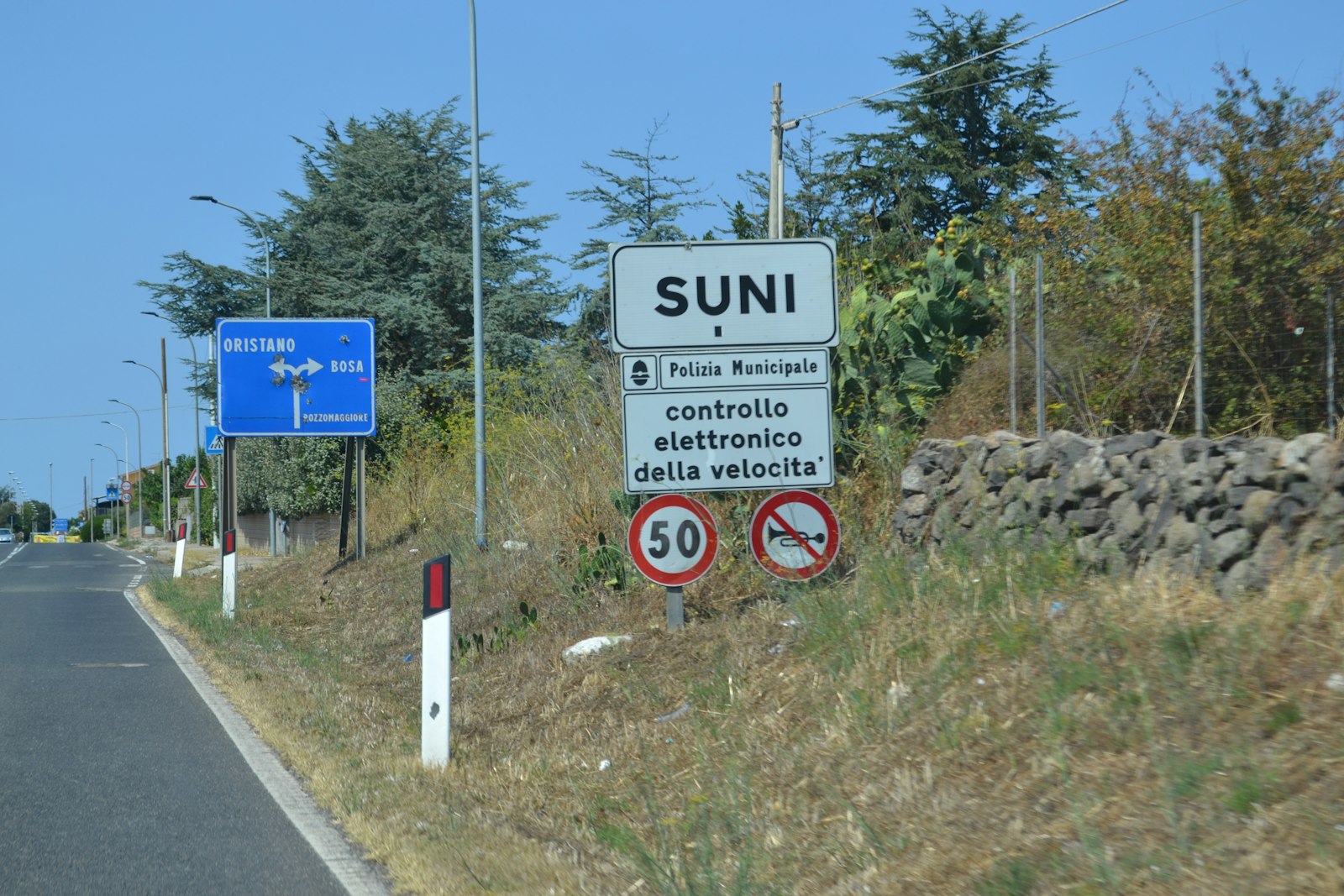
- Polizia Locale: municipal or local police.
- Polizia Provinciale: provincial police.
- Polizia Stradale: traffic police.
Italian regulations allow the warning to be given by permanent or temporary road signs, variable-message signs, or certain illuminated displays. The rectangular sign’s background can also vary with the type of road, so there is no single “speed-camera sign color” to memorize.
How far after the warning sign is the camera?
There are two separate distances that travelers often mix up: the distance from the camera-warning sign to the enforcement position, and the distance from a speed-limit sign to the enforcement position.
Camera-warning sign to the enforcement position
Under the national signalling rules, an appropriate advance distance is generally 250 metres on motorways and main extra-urban roads, 150 metres on secondary extra-urban roads and urban through-roads, and 80 metres on other roads. The warning can be placed farther away when the road layout requires it, but normally no more than 4 kilometres before the actual measurement point. An intervening junction can require the warning to be repeated. You can check the detailed rules in the 2017 Ministry decree on speed-control signalling.
Speed-limit sign to the camera
A different set of placement rules applies between the sign imposing the speed limit and the measuring device. The 2024 national decree requires at least 1 kilometre outside built-up areas in the situations covered by the decree. In urban areas, the specified minimum is 200 metres on type D urban through-roads and 75 metres on other urban roads. These rules concern the speed-limit sign, not the rectangular warning saying electronic speed control. The official text is available in the 2024 autovelox placement decree.
For a driver, there is little value in trying to count metres from the dashboard. Treat the warning as notice that enforcement can occur ahead and concentrate on maintaining the posted limit.
What to do as soon as you see a speed-camera warning
- Find the current speed limit. The camera-warning sign does not set the speed limit. Look for the last circular red-bordered speed sign applying to your road.
- Come down to the limit smoothly. Do not make a hard emergency-braking manoeuvre just because an orange column appears beside the road.
- Maintain the limit beyond the first box. There may be another enforcement position farther along the controlled stretch.
- Do not assume the side facing you tells you what is measured. Different approved systems can work in different configurations, so the obvious lens or opening is not a dependable clue.
- Watch for a new limit. Entering a town, leaving a town, passing roadworks or reaching another specifically signed section can change the applicable speed.
If you are connecting several countryside drives, motorway sections and city stops, it helps to organize the rest of your Italy trip before collecting the car so you know where driving is useful and where trains or local transport make more sense.
Does an orange box need a police officer beside it?
Not necessarily. The presence or absence of a visible patrol is not a reliable way to determine whether speed enforcement is valid. Italian rules distinguish among fixed positions, mobile positions, road classifications, remotely enforced sections and situations in which immediate roadside interception is required or can legally be omitted.
Some roads require specific prefectural authorization for enforcement without an immediate stop, while motorways and main extra-urban roads are treated differently. A valid unattended installation therefore cannot be ruled out simply because you passed the box without seeing an officer. The rules were tightened nationally in 2024, including requirements governing where fixed and mobile equipment may be positioned.
No flash does not mean no photograph
Do not wait for a bright flash as confirmation that you have been measured. Modern equipment can operate in daylight or darkness without producing the dramatic camera flash travelers expect.
The reverse is also true: noticing a roadside box does not mean it recorded you. The equipment may be inactive or the housing may be empty. There is usually no useful way for a passing driver to determine its status, which is precisely why maintaining the posted limit is easier than trying to inspect each installation from the car.
Can the warning sign stay up when no camera is operating?
Yes, in appropriate circumstances. Italian rules recognize permanent as well as temporary warning signs. Permanent warning signs can also be used in connection with systematically planned temporary enforcement rather than a camera operating continuously every minute of the year.
That means passing a warning several times without ever seeing obvious enforcement does not make the sign meaningless. Equally, it does not prove that a camera is running every time you pass.
What if you join the road after the warning sign?
National signalling rules take junctions into account because a driver entering from a side road may not have seen an earlier warning. Where an intersection interrupts the relationship between the warning and the measurement position, the warning may need to be repeated after the junction.
Do not turn that into a roadside legal experiment. You are still required to obey the posted speed limit even if you believe a camera warning was missing. If a ticket later arrives and the adequacy of the warning is genuinely in question, that is the point to examine the exact location, direction of travel, signage and enforcement documentation.
How to check a camera if a ticket arrives later
For a disputed notice, the color of the roadside box is one of the least useful pieces of evidence. Italy now has an official Ministry of Infrastructure and Transport database listing speed-detection devices reported for legitimate use. The MIT national speed-camera register includes information such as the device model, relevant approval or homologation details and identifying data. The Ministry introduced the national register in 2025, followed by a new homologation framework that took effect in July 2026.
A registry check does not by itself decide whether an individual fine is valid. The actual enforcement location, applicable limit, warning signs, device status and procedural requirements can all matter.
With a rental car, keep the police notice separate from any administration charge from the rental company. A rental company may charge a contractual handling fee for identifying the driver or forwarding the authorities’ request, and that charge is not necessarily the traffic fine itself. For other paperwork to sort out before collecting a vehicle, see our guide to driving permits and foreign licences in Italy.
Common mistakes that cause trouble
- “The orange box is empty, so I can accelerate.” You normally cannot tell whether equipment is installed from the driver’s seat.
- “Blue cameras are real, orange cameras are fake.” Housing color is not a dependable legal classification.
- “I passed the box, so the check is finished.” The precise measurement point and direction may not be obvious.
- “There was no flash.” A visible flash is not required for every system.
- “The warning sign means the limit is 50.” It does not. Read the separate circular speed-limit sign.
- “There is no police car, so the camera cannot issue a fine.” Some lawful enforcement operates without an officer standing beside the device.
- “My navigation app did not warn me.” Roadside signs and the actual posted limit take priority over an app’s camera database.
The easiest rule to remember is that the warning tells you speed may be checked ahead, while the circular speed-limit sign tells you how fast you may legally drive. The orange box tells you almost nothing by itself. Read the limit, hold it steadily, and leave the detective work for later if an actual notice ever arrives.