Use the M1 metro if you are starting near Duomo, Cadorna, San Babila, Loreto, Lotto, or anywhere already on the red line. Use the train if you are near a Passante station such as Porta Venezia, Repubblica, Dateo, Forlanini, or Garibaldi. Both bring you to the east side of Fiera Milano Rho, so the real Rho Fiera metro vs train decision is about your starting point, ticket type, and how a frequent metro compares with a timed rail departure.
For most first-time visitors from central Milan, the M1 is the simpler default. The train can be the more direct choice when your hotel or arrival point already sits on the suburban rail network.
First, know the two station names
The metro and railway stations are next to the same exhibition complex, but they do not have exactly the same name:
- Metro: Rho Fieramilano, the western terminus of M1, the red line.
- Train: Rho Fiera, served by suburban and regional rail services.
Do not confuse either with Rho railway station. Rho is a separate station in the town and is not the fairground stop. On a train, check that Rho Fiera appears in the stopping pattern before you board.
Fiera Milano maps place both rail systems at Porta Est, the East Gate side of the exhibition district. The M1 station’s useful exit is signed Viale Porta Est. This is why the choice of metro or train usually does not change where you enter the venue. Your event’s assigned entrance and hall matter more. Check the event map before travel, especially for fairs using Porta Sud or halls at the western end of the site. The official Fiera Milano Rho venue page is the best place to confirm the current site layout.
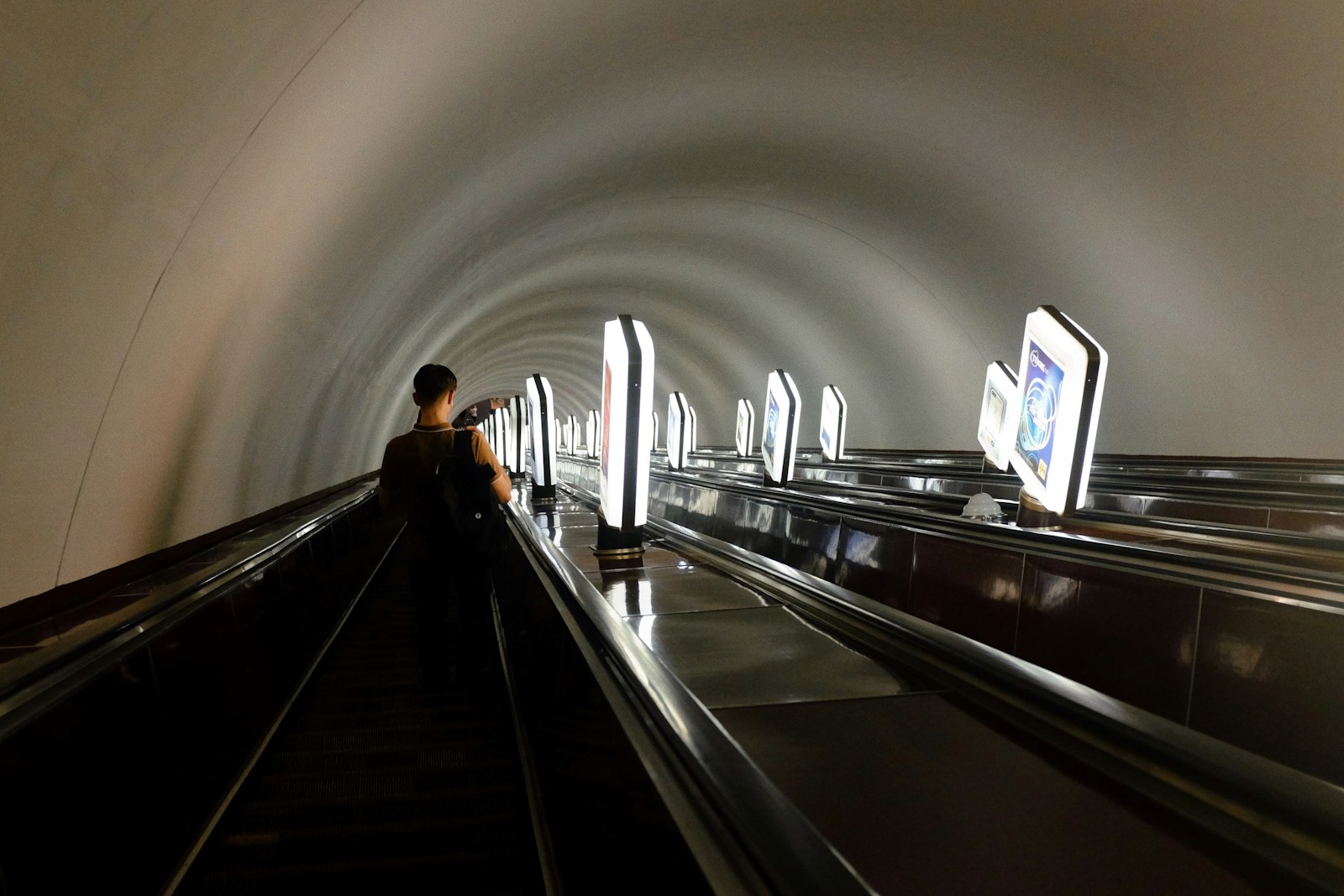
Choose the M1 when you are already on the red line
The M1 is the easiest option from central stops including Duomo, Cadorna, San Babila, Loreto and Lotto because there is no transfer. Board a train whose destination display says Rho Fieramilano.
This detail matters because the western M1 has two branches. Some trains go to Bisceglie, not Rho. At central stations, check the destination on the platform display and on the train itself before boarding. If you accidentally stay on a Bisceglie train past the branch, get off at the next station, return to Pagano, and wait for a train marked Rho Fieramilano.
At the end of the line, follow signs for Fiera Milano and Viale Porta Est. You are arriving at the exhibition district itself, not in central Rho.
Why the metro is often the safer default
You do not need to plan around a specific departure, and the terminus is obvious. This is useful on a trade-fair morning when you may leave your hotel later than expected or when queues for coffee have already ruined your beautiful spreadsheet of timings.
The metro is especially practical from Cadorna. It is a direct M1 ride with no platform hunt, which also makes Cadorna a useful base for fair-heavy trips. For a broader explanation of tickets, lines and Milan transport habits, see our guide to getting around Milan.
Choose the train when a Passante station is already on your route
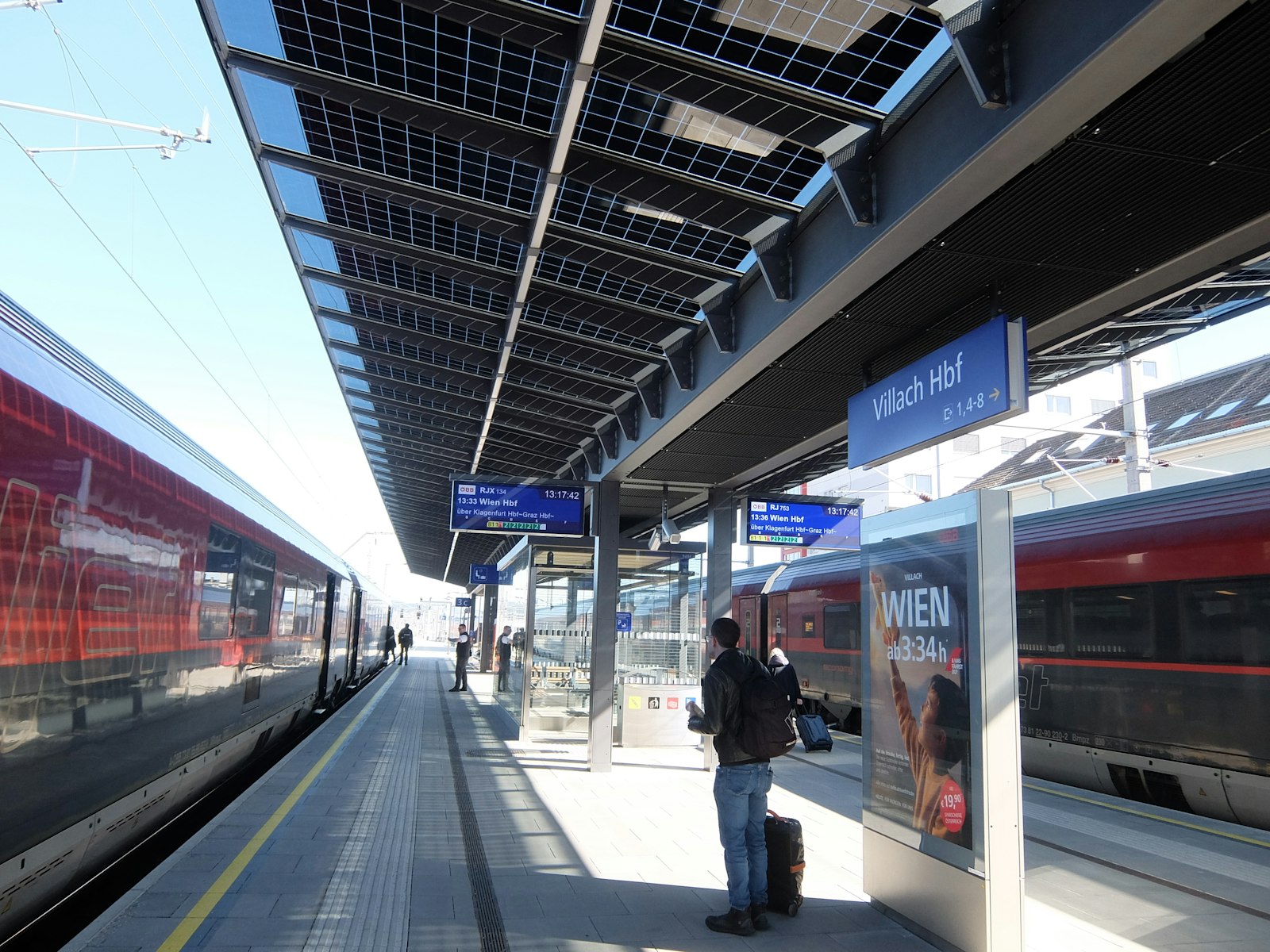
Trenord’s suburban lines S5 and S6 provide direct rail access to Rho Fiera from several stations across Milan’s underground Passante corridor. Useful central and eastern stops include Porta Vittoria, Dateo, Porta Venezia, Repubblica and Milano Porta Garibaldi Passante.
That makes the train particularly attractive if you are staying near Porta Venezia or Repubblica, or arriving from Linate via M4 and changing at Dateo. ATM itself lists both Linate options: M4 to San Babila plus M1, or M4 to Dateo plus the S lines. Choose Dateo and rail if the connection lines up soon; choose San Babila and M1 if you prefer not to time a suburban train.
Porta Garibaldi has one important trap
Milano Porta Garibaldi Passante is the underground suburban station used by S5 and S6. Milano Porta Garibaldi Superficie refers to the surface railway platforms used by S11 and various regional services. Follow the exact station and platform shown in your journey planner rather than simply following the first sign that says “trains.”
From Garibaldi, a direct rail service is usually more sensible than taking a metro line into the centre and changing onto M1. During service changes, however, the exact S11 and regional stopping patterns can vary, so check the live Trenord departure board rather than memorising a train number.
From Milano Centrale, check before assuming there is a direct train
Some regional services and selected long-distance trains stop at Rho Fiera, and major exhibitions sometimes receive extra or special stops. That does not mean every train heading northwest from Centrale serves the fair. Search your exact date and confirm that Rho Fiera is listed as a stop.
If a convenient direct train does not appear, the simple fallback is M3 from Centrale to Duomo, then M1 to Rho Fieramilano. It adds one change but removes any guesswork about regional stopping patterns.
Ticketing is similar until you use contactless
ATM currently lists the Mi1-Mi3 ordinary fare at €2.20, valid for 90 minutes, and this fare covers both the M1 to Rho Fieramilano and eligible Trenord rail services to Rho Fiera within the integrated area. Current fares and the urban-pass extension are listed on the official ATM ticket and public transport page.
The important exception is pay-as-you-go contactless. Tapping a bank card, phone or watch at an ATM metro gate is valid on ATM services, but it is not valid on Trenord trains or S lines. If you plan to go out by metro and return by train, do not assume the same bank-card tap covers both systems.
For a journey that may mix metro and rail, use a proper integrated STIBM ticket. Trenord states that integrated tickets must be validated before the first train or at the metro gate, then validated again when changing to another mode, except for train-to-train transfers. The official STIBM ticket rules are worth checking if you plan to mix operators.
If you start on the train, avoid the paper-ticket validation trap
Trenord has moved toward electronic and digital ticketing. Its current guidance warns that magnetic STIBM tickets sold by other operators cannot necessarily be validated on Trenord’s newer devices. If your first leg is by train, buying an appropriate digital or electronic ticket through Trenord or a Trenord sales channel avoids that problem. An unvalidated paper ticket in your wallet is not a valid travel plan.
If you have an urban Milan monthly or annual pass, it does not by itself cover Rho Fiera because the venue lies outside the Comune di Milano. ATM currently lists a €1.70 fare extension for the trip to Rho.
Which option is better from the places visitors actually start?
- Duomo, Cadorna, San Babila, Loreto or Lotto: take M1. It is direct and hard to improve on.
- Porta Venezia, Repubblica or Dateo: check S5/S6 first. A direct suburban train avoids a metro detour.
- Porta Garibaldi: check direct rail departures first, but pay attention to Passante versus surface platforms.
- Milano Centrale: take a direct train only if your exact service lists Rho Fiera. Otherwise use M3 to Duomo and M1.
- Linate Airport: M4 to Dateo plus S5/S6 can be efficient; M4 to San Babila plus M1 is easier if you do not want to wait for a rail departure.
- A hotel on the western M1 corridor: the metro is usually the obvious choice.
If your trip is built around Salone del Mobile, our Salone del Mobile Milan guide helps connect the Rho fair days with the city districts. For a multi-stop trip beyond the exhibition, you can also build your Italy itinerary around your hotel, rail arrivals and onward travel.
The gate and pavilion can matter more than the transport mode
Fiera Milano Rho is long. Porta Est is convenient for the eastern halls, but some events use Porta Sud as an additional visitor entrance, and a show spread across many pavilions may place your first meeting much farther west. Both the metro and railway feed the eastern side, so changing from train to metro will not solve a bad pavilion choice.
Before leaving your hotel, look for three items on your fair ticket or event map: entrance gate, pavilion number and stand number. Italian signage uses Porta for gate and Padiglione or Pad. for pavilion. Fiera maps also show a shuttle connection between gates, but service arrangements can depend on the event, so do not assume a shuttle is running until your fair confirms it.
Luggage, strollers and step-free access
If you are arriving with a suitcase, the best option is usually the one with fewer changes. Rho Fieramilano metro station is served by lifts, while RFI lists lifts to all six passenger platforms at Rho Fiera railway station. Temporary lift outages can still change the practical route, so travellers who require step-free access should check live status before departure. RFI’s Rho Fiera station accessibility page also lists assistance services.
For a stroller, rolling sample case or exhibition materials, avoid adding a transfer merely to save a few theoretical minutes. A direct M1 ride from Cadorna is often less work than a rail option requiring a cross-station change, and the reverse is true if you are already standing above Dateo Passante.
What to do at closing time
Do not assume the return trip will be identical to the morning. Large fairs can produce a concentrated rush toward Porta Est, and special events sometimes receive extra rail stops or extended transport. Those arrangements are event-specific. Sunday and holiday timetables can also differ from weekday service, so check ATM, Trenord and the organiser’s transport notice for your actual date.
If both modes are running normally, look at the next credible departure rather than feeling loyal to the ticket machine you used that morning. A nearby S5 or S6 can be useful if the metro entrance is heavily backed up, while M1 is an excellent fallback when a rail disruption hits the Rho corridor. Just remember the contactless restriction before switching operators.
Late in the evening, verify the last departure rather than relying on a general statement that Milan transport runs “until midnight.” Last trains vary by day and special schedules. Do not assume Milan’s normal night replacement buses extend all the way to Rho unless ATM specifically says so for your event.
The mistakes that cost the most time
- Boarding an M1 train marked Bisceglie instead of Rho Fieramilano.
- Getting off at Rho railway station instead of Rho Fiera.
- Tapping a bank card on the metro and assuming that same tap is valid on an S train.
- Following signs for the wrong part of Porta Garibaldi and missing a Passante departure.
- Assuming every regional or high-speed service from Centrale stops at the exhibition station.
- Choosing transport before checking which gate and pavilion your event actually uses.
If something goes wrong
If you board the wrong M1 branch, return to Pagano and change for a train displaying Rho Fieramilano. If you accidentally get off at Rho railway station, do not start walking toward the fairgrounds. Check the next eastbound train that explicitly stops at Rho Fiera.
If Trenord has a disruption between Milan and Rho, switch to M1 if ATM is running normally. If M1 is disrupted, check S5/S6 and other rail services to Rho Fiera. The metro and railway are run by different operators, which is exactly why knowing both routes is useful on a busy fair day.