A cuoppo is designed to be eaten standing up or while moving: fried food is piled into a paper cone, handed over hot, and usually eaten with fingers, a small fork, or a wooden pick. You do not need to wait for a table. For Naples cuoppo street food, the main decision at the counter is normally between a land-based mix, a seafood mix, or whatever combination that particular friggitoria offers.
The trick is not ordering it. The trick is handling a cone full of freshly fried food, napkins, a phone, and perhaps a shopping bag without dropping a crocchè into a Neapolitan side street. A little preparation helps.
What exactly is a cuoppo?
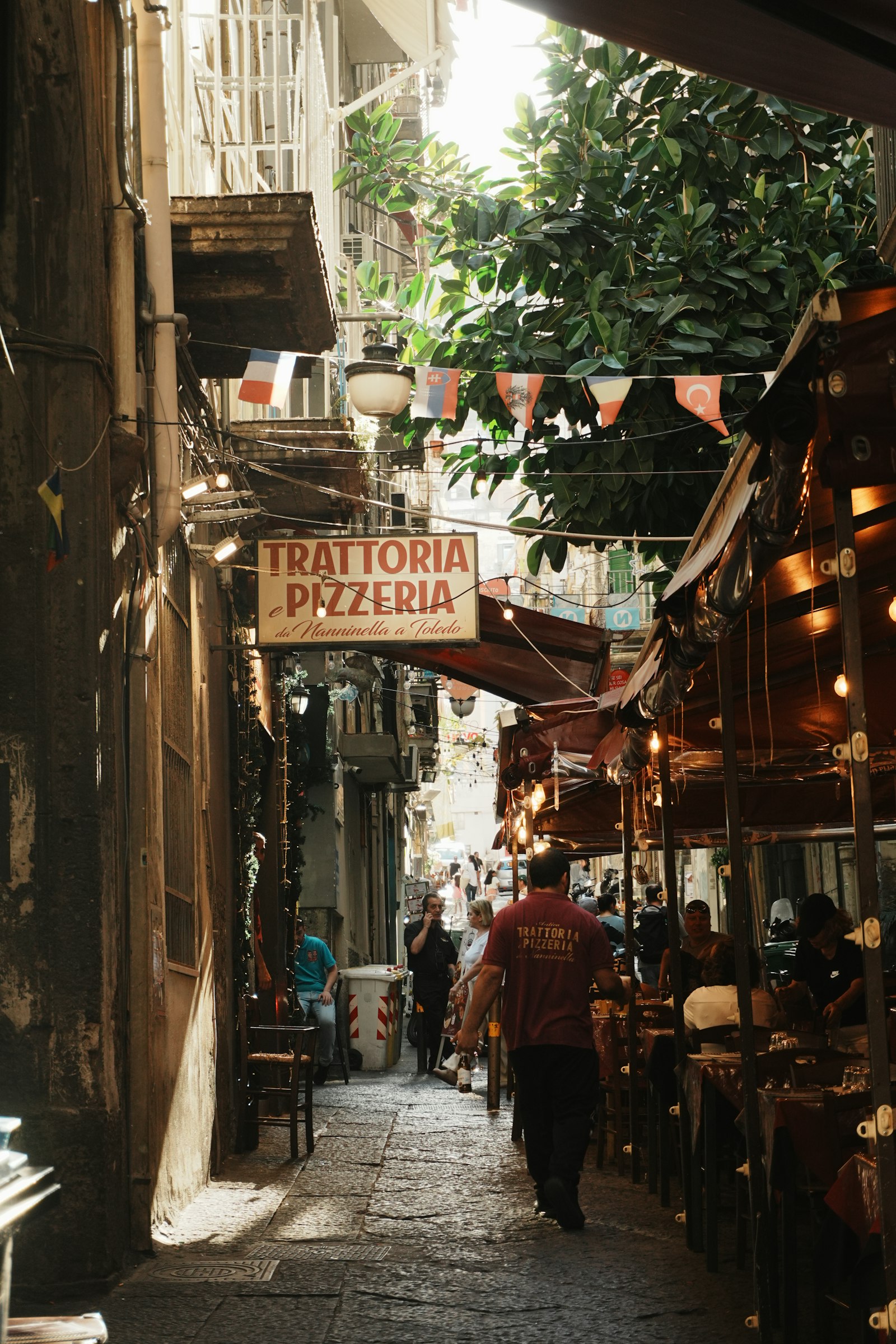
The word cuoppo refers to the cone-shaped paper wrapper as much as to the food inside it. Naples has a long tradition of selling small fried foods this way, making them practical to carry away from a friggitoria, a shop specializing in fried food.
There is no single compulsory recipe. Italy’s official tourism site describes the classic version with items such as potato croquettes, fried dough, battered zucchini flowers, small rice balls, fried polenta and pasta fritters, while seafood versions can include small fish, calamari and other fried seafood. You can see the broader traditional lineup in the official Italia.it overview of Neapolitan street food.
That variation matters when ordering. Two shops can both advertise a cuoppo di terra and put different things inside.
The three names you are most likely to see
Cuoppo di terra
Di terra, literally “of the land,” generally means a mixture based on vegetables, potatoes, rice, pasta and fried dough rather than seafood. Possible items include:
- crocchè: potato croquettes, sometimes with cheese or other fillings
- zeppoline or pasta cresciuta: small pieces of fried dough
- frittatina di pasta: a compact fried pasta portion, often quite filling
- arancini or small rice balls
- scagliozzi: pieces of fried polenta
- battered zucchini, aubergine or zucchini flowers
Do not automatically interpret di terra as vegetarian. Individual croquettes, rice balls and pasta fritters may contain meat, cheese or other animal ingredients.
Cuoppo di mare
Di mare is the seafood version. Calamari, prawns, anchovies, small fish and seafood fritters are common possibilities, depending on the shop and its menu.
This version is usually easiest to eat when the pieces are fairly small. Larger fish or shell-on seafood, when present, require more attention than a potato croquette, particularly if you are standing in a crowded lane.
Cuoppo misto
Misto means mixed. Some shops offer a defined house mixture; others may let you combine several items. Do not assume that misto automatically means half seafood and half land-based fritters. Read the displayed ingredients or ask what is included.
How to order at a Naples friggitoria
Most transactions are quick, and you do not need elaborate Italian. First look for the menu board before reaching the counter. This prevents the classic problem of reaching the front of a fast-moving queue and discovering six different cones with six different names.
- Choose the type. Look for terra, mare, misto or a list of individual fried pieces.
- Check whether you order at the food counter or at the cassa. If you see cassa, payment may be handled separately. Follow the shop’s signs rather than assuming every friggitoria works the same way.
- Order the quantity. “Un cuoppo di terra, per favore” is enough for one land-based cone. Use due for two.
- Pay and keep the receipt if one is handed to you. In shops using separate ordering and collection points, you may need it when collecting the food.
- Move away from the ordering position. If food is being fried to order, staff may call you back, use an order number, or simply hand it over when ready.
If staff ask “Qui o da asporto?”, they mean “Here or takeaway?” Answer “da asporto” if you are taking it outside.
Useful Italian at the counter
- Un cuoppo di terra, per favore. One land-based cone, please.
- Un cuoppo di mare, per favore. One seafood cone, please.
- Cosa c’è dentro? What’s inside?
- È vegetariano? Is it vegetarian?
- Senza pesce, per favore. Without fish, please.
- Posso avere solo crocchè e zeppoline? Can I have only croquettes and zeppoline?
- Quanto costa? How much does it cost?
- Da asporto. To take away.
One particularly useful word is pezzo, meaning one piece. If an entire cone looks excessive, some friggitorie also sell individual crocchè, frittatine or other fried snacks. Ask for un pezzo rather than buying a large mix you do not actually want.
How to eat it when there is no table
Do not treat the paper cone like a takeaway bag. It is the serving container.
Hold it upright around the lower half and eat from the top downward. Freshly fried pieces can be extremely hot inside even when the outside seems manageable, so be cautious with the first bite, particularly with potato, cheese and pasta fillings.
If you are given a small fork or pick, keep it. It becomes useful once the easy pieces at the top are gone and you are trying to retrieve the last slippery fried vegetable without putting half your hand into the cone.
A few practical habits make the whole operation less messy:
- take several napkins before leaving the counter
- keep the cone upright rather than folding or closing the top
- do not stuff it immediately into a bag, where trapped steam will soften the frying and spread oil
- finish typing messages and checking maps before you start eating
- stand somewhere you are not blocking a doorway, shop counter or narrow pedestrian flow
Via dei Tribunali, Spaccanapoli and the smaller streets of the historic centre can become tightly packed. “Street food” does not mean you must continuously walk while eating it. Standing to one side in a wider section of street is often far easier.
Where to put your phone, bags and luggage first
A cuoppo is a two-hand problem pretending to be a one-hand snack. You can technically hold the cone in one hand, but the other soon gets recruited for napkins, a fork, lemon, loose pieces or retrieving something that has shifted inside.
If you have a backpack, put it on properly before collecting the food. If you are pulling a suitcase, stop somewhere safe rather than attempting to eat while steering luggage across uneven paving and through crowds.
The same applies before descending Metro stairs or boarding public transport. Finish the hottest and messiest part of the cone first rather than combining fried seafood, luggage and an escalator.
If a food stop is one part of a larger sightseeing day, the Italy on Foot trip planner can help keep meals, walks and the rest of your Naples route in a sensible order instead of sending you back across the centre unnecessarily.
What to order if you want the easiest version to eat
Choose a land-based cone dominated by small crocchè, dough fritters and bite-sized vegetables if your priority is convenience. These are generally easier to manage with one hand than irregular pieces of fish or calamari.
Choose seafood when that is what you actually came for, but consider stopping to eat rather than walking through the busiest streets. Lemon juice, hot calamari and white clothing can become acquainted surprisingly quickly.
If you are not very hungry, buying one frittatina or crocchè can make more sense than ordering the largest cone. A mixture containing potato, rice, pasta and fried dough becomes filling faster than its paper packaging suggests.
Vegetarian, gluten-free and allergy questions
Ingredients need checking rather than guessing from the name. A vegetable-looking cone can contain dairy, egg or meat in individual pieces. Wheat flour is common in batters and fried dough, while seafood cones may involve fish, molluscs or crustaceans. Shared frying oil can also matter for people who need to avoid cross-contact.
For a genuine food allergy, ask for the allergen information rather than relying on “no fish” or “no cheese.” Italian rules require allergen information for non-prepacked foods as well as packaged products; the Italian Ministry of Health explains the allergen requirements.
Useful questions include “Avete l’elenco degli allergeni?” for “Do you have the allergen list?” and “Usate lo stesso olio per il pesce?” for “Do you use the same oil for the fish?”
Someone with coeliac disease should not assume that plain potatoes, polenta or vegetables make a standard friggitoria cone gluten-free. Batter, coatings and shared fryers all need to be checked with the individual business.
Ordering for children
A freshly filled cone is awkward for small children because the paper can contain several pieces that are still very hot in the centre. Buying individual items can be simpler than handing over an entire cone.
A crocchè or small piece of fried dough also lets you test the temperature before the child bites into a cheese-filled or pasta-filled centre. If you buy a mixture for the family, an adult can hold the cone and distribute pieces as they cool instead of passing the whole package around.
With a stroller, stop away from the counter after collecting the food. Busy takeaway entrances often have customers moving in two directions at once: people ordering and people emerging with hot food.
Common mistakes that make a good cuoppo worse
Carrying it around for later. A paper cone works best for food intended to be eaten promptly. Steam and oil gradually work against the crisp texture.
Assuming every cone contains the same things. Cuoppo di terra is a category, not a legally standardized recipe. Look at what the shop actually lists.
Ordering the biggest portion before another meal. Several small fried pieces can amount to a substantial snack, particularly if frittatina, rice and potato are all involved.
Using “vegetarian” and “di terra” interchangeably. They are not the same thing. Ask.
Walking straight into the densest part of the crowd. Collect the cone, find a sensible patch of pavement, eat the first few hot pieces, then continue.
Throwing away your napkins too early. The bottom of the cone is where oil, crumbs and the most determined final piece usually meet. Keep at least one napkin until the cone itself goes into a bin.
What to do when the shop has no cuoppo on the menu
Do not assume you chose the wrong place. Traditional friggitorie may sell the individual components separately instead of packaging them under one tourist-friendly heading.
Look for words such as fritti, friggitoria, crocchè, frittatina, arancino, pasta cresciuta and scagliozzi. You can simply point and order several individual pieces.
In some ways, that is the more useful approach when two people want different things, when a full cone is too large, or when you want to know exactly what you are eating. The paper cone is part of Naples’ street-food tradition, but the real point is the hot fried food inside it, not obeying a particular serving format.