The easiest old-town swim is Cala Porta Vecchia, directly below Monopoli’s historic walls. From there, the coast continues south along Via Procaccia to Porto Bianco, Porto Rosso, Porto Nero and Cala Paradiso. Monopoli beach access varies surprisingly quickly along this short stretch: one cove has ramps, another has a broad staircase, others involve rockier approaches, and the nearest full-service beach clubs are farther along the same coast.
There is one important recent change. Porta Vecchia underwent a major redevelopment and reopened on 14 August 2026. Some older pages still mention the previous closure, but the later Comune di Monopoli reopening notice confirms that the structural work was completed and pedestrian access between the waterfront and historic centre restored. Landscaping and finishing work continued afterward. No separate 2027 closure programme has been published at the time of writing.
Which beach should you choose?
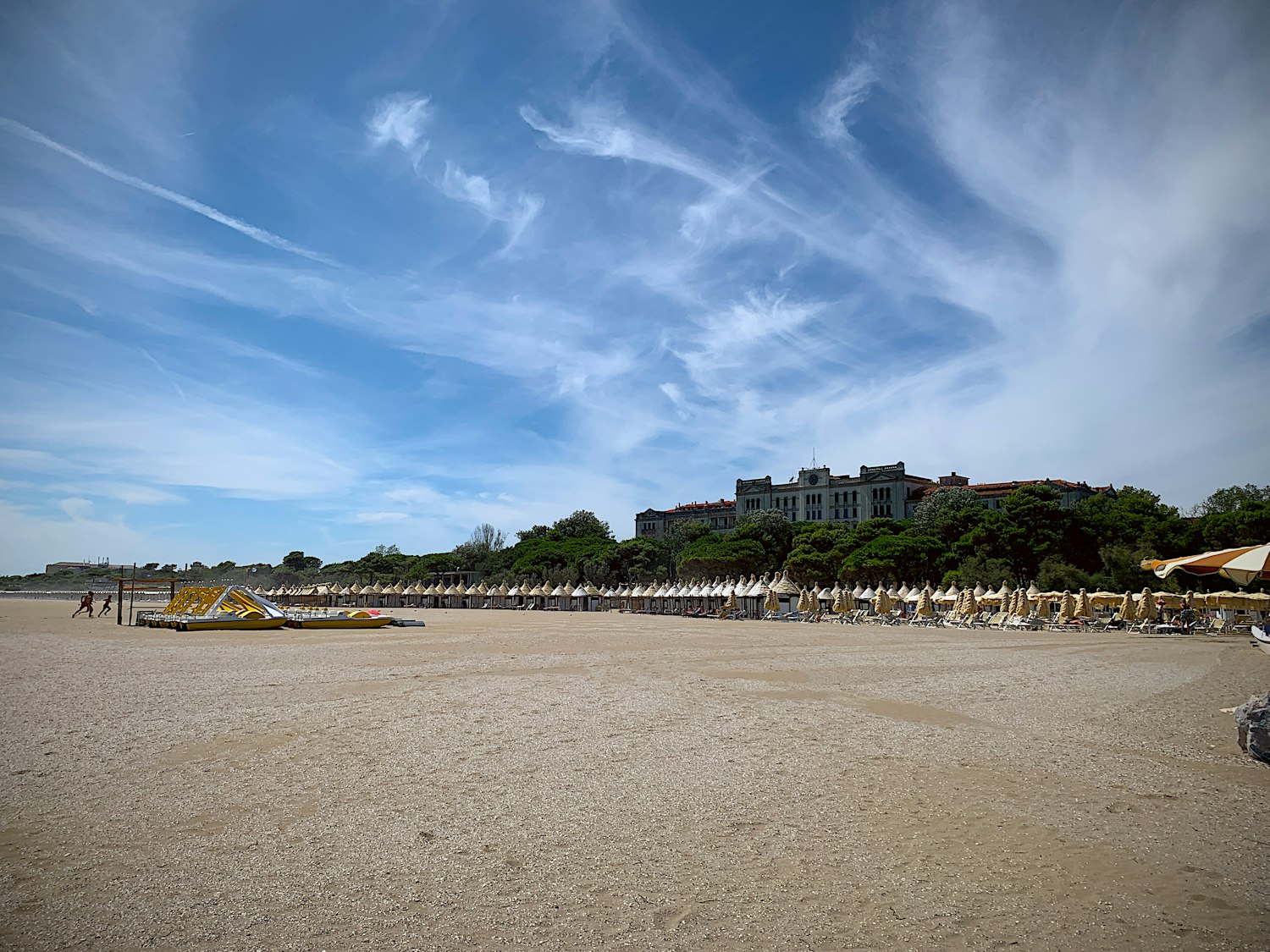
- Cala Porta Vecchia: choose it for the shortest walk from the old town, shallow sandy water and a quick swim between sightseeing stops.
- Cala Porto Bianco: choose it if ramps are preferable to a large staircase, although the final beach surface is still sand.
- Porto Rosso: choose it for a larger sandy cove and shallow water, but expect a broad flight of steps to reach the beach.
- Porto Nero: better for a smaller, rockier-feeling cove. It is less straightforward with children, strollers or lots of beach gear.
- Cala Paradiso: the closest obvious choice if you want an organized lido with reserved umbrellas, loungers and services rather than finding space on a public beach.
- Lido Pantano: consider this north-of-centre option if barrier-free facilities matter more than being within the immediate old-town beach sequence.
Walking from the old town to the beaches
Do not start by walking around the commercial harbour looking for a continuous waterfront path. For the southern beaches, move toward the Porta Vecchia side of the centro storico.
- From the old town, work toward the southern walls and the Porta Vecchia waterfront.
- The renewed connection uses Via Papacenere and Via Argento between the historic centre and the redeveloped coastal area.
- Once beside the sea, Via Procaccia is the useful reference street. Continue south along it for the next series of coves.
- Beach entrances appear successively on the sea side. There is no need to return inland between Porta Vecchia, Porto Bianco and Porto Rosso.
This makes the southern coast especially useful if the first beach is too crowded. Instead of committing to one cove before you see it, walk south and inspect the next one.
Cala Porta Vecchia: the simplest old-town swim
Cala Porta Vecchia sits immediately below the historic walls and is a spiaggia libera, meaning a public beach rather than a private bathing establishment. The Comune describes it as a sandy beach with a shallow, predominantly sandy seabed.
The useful distinction is between reaching the waterfront and reaching your towel spot. The redevelopment created an accessible public space and restored the pedestrian connection with the old town. The project also extended toward the existing beach-ramp area. Sand, changing beach levels and temporary coastal works can still make the final metres different from an ordinary paved step-free route, so travelers who require guaranteed wheelchair access should check current conditions rather than assuming that the word accessibile means every part of the shoreline is independently usable.
There are also low rocks around the cove where people sit and enter the water. They save you from hunting for sand space on a crowded day, but they are a poor choice with a stroller, limited balance or slippery footwear.
Useful facilities at Porta Vecchia
The Comune lists a public toilet on Via Procaccia with showers. In the confirmed 2026 high season, the Porta Vecchia facility was scheduled from 10:00 until 01:00 between 1 June and 15 September. Those hours should not be assumed for a later season, so check the current municipal public-toilet listing before relying on a late-night shower or changing stop.
Porto Bianco: the better choice when you want a ramp
Continue south from Porta Vecchia and the next useful sandy option is Cala Porto Bianco. Monopoli’s institutional tourism site specifically describes its access as using both ramps and steps.
That makes Porto Bianco the first place to inspect if you have a stroller or want to avoid carrying beach equipment down a large staircase. A ramp to beach level does not turn the sand itself into a firm surface, but it can make the approach considerably easier.
Look for words such as rampa for ramp, scalini or scalinata for steps, and spiaggia libera for the public section. The official Monopoli city beach guide is useful for checking the individual coves before setting out.
Porto Rosso: more sand, but a real staircase
Porto Rosso is farther along the same southbound coast and has a broader sandy bay. The official tourism description specifically notes a wide flight of steps as the main access.
For able-bodied adults carrying only a towel and small bag, the stairs are not a reason to avoid it. They matter much more with a pushchair, rolling beach cart, large inflatable equipment or reduced mobility. A lightweight stroller that folds is much easier here than a heavy travel system.
The attraction for families is the beach itself: fine sand and shallow water extending away from the shore. The trade-off is simply getting down and back up again.
Porto Nero: expect a less straightforward approach
Porto Nero comes after Porto Rosso and is smaller, with sand mixed into a rockier coastal setting. The tourism office describes two approaches: continue on foot around from Porto Rosso, or approach through the nearby private lido known as La Perla Nera.
If you use the coastal route, pack as though you are going to a rocky cove rather than a groomed urban beach. Shoes with a secure sole are more useful than loose flip-flops, particularly if you intend to get into the water from the rock edges.
Do not assume that walking through a private establishment gives you free use of its loungers, pool, showers or other facilities. Public shoreline access and paid lido services are separate things.
Cala Paradiso: the nearest straightforward lido option
Keep going south and Cala Paradiso changes the setup. According to the city tourism office, most of this bay is occupied by a private bathing establishment, with a smaller public section remaining available.
Lido Cala Paradiso offers reservable umbrellas and loungers, a bar, showers and sports facilities. Its current website lists daily opening from 09:00 to 19:00, but seasonal opening dates, prices and 2027 reservations should be checked directly rather than carried over from a previous summer.
This is the better choice when having a guaranteed base matters more than staying immediately beneath the old-town walls. In July and August, reserving a lido also removes the problem of arriving at a small public cove and discovering that every practical patch of sand is already occupied.
If Monopoli is part of a longer coastal stay, you can keep beach days, train-connected towns and walking days together when you build your Italy itinerary.
For reduced mobility, Lido Pantano is worth knowing about
Travelers who need a more purpose-built beach setup should also look north of central Monopoli. The institutional tourism office describes Lido Pantano as an equipped sandy beach without architectural barriers. Its own site lists umbrellas, loungers, food service and parking.
It is not part of the immediate Porta Vecchia-to-Porto Rosso walking sequence, so a taxi or bicycle may make more sense than choosing it simply because it appears on a list of Monopoli beaches. The point is not that it is the closest beach, but that it may be the more practical one when steps are a deciding factor.
The Comune also ran its Mare senza barriere programme in 2026, providing reserved beach positions at participating lidi for eligible people with severe disabilities and a caregiver. That was a municipal seasonal programme, not a permanent national entitlement, so anyone travelling in 2027 should wait for the new year’s Comune announcement rather than assuming the 2026 arrangements continue unchanged.
Rocks, water shoes and children
You do not need reef shoes for every Monopoli beach. Porta Vecchia, Porto Bianco and Porto Rosso all have useful sandy sections. Pack water shoes if you intend to move between coves, sit on the limestone edges or swim from rocks rather than from the sand.
With small children, prioritize the sandy entries over the rock shelves even if the rocks appear quieter. Limestone becomes slick once wet, and getting a child back out of the water is much easier from a shallow sandy edge.
For strollers, think about the route in two separate stages. A paved ramp can solve the descent from street level, but a narrow wheel still performs badly on loose dry sand. A carrier or folding lightweight stroller is much less frustrating if the beach is only one part of a sightseeing day.
Parking near Porta Vecchia is no longer simply “free nearby”
Older guides can be misleading here. In May 2026 the Comune introduced a new parking regime in the Porta Vecchia-Porto Bianco macroarea, including 125 paid spaces. The published 2026 arrangement charged €2 per hour, daily from 1 June to 30 September and on holidays and pre-holiday days during April, May and October.
That is more recent than tourism pages that still refer broadly to free nearby parking. Drivers should therefore follow the actual strisce blu signs and payment instructions on the street. The Comune’s Porta Vecchia-Porto Bianco parking notice gives the latest confirmed scheme, but 2027 tariffs and seasonal dates had not yet been published.
If the first beach is full or an access point is closed
Monopoli is unusually forgiving because the backup beaches line up along the same coast. If Porta Vecchia is packed, continue south on Via Procaccia instead of waiting for space. Porto Bianco is the logical next check, particularly if you need a ramp. Porto Rosso works well if stairs are not a problem. If you want guaranteed facilities, continue toward Cala Paradiso and check lido availability.
If limited mobility is the problem rather than crowds, do not treat Porto Rosso as the automatic fallback because of its large sandy area. The staircase is the catch. Check Porto Bianco first, or use an equipped lido with confirmed accessible facilities.
And if you arrive late in the day, separate beach access from beach services in your planning. A public cove does not guarantee an open shower, staffed facility or somewhere secure to leave belongings. Bring only what you are prepared to carry back through the old town, especially if your swim is followed by dinner rather than a return to your accommodation.