Sardinia beach parking is local, seasonal, and often more regulated than the quiet coastal road suggests. At popular beaches you may find blue-line street spaces, municipal gravel lots, barrier-controlled private car parks, or a restricted beach access system on top of the parking charge. Pay using the method shown at that specific location, check the vehicle registration carefully, and never assume that a beach reservation includes a parking space.
For 2027 travel: as of September 2026, the main beach municipalities have not published complete 2027 parking seasons, tariffs, and access arrangements. The confirmed 2026 systems below are useful for understanding how each area works, but dates and prices should be checked again shortly before your trip.
There Is No Single Parking System for Sardinia’s Beaches
The biggest mistake is expecting the next beach to work like the previous one. Sardinian coastal parking generally falls into three categories:
- Public paid parking: usually marked by blue lines or signs saying parcheggio a pagamento. You pay at a parcometro or through an approved app.
- Managed municipal beach lots: these may have attendants, online reservations, daily tariffs, vehicle limits, or special access rules.
- Private car parks: you may take a ticket at a barrier, pay at a cashier or automatic machine before leaving, and follow the operator’s own opening and closing times.
Parking payment and permission to enter the beach are also separate things. La Pelosa, Cala Brandinchi, Lu Impostu, and Punta Molentis illustrate different versions of controlled beach access. A parking receipt does not automatically satisfy an environmental contribution, beach reservation, or visitor cap.
How to Use a Beach Parking Machine
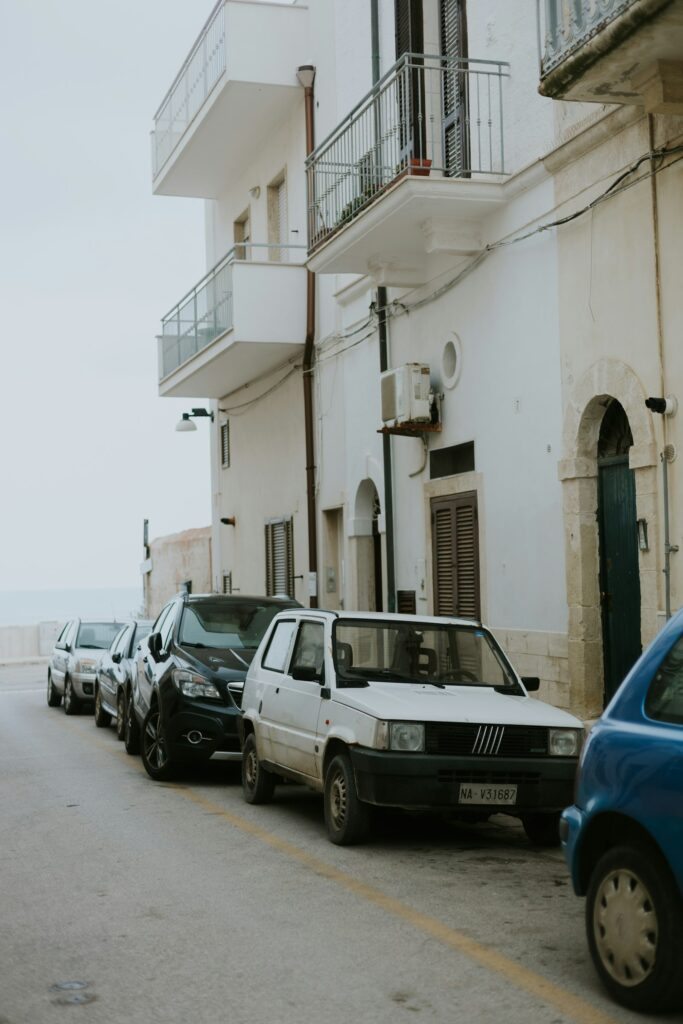
Before walking away from the car, look at the vertical parking sign and the machine itself. The sign controls the space. The machine is only the payment device.
- Check the paid-parking hours, usually shown beside orario or fascia oraria.
- Check whether the tariff is hourly, half-day, or daily.
- Look for the vehicle category. Cars, motorcycles, and campers can have different rates.
- If the machine asks for targa, enter the registration plate exactly as it appears on the car.
- Pay using one of the accepted methods. Coastal machines may accept coins, cards, or contactless payment, but do not assume every machine accepts all three.
- If a paper ticket is printed and the instructions say esporre il ticket, put it clearly behind the windscreen.
Some systems register the payment electronically against the number plate and produce nothing that needs to be displayed. Others still require a physical ticket. Read the instruction rather than copying what the neighboring driver does.
Useful Italian parking words
- Parcheggio a pagamento: paid parking
- Parcometro: parking meter
- Sosta: parking or stopping for a period
- Tariffa: tariff
- Targa: vehicle registration plate
- Esporre il ticket: display the ticket
- Posti disponibili: spaces available
- Riservato: reserved
- Residenti: residents
- Autorizzati: authorized vehicles
- Divieto di sosta: no parking
- Rimozione forzata: tow-away enforcement
If road markings are unfamiliar, the practical distinction between blue, white, and reserved spaces is covered in our guide to parking colors in Italy. The nearby vertical sign still takes priority over assumptions based only on paint.
Paying by App: Check the Zone Code, Not Just the GPS Pin
Parking apps are convenient on beach days because an allowed session can often be extended without walking back from the sand. Apps such as MooneyGo and EasyPark operate in many Italian municipalities, but availability is not uniform across Sardinia.
Use only an app identified on the local meter or parking sign. When you open it, compare the zone number in the app with the number printed beside the parking spaces. A GPS pin can place you in an adjacent tariff zone, especially along a long coastal road.
Before confirming payment, check three details:
- the correct registration plate, particularly if your account contains several cars;
- the correct parking zone;
- the intended end time or daily tariff.
A confirmation screen is more useful than simply seeing a card charge later. Keep the session visible in the app until you return to the vehicle.
Do not trust a random QR sticker on a meter
Parking app providers have warned about fraudulent QR stickers placed on machines. If a QR label looks as though it has been stuck over the original panel, use the official app you already have installed, manually enter the zone code, or follow the printed payment instructions. Do not enter card details into an unfamiliar page merely because the sticker is attached to a parking machine.
La Pelosa: The Beach Booking and the Car Are Separate
La Pelosa at Stintino is a good example of why visitors should separate beach access from parking in their planning. For the confirmed 2026 season, entry to the beach was controlled from 15 May to 15 October and required a reservation and QR code. The official La Pelosa booking system handled the beach allocation.
That reservation did not function as a parking payment. The coastal parking around La Pelosa is separately regulated, so drivers still need to follow the payment instructions beside the space where the car is left.
The reverse is equally important: finding and paying for a parking space does not guarantee that you can enter the controlled section of La Pelosa. Check the beach reservation before making the drive to Stintino, particularly in July and August.
Villasimius: Porto Giunco, Porto Sa Ruxi and Punta Molentis Work Differently
Villasimius operates an extensive seasonal coastal parking system. The municipal tourism service confirmed that paid coastal parking began on 6 June for the 2026 season.
For Porto Giunco and Porto Sa Ruxi, the municipal company offered optional advance parking reservations. If the reservable allocation was sold out, visitors could still arrive and try for remaining spaces.
Punta Molentis was different. Under the municipality’s 2026 arrangements, access to the coastal area was limited by capacity and was not available for advance online parking reservation. Entry was handled on arrival until the permitted capacity was reached. The municipal operator also instructed drivers to display the parking title visibly on the dashboard.
This is a useful decision rule: if you want certainty that your car has somewhere to go, a beach with reservable parking such as Porto Giunco can be easier to plan than a capacity-controlled area where admission depends on what is left when you arrive.
Is Arutas and the Sinis Coast: Paid Parking Extends Beyond Peak Summer
Do not assume coastal charges disappear after August. The Municipality of Cabras confirmed that in 2026 the managed parking season at Is Arutas and San Giovanni di Sinis began on 1 May and continued until 2 November. Mari Ermi, Maimoni, and Funtana Meiga followed a more seasonal calendar.
The municipality publishes the operative dates through its coastal parking notices. These are worth checking for spring and autumn trips because a nearly empty beach does not necessarily mean the parking regulations are inactive.
La Cinta: A Private Car Park Rather Than Blue-Line Street Parking
At La Cinta in San Teodoro, the main beach car park illustrates a different model. The current operator’s published system uses an entrance ticket rather than a roadside meter. Drivers collect the ticket on entry, then pay before leaving at the staffed or automatic payment point.
The La Cinta parking operator currently publishes opening hours of 08:00 to 21:00, with seasonal hourly prices and a daily maximum for cars. Because this is a managed car park, do not assume that the rules for a municipal blue-line space apply in exactly the same way.
Pay before walking back to the vehicle when possible. Doing so avoids joining a queue at the payment machine after you have already packed everyone into a hot car.
Beach Reservations at San Teodoro Are Another Separate Step
Cala Brandinchi and Lu Impostu have their own controlled-access system. Under the confirmed 2026 rules, reservations were required from 1 June through 30 September, with daily booking availability opening at 18:00 for the second following day through the official San Teodoro beach platform.
The QR code is for entering the regulated beach area. Treat parking arrangements as a separate check. This distinction matters when several people are traveling in one vehicle because the beach reservation concerns people, while parking systems usually concern the vehicle and its registration plate.
How Parking Fines Work in Paid Public Spaces
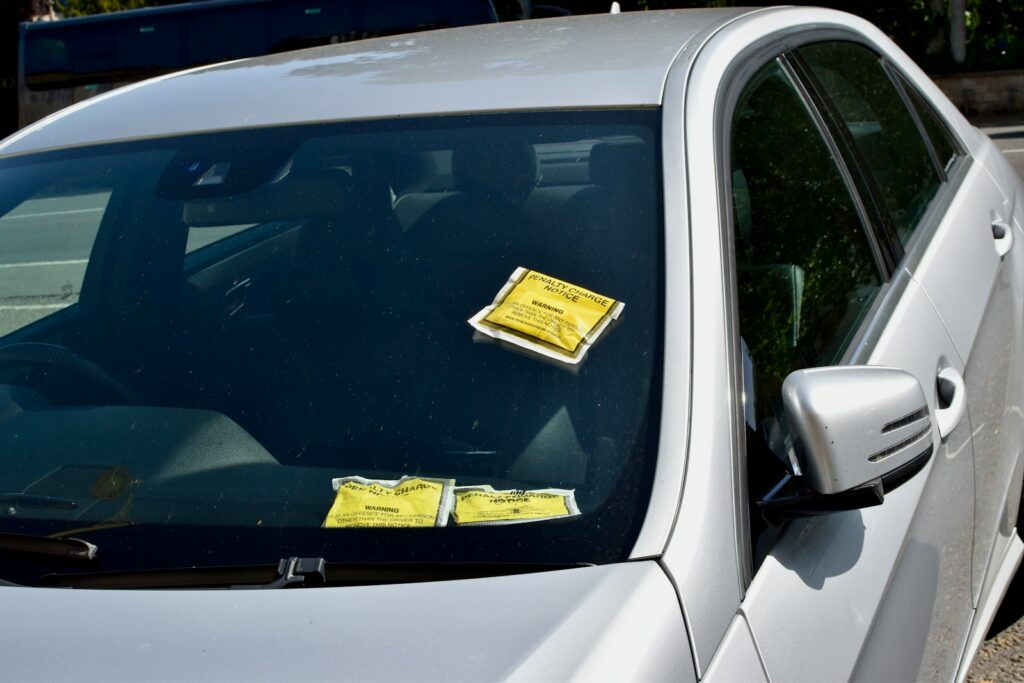
For public tariffed parking, national road rules provide the legal framework while municipalities establish the local parking zones, tariffs, and operating hours.
Under the current Article 7 of the Italian Road Code, failure to pay for tariffed public parking can carry an administrative penalty of €42 to €173, with recovery of the unpaid parking tariff also provided for by the code.
The rules became more nuanced for drivers who paid something but stayed longer than purchased. Under the current system:
- an overrun within 10% of the time purchased does not trigger the parking sanction;
- an overrun of more than 10% but no more than 50% can result in the applicable sanction being reduced by half;
- an overrun beyond 50% can result in the full applicable sanction.
The code also provides mechanisms for recovering unpaid parking charges. Do not treat the 10% tolerance as free extra beach time. Extending the parking session before it expires is much safer where the app permits it.
Illegal parking can cost considerably more
A paid ticket does not make an illegal space legal. The current Article 158 sets separate penalties for parking on pavements, pedestrian crossings, bus stops, reserved areas, and other prohibited locations.
For an ordinary car, occupying a space reserved for people with disabilities can currently carry a penalty of €330 to €990. Other parking offences have different ranges depending on the location and obstruction involved. A rimozione forzata sign also warns that towing may be authorized.
A rental-car company may charge its own administrative fee for processing a traffic or parking notice. That fee is contractual and is separate from the fine imposed by the authority.
Parking With a Disability Permit
Current Article 188 of the Road Code provides free parking in public paid areas for qualifying vehicles serving holders of the recognized disability parking permit. The permit still needs to be used correctly, and it does not override a prohibition on stopping, a beach-access quota, or the terms of a private car park.
At private beach lots, check the operator’s own conditions and accessible spaces rather than assuming the public blue-space rule automatically applies.
Early Arrivals, Sundays and Evening Parking
Arriving before the paid period begins is common in August, but free parking at 07:00 does not necessarily mean the car can remain unpaid after the tariff starts. Read the sign and either activate payment at the correct time or use any permitted advance-start function in the official app.
Likewise, do not assume Sundays or public holidays are free. Seasonal beach parking frequently operates every day because those are precisely the days of highest demand. Look for wording such as tutti i giorni, which means every day, or a tariff panel listing weekdays and holidays separately.
At the other end of the day, check whether you are in an open public parking zone or a private lot with a closing time. A deserted car park after sunset is not helpful if the exit barrier has been locked.
If the Parking Meter Is Broken
A dead parcometro does not automatically make the space free. Check the machine for instructions directing you to another meter or an approved app. Look along the same parking zone for a second machine, since another tariff area nearby may have a different code.
If there is no workable payment method, photograph the faulty machine and its identification number for your records, but the lowest-risk solution is to move to a space where payment can be completed properly. A photograph documents the problem; it does not automatically create permission to park without paying.
Do Not Leave Beach Luggage on Display
Many coastal lots are explicitly non custoditi, meaning the parking fee does not buy vehicle security. Villasimius, for example, makes clear in its parking conditions that the ticket is not a vehicle-custody service.
Keep passports, electronics, cameras, rental documents, and bags out of sight. If you are changing hotels, arrange luggage storage before the beach when practical rather than leaving a fully packed rental car beside an isolated coastal path.
When building several beach stops into the same road trip, it helps to plan your Italy route with parking, reservations, and realistic driving time treated as part of the day rather than an afterthought.
What to Do If You Return to a Parking Notice
- Photograph the notice, your parking position, the nearest sign, and any valid ticket or app session.
- Check whether the document comes from the municipality, local police, parking concessionaire, or a private operator.
- Read the payment deadline printed on the document rather than assuming every notice follows the same procedure.
- If it is a Road Code penalty eligible for reduced payment, Article 202 currently allows a 30% reduction when payment is made within five days of contestation or notification, subject to the exclusions specified by the law.
- Keep proof of payment, especially with a rental vehicle.
A paper left on the windscreen may sometimes be a preliminary notice rather than the final notified penalty, so follow the instructions printed by the issuing authority. With a rental car, do not wait for the rental company to forward correspondence if the notice already gives you a legitimate way to resolve it directly.